

śaṃkha शंख – conch shell
substantive masculine · substantive neuter
Dictionary sources
AYI dictionary substantive masculine
conch shell
Apte 1890 substantive masculine · substantive neuter
Original text · English · substantive masculine
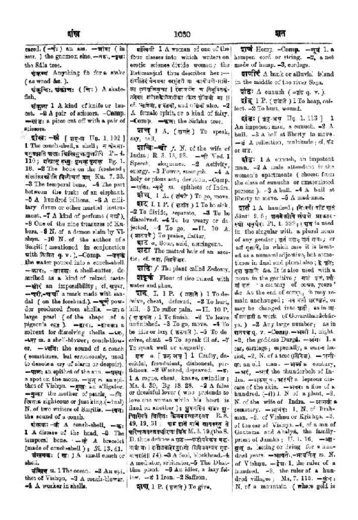
śaṃkhaḥ -khaṃ [śam-kha Uṇ. 1. 102] 1 The conch-shell, a shell; na śvetabhāvamujjhati śakhaḥ śikhibhuktamuktopi Pt. 4. 110; śaṃkhān dadhmuḥ pṛthak pṛthak Bg. 1. 18. 2 The bone on the forehead; śaṃkhāṃtaradyoti vilocanaṃ yat Ku. 7. 33. 3 The temporal bone. 4 The part between the tusks of an elephant. 5 A hundred billions. 6 A military drum or other martial instrument. 7 A kind of perfume (narkhā). 8 One of the nine treasures of Kubera. 9 N. of a demon slain by Viṣṇu. 10 N. of the author of a Smṛti (mentioned in conjunction with likhita q. v.). Comp. — udakaṃ the water poured into a conch-shell. — kāraḥ, -kārakaḥ a shell-cutter, described as a kind of mixed caste — kṣīraṃ an impossibility; cf. khapuṣpa. — carī, -carcī a mark made with sandal (on the forehead.). — cūrṇaṃ powder produced from shells. — jaḥ a large pearl (of the shape of a pigeon's egg). — drāvaḥ, -drāvakaḥ a solvent for dissolving shells. — dhmaḥ, — dhmā m. a shell-blower; conch-blower. — dhvaniḥ the sound of a conch (sometimes, but erroneously, used to denote a cry of alarm or despair). — pālaḥ an epithet of the sun. — prasthaḥ a spot on the moon. — bhṛt m. an epithet of Viṣṇu. — mukhaḥ an alligator. — muktā the mother of pearls. — likhitaḥ a righteous or just king. (-dual) N. of two writers of Smṛtis. — svanaḥ the sound of a conch.
Original text · English · substantive neuter
śaṃkhaḥ -khaṃ [śam-kha Uṇ. 1. 102] 1 The conch-shell, a shell; na śvetabhāvamujjhati śakhaḥ śikhibhuktamuktopi Pt. 4. 110; śaṃkhān dadhmuḥ pṛthak pṛthak Bg. 1. 18. 2 The bone on the forehead; śaṃkhāṃtaradyoti vilocanaṃ yat Ku. 7. 33. 3 The temporal bone. 4 The part between the tusks of an elephant. 5 A hundred billions. 6 A military drum or other martial instrument. 7 A kind of perfume (narkhā). 8 One of the nine treasures of Kubera. 9 N. of a demon slain by Viṣṇu. 10 N. of the author of a Smṛti (mentioned in conjunction with likhita q. v.). Comp. — udakaṃ the water poured into a conch-shell. — kāraḥ, -kārakaḥ a shell-cutter, described as a kind of mixed caste — kṣīraṃ an impossibility; cf. khapuṣpa. — carī, -carcī a mark made with sandal (on the forehead.). — cūrṇaṃ powder produced from shells. — jaḥ a large pearl (of the shape of a pigeon's egg). — drāvaḥ, -drāvakaḥ a solvent for dissolving shells. — dhmaḥ, — dhmā m. a shell-blower; conch-blower. — dhvaniḥ the sound of a conch (sometimes, but erroneously, used to denote a cry of alarm or despair). — pālaḥ an epithet of the sun. — prasthaḥ a spot on the moon. — bhṛt m. an epithet of Viṣṇu. — mukhaḥ an alligator. — muktā the mother of pearls. — likhitaḥ a righteous or just king. (-dual) N. of two writers of Smṛtis. — svanaḥ the sound of a conch.
Occurrences in source texts (1)
HP 1 occurrence
Continue with AYI Free
Image source: AYI archive.