

avara अवर – lower
adjective · substantive masculine · substantive neuter · Word type unspecified
Dictionary sources
AYI dictionary adjective
lower
Cappeller 1891 Word type unspecified
Original text · English · Word type unspecified
ávara ·lower, inferior; posterior, following, later, younger; nearer; preceding (w. abl.); western; vile, base, mean; --° at least in adj., n. in adv. --f. avarā after-birth.
Monier-Williams 1872 adjective
Original text · English · adjective
avara avara, as, ā, am (fr. 2. ava), below, inferior; low, mean, unimportant, of small value; posterior, hinder, later, last, younger; western; nearer; (at the end of a compound signifying quantity) the least, the lowest degree, lowest value; (ā), f. the hind thigh of an elephant; a N. of Durgā; (am), n. the hind thigh of an elephant; [with avara have been compared Gr. οὐρά, οὖρος, οὖρον, ὅρος, ὄρρος; Lat. eurus; also the Lat. aver-nus].
Petersburger 1855 adjective · substantive neuter · Word type unspecified
Original text · German · adjective · substantive neuter
ávara (von 1. ava) 1〉 adj. f. ā, Declin. P. 1,1,34. P. 7,1,16. VOP. 3,9. VOP. 3,12. VOP. 3,37. Gegens. para. a〉 unten befindlich, der untere: avàre vṛ̱janè ṚV. 2,24,11. ā sàmu̱drādavàrā̱dā paràsmāt ṚV. 7,6,7. ṚV. 10,120,7. AV. 1,8,3. AV. 1,12,4. AV. 7,41,1. śaṃ te̱ parèbhyo̱ gātrèbhya̱ḥ śama̱stvavàrebhyaḥ VS. 23,44. VS. 7,5. compar. ávaratara ŚAT. BR. 3,1,1,1. Uebertr. niedrig, gering, wenig geachtet ŚAT. BR. 5,1,1,12. prāṇena rakṣannavaraṃ (die MĀDHY.-Rec. ŚAT. BR. 14,7,1,13 hat st. d.: aparaṃ) kulāyam BṚH. ĀR. UP. 4,3,12. karman MUṆḌ. UP. 1,2,7. na nareṇāvareṇa prokta eṣaḥ KAṬHOP. 2,8. śraddadhānaḥ śubhāṃ vidyāmādadītāvarādapi . antyādapi paraṃ dharmam M. 2,238. avaravarṇaja M. 3,241. M. 9,248. adīrghakāle na tu devi jīvite vṛṇe 'varāmadya mahīmadharmataḥ R. 2,21,62. dūreṇa hyavaraṃ (bedeutend weniger werth) karma buddhiyogāt BHAG. 2,49. prathamāvaratvam die höchste und niedrigste Stellung KUMĀRAS. 7,44. avarāvara der allerniedrigste: na hi prakṛṣṭānpreṣyāṃstu preṣayantyavarāvarān R. 5,53,24. R. 5,69,21. Vgl. anavara. — b〉 der hintere, nachstehend, nachfolgend, später, jünger H. 1542. manòjavā̱ avàra̱ indrà āsīt ṚV. 1,163,9. brā̱hma̱ṇo hotu̱ravàro ni̱ṣīdàn ṚV. 10,88,19. anu̱ yatpūrvā̱ arùhatsanā̱juvo̱ ni navyàsī̱ṣvavàrāsu dhāvate ṚV. 1,141,5. pṛ̱cchanto 'vàrāsa̱ḥ parā̀ṇi ṚV. 6,21,6. prathamacchadavarāṃ ā viveśa ṚV. 10,81,1. NIR. 1,20. avaraṃ svāhākāraṃ karoti parāṃ devatām ŚAT. BR. 4,1,1,23. antaraṃ mṛtyoramṛtamityavaraṃ hyetanmṛtyoramṛtam ŚAT. BR. 10,5,2,4. ŚAT. BR. 12,2,3,6. avarapuruṣāḥ die Nachkommen CHĀND. UP. 4,11,2. caturo 'varān die 4 folgenden M. 3,23. dakṣo vivasvānavaro (darauf) 'riṣṭanemistathaiva ca . kaśyapaśca u. s. w. R. 3,20,9. pūrvaje nāvaraḥ putro jyeṣṭho rājye 'bhiṣicyate R. 2,110,36. P. 3,3,136. avarokta zuletzt genannt KĀTY. ŚR. 1,10,5. śrutena bālasthānena janmanā cāvaro hyaham R. 2,106,22. māsenāvaro māsāvaraḥ SIDDH. K._zu_P. 2,1,31. yadavaraṃ kauśāmbyāḥ, yadavaramāgrahāyaṇyāḥ Sch. zu P. 3,3,136. P. 3,3,137. rāmādvarṣeṇādho'kṣajo 'varaḥ VOP. 5,10. kṛṣṇādavaro gadaḥ VOP. 5,21. kālāvara der Zeit nach später VOP. 3,37, Śl. 3. jarāvarāḥ die auf jarā folgenden (Wörter) AK. 2,6,1,49. — c〉 westlich ŚAT. BR. 1,6,3,11. — d〉 näher: avàrāṃ ca̱kriyāvàse ṚV. 2,34,14. pa̱ro vàdā̱tyavàreṇa pi̱trā ṚV. 6,9,2. śi̱śā̱no 'vàra̱ṃ paràṃ ca ṚV. 10,87,3. ṚV. 1,155,3. ṚV. 8,64,15. ṚV. 9,97,17. ṚV. 10,15,1. ṚV. 10,56,6. ṚV. 10,15,7. ṚV. 10,88,17. ya̱maḥ pa̱ro 'vàro vi̱vasvā̱ntata̱ḥ para̱ṃ nātì paśyāmi̱ kiṃ ca̱na AV. 18,2,33. AV. 1,17,2. AV. 5,11,5. AV. 5,24,6. AV. 10,7,21. — e〉 am Ende eines adj. comp. nach einem Wort, das ein Grössenverhältniss bezeichnet: das Mindeste, das niedrigste Maass, der niedrigste Betrag: iṣumātrāvaraṃ sthaṇḍilamupalipya ĀŚV. GṚHY. 1,3. saṃvatsarāvareṣu (wenigstens ein Jahr während) satreṣu KĀTY. ŚR. 13,4,5. trirātrāvaram KĀTY. ŚR. 4,11,3. daśāvarā (aus Zehnen zum Mindesten bestehend) pariṣat M. 12,110—M. 12,112. tryavara wenigstens drei M. 3,187. M. 8,60. YĀJÑ. 2,69. tryavaram wenigstens dreimal M. 11,80. kārṣāpaṇāvara M. 8,274. M. 10,120 (an beiden Stellen von den Erkll. sehr künstlich gedeutet). Verz. d. B. H. No. 1149. Verz. d. B. H. No. 1150. — 2〉 f. ˚rā a〉 Hintertheil des Elephanten H. 1228, Sch. H. an. 3,515. Vgl. apara 3,b. — b〉 ein Bein. der Durgā H. an. VIŚVA_im_ŚKDR. — 3〉 n. Hintertheil des Elephanten AK. 2,8,2,8. TRIK. 2,8,39. MED. r. 108. Vgl. apara 4,b. — Vgl. parāvara und paro'vara.
Original text · German · substantive neuter
avara 1〉a〉 viśeṣaṃ nādhigacchāmi nirdhanasyāvarasya ca zwischen einem Armen und einem niedrig Stehenden Spr. 4490. āsevantāvarā vṛttīḥ kavayaḥ führten das erbärmlichste Leben RĀJA-TAR. 5,203. — b〉 dvādaśāvarāndvādaśa parānpunātyubhayataḥ spätere so v. a. die noch geboren werden sollen ĀŚV. GṚHY. 1,6,1. fgg. P. 3,4,20. avare makārāt nach unserer Anschauung die dem ma vorangehenden (Laute) ṚV. PRĀT. 6,7. ṚV. PRĀT. 11,26. ṚV. PRĀT. 12,1. ṚV. PRĀT. 13,16. ṚV. PRĀT. 14,20. ṚV. PRĀT. 18,22. vorangehend (Gegens. para) auch ŚAT. BR. 4,1,1,23. ŚAT. BR. 12,2,3,6. ŚAT. BR. 14,1,3,26. — 4〉 n. Nachgeburt: avarāvapatana das Abgehen der Nachgeburt PĀR. GṚHY. 1,16.
Original text · German · Word type unspecified
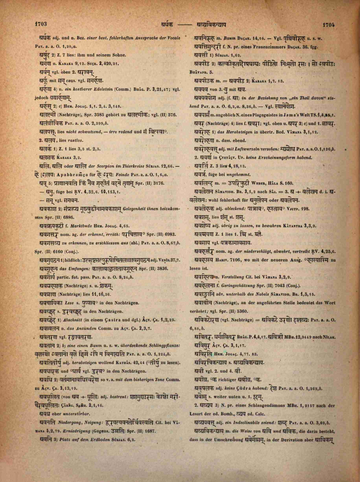
avara (Nachträge) 4〉 lies f. avarā; vgl. oben u. apara 3〉c〉 und 1. sāvara.
Böhtlingk 1879 adjective · substantive neuter · Word type unspecified
Original text · German · adjective · substantive neuter
ávara — 1〉 Adj. (f. ā) — a〉 der untere. Compar. ávaratara. — b〉 niedrig, gering, wenig geachtet. — c〉 näher. — d〉 der hintere, nachstehend, nachfolgend, später, jünger. — e〉 vorangehend (mit Abl.). — f〉 westlich. — 2〉 f. ā — a〉 Nachgeburt. — b〉 *Hintertheil eines Elephanten. — c〉 *Bein. der Durgā. — 3〉 n. — a〉 am Ende eines adj. Comp. (f. ā) das Mindeste, das niedrigste Maass, der niedrigste Betrag. tryavaras Adv. wenigstens dreimal. — b〉 *Hintertheil eines Elephanten.
Original text · German · Word type unspecified
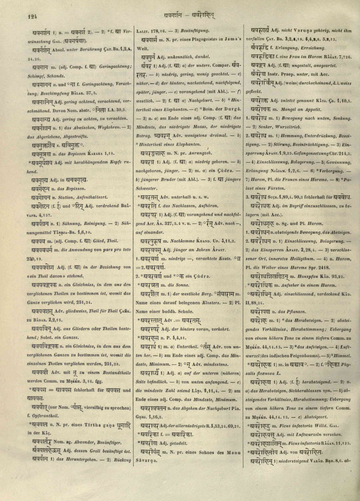
avara 1〉e〉 als m. so v. a. Vorfahr. [Nachtrag, Band 3]
Original text · German · Word type unspecified
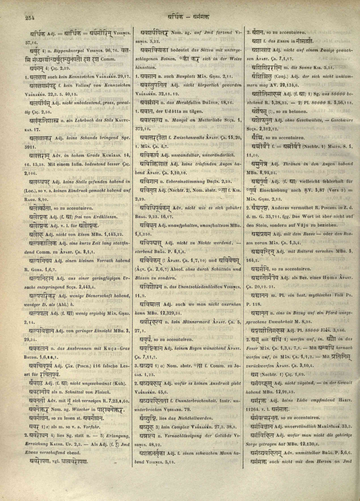
avara 3〉b〉 vgl. u. gātrāvara weiter unten. [Nachtrag, Band 6]
Original text · German · Word type unspecified
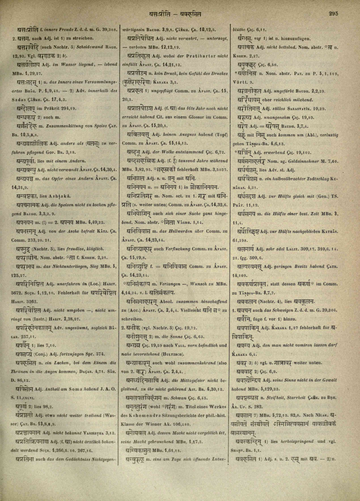
avara I. 3. 6. *m. n. eine best. hohe Zahl MAHĀVY. 246. fg. [Nachtrag, Band 7]
Apte 1890 adjective · substantive masculine · substantive neuter
Original text · English · adjective · substantive masculine · substantive neuter
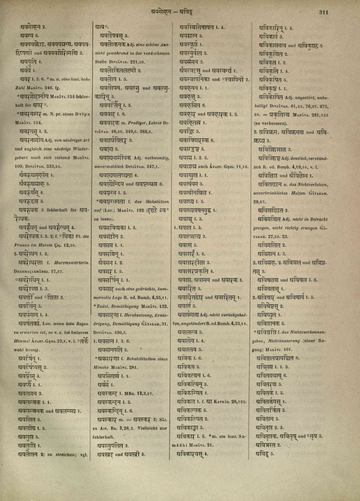
avara a. [vṛ-bā˚. ap na. ta.] 1 (a) Younger (in years); māsenāvaraḥ = māsāvaraḥ Sk. (b) Later; posterior, hinder (in time or space); dakṣo vivasvānavaraḥ Rām.; pūrvaje nāvaraḥ putro jyeṣṭho rājye' bhiṣicyate Rām.; yadavaraṃ kauśāṃbyāḥ, yadavaramāgrahāyaṇyāḥ P. III. 3. 136-7 Sk.; rāmādvarṣeṇādhokṣajo'varaḥ Bop. 2 Following, succeeding; jarāvarāḥ (śabdāḥ) Ak.; caturo'varān Ms. 3. 23. 3 Below, under, lower, inferior, less; varṇāvaro bhrātā M. 1. 4 Mean, unimportant, worst, lowest (opp. uttama); avyaṃgyamavaraṃ smṛtaṃ K. P. 1; dūreṇa hyavaraṃ karma buddhiyogāddhanaṃjaya Bg. 2. 49; śraddadhānaṃ śubhāṃ vidyāmādadītāvarādapi Ms. 2. 238. 5 Last (opp. prathama); sāmānyameṣāṃ prathamāvaratvaṃ Ku. 7. 44. 6 Least; usually as the last member of comp. with numerals; tryavaraiḥ sākṣibhirbhāvyaḥ Ms. 8. 60, Ms. 3. 187; Ms. 11. 81, Ms. 12. 110; tryavarā pariṣad jñeyā Ms. 12. 112; Y. 2. 69. 7 Western. 8 Nearer, next. 9 Most excellent (atyaṃtaśreṣṭha). — raḥ 1 A country behind. 2 Time gone. — rā 1 A Direction. 2 N. of Durgā. — raṃ The hind thigh of an elephant (also ˚rā). Comp. — ardhaḥ 1 the least part, the minimum. 2 the last half. 3 the hinder part of the body. — (rdhaṃ) ind. in a certain succession of parts, successively. ˚taḥ ind. from below. — ardhya a. [avarārdhe bhavaḥ yat] 1 being on the lower or near side. 2 belonging to the last half. 3 beginning from below. 4 defective (nyūna). — (rdhyaṃ) the least or smallest part. — avara a. lowest, most inferior of all; na hi prakṛṣṭān preṣyāṃstu preṣayaṃtyavarāvarān Rām. — ukta a. named last. — ja a. 1 younger, junior, born afterwards; Śi. 14. 74. 2 of a low birth, inferior. — (jaḥ) 1 a younger brother; R. 11. 54; R. 14. 11, R. 14. 36. 2 a Śūdra. — (jā) a younger sister; vidarbharājāvarajā R. 6. 58, R. 6. 84; R. 12. 32. — paraṃ ind. one after another. — puruṣāḥ (pl.) one's descendants. — varṇa a. belonging to a low caste or tribe. — (rṇaḥ) 1 a Śūdra, a man of the fourth tribe. 2 the last or fourth tribe; Ms. 3. 241, Ms. 9. 248. — varṇakaḥ, -varṇajaḥ a Śūdra. — vrata a. having no vow (hīnavrata or adhamavrata). — (taḥ) [avaraṃ atyaṃtaśreṣṭhaṃ vratamasya] 1 the Sun. 2 a kind of tree (arka). — śailaḥ [avaraḥ paścādvartī śailaḥ] the western mountain (behind which the sun is supposed to set).
Cappeller 1887 Word type unspecified
Original text · German · Word type unspecified
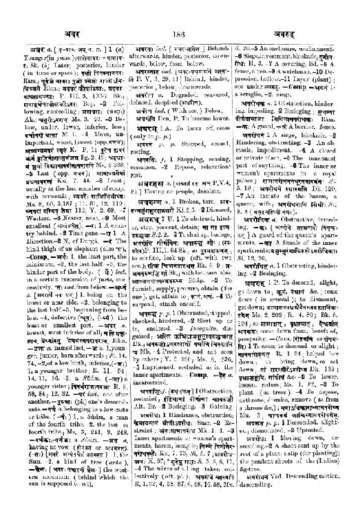
ávara der untere, geringer, nachstehend, [Page031-2] jünger, näher (opp. para) später (opp. pūrva), westlich.
Burnouf 1866 adjective
Original text · French · adjective
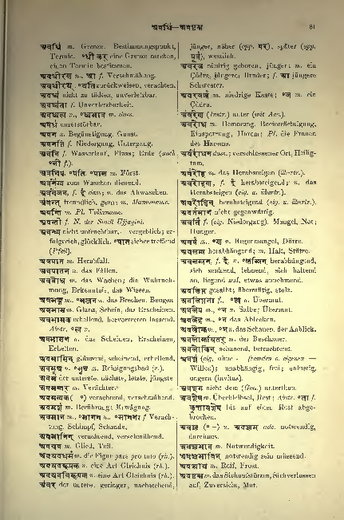
avara avara a. (comp. d'ava) qui est au dessous, inférieur. Postérieur, qui vient après. Septentrional. — S. n. la jambe postérieure de l'éléphant; sa croupe. — S. f. avarā, surnom de Durgā.
Occurrences in source texts (2)
SS 1 occurrence
SVU 1 occurrence
Continue with AYI Free
Image source: AYI archive.