

bisa बिस – lotus fibre
substantive neuter · Word type unspecified
Dictionary sources
AYI dictionary substantive neuter
lotus fibre
Cappeller 1891 substantive neuter
Original text · English · substantive neuter
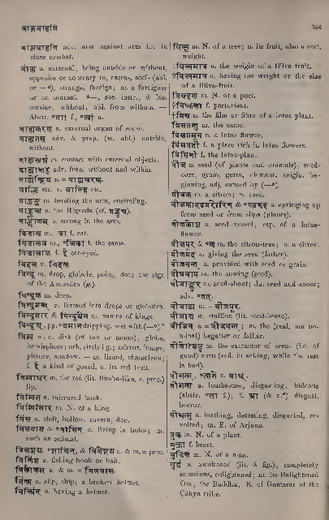
†bísa ·n. the film or fibre of a lotus plant.
Monier-Williams 1872 substantive neuter
Original text · English · substantive neuter
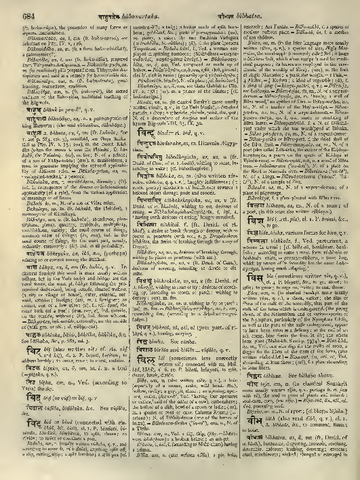
Bisa, am, n. (in classical Sanskrit more usually written visa, q. v.), a shoot, sucker; the film or fibres of the stalk of the water-lily, that part of the stalk of the lotus which is underground, (the young shoots of the Nelumbium and of various species of the Nymphæa, particularly of the Nymphæa Edulis, as well as the parts of the stalk underground, appear to have been eaten as a delicacy; at the end of an adj. comp. bisa forms the fem. in ā); the whole lotus plant (Mahā-bh. Śānti-p. 7974).
Petersburger 1855 substantive neuter
Original text · German · substantive neuter
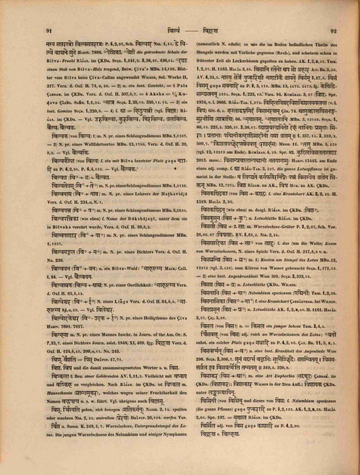
bísa n. SIDDH. K. 249,b,7. Wurzelschoss, Untergrundstengel des Lotus. Die jungen Wurzelschosse des Nelumbium und einiger Nymphaeen (namentlich N. edulis) so wie die im Boden befindlichen Theile des Stengels werden mit Vorliebe gegessen (Roxb.), und scheinen schon in frühester Zeit als Leckerbissen gegolten zu haben. AK. 1,2,3,41. TRIK. 1,2,37. H. 1165. HALĀY. 3,60. bisāni steno apa so jahāra AIT. BR. 5,30. AV. 4,34,5. nāsya̱ kṣetrè puṣka̱riṇī̱ nāṇḍīkàṃ jāyate̱ bisàm AV. 5,17,6. visaṃ visam gaṇa savanādi zu P. 8,3,110. MBH. 13,4475. MBH. 13,4479. fg. kecidvisānyakhanan MBH. 13,4554. SUŚR. 1,225,13. VIKR. 94. KUMĀRAS. 3,37 (viśa). Spr. 1934, v. l. Spr. 3866. RĀJA-TAR. 1,373. vihitaviśadaviśakiśalayavalayā (v. l. viṣa) GĪT. 6,4. hastādbhraṣṭamidaṃ visābharaṇam ŚĀK. 74. āśuklāntavisabhaṅgasurabhīṇi (gātrāṇi) ŚĀK. 66. ˚mṛṇālam, ˚mṛṇālāni MBH. 3,13149. SUŚR. 1,80,13. SUŚR. 1,225,2. SUŚR. 1,326,21. SUŚR. 2,38,17. vyāpnuvantyabhito dehaṃ nābhitaḥ prasṛtāḥ sirāḥ . pratānāḥ padminīkandādvisādīnāṃ yathā jalam .. SUŚR. 1,357,14. SUŚR. 1,2,310. SUŚR. 1,357,2. SUŚR. 1,509,7. ˚kiśalayacchedapātheyavant (rājahaṃsa) MEGH. 11. ˚tantu MBH. 5,438 (vgl. MBH. 12,13213 am Ende). KUMĀRAS. 4,29. Spr. 82. kuṭilavisalatākhaṇḍa Spr. 2013. masc.: visānprabālānpadmānāṃ bhakṣayāmāsuḥ HARIV. 15445. am Ende eines adj. comp. f. ā RĀJA-TAR. 3,527. die ganze Lotuspflanze ist gemeint in der Stelle: na lipyate karmaphalairaniṣṭaiḥ pattraṃ visasyeva jalena siktam MBH. 12,7974. viśa RĀYAM._zu_AK., viṣa MUK._zu_AK. ŚKDR.
Böhtlingk 1879 substantive neuter · Word type unspecified
Original text · German · substantive neuter
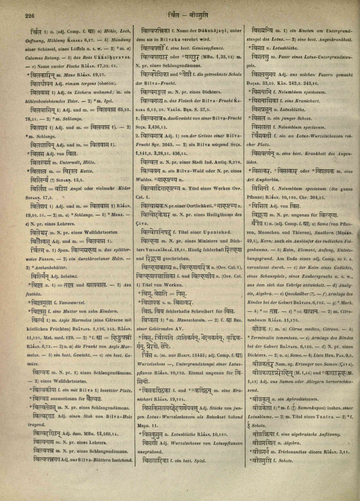
bísa n. (m. nur HARIV. 15445; adj. Comp. f. ā) Wurzelschoss —, Untergrundstengel einer Lotuspflanze RĀJAN. 10,193. Einmal ungenau für bisinī.
Original text · German · Word type unspecified
biśa, bisa fehlerhafte Schreibart für bisa.
Apte 1890 substantive neuter
Original text · English · substantive neuter
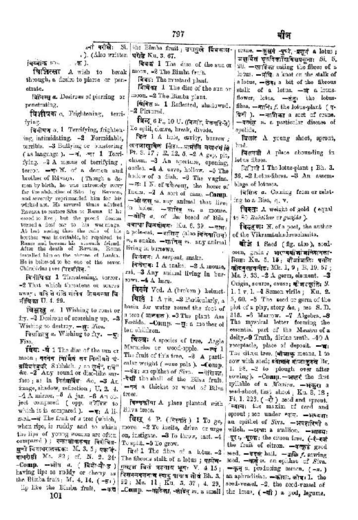
bisaṃ 1 The fibre of a lotus. 2 The fibrous stalk of a lotus; pātheyamutsṛja bisaṃ grahaṇāya bhūyaḥ V. 4. 15; bisamalamaśanāya svādu pānāya toyaṃ Bh. 3. 22; Me. 11; Ku. 3. 37; Ku. 4. 29. Comp. — kaṃṭhikā, -kaṃṭhin m. a small ([Page 0797-c]) crane. — kusumaṃ, -puṣpaṃ, -prasūnaṃ a lotus; jakṣurbisaṃ dhṛtavikaśibisaprasūnāḥ Śi. 5. 28. — khādikā eating the fibres of a lotus. — graṃthiḥ a knot on the stalk of a lotus. — chedaḥ a bit of the fibrous stalk of a lotus. — jaṃ a lotusflower, lotus. — taṃtuḥ the lotusfibre. — nābhiḥ f. the lotus-plant ( padminī). — nāsikā a sort of crane. — vartman n. a particular disease of eyelids.
Cappeller 1887 substantive neuter · Word type unspecified
Original text · German · substantive neuter
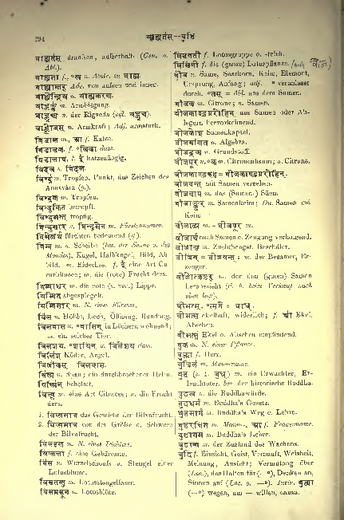
bísa n. Wurzelschooß o. Stengel einer Lotusblume.
Original text · German · Word type unspecified
bísa Wurzelschoß (nicht-) schooß).
Occurrences in source texts (2)
SiSa 1 occurrence
VBT 1 occurrence
Continue with AYI Free
Image source: AYI archive.