

kāka काक – a crow, (metaphorically an expression of contempt, e. g. na tvāṃ kākam manye, I value thee less than a crow)
substantive masculine · substantive neuter
Dictionary sources
Cappeller 1891 substantive masculine
Original text · English · substantive masculine
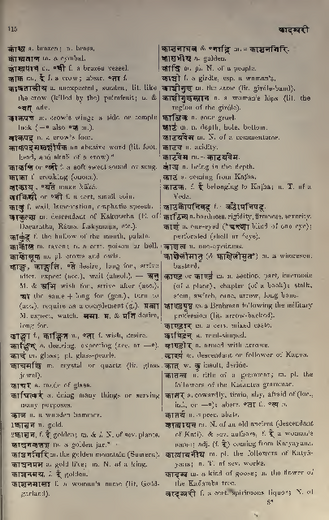
kāka ·m. ī f. a crow; abstr. °tā f.
Monier-Williams 1872 substantive masculine
Original text · English · substantive masculine
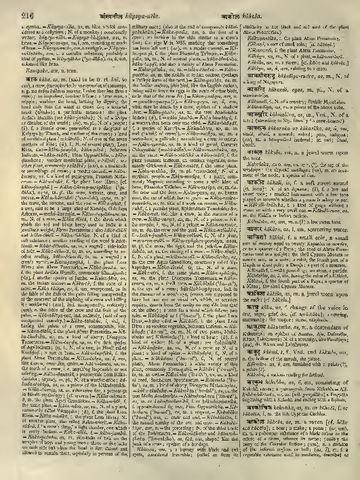
kāka kāka, as, m. (said to be fr. rt. kai, to caw), a crow, (metaphorically an expression of contempt, e. g. na tvāṃ kākam manye, I value thee less than a crow); an impudent, insolent fellow; a lame man, a cripple; washing the head, bathing by dipping the head only into the water as crows do; a sectarial mark (tilaka); a particular measure; the plant Ardisia Humilis (see kāka-jambu); N. of a Dvīpa or division of the world; (ās), m. pl., N. of a people; (ī), f. a female crow, personified as a daughter of Kaśyapa by Tāmrā, and mother of the crows; a kind of medicinal plant (= kākolī); N. of one of the seven mothers of Śiśu; (ā), f., N. of several plants, Leea Hirta, also = kāka-jaṅghā, kāka-nāsā; Solanum Indicum, = kāka-mācī; Ficus Oppositifolia, = kāko- ḍumbara; another medicinal plant, = kākolī; an- other plant, commonly raktikā; (am), n. a multitude or assemblage of crows; a modus coeundi.
Petersburger 1855 substantive masculine · substantive neuter
Original text · German · substantive masculine
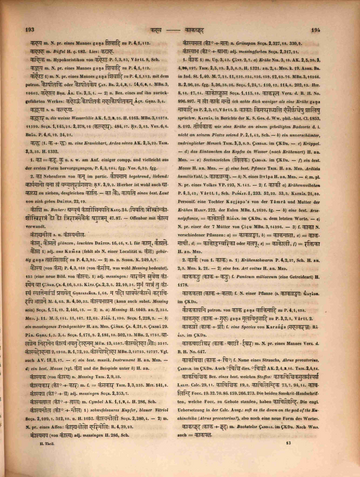
1. kā́ka 1〉 m. Uṇ. 3,43. ŚĀNT. 2,7. a〉 Krähe NIR. 3,18. AK. 2,5,20. AK. 3,4,26,197. TRIK. 2,5,19. TRIK. 3,3,8. TRIK. 3,3,9. H. 1321. H. an. 2,4. MED. k. 19. ADBH. BR._in_Ind. St. 1,40. M. 7,21. M. 11,131. M. 11,154. M. 11,156. M. 11,159. M. 12,62. M. 12,76. MBH. 3,16266. R. 2,96,38. fgg. R. 5,36,35. fgg. R. 5,36,36. SUŚR. 1,24,7. SUŚR. 1,110,12. SUŚR. 1,114,8. SUŚR. 1,202,13. HIT. 8,18. HIT. 17,14. kākocchvāsa SUŚR. 1,115,18. kākaruta Verz. d. B. H. No. 896. Verz. d. B. H. No. 897. na tvāṃ kākaṃ manye ich achte dich weniger als eine Krähe gaṇa nāvādi zu P. 2,3,17, Vārtt. 2. kākāḥ kimaparādhyanti haṃsairjagdheṣu śāliṣu sprüchw. KATHĀS._in_Berichte d. k. s. Ges. d. Ww. phil.-hist. Śl. 1853, S. 192. tīrthakāka wie eine Krähe an einem geheiligten Badeorte d. i. nicht an seinem Platze seiend P. 2,1,42, Sch. — b〉 ein unverschämter, zudringlicher Mensch TRIK. 3,3,8. TRIK. 3,3,9. ŚABDAR._im_ŚKDR. — c〉 Krüppel. — d〉 das Eintauchen des Kopfes in Wasser (nach Krähenart) H. an. MED. — e〉 Sectenzeichen (tilaka) ŚABDAR._im_ŚKDR. — f〉 ein best. Maass H. an. MED. — g〉 eine best. Pflanze TRIK. H. an. MED. Ardisia humilis Vahl. (s. kākajambu). — h〉 N. eines Dvipa H. an. MED. — i〉 m. pl. N. pr. eines Volkes VP. 193, N. 142. — 2〉 f. kākī a〉 Krähenweibchen P. 6,3,42, Vārtt. 1, Sch. PAÑCAT. I, 233. PAÑCAT. I,52,23. PAÑCAT. I,53,3. KATHĀS. 21,80. Personif. eine Tochter Kaśyapaʼs von der Tāmrā und Mutter der Krähen HARIV. 222. der Eulen MBH. 1,2620. fg. — b〉 eine best. Arzeneipflanze, = kākolī RĀJAN._im_ŚKDR. u. dem letzten Worte. — c〉 N. pr. einer der 7 Mütter von Śiśu MBH. 3,14396. — 3〉 f. kākā N. verschiedener Pflanzen: a〉 = kākajaṅghā, b〉 = kākanāsā, c〉 = kākamācī, d〉 = kākodumbarikā oder malapū, e〉 = kākolī, f〉 = raktikā H. an. MED.
Original text · German · substantive neuter
2. kāká (von 1. kāka) n. 1〉 Krähenschwarm P. 4,2,37, Sch. H. an. 2,5. MED. k. 21. — 2〉 eine bes. Art coitus H. an. MED.
Böhtlingk 1879 substantive masculine · substantive neuter
Original text · German · substantive masculine · substantive neuter
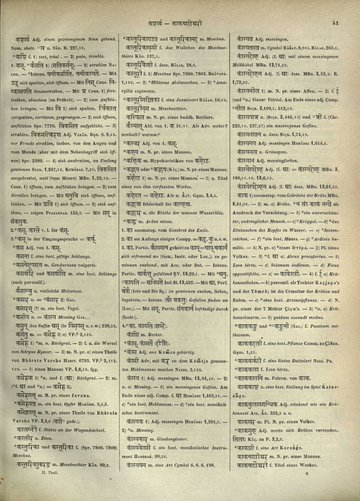
kāka — 1〉 onomatop. vom Gekrächz der Krähe MBH. 8,41,58. — 2〉 m. — a〉 Krähe. *na tvāṃ kākaṃ manye als Ausdruck der Verachtung. — b〉 *ein unverschämter, zudringlicher Mensch. — c〉 *Krüppel. — d〉 *das Eintauchen des Kopfes in Wasser. — e〉 *Sectenzeiche. — f〉 *ein best. Maass. — g〉 *Ardisia humilis. — h〉 N. pr. — α〉 *ein Dvīpa. — β〉 Pl. eines Volkes. — 3〉 *f. ā — a〉 Abrus precatorius. — b〉 Leea hirta. — c〉 Solanum indicum. — d〉 Ficus oppositifolia. — e〉 = kākolī. — 4〉 f. ī — a〉 Krähenweibchen. — b〉 personif. als Tochter Kaśyapaʼs und der Tāmrā; ist die Urmutter der Krähen und Eulen. — c〉 *eine best. Arzeneipflanze. — d〉 N. pr. einer der 7 Mütter Śiśuʼs. — 5〉 *n. — a〉 Krähenschwarm. — b〉 quidam coeundi modus.
Apte 1890 substantive masculine
Original text · English · substantive masculine
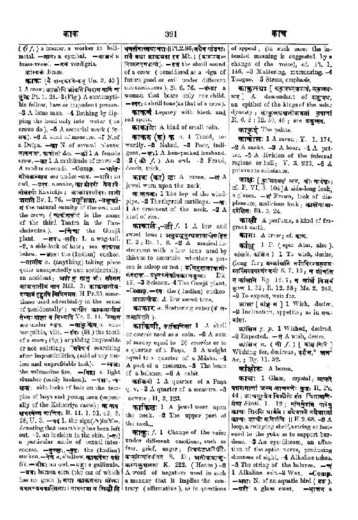
kākaḥ [kai śabdakaraṇe-kan Uṇ. 3. 43] 1 A crow; kākopi jīvati cirāya baliṃ ca bhuṃkte Pt. 1. 24. 2 (Fig.) A contemptible fellow, base or impudent person. 3 A lame man. 4 Bathing by dipping the head only into water (as crows do). 5 A sectarial mark ( tilaka). 6 A kind of measure. 7 N. of a Dvīpa. — kā N. of several plants: kākanāsā, kākolī &c. — kī A female crow. — kā 1 A multitude of crows. 2 A modus coeundi. Comp. — akṣigolakanyāya see under nyāya. — ariḥ an owl. — udaraḥ a snake; kākodaro yena vinītadarpaḥ Kavirāja; kākodarasodaraḥ khalo jagati Bv. 1. 76. — ulūkikā, — ulūkīyaṃ the natural enmity of the owl and the crow; (kākolūkīyaṃ is the name of the third Tantra in the Panchatantra). — ciṃcā the Guñjā plant. — chadaḥ, -chadiḥ 1 a wag-tail. 2 a side-lock of hair; see kākapakṣa below. — jātaḥ the (Indian) cuckoo. — tālīya a. (anything) taking place quite unexpectedly and accidentally, an accident; aho nu khalu bhoḥ tadetat kākatālīyaṃ nāma Māl. 5; kākatālīyavatprāptaṃ dṛṣṭvāpi nidhimagrataḥ H. Pr. 35; sometimes used adverbially in the sense of ‘accidentally’; phalaṃti kākatālīyaṃ tebhyaḥ prājñā na bibhyati Ve. 2. 14. ˚nyāya see under nyāya. — tāṃlukin a. contemptible, vile. — daṃtaḥ (lit.) the tooth of a crow; (fig.) anything impossible or not existing; ˚gaveṣaṇaṃ searching after impossibilities, (said of any useless and unprofitable task). — dhvajaḥ the submarine fire. — nidrā a light slumber (easily broken). — pakṣaḥ, — pakṣakaḥ side-locks of hair on the temples of boys and young men (especially of the Kṣatriya caste); ka kapakṣadharametya yācitaḥ R. 11. 1, R. 11. 31, R. 11. 42; R. 3. 28; U. 3. — padaṃ 1 the sign (⁁) in Mss. denoting that something has been left out. 2 an incision in the skin. — (daḥ) a particular mode of sexual intercourse. — pucchaḥ, -puṣṭaḥ the (Indian) cuckoo. — peya a. shallow; kākapeyā nadī Sk. — bhīruḥ an owl. — madguḥ a gallinule. — yavaḥ barren corn (the ear of which has no grain); yathā kākayavāḥ proktā yathāraṇyabhavāstilāḥ . nāmamātrā na siddhau hi ([Page 0391-b]) dhanahīnāstathānarāḥ .. Pt. 2. 86; tathaiva pāṃḍavāḥ sarve yathā kākayavā iva Mb.; (kākayavāḥ = niṣphalatṛṇadhānyaṃ). — rutaṃ the shrill sound of a crow (considered as a sign of future good or evil under different circumstances); Śi. 6. 76. — vaṃdhyā a woman that bears only one child. — svaraḥ a shrill tone (as that of a crow).
Cappeller 1887 substantive masculine
Original text · German · substantive masculine
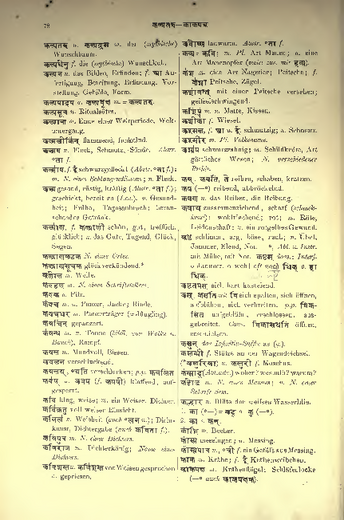
kāka m. Krähe; f. ī Krähenweibchen.
Burnouf 1866 substantive masculine
Original text · French · substantive masculine
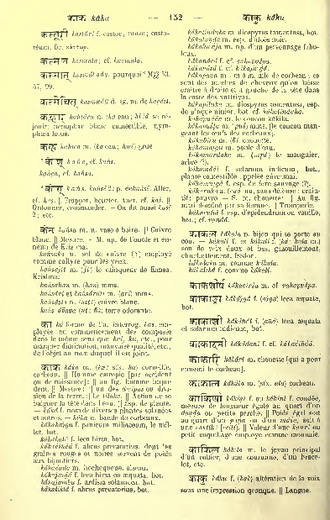
kāka kāka m. (kai; sfx. ka) corneille, corbeau. Homme estropié [par accident ou de naissance]; au fig. homme impudent. Mesure; un des dvipas ou division de la terre. Le tilaka. Action de se baigner la tête dans l'eau. Esp. de plante. — kākā f. nom de diverses plantes solanées et autres. — kāka n. bande de corbeaux. kākakaṅgu f. panicum miliaceum, le millet. bot. kākakalā f. leca hirta, bot. kākaciñcā f. abrus precatorius, dont les graines rouges et noires servent de poids aux bijoutiers. kākacada m. hochequeue, oiseau. kākajaṅghā f. leea hirta ou æquata, bot. kākajambu f. ardisia solanacea. bot. kākatiktā f. abrus precatorius, bot. [Page152-2] kākatinduka m. diospyros tomentosa, bot. kākatuṇḍa m. esp. d'aloès noir. kākadhvaja m. np. d'un personnage fabuleux. kākanācā f. cf. vakapuṣpa. kākanāsā f. cf. kākajaṅghā. kākapakṣa m. m à m. aile de corbeau: ce sont des mèches de cheveux qu'on laisse croître à droite et à gauche de la tète dans la caste des kṣatriyas. kākapīluka m. diospyros tomentosa, esp. de plaqueminier, bot. cf. kākatinduka. kākapuccha m. le coucou kokila. kākapuṣṭa m. (puṣ) mms. [le coucou mangeant les œufs des corbeaux]. kākabhiru m. (bhi) chouette. kākamaṭgu m. poule d'eau. kākamardaka m. (mṛd) le manguier, arbre (?). kākamācī f. solanum indicum, bot., plante comestible, ppelée gûrcamai. kākamuḷgā f. esp. de feve sauvage (?). kākaruka a. (ruc nu, sans défense; craintif: pauvre — S. m. chouette: Au fig. mari dominé par sa femme. Tromperie. kākaruhā f. esp. d'epidendrum ou vanille, bot.; cf. vandā.
Occurrences in source texts (3)
Continue with AYI Free
Image source: AYI archive.