

lakṣmī लक्ष्मी – īs (rarely ī), f. (according to some fr. rt. lag; according to others connected with rt. lañj, to shine), a mark…
substantive feminine · Word type unspecified
Dictionary sources
Cappeller 1891 substantive feminine
Original text · English · substantive feminine
lakṣmī́ ·f. (nom. lakṣmī́s & lakṣ3mī) mark, sign; (±pāpī́) bad sign or omen, (±púṇyā) good sign, good luck (also pl.); prosperity, wealth, splendour, esp. royal splendour or dignity (often personif.); beauty, grace, loveliness, N. of the goddess of fortune and beauty (often identif. w. śī q.v.).
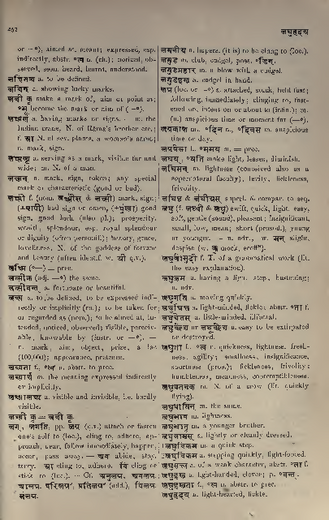
Monier-Williams 1872 Word type unspecified
Original text · English · Word type unspecified
Lakṣmī, īs (rarely ī), f. (according to some fr. rt. lag; according to others connected with rt. lañj, to shine), a mark, sign, indication, token (Ved.; sometimes even ‘a bad sign’ in Ved., but in this sense usually with pāpī); a good sign, (in Ved. usually with puṇyā); good fortune, good luck, for- tune, prosperity, wealth, success, happiness; beauty, grace, loveliness, charm, splendor; N. of the god- dess of fortune and beauty, (frequently in the later mythology identified with Śrī and regarded as the wife of Viṣṇu or Nārāyaṇa; according to the legend narrated in Rāmāyaṇa I. 45, 40-43, she sprang with other precious things from the froth of the ocean when churned by the gods and demons for the recovery of the Amṛta [see mandara]; she appeared with a lotus in her hand, whence she is also called Padmā; she is, moreover, connected in other ways with the lotus, and according to another legend is said to have appeared at the creation floating over the water on the expanded petals of a lotus-flower; Lakṣmī is also variously regarded as a wife of Sūrya, as a wife of Prajā-pati, as a wife of Dharma and mother of Kāma, as sister [or mother] of Dhātṛ and Vidhātṛ, as wife of Dattātreya); the Good Genius or Fortune of a king personified; royal power, dominion; superhuman power; N. of Dāk- ṣāyaṇī in Bharatāśrama; of Sītā the wife of Rāma, and of other women; the wife of a hero; N. of tur- meric and various other auspicious plants (= ṛddhi, vṛddhi, priyaṅgu, phalinī, sthala-padminī, śamī); N. of the eleventh Kalā of the moon; of a metre, four times ¯¯˘¯˘˘˘˘¯˘¯˘¯; of another, four times ¯¯¯˘˘¯¯¯˘¯˘˘¯¯; = dravya; = muktā, a pearl; [cf. Lith. Laime, ‘the goddess of happiness.’]
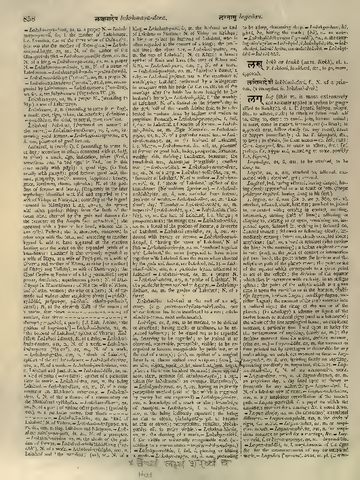
Petersburger 1855 substantive feminine
Original text · German · substantive feminine
lakṣmī́ (von lag wie lakṣa und lakṣman) UṆĀDIS. 3,160. f. nom. lakṣmīs VOP. 3,80. hier und da auch lakṣmī H. 226, Randgl., RAKṢITA_bei_UJJVAL._zu_UṆĀDIS. TS. TBR. Verz. d. Oxf. H. 97,a, No. 151,1 v. u. acc. lakṣmyam AV. Am Ende eines adj. comp. erhält sich das ī auch im masc. P. 1,2,48, Sch. ˚lakṣmi neutr. R. GORR. 2,33,22. 1〉 Merkmal, Zeichen NIR. 4,10. bha̱draiṣā̀ṃ la̱kṣmīrnihi̱tādhì vā̱ci ṚV. 10,71,2. — 2〉 mit oder ohne pāpī ein schlimmes Zeichen, bevorstehendes Unglück, Unglück AV. 1,18,1. AV. 7,115,1. — 3. viṣama˚ fortuna adversa VARĀH. BṚH. S. 81,27. — 3〉 ein gutes Zeichen (in der älteren Sprache gewöhnlich mit puṇyā verbunden), gute Anwartschaft, ein bevorstehendes Glück, Glück AK. 2,8,2,50. TRIK. 3,3,303. H. 357. H. an. 2,336. MED. m. 28. AV. 11,7,17. AV. 12,5,6. ŚAT. BR. 8,4,4,8. ŚAT. BR. 8,4,4,11. puṇyāmeva lakṣmīṃ saṃbhāvayati AIT. BR. 2,40. sā̱ha̱srī vā e̱ṣā la̱kṣmī yadùnna̱to la̱kṣmiyai̱va pa̱śūnavàrundhe TS. 2,1,5,2. śrī und lakṣmī VS. 31,22. jyeṣṭhalakṣmī́ TBR. 2,1,2,2; die mythol. Erklärung s. im Comm. zu d. St. und vgl. jyeṣṭha 3〉(g.) samagrā rūpiṇī lakṣmīḥ kamekaṃ saṃśritā naram R. 1,1,6. nahyenaṃ hāsyate lakṣmīrdurlabhā yā gatāyuṣām R. ed. Bomb. 6,46,39. śūraṃ kṛtajñaṃ dṛḍhasauhṛdaṃ ca lakṣmīḥ svayaṃ mārgati vāsahetoḥ Spr. 460. udyoginaṃ puruṣasiṃhamupaiti lakṣmīḥ Spr. 471. anutseko lakṣmyām Spr. 1859. lakṣmīrutsāhasaṃpannāt — nāpaiti Spr. 2650. janapadairlakṣmīḥ samālambyatām Spr. 4721. Spr. 4946. VARĀH. BṚH. S. 71,5. VARĀH. BṚH. S. 84,2. VARĀH. BṚH. S. 93,13. KATHĀS. 18,204. KATHĀS. 18,406. saṃgamo lakṣmīvinayayoriva KATHĀS. 25,171. lakṣmīsteṣāṃ sadā sthirā WEBER, KṚṢṆAJ. 231. lakṣmyā viparyaye R. 2,22,29. ˚vivarta DHŪRTAS. 74,16. vītavyasanam u. s. w. praviśanti sadā lakṣmyaḥ Spr. 2882. narapati˚ das Glück eines Fürsten VARĀH. BṚH. S. 4,20. kalatravantamātmānamavarodhe mahatyapi . tayā mene manasvinyā lakṣmyā ca vasudhādhipaḥ .. die gute Genie eines Fürsten RAGH. 1,32. RAGH. 12,26. yā lakṣmīrnāluliptāṅgī vairiśoṇitakuṅkumaiḥ Spr. 2478. jitendriyasya nṛpateḥ — bhavanti jvalitā lakṣmyaḥ kīrtayaśca nabhaḥspṛśaḥ Spr. 4076. Spr. 4791. sāmrājyalakṣmīlīlāmbuja KATHĀS. 23,69. RĀJA-TAR. 3,175. lakṣmīścandragupte niveśitā so v. a. die königliche Würde KATHĀS. 5,123. kṣamayā rocate lakṣmīrbrāhmī die Herrlichkeit der Brahmanen BHĀG. P. 9,15,40. Reichthum: lakṣmyā paramayā yutaḥ (kuberaḥ) MBH. 3,12004. tṛṇamiva laghu lakṣmīrnaiva tānsaṃruṇaddhi Spr. 82. lakṣmyā paripūrṇaḥ Spr. 2652. lakṣmīṃ kṛtvārthisātkṛtsnām RĀJA-TAR. 5,18. — 4〉 Schönheit, Anmuth, Pracht H. 1512. H. an. MED. HALĀY. 5,27. śirasaḥ HARIV. 4788. dehasya R. 4,16,4. MBH. 3,2410. mukhasya Spr. 1693. svaprabhā˚ R. 2,94,21 (R. 2,103,21 GORR.). candre R. 3,70,5. R. 5,1,21. malinamapi himāṃśorlakṣma lakṣmīṃ tanoti ŚĀK. 19. KUMĀRAS. 3,49. VIKR. 23. jalada˚ Spr. 1427. lavaṇya˚ KATHĀS. 43,114. KIR. 5,39. RĀJA-TAR. 1,104. RĀJA-TAR. 3,361. am Ende eines adj. comp. KIR. 5,52. BHĀG. P. 2,2,10. — 5〉 personif. als Göttin des Glückes und der Schönheit (oft neben śrī) HARIV. 1337. lakṣmīralakṣmīrūpeṇa dānavānāṃ vadhāya ist Durgā HARIV. 3279. HARIV. 6613. HARIV. 9498. HARIV. 14027. R. 3,52,26. KUMĀRAS. 1,44. Spr. 2164. Spr. 2651. guṇinaṃ janamālokya — lakṣmīḥ kuraṅgīva dūraṃ dūraṃ palāyate Spr. 4020. pāṭaliputraṃ kṣetraṃ lakṣmīsarasvatyoḥ KATHĀS. 3,78. lakṣmīḥ sā (kanyā) hyāgateha naḥ KATHĀS. 33,8. gṛhe lakṣmyo mānyā satatamabalā mānavibhavaiḥ VARĀH. BṚH. S. 74,4. patirlakṣmyāḥ so v. a. ein Liebling der Glücksgöttin VARĀH. BṚH. S. 61,18. als Gattin der Sonne (neben śrī) PURUṢASŪKTA_in_Ind. St. 9,9. als Gattin Prajāpatiʼs (neben śrī) MAHĀNĀR. UP. ebend. 2,82. entsteht bei der Quirlung des Meeres MBH. 1,1155. jaladhisutayā lakṣmyā DHŪRTAS. 77,5. Gattin Dharmaʼs und Mutter Kāmaʼs MBH. 1,2578. HARIV. 11525. HARIV. 11535. HARIV. 12452. HARIV. 12482. VP. 54. VP. 119, N. 12. MĀRK. P. 50,20. Schwester (Mutter nach VP. 82) Dhātarʼs und Vidhātarʼs MBH. 1,2615. Gattin Nārāyaṇaʼs oder Viṣṇuʼs AK. 1,1,1,22. TRIK. 1,1,41. TRIK. 3,3,303. H. 226. H. an. MED. HĀR. 224. HALĀY. 1,31. MBH. 1,7352. HARIV. 12308. R. 5,25,26. NṚS. TĀP. UP._in_Ind. St. 9,98. Ind. St. 9,103 (neben śrī). VP. 60. VP. 82. Verz. d. Oxf. H. 76,b,24. Gattin Dattātreyaʼs MĀRK. P. 18,39. fgg. = sītā ŚABDAR._im_ŚKDR. — N. der Dākṣāyaṇī in Bharatāśrama Verz. d. Oxf. H. 39,b,26. eine Manifestation der Prakṛti Verz. d. Oxf. H. 23,a,27. ˚kavaca Verz. d. Oxf. H. 26,a,19. Verz. d. Oxf. H. 94,a,33. ˚mantrāḥ Verz. d. Oxf. H. 93,b,5. ˚yantra Verz. d. Oxf. H. 94,b,10. Verz. d. Oxf. H. 96,b,1. lakṣmyā dhāraṇayantram Verz. d. Oxf. H. 3. Verz. d. Oxf. H. 4. — 6〉 Bez. verschiedener glückbringender Pflanzen: = ṛddhi AK. 2,4,3,31. MED. = vṛddhi MED. = priyaṅgu H. an. = phalinī MED. = sthalapadminī, haridrā und śamī RĀJAN._im_ŚKDR. — SUŚR. 1,71,16. — 7〉 Bez. der 11ten Kalā des Mondes Verz. d. Oxf. H. 18,b,26. — 8〉 N. zweier Metra: α〉 4 Mal – – ⏑ – ⏑ ⏑ ⏑ ⏑ – ⏑ – ⏑ – Ind. St. 8,385. — β〉 4 Mal – – – ⏑ ⏑ – – – ⏑ – ⏑ ⏑ – – COLEBR. Misc. Ess. II, 161. (COLEBR. Misc. Ess. IX, 8). — 9〉 die Gattin eines Helden (vīrayoṣit) ŚABDAR._im_ŚKDR. — 10〉 = dravya und muktā RĀJAN._im_ŚKDR. — 11〉 ein Frauenname ŚUK. in LA. (III) 37,3. HALL 183. — Vgl. a˚ (f. Unglück auch R. 3,72,25. SUŚR. 1,180,12. Spr. 4869. adj. unschön: alakṣmīṇi veśmāni R. GORR. 2,33,22; in den Nachträgen ist die Stelle Spr. 3585 zu streichen), ati˚, jaya˚, mahā˚, yajurlakṣmī, rāja˚ (unter 1〉 noch hinzuzufügen die gute Genie eines Fürsten und VET. in LA. (III) 25,16), rājya˚.
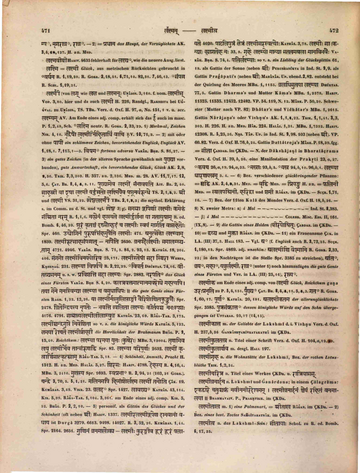
Böhtlingk 1879 substantive feminine
Original text · German · substantive feminine
lakṣmī́ f. (Nomin. lakṣmī́s und lakṣmī́; am Ende eines adj. Comp. m. ebenso, n. lakṣmi) — 1〉 Mal, Zeichen. — 2〉 mit oder ohne pāpī́ ein schlimmes Zeichen, bevorstehendes Unglück, Unglück ĀPAST. ŚR. 4,15,4. — 3〉 ein gutes Zeichen (in der älteren Sprache gewöhnlich mit púṇyā verbunden), gute Anwartschaft, ein bevorstehendes Glück, Glück. Auch Pl. — 4〉 die gute Genie eines Fürsten, die königliche Würde, Herrlichkeit überh. — 5〉 Reichthum, Reichthümer RĀJAT. 7,346. — 6〉 Schönheit, Anmuth, Pracht. — 7〉 personificirt als Göttin des Glückes und der Schönheit. patirlakṣmyāḥ so v. a. ein Liebling der Glücksgöttin. Erscheint als Gattin des Sonnengottes Prajāpatiʼs, Dharmaʼs (und Mutter Kāmaʼs), Nārāyaṇaʼs oder Viṣṇuʼs und Dattātreyaʼs; als Schwester oder Mutter Dhātarʼs und Vidhātarʼs; als Name der Dākṣāyaṇī in Bharatāśrama; als eine Manifestation der Prakṛti; entsteht bei der Quirlung des Oceans. Wird auch mit Sītā identificirt (vgl. lakṣmītva). — 8〉 ein best. Spruch NṚS. TĀP. UP. 1,3. — 9〉 Bez. verschiedener Pflanzen. Nach den Lexicographen Hibiscus mutabilis, Mimosa suma, Gelbwurz, eine weisse Tulasī, = ṛddhi, vṛddhi, priyaṅgu und phalinī RĀJAN. 5,29. 6,200. 8,33. 10,155. BHĀVAPR. 1,171. — 10〉 Bez. der 44ten Kalā des Mondes. — 11〉 Name zweier Metra. — 12〉 *die Gattin eines Helden. — 13〉 *Perle GARBE zu RĀJAN. 13,153. — 14〉 ein Frauenname.
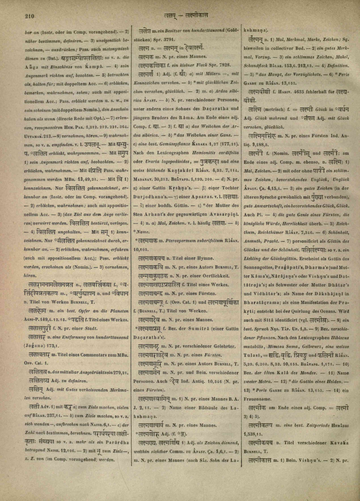
Apte 1890 substantive feminine
Original text · English · substantive feminine
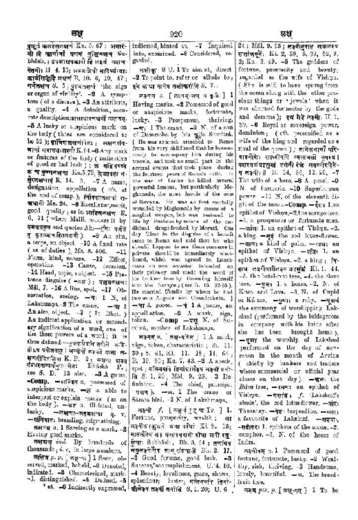
lakṣmī f. [lakṣ-ī muṭ ca Tv.] 1 Fortune, prosperity, wealth; sā lakṣmīrupakurute yayā pareṣāṃ Ki. 8. 13; mātarlakṣmi tava prasādavaśato doṣā amī syurguṇāḥ Subhāṣ., Bh. 3. 64; tṛṇamiva laghulakṣmīrnaiva tān saṃruṇaddhi Bh. 2. 17. 2 Good fortune, good luck. 3 Success, accomplishment; U. 4. 10. 4 Beauty, loveliness, grace, charm, splendour; lustre; malinamapi himāṃśorlakṣma lakṣmīṃ tanoti Ś. 1. 20; ([Page 0920-c]) U. 6. 24; Māl. 9. 25; lakṣmīmuvāha sakalasya śaśāṃkamūrteḥ Ki. 2. 59, Ki. 5. 39, Ki. 5. 52, Ki. 9. 2; Ku. 3. 49. 5 The goddess of fortune, prosperity and beauty, regarded as the wife of Viṣṇu. (She is said to have sprung from the ocean along with the other precious things or ‘jewels’ when it was churned for nectar by the gods and demons); iyaṃ gehe lakṣmīḥ U. 1. 39. 6 Royal or sovereign power, dominion; (oft. personified as a wife of the king and regarded as a rival of the queen); tāmekabhāryāṃ parivādabhīroḥ sādhvīmapi tyaktavato nṛpasya . vakṣasyasaṃghaṭṭasukhaṃ vasaṃtī reje sapatnīrahiteva lakṣmīḥ .. R. 14. 86, R. 12. 26. 7 The wife of a hero. 8 A pearl. 9 N. of turmeric. 10 Superhuman power. 11 N. of the eleventh digit of the moon. Comp. — īśaḥ 1 an epithet of Viṣṇu. 2 the mango tree. 3 a prosperous or fortunate man. — kāṃtaḥ 1 an epithet of Viṣṇu. 2 a king. — gṛhaṃ the red lotus-flower. — tālaḥ a kind of palm. — nāthaḥ an epithet of Viṣṇu. — patiḥ 1 an epithet of Viṣṇu. 2 a king; vihāya lakṣmīpatilakṣma kārmukaṃ Ki. 1. 44. 3 the betel-nut tree. 4 the clove tree. — putraḥ 1 a horse. 2 N. of Kuśa and Lava. 3 N. of Cupid or Kāma. — puṣpaḥ a ruby. — pūjanaṃ the ceremony of worshipping Lakṣmī (performed by the bridegroom in company with his bride after she has been brought home). — pūjā the worship of Lakṣmī performed on the day of newmoon in the month of Āśvina (chiefly by bankers and traders whose commercial or official year closes on that day). — phalaḥ the Bilva tree. — ramaṇaḥ an epithet of Viṣṇu. — vasatiḥ f. ‘Lakṣmī's abode’, the red lotus-flower. — vāṃraḥ Thursday. — veṣṭaḥ turpentine. — sakhaḥ a favourite of Lakṣmī. — sahajaḥ, — sahodaraḥ 1 epithets of the moon. 2 camphor. 3 N. of the horse of Indra.
Cappeller 1887 substantive feminine
Original text · German · substantive feminine
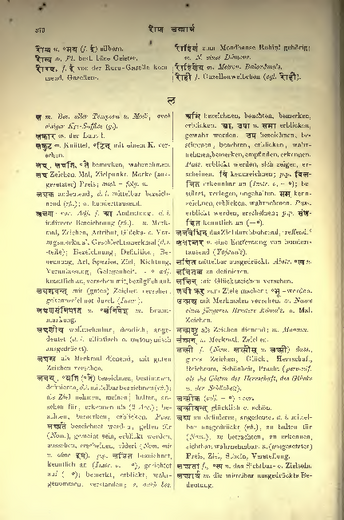
lakṣmī́ f. (Nom. lakṣmī́s u. lakṣmī́ dass., gutes Zeichen, Glück, Herrschaft, Reichthum, Schönheit, Pracht (personif. als die Göttin der Herrschaft, des Glücks u. der Schönheit).
Burnouf 1866 substantive feminine
Original text · French · substantive feminine
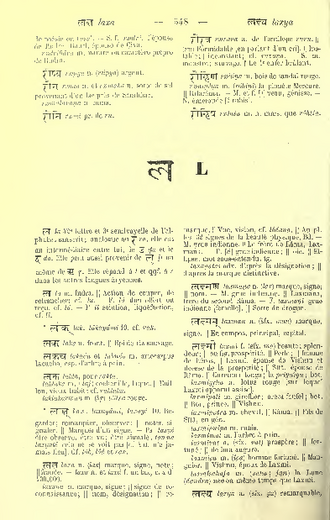
lakṣmī lakṣmī f. (sfx. ma) beauté; splendeur; au fig. prospérité. Perle; femme de héros. Lakṣmī, épouse de Viṣṇu et déesse de la prospérité; Sītā, épouse de Rāma. Curcuma longa; la priyaṅgu; bot. lakṣmīgṛha n. lotus rouge [sur lequel Lakṣmī apparut assise]. lakṣmīpati m. giroflier; areca faufel; bot. Roi; prince. Viṣṇu. lakṣmīputra m. cheval. Kāma. Fils de Sītā, en gén. lakṣmīpuṣpa m. rubis. lakṣmīmat m. l'arbre à pain. lakṣmīvat a. (sfx. vat) prospère; fortuné; de bon augure. lakṣmīśa m. (īśa) homme fortuné. Manguier. Viṣṇu, époux de Lakṣmī. lakṣmīsahaja m. (saha; jan) la Lune (candra) née en même temps que Lakṣmī.
Occurrences in source texts (1)
SiSa 1 occurrence
Continue with AYI Free
Image source: AYI archive.