

madana मदन – intoxicating, maddening, delighting, &c.
adjective · substantive masculine · substantive neuter · Word type unspecified
Dictionary sources
Cappeller 1891 substantive masculine
Original text · English · substantive masculine
madana ·m. love or the god of love.
Monier-Williams 1872 adjective
Original text · English · adjective
Madana, as, ī, am (fr. the Caus.), intoxicating, maddening, delighting, &c.; (as), m. passion, love, sexual love, lust; N. of Kāma-deva, the god of love; a kind of embrace; the season of spring; a bee; bees-wax; N. of several plants, Vanguiera Spinosa [cf. madana-kaṇṭaka]; the thorn-apple, Datura Metel; Phaseolus Radiatus; Acacia Catechu; Alan- gium Hexapetalum; Mimusops Elengi; N. of several men [cf. bhaṭṭa-m˚, madana-nṛpa, madana- pāla, madana-rāja]; (ā, ī), f. any intoxicating drink, spirituous liquor; (ī), f. musk; a species of plant, = ati-muktaka; (am), n. the act of intoxi- cating or exhilarating; gladdening; (scil. astra), N. of a mythical weapon (‘the intoxicater, maddener’).
Petersburger 1855 adjective · substantive masculine · substantive neuter · Word type unspecified
Original text · German · adjective · substantive masculine · substantive neuter
madana (vom caus. von 1. mad), proparox. saṃjñāyām gaṇa nandyādi zu P. 3,1,134. 1〉 adj. zur Erklärung von mandra NIR. 11,28. NIR. 11,29. — 2〉 m. a〉 Geschlechtsliebe, das Gefühl der Wollust; der Liebesgott AK. 1,1,1,20. TRIK. 3,3,252. H. 227. H. an. 3,397 (wo smare st. 'smare zu lesen ist). MED. n. 103. HALĀY. 1,32. naiva tvāṃ madano jahyānmṛte 'pi (jahyādamṛte die neuere Ausg.) mayi māmakaḥ HARIV. 7086. ṚT. 1,3. ŚĀK. 26. ŚĀK. 44. ŚĀK. 65. MBH. 3,1829. MBH. 3,10324. hatamapi nihantyeva madanaḥ Spr. 729. Spr. 2461. KATHĀS. 43,268. rajanyā saha vijṛmbhate ˚bādhā VIKR. 41,15. ŚĀK. 32,5. SĀH. D. 99. madanena vimohitaḥ R. 1,63,7. madanāturā RAGH. 12,32. VET. in LA. (II) 16,14. ˚kliṣṭā ŚĀK. 58. madanotsuka VIKR. 22,8. ˚vahniśikhāvalī Spr. 117. ˚śikhipīḍā Spr. 2840. jajvāla cāgnimadanaḥ (= madanāgniḥ Schol.) MBH. 4,396. śṛṅgāraikarasaḥ svayaṃ nu madanaḥ VIKR. 9. MṚCCH. 59,14. RAGH. 5,63. KUMĀRAS. 3,22. VARĀH. BṚH. S. 19,18. MĀRK. P. 21,20. samadanā MṚCCH. 86,19. a˚ Bein. Śivaʼs BHĀG. P. 1,11,37. — b〉 eine Art von Umarmung, die im KĀMAŚĀSTRA nach ŚKDR. folgendermaassen beschrieben wird: nāyako nāyikāyāḥ kaṇṭhe hastaṃ dattvā dvitīyahastaṃ tasyā madhyadeśe dattvā yadāśliṣati. — c〉 der Frühling H. an. MED. — d〉 Biene JAṬĀDH._im_ŚKDR. — e〉 Wachs TRIK. H. an. MED. Hierher viell. ˚paṭṭikā Verz. d. Oxf. H. 151,a,3. fgg. — f〉 N. verschiedener Pflanzen: Vanguiera spinosa Roxb. (vgl. madanakaṇṭaka) AK. 2,4,2,33. RATNAM. 29. SUŚR. 1,137,9. SUŚR. 1,138,21. SUŚR. 1,144,12. SUŚR. 1,158,8. SUŚR. 1,159,7. SUŚR. 1,367,14. madanaphalaṃ vāmayati SUŚR. 2,559,1. SUŚR. 2,280,17. = tarubhid, drubhid TRIK. MED. = rāḍha(?) H. an. Stechapfel AK. 2,4,2,58. TRIK. H. an. MED. Phaseolus radiatus H. 1171. Acacia Catechu Willd. ŚABDAC._im_ŚKDR. = maṅkoṭha d. i. wohl aṅkoṭha Alangium hexapetalum; Mimusops Elengi RĀJAN._im_ŚKDR. — g〉 N. pr. verschiedener Männer Verz. d. B. H. 117 (LXX). Verz. d. Oxf. H. 124,a,50. Verz. d. Oxf. H. 127,a, No. 228. Verz. d. Oxf. H. 150,b,32. Verz. d. Oxf. H. 275,a,17. Verz. d. Oxf. H. 276,a,15. Verz. d. Oxf. H. 323,a, No. 765. HALL in der Einl. zu VĀSAVAD. S. 7. RĀJA-TAR. 7,301. RĀJA-TAR. 7,580. RĀJA-TAR. 7,888. RĀJA-TAR. 7,924. RĀJA-TAR. 7,1130. RĀJA-TAR. 7,1206. RĀJA-TAR. 7,1213. ŚUK. in LA. (II) 32,9. Inschr. in Journ. of the Am. Or. S. 7,29,3. Journ. of the Am. Or. S. 7,33,8. WILSON, Sel. Works I, 211 (wohl fehlerhaft für damana; vgl. die Note ebend.). Vgl. bhaṭṭa˚, madananṛpa, madanapāla, madanarāja. — 3〉 f. ā ein berauschendes Getränk H. 903. — 4〉 f. ī a〉 dass. HĀR. 63. — b〉 Moschus. — c〉 eine best. Pflanze, = atimuktaka RĀJAN._im_ŚKDR. — 5〉 n. (sc. astra) Bez. einer mythischen Waffe (die Berauschende) R. 1,29,16 (R. 1,30,15 GORR.). — Vgl. unmadana.
Original text · German · Word type unspecified
madana 5〉 mādana R. ed. Bomb. 1,27,16.
Böhtlingk 1879 adjective · substantive masculine · substantive neuter · Word type unspecified
Original text · German · adjective · substantive masculine · substantive neuter
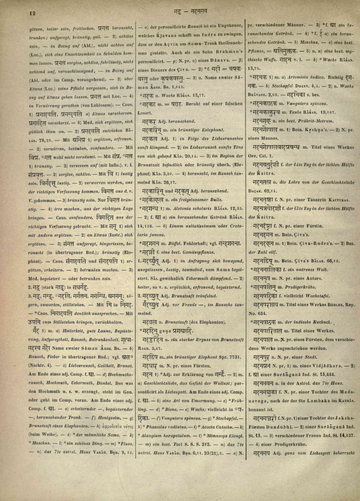
madana — 1〉 *Adj. zur Erklärung von mandrá. — 2〉 m. — a〉 Geschlechtsliebe, das Gefühl der Wollust; personificirt als Liebesgott. Am Ende eines adj. Comp. f. ā. — b〉 eine Art von Umarmung. — c〉 *Frühling. — d〉 *Biene. — e〉 Wachs; vielleicht in ˚paṭṭikā. — f〉 Vangueria spinosa. — g〉 *Stechapfel. — h〉 *Phaseolus radiatus. — i〉 *Acacia catechu. — k〉 *Alangium hexapetalum. — l〉 *Mimusops elengi. — m〉 ein best. Tact. S. S. S. 212. — n〉 das 7te astrol. Haus VARĀH. BṚH. 6,11. 23 (21),6. — o〉 N. pr. [Page5-012-c] verschiedener Männer. — 3〉 *f. ā ein berauschendes Getränk. — 4〉 *f. ī — a〉 ein berauschendes Getränk. — b〉 Moschus. — c〉 eine best. Pflanze, = atimuktaka. — 5〉 n. — a〉 eine best. mythische Waffe. mādana v. l. — b〉 *Wachs RĀJAN. 13,75.
Original text · German · Word type unspecified
madana V. 2〉a〉 DHARMAŚARM. 11,55. [Nachtrag, Band 7]
Apte 1890 adjective · substantive masculine · substantive neuter
Original text · English · adjective · substantive masculine · substantive neuter
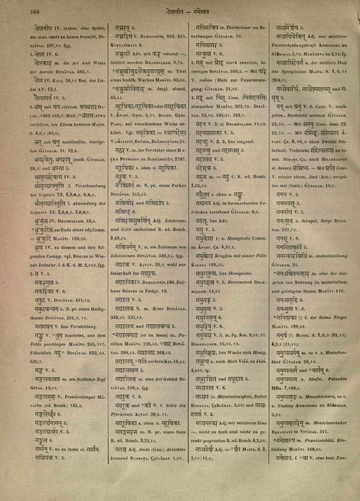
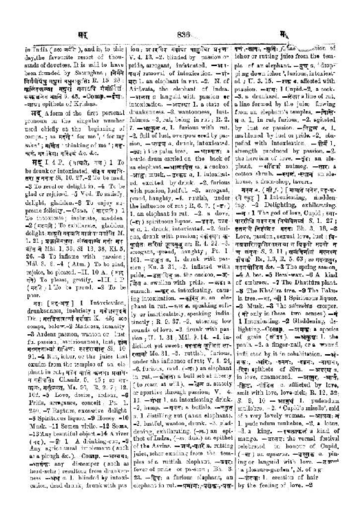
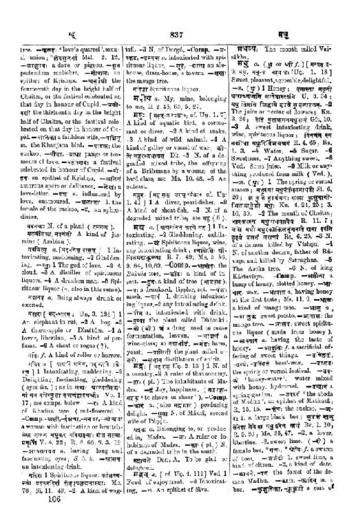
madana a. (nī f.) [mādyati anena, mad-karaṇe lyuṭ] 1 Intoxicating, maddening. 2 Delighting, exhilarating. — naḥ 1 The god of love, Cupid; vyāpārarodhi madanasya niṣevitavyaṃ Ś. 1. 27; hatamapi nihaṃtyeva madanaḥ Bh. 3. 18. 2 Love, passion, sexual love, lust; vinayavāritavṛttiratastayā na vivṛto madano na ca saṃvṛtaḥ Ś. 2. 11; sataṃtrigītaṃ madanasya dīpakaṃ Rs. 1. 3, R. 5. 63; so madanātura, madanapīḍita &c. 3 The spring season. 4 A bee. 5 Bees’-wax. 6 A kind of embrace. 7 The Dhattūra plant. 8 The Khadira tree. 9 The Bakula tree. — nā, -nī 1 Spirituous liquor. 2 Musk. 3 The atimukta creeper. (nī only in these two senses). — naṃ 1 Intoxicating. 2 Gladdening, delighting. Comp. — agrakaḥ a species of grain (kodrava). — aṃkuśaḥ 1 the penis. 2 a fingernail, or a wound inflicted by it in cohabitation. — aṃtakaḥ, -ariḥ, -damanaḥ, -dahanaḥ, -nāśanaḥ, — ripuḥ epithets of Śiva. — avastha a. in love, enamoured. — ātura, -ārta, — kliṣṭa, -pīḍita a. afflicted by love, smit with love, love-sick; R. 12. 32; Ś. 3. 10. — āyudhaṃ 1 pudendum muliebre. 2 ‘Cupid's missile’, said of a very lovely woman. — ālayaḥ -yaṃ 1 pudendum muliebre. 2 a lotus. 3 a king. — icchāphalaṃ a kind of mango. — utsavaḥ the vernal festival celebrated in honour of Cupid. — (vā) an apsaras. — utsuka a. pining or languid with love. — udyānaṃ ‘a pleasure-garden’, N. of a garden. — kaṃṭakaḥ 1 erection of hair caused by the feeling of love. 2 N. of ([Page 0837-a]) tree. — kalahaḥ ‘love's quarrel’, sexual union; ˚chedasulabhāṃ Māl. 2. 12. — kākuravaḥ a dove or pigeon. — gṛha pudendum muliebre. — gopālaḥ an epithet of Kṛṣṇa. — catardaśī the fourteenth day in the bright half of Chaitra, or the festival celebrated on that day in honour of Cupid. — trayodaśī the thirteenth day in the bright half of Chaitra, or the festival celebrated on that day in honour of Cupid. — nālikā a faithless wife. — pakṣin m. the Khañjana bird. — pāṭhakaḥ the cuckoo. — pīḍā, -bādhā pangs or torments of love. — mahotsavaḥ a festival celebrated in honour of Cupid. — mohanaḥ an epithet of Kṛṣṇa. — lalitaṃ amorous sport or dalliance. — lekhaḥ a love-letter. — vaśa a. influenced by love, enamoured. — śalākā 1 the female of the cuckoo. 2 an aphrodisiac.
Cappeller 1887 substantive masculine
Original text · German · substantive masculine
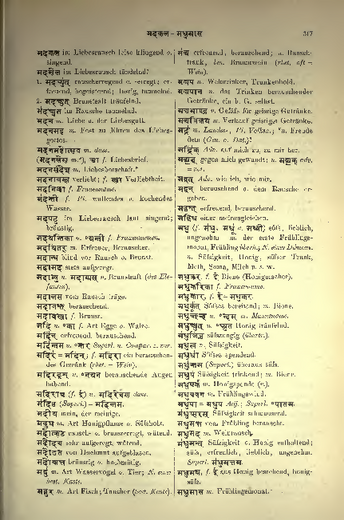
madana m. Liebe o. der Liebesgott.
Burnouf 1866 substantive masculine
Original text · French · substantive masculine
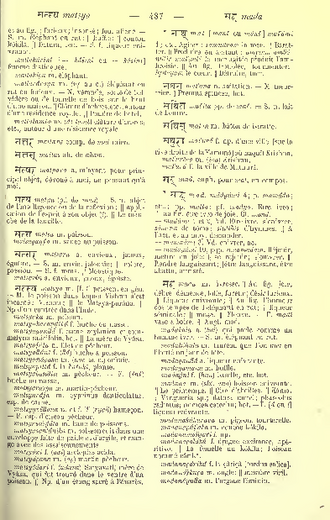
madana m. (sfx. ana) boisson enivrante. Le printemps. Cire d'abeilles. Kāma. Vangueria sp.; datura metel; phaseolus radiatus; mimosa catechu; bot. — F. [ā ou ī] liqueur enivrante.
Occurrences in source texts (1)
SiSa 1 occurrence
Continue with AYI Free
Image source: AYI archive.