

pitṛ पितृ – a father
substantive masculine
Dictionary sources
Cappeller 1891 substantive masculine
Original text · English · substantive masculine
pitṛ́ ·m. father, E. of sev. gods; du. the parents; pl. the father and his brothers, also the forefathers & their spirits, the Manes.
Monier-Williams 1872 substantive masculine
Original text · English · substantive masculine
pitṛ pitṛ, tā, m. (fr. rt. 3. pā), a father; (in the Veda pitṛ is an epithet of Bṛhas-pati, Varuṇa, Prajā-pati, and especially of heaven or the sky; antarā pitaram mātarañ-ca, between heaven and earth; according to Sāy. pitṛ = pālaka, a protector); (tarau), m. du. father and mother, parents, (in the Veda an epithet of the Araṇis or two pieces of wood regarded as the parents of Fire, and of heaven and earth regarded as the parents of all beings); (taras), m. pl. fathers, forefathers, ancestors; a father and his brothers, father and uncles, paternal ancestors; the spirits of departed an- cestors, the Manes or spirits of the dead (they are of two kinds, viz. either the spirits of the father, grand- fathers, and great-grandfathers of an individual or the progenitors of mankind generally, to both classes of whom Śrāddhas or obsequial worship is paid and oblations of food called Piṇḍas presented; they in- habit a peculiar region, which, according to some, is the Bhuvas or region of the air, according to others, the orbit of the moon, and are considered as the regents of the Nakṣatras Maghā and Mūla); [cf. Zend pita, base pa-tar: Gr. πα-τήρ, πάτρω-ς: Lat. pa-ter, Jup-piter: Goth. fa-dar: Old Germ. fa-tar, fa-ter, ‘father;’ fataro, ‘uncle:’ Angl. Sax. faeder, ‘father;’ fadhu, ‘aunt, father's sister:’ Hib. athair, ‘father,’ for pathair.],
Apte 1890 substantive masculine
Original text · English · substantive masculine
pitṛ m. [pāti rakṣati, pā-tṛc ni˚] 1 A father; tenāsa lokaḥ pitṛmān vinetrā R. 14. 23; R. 1. 24; R. 11. 67. — rau (dual) Parents, father and mother; jagataḥ pitarau vaṃde pārvatīparameśvarau R. 1. 1; Y. 2. 117. — raḥ (pl.) 1 Fore-fathers, ancestors, fathers; Ś. 6. 24. 2 Paternal ancestors taken collectively; Ms. 2. 151. 3 The Manes; R. 2. 16; R. 3. 20; Bg. 10. 29: Ms. 3. 81; Ms. 3. 192. Comp. — arjita a. acquired by a father, paternal (as ([Page 0702-b]) property.) — karman n., — kāryaṃ, -kṛtyaṃ, kriyā oblations or sacrifice offered to deceased ancestors, obsequial rites: Ms. 3. 252. — kalpaḥ performance of the Śrāddha ceremony in honor of the Manes. — kānanaṃ a cemetery; R. 11. 16. — kulyā N. of a river rising in the Malaya mountain. — gaṇaḥ 1 the whole body of ancestors taken collectively. 2 a class of Manes or deceased progenitors who were sons of the Prajāpati; see Ms. 3. 194-195. — gaṇā N. of Durgā. — gātin a. devolving on, or belonging to, a father. — gṛhaṃ 1 a paternal mansion. 2 a cemetery, burial-ground. — ghātakaḥ, ghātin m. a parricide. — tarpaṇaṃ 1 an oblation to the Manes. 2 the act of throwing water out of the right hand (as at the time of ablutions) as an offering to the Manes or deceased ancestors; Ms. 2. 176. 3 sesamum. 4 gifts given at Śrāddhas or funeral rites. 5 the part of the hand between the thumb and the fore finger (sacred to the Manes.). — tithiḥ f. the day of new-moon (amāvāsya). — tīrthaṃ 1 N. of the place called Gayā where the performance of funeral rites, such as Śrāddhas in honour of the Manes, is held to be particularly meritorious. 2 the part of the hand be tween the fore-finger and the thumb (considered to be sacred to the Manes). — datta a. given by a father (as a woman's peculiar property). — dānaṃ an offering to the Manes — dāyaḥ patrimony. — dinaṃ the day of new-moon (amāvāsyā). — deva a 1 worshipping a father. 2 relating to the worship of the Manes — (vāḥ) the divine Manes. — devata a 1 presided over by the Manes. 2 relating to the worship of the Manes. — (taṃ) N. of the tenth lunar mansion (maghā). — daivatya a. belonging to the worship of the Manes. — (tyaṃ) a sacrifice offered to the Manes on the day called aṣṭakā. — dravyaṃ patrimony; Y. 2. 118. — pakṣaḥ 1 the paternal side, paternal relationship. 2 a relative by the father's side. 3 ‘the fortnight of the Manes’, N of the dark half of Bhādrapada which is ([Page 0702-c]) particularly appointed for the celebration of obsequial rites to the Manes. — patiḥ an epithet of Yama. — padaṃ the world of the Manes. — pitṛ m. a paternal grandfather. — putrau ( pitāputrau dual) father and son. (pituḥ putraḥ means ‘the son of a wellknown and renowned father’). — pūtanaṃ worship of the Manes. — paitāmaha a. (hīṃ f.) inherited from ancestors, ancestral, hereditary. ( — hāḥ pl.) ancestors. — prasūḥ f. 1 a paternal grandmother. 2 evening twilight. — prāpta a. 1 inherited from a father. 2 inherited patrimonially. — baṃdhu a kinsman by the father's side; they are: — pituḥ pituḥsvasuḥ putrāḥ piturmārtuḥsvasaḥ sutāḥ . piturmatulaputraśca vinjñeyāḥ pitṛbaṃdhavaḥ .. (dhu n.) relationship by the father's side. — bhakta a. dutifully attached to a father. — bhaktiḥ f. filial duty, — bhojanaṃ food offered to the Manes. — bhrātṛ m. a father's brother, paternal uncle. — maṃdiraṃ 1 a paternal mansion. 2 a cemetery. — medhaḥ a sacrifice offered to the Manes, obsequial offerings. — yajñaḥ 1 obsequial offerings. 2 offering libations of water every day to the deceased ancestors; it is one of the five daily Yajñas enjoined to be performed by a Brāhmaṇa; pimṛyajñātu tarpaṇaṃ Ms. 3. 10; also Ms. 3. 122, Ms. 3. 283. — yānaṃ the the way of the Manes (to their world). — rāj m. — rājaḥ, -rājan m. an epithet of Yama. — rūpaḥ an epithet of Śiva. — lokaḥ the world of the Manes. — vaṃśaḥ the paternal family. — vanaṃ a cemetery. ( pitṛvanecaraḥ 1 a demon, goblin. 2 an epithet of Śiva). — vasatiḥ f. — sadman n. a cemetery; Ku. 5. 77. — vrataḥ a worshipper of the Manes. — (taṃ) obsequial rites — śrāddhaṃ obsequial rites in honour of a father or deceased ancestor. — svasṛ f. (also pitṛṣvasṛ as well as pituḥ svasṛ or pituḥṣvasṛ) a father's sister; Ms. 2. 131. — ṣvasīyaḥ a paternal aunt's son. — saṃnibha a. fatherly, paternal. — sūḥ 1 a paternal grandmother. 2 evening twilight, — sthānaḥ, -sthānīyaḥ a guardian (who is in the place of a father). — hatyā parricide. — han m. a parricide. — hū m. the right ear; pitṛhūrdakṣiṇaḥ karṇa uttaro devahūḥ smṛtaḥ.
Burnouf 1866 substantive masculine
Original text · French · substantive masculine
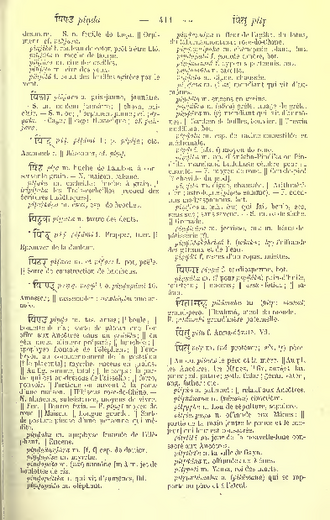
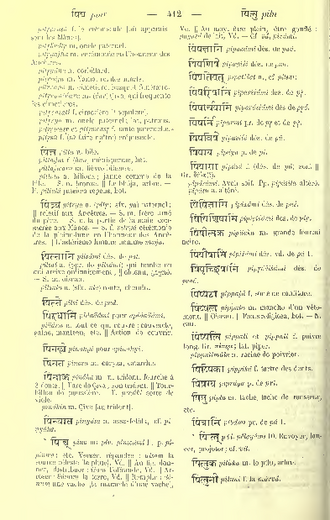
pitṛ pitṛ m. (pā protéger; sfx. tṛ) père Au du. pitarau le père et la mère. Au pl. les Ancêtres, les Mânes. Gr. πατήρ; lat. pater; zd. patare; goth. fadar; germ. vater; ang. father; etc. pitṛka a. paternel; relatif aux Ancêtres. pitṛkānana n. (kānana) cimetière. pitṛgṛha n. lieu de sépulture, sépulcre. pitṛtarpaṇa n. offrande aux Mânes; partie de la main [entre le pouce et le majeur] qui leur est consacrée. pitṛtithi m. jour de la nouvelle-lune consacré aux Ancêtres. pitṛtirtha n. la ville de Gaya. pitṛdāna n. offrande aux Mânes. pitṛpati m. Yama, roi des morts. pitṛpaitāmaha a. (pitāmaha) qui se rapporte au père et à l'aïeul. [Page412-1] pitṛprasū f. le crépuscule [où apparaissent les Mânes]. pitṛbhrātṛ m. oncle paternel. pitṛyajña m. cérémonie en l'honneur des Ancêtres. pitṛyāna n. corbillard. pitṛrāja m. Yama, roi des morts. pitṛvana n. cimetière, bosquet funéraire. pitṛvanecara m. (car) Śiva, qui fréquente les cimetières. pitṛvasati f. cimetière [? sépulcre]. pitṛvya m. oncle paternel; lat. patruus. pitṛśvasṛ et pitṛsvasṛ f. tante paternelle. pitṛsū f. (sū faire naître) crépuscule.
Occurrences in source texts (5)
SiSa 5 occurrences
SiSa 5.156-5.181: Sahasrāra 2 occurrences
Direct occurrences
-
SiSa 5.172 Segment 6
-
SiSa 5.172 Segment 11
Continue with AYI Free
Image source: AYI archive.