

sindhu सिन्धु – ocean
substantive feminine · substantive masculine
Dictionary sources
AYI dictionary substantive masculine
ocean
Cappeller 1891 substantive feminine · substantive masculine
Original text · English · substantive feminine · substantive masculine
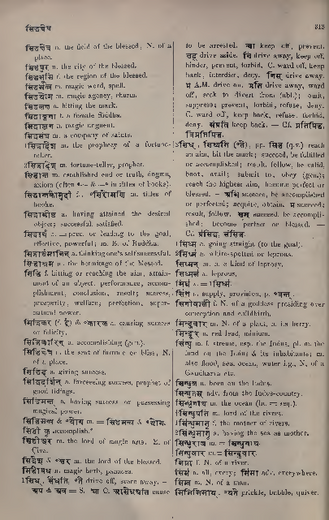
síndhu ·m. f. stream, esp. the Indus, pl. m. the land on the Indus & its inhabitants; m. also flood, sea, ocean, water i.g., N. of a Gandharva etc.
Monier-Williams 1872 substantive masculine
Original text · English · substantive masculine
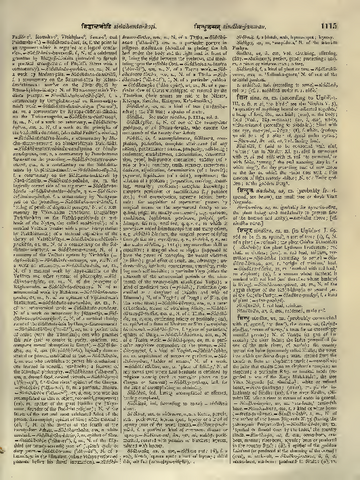
sindhu sindhu, us, m. (probably connected with rt. syand, ‘to flow’), the ocean, sea, (kṛpā- sindhu, ‘ocean of mercy,’ a term for an exceedingly merciful person); N. of Varuṇa (as god of the ocean); the river Indus; the Indus personified (as one of the male rivers, cf. nada); the country around the Indus (commonly called Sindh); the water into which the Soma drops; water ejected from the mouth or from an elephant's trunk (= vamathu); the juice that exudes from an elephant's temples; an elephant; a particular Rāga or musical mode (re- garded as son of the Rāga Mālakauśa); the tree Vitex Negundo [cf. sinduka]; white or refined borax, = śveta-ṭaṅkaṇa; (avas), m. pl. the in- habitants of Sindh; (us), f. the river Sindhu, (Ni- rukta IX. 26); a river or stream of water in general.
Petersburger 1855 substantive feminine · substantive masculine
Original text · German · substantive feminine · substantive masculine
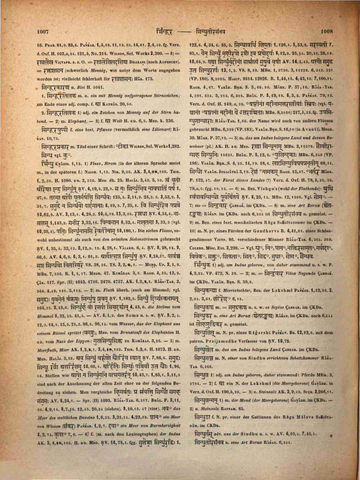
síndhu UṆĀDIS. 1,12. 1〉 Fluss, Strom (in der älteren Sprache meist m., in der späteren f.) NAIGH. 1,13. NIR. 9,26. AK. 3,4,18,103. TRIK. 1,2,30. H. 1080. H. an. 2,256. MED. dh. 25. HALĀY. 3,43. HALĀY. 5,52. tvaṃ vṛ̱tāṃ àriṇā indra̱ sindhū̀n ṚV. 4,19,5. ṚV. 4,22,8. sa na̱ḥ sindhùmiva nā̱vayātì parṣa ṚV. 1,97,8. tasmā̱ āpò ghṛ̱tamàrṣanti̱ sindhàvaḥ ṚV. 125,5. ṚV. 2,11,9. ṚV. 25,3. ṚV. 1,5. ṚV. 3,53,9. ṚV. 5,51,7. sa̱mu̱dre na sindhàvo̱ yādàmānāḥ ṚV. 6,19,5. ṚV. 7,35,8. vi sindhùriva paprathe ṚV. 10,62,9. AV. 3,13,1. AV. 4,24,2. AV. 10,4,19. AV. 13,3,50. ratnadhā ṚV. 4,34,8. bhātvakṣas ṚV. 1,143,3. gabhīra ṚV. 3,32,16. pinvamāna ṚV. 6,52,4. mātṛtamā ṚV. 3,33,3 (vgl. ṚV. 10,35,2). pati̱ḥ sindhū̀nāmasi re̱vatī̀nām ṚV. 10,180,1. Die sieben Flüsse, sowohl unbestimmt als auch von den arischen Siebenströmen gebraucht ṚV. 1,35,8. ṚV. 1,32,12. ṚV. 2,12,3. ṚV. 2,12,12. ṚV. 4,28,1. VĀLAKH. 6,4. ṚV. 8,58,12. ṚV. 9,66,6. AV. 4,6,2. AV. 6,3,1. AV. 6,61,3. āryā̀tsa̱pta sindhùṣu ṚV. 8,24,27. yāvàcca sa̱pta sindhàvo vitasthi̱re VS. 38,26. TS. 3,2,6,1. — MUṆḌ. UP. 2,1,9. MBH. 7,356. R. 1,1,17. MEGH. 47. KUMĀRAS. 3,6. RAGH. 4,35. RAGH. 13,9. ŚĀK. 117. Spr. (II) 1643. Spr. (II) 1716. Spr. (II) 2470. Spr. (II) 4757. AK. 1,2,2,2. RĀJA-TAR. 3,360. RĀJA-TAR. 4,49. RĀJA-TAR. 4,181. RĀJA-TAR. 5,112. — 2〉 m. Fluth überh. (auch am Himmel; vgl. samudra): yu̱vame̱taṃ càkrathu̱ḥ sindhùṣu pla̱vam ṚV. 1,182,5. sindhùṃ di̱vyàskabhāyat ṚV. 164,25. ṚV. 2,15,6. sindhùrha vāṃ ra̱sayā̀ siñca̱daśvā̀n ṚV. 4,43,6. die Ströme vom Himmel ? ṚV. 8,32,25. ṚV. 8,41,2. — AV. 6,1,2. des Soma u. s. w. ṚV. 9,2,4. ṚV. 9,12,3. ṚV. 9,14,1. ṚV. 9,15,5. ṚV. 9,21,3. ṚV. 9,86,8. ṚV. 9,96,14. vom Wasser, das der Elephant aus seinem Rüssel spritzt (vamathu), MED. vom Brunstsaft des Elephanten H. an. vom Nass der Lippen: mukhasindhusikta zu KUMĀRAS. 3,26. — 3〉 m. Meerfluth, Meer AK. 1,2,3,1. AK. 3,4,18,103. TRIK. 1,2,8. H. 1073. H. an. MED. HALĀY. 5,52. ava̱ sindhu̱ṃ varùṇo̱ dyaurìva sthāt ṚV. 7,86,6. sa̱mu̱draḥ sindhū̱ rajò a̱ntarìkṣam ṚV. 10,66,1. adìti̱ḥ sindhùḥ pṛthi̱vī u̱ta dyauḥ ṚV. 1,94,16. Stellen wie āpo̱ na sindhùma̱bhi yatsama̱kṣaràn ṚV. 10,43,7. ṚV. 1,83,1. ṚV. 5,11,5. sind nach der Anschauung der alten Zeit eher zu der folgenden Bedeutung zu ziehen. Man vergleiche hi̱mavàta̱ḥ pra sràvanti̱ sindhaù samaha saṃga̱maḥ AV. 6,24,1. — Spr. (II) 1095. RĀJA-TAR. 6,317. BHĀG. P. 3,11,30. BHĀG. P. 4,9,14. BHĀG. P. 8,7,16. BHĀG. P. 8,12,45. BHĀG. P. 8,20,24 (sieben). BHĀG. P. 9,10,13. BHĀG. P. 9,10,47 (vier). bhava˚ das Meer des weltlichen Daseins BHĀG. P. 1,6,35. BHĀG. P. 3,21,14. BHĀG. P. 4,23,39. jñāna˚ ein Meer von Wissen (śaṃkara) PAÑCAR. 1,2,7. dayā˚ ein Meer von Barmherzigkeit PAÑCAR. 2,2,74. kṛpā˚ PAÑCAR. 7,9. — 4〉 f. (m. nach den Lexicographen) der Indus AK. 3,4,18,103. H. an. MED. ṚV. 10,75,1. fgg. su̱kṣetrā̱ sindhùra̱dbhiḥ ṚV. 1,122,6. ṚV. 4,54,6. ṚV. 4,55,3. sindhāvadhì kṣiya̱taḥ ṚV. 1,126,1. ṚV. 5,53,9. sarasvatī ṚV. 7,95,1. yena̱ sindhùṃ ma̱hīrapo rathā̀ṃ iva praco̱dayàḥ ṚV. 8,12,3. ṚV. 8,25,14. ṚV. 8,20,25. ṚV. 8,26,18. ṚV. 10,64,9. yathā̱ sindhùrna̱dīnā̱ṃ sāmrā̀jyaṃ suṣu̱ve vṛṣā̀ AV. 14,1,43. yasyā̀ṃ samu̱dra u̱ta sindhu̱rāpàḥ AV. 12,1,3. VS. 8,59. MBH. 1,3730. MBH. 3,14229. MBH. 6,243. MBH. 6,321 (VP. 180). MBH. 8,2055. HARIV. 9514. HARIV. 12826. R. 1,44,15. R. 4,43,13. R. 7,100,11. RAGH. 4,67. VARĀH. BṚH. S. 5,66. VARĀH. BṚH. S. 5,80. MĀRK. P. 57,16. RĀJA-TAR. 4,391. RĀJA-TAR. 4,534. RĀJA-TAR. 5,215. RĀJA-TAR. 6,305. BHĀG. P. 5,19,18. BHĀG. P. 6,5,3. PAÑCAT. 79,15. Verz. d. Oxf. H. 149,a,26. ˚ṣaṣṭhīnāṃ nadīnāmantarālīyāḥ striyaḥ (vgl. pañcānāṃ ˚ṣaṣṭhānāṃ nadīnāṃ ye 'ntarāśritāḥ MBH. 8,2030) Verz. d. Oxf. H. 217,b,23. fg. upasindhugāndhārāḥ RĀJA-TAR. 1,66. der Name wird auch von andern Flüssen gebraucht MBH. 6,329 (VP. 183). VARĀH. BṚH. S. 16,10 (in Avanti). MEGH. 30. MĀRK. P. 57,19. — 5〉 m. das am Indus belegene Land und dessen Bewohner (pl.) AK. H. an. MED. rājā sindhūnām MBH. 3,15576. sauvīrānsaha sindhubhiḥ MBH. 3,15621. BHĀG. P. 5,12,6. ˚pulindakāḥ MBH. 6,348 (VP. 186). VARĀH. BṚH. S. 4,23. VARĀH. BṚH. S. 14,19. VARĀH. BṚH. S. 18,6. lāṭasindhuviṣayaprabhṛtīn VARĀH. BṚH. S. 69,11. sindhau VARĀH. YOGAYĀTRĀ 3,19. deśaṃ ˚nāmakam RAGH. 15,87. ˚bhartar MĀRK. P. 132,47. der Fürst dieses Landes (?) Verz. d. Oxf. H. 78,b,36. fgg. Verz. d. Oxf. H. 78,b,38. Verz. d. Oxf. H. 79,a,6. fgg. Verz. d. Oxf. H. 79,a,10. fgg. Verz. d. Oxf. H. 79,a,12. — 6〉 m. Bez. Viṣṇuʼs (wohl der Fluthende): śru̱dhi svàyāvansindho pū̱rvacìttaye ṚV. 8,25,12. MBH. 12,1508. Vgl. soma˚. — 7〉 m. = sinduvāra ŚABDAC._im_ŚKDR. — 8〉 m. eine Art Borax (śvetaṭaṅkaṇa) RĀJAN._im_ŚKDR. nach RĀJAN. 6,244 ist sindhutīrasaṃbhava n. gemeint. — 9〉 m. Bez. eines best. musikalischen Rāga SAṂGĪTASINDHU_im_ŚKDR. — 10〉 m. N. pr. eines Fürsten der Gandharva R. 4,41,61. eines Schlangendämons VYUTP. 86. verschiedener Männer RĀJA-TAR. 6,264. RĀJA-TAR. 6,269. COLEBR. Misc. Ess. 2,298. — Vgl. dyu˚, ni˚, pāna˚, bhaktirasāmṛta˚, maryādā˚, viveka˚, saktu˚, sikatā˚, sita˚, siddha˚, sudhā˚, soma˚, saindhava.
Böhtlingk 1879 substantive feminine · substantive masculine
Original text · German · substantive feminine · substantive masculine
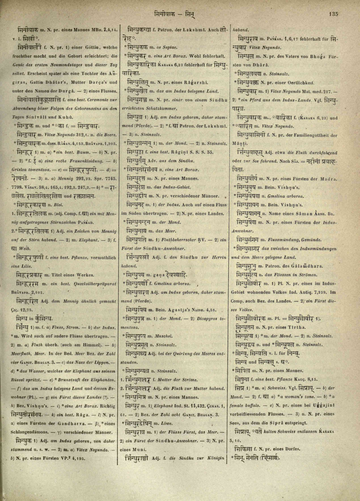
síndhu — 1〉 m. f. — a〉 Fluss, Strom. — b〉 der Indus. *m. Wird auch auf andere Flüsse übertragen. — 2〉 m. — a〉 Fluth überh. (auch am Himmel). — b〉 Meerfluth, Meer. In der Bed. Meer Bez. der Zahl vier GAṆIT. BHAGAṆ. 3. — c〉 das Nass der Lippen. — d〉 *das Wasser, welches der Elephant aus seinem Rüssel spritzt. — e〉 *Brunstsaft des Elephanten. — f〉 das am Indus belegene Land und dessen Bewohner (Pl.). — g〉 ein Fürst dieses Landes (?). — h〉 Bez. Viṣṇuʼs. — i〉 *eine Art Borax. Richtig sindhutīrasaṃbhava. — k〉 ein best. Rāga. — l〉 N. pr. — α〉 eines Fürsten der Gandharva. — β〉 *eines Schlangendämons. — γ〉 verschiedener Männer.
Cappeller 1887 substantive masculine
Original text · German · substantive masculine
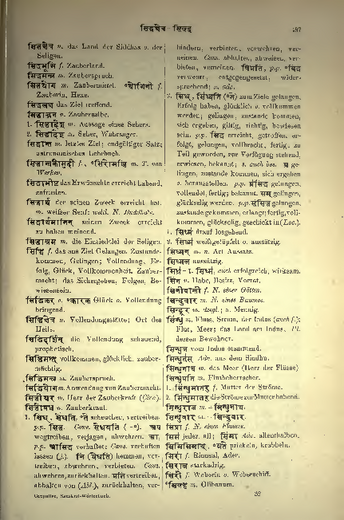
síndhu m. Fluss, Strom, der Indus (auch f.); Flut, Meer; das Land am Indus, Pl. dessen Bewohner.
Burnouf 1866 substantive feminine
Original text · French · substantive feminine
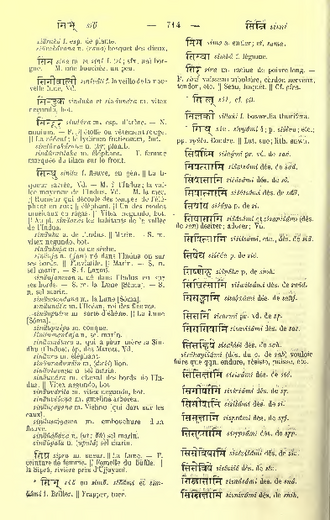
sindhu sindhu f. fleuve, en gén. La liqueur sacrée, Vd. — M. f. l'Indus; la vallée moyenne de l'Indus, Vd. — M. la mer. Humeur qui découle des tempes de l'éléphant en rut; éléphant. Un des modes musicaux ou rāgas. Vitex negundo, bot. Au pl. sindhavas les habitants de la vallée de l'Indus. sindhuka a. de l'Indus. Marin. — S. m. vitex negundo, bot. sindhukapha m. os de sèche. sindhuja a. (jan) né dans l'Indus ou sur ses bords. Fluviatile. Marin. — S. n. sel marin. — S. f. Lakṣmī. sindhujanman a. né dans l'Indus ou sur ses bords. — S. m. la Lune [Soma]. — S. n. sel marin. sindhunandana m. la Lune [Soma]. sindhunātha m. l'Océan, roi des fleuves. sindhuputra m. sorte d'ébène. La Lune [Soma]. sindhupuṣpa m. conque. ṣindhumanthaja n. sel marin. sindhumātara a. qui a pour mère la Sindhu (l'Indus), ép. des Maruts, Vd. sindhura m. éléphant. sindhuradvaiṣin m. (dviṣ) lion. sindhulavaṇa n. sel marin. sindhuvāra m. cheval des bords de l'Indus. Vitex negundo, bot. sindhuvārita m. vitex negundo, bot. sindhuveṣaṇa m. gmelina arborea. sindhuśayana m. Viṣṇu [qui dort sur les eaux]. sindhusaṅgama m. embouchure d'un fleuve. sindhūdbhava n. (ut; bhū) sel marin. sindhūpala n. (upalā) sel marin.
Occurrences in source texts (2)
HP 1 occurrence
SiSa 1 occurrence
Continue with AYI Free
Image source: AYI archive.