

śastra शस्त्र – weapon
substantive masculine · substantive neuter · Word type unspecified
Dictionary sources
AYI dictionary substantive neuter
weapon
Cappeller 1891 substantive neuter
Original text · English · substantive neuter
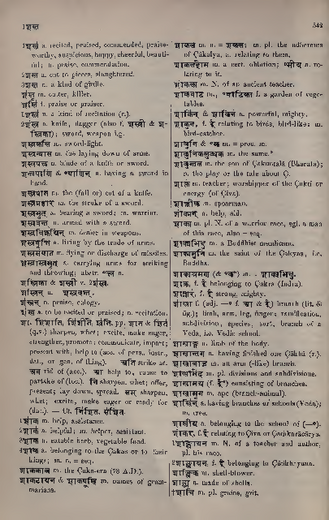
śastrá1 ·n. a kind of recitation (r.).
Original text · English · substantive neuter
śástra2 ·n. knife, dagger (also f. śastrī & śastrikā); sword, weapon i.g.
Monier-Williams 1872 substantive neuter
Original text · English · substantive neuter
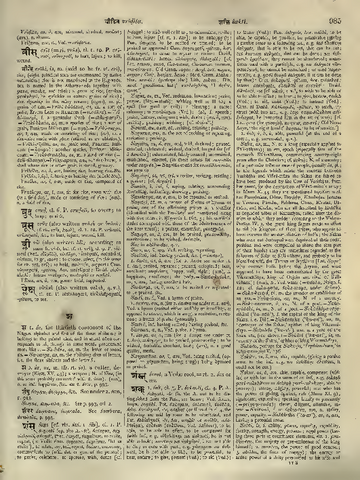
1. śastra, am, n. (for 2. śastra see under rt. 1. śas), Ved. a hymn (recited either audibly or inaudibly, as opposed to stoma, which is sung), a recitative, recita- tion; a hymn of praise (generally).
Original text · English · substantive neuter
2. śastra, am, n. (for 1. śastra see p. 985, col. 2), an instrument for cutting or wounding, a cutting weapon, a weapon or arms (in general); an instru- ment or tool; iron; steel; (as), m. a sword, scymitar; (ī), f. a knife.
Petersburger 1855 substantive masculine · substantive neuter
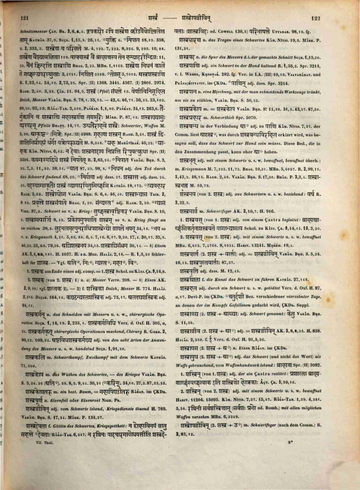
Original text · German · substantive masculine · substantive neuter
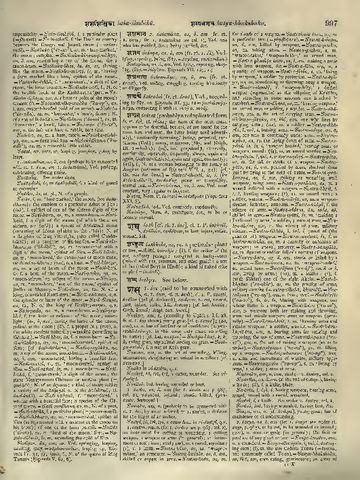
2. śastrá (von 1. śas) P. 3,2,182. UJJVAL._zu_UṆĀDIS. 4,158. 1〉 m. Schwert TRIK. 2,8,54. H. ś. 145. — 2〉 f. śastrī́ P. 6,2,2, Schol. Messer, Dolch AK. 2,8,2,60. H. 784. H. an. 2,460. fg. MED. r. 88. Spr. (II) 2391. śastrī́śyāma P. 6,2,2, Schol. ŚIŚ. 4,44. — 3〉 n. a〉 ein schneidendes Werkzeug: Messer, Schwert; Mordwaffe überh. AK. 2,8,2,50. AK. 3,4,25,181. TRIK. 2,8,50. H. 773. H. an. MED. HALĀY. 2,307. HALĀY. 2,321. tatra muktamastramucyate amuktaṃ śastramityucyate MADHUS._in_Ind. St. 1,21,18. ˚viśeṣāḥ Ind. St. 23. fg. ĀŚV. GṚHY. 1,12,5. KAUŚ. 44. KAUŚ. 92. ye śastramupajīvanti ĀPAST. 1,18,19. takṣṇaḥ Schnitzmesser ŚAT. BR. 6,6,4,4. rūpakāro 'pi śastreṇa krīḍayaivollilekha tām KATHĀS. 37,9. SUŚR. 1,15,8. SUŚR. 1,26,11. ˚yukti SUŚR. 6. ˚nipāta SUŚR. 18,15. SUŚR. 358,9. SUŚR. 2,333,3. śastreṇa ca parikṣate M. 4,122. M. 7,222. M. 8,324. M. 9,293. M. 10,88. śastreṇa vaiśyānrakṣitvā M. 119. vākśastraṃ vai brāhmaṇasya tena hanyādarīndvijaḥ M. 11,33. nainaṃ chindanti śastrāṇi BHAG. 2,23. MBH. 1,1169. śastreṇa nidhanaṃ kāle ye gacchantyaparāṅmukhāḥ MBH. 3,2121. niśita MBH. 3,2389. ˚tejas MBH. 5,7015. astraśastrāṇi R. 1,23,14. R. 1,54,19. R. 2,75,25. Spr. (II) 1368. Spr. (II) 3441. Spr. (II) 4367. Spr. (II) (I) 2801. Spr. (II) 2974. RAGH. 2,40. RAGH. 5,28. ŚĀK. 11. ŚĀK. 94,9. śastraṃ (Pfeil) saṃdhatte 13. veṇīvinigūhita Dolch, Messer VARĀH. BṚH. S. 78,1. VARĀH. BṚH. S. 55,15. —VARĀH. BṚH. S. 42,6. VARĀH. BṚH. S. 46,71. VARĀH. BṚH. S. 50,25. VARĀH. BṚH. S. 53,102. VARĀH. BṚH. S. 69,30. VARĀH. BṚH. S. 95,23. RĀJA-TAR. 3,406. PAÑCAR. 1,1,80. PAÑCAT. 34,15. PAÑCAT. 263,6. tairmuktāni ca śastrāṇi mahāstrāṇi mahāstrāṇi tathāsuraiḥ MĀRK. P. 87,12. śastrāṇyāsuḥ parasparam Pfeile BHAṬṬ. 14,77. udyatairāhave śastraiḥ Schwerter, Waffen M. 5,98. ākṛṣṭa˚ (mitre) Spr. (II) 4988. gṛhāṇa śastram RAGH. 3,51. śastraṃ dvijātibhirgrāhyaṃ dharmo yatroparudhyate M. 8,348. ˚graha MAHĀVĪRAC. 40,22. ˚grāhaka KĀM. NĪTIS. 6,12. na devāḥ śastramādāya nighnanti ripuvatkrudhā Spr. (II) 3304. kathamasmadvidhe śastraṃ nipatet R. 2,63,24. ˚nipāta VARĀH. BṚH. S. 3,22. VARĀH. BṚH. S. 7,3. VARĀH. BṚH. S. 11,52. VARĀH. BṚH. S. 58,51. ˚ghāta VARĀH. BṚH. S. 87,39. VARĀH. BṚH. S. 98,8. ˚nidhana adj. den Tod durch das Schwert findend VARĀH. BṚH. S. 68,29. ˚niryāṇa adj. dass. 37. śastrānta adj. dass. VARĀH. BṚH. S. 24. VARĀH. BṚH. S. 31. yadasyāmākṛtau śastraṃ vyāpārayitumicchasi KATHĀS. 18,173. ˚vyavahāra RAGH. 3,62. śastrodyoga VARĀH. BṚH. S. 6,8. VARĀH. BṚH. S. 46,40. śastrābhyāsa TRIK. 2,8,52. pravṛtte śastrasaṃpāte BHAG. 1,20. saṃnyasta˚ adj. RAGH. 2,59. ˚nyāsa VIKR. 87,2. Schwert so v. a. Krieg: kṣucchastrāvṛṣṭikara VARĀH. BṚH. S. 10,2. śastrāmayārti VARĀH. BṚH. S. 8,42. prakopamupayāti śastram so v. a. Krieg fängt an zu wüthen VARĀH. BṚH. S. 38,3. kṣudanalamṛtyunarādhipaśastrebhyo jāyate bhayam VARĀH. BṚH. S. 34,15. ˚bhaya so v. a. Kriegsnoth VARĀH. BṚH. S. 4,21. VARĀH. BṚH. S. 5,83. VARĀH. BṚH. S. 5,88. VARĀH. BṚH. S. 6,5. VARĀH. BṚH. S. 7,16. VARĀH. BṚH. S. 8,17. VARĀH. BṚH. S. 9,20. VARĀH. BṚH. S. 17,4. VARĀH. BṚH. S. 30,17. VARĀH. BṚH. S. 35,5. VARĀH. BṚH. S. 46,63. VARĀH. BṚH. S. 53,60. VARĀH. BṚH. S. 79,36. agniśastrabhaya VARĀH. BṚH. S. 34,13. śastrāgnisaṃbhrama VARĀH. BṚH. S. 30,14. — b〉 Eisen AK. 3,4,25,181. H. 1037. H. an. MED. HALĀY. 2,16. — R. 1,5,20 fehlerhaft für śāstra. — Vgl. ati˚, niḥ˚, nyasta˚, mahā˚, vi˚.
Original text · German · substantive neuter
1. śastrá (von śaṃs) UṆĀDIS. 4,163. n. Anruf, Lob; so heisst im Ritual der Satz oder die Strophenreihe, welche die Recitation des Hotar und seiner Gehilfen (s. 1. śastrin) bilden, zur Begleitung der Graha bei der Soma-Libation. Sie folgen auf das Stotra des Udgātar und heissen, für den Hotar, am Morgen ājya und prauga, am Mittag marutvatīya und niṣkevalya, bei der dritten Spende vaiśvadeva und āgnimāruta. Ind. St. 10,353. VS. 19,25. VS. 19,28. AIT. BR. 2,37. AIT. BR. 3,4. AIT. BR. 4,12. AIT. BR. 6,30. AIT. BR. 8,1. ŚAT. BR. 4,2,4,20. ŚAT. BR. 4,3,2,3. ŚAT. BR. 5,1,3,4. etattrayaṃ saha kriyate grahaḥ stotraṃ śastram ŚAT. BR. 8,1,3,4. ŚAT. BR. 10,3,5,2. ŚAT. BR. 13,5,1,2. ŚAT. BR. 13,5,3,10. tadvai śastraṃ samṛddhaṃ yatstomena saṃpadyate ŚĀṄKH. BR. 19,8. TS. 3,2,7,2. KĀṬH. 29,2. ŚĀṄKH. ŚR. 9,1,8. ŚĀṄKH. ŚR. 14,8,11. ŚĀṄKH. ŚR. 14,8,13. ŚĀṄKH. ŚR. 14,19,2. ŚĀṄKH. ŚR. 14,22,24. ĀŚV. ŚR. 1,2,23. ĀŚV. ŚR. 1,2,26. ĀŚV. ŚR. 5,9,2. ĀŚV. ŚR. 5,9,4. ĀŚV. ŚR. 5,9,10. ĀŚV. ŚR. 5,9,27. ĀŚV. ŚR. 5,10,1. ĀŚV. ŚR. 5,18,2. KĀTY. ŚR. 9,13,34. śastrānte grahaṃ juhoti KĀTY. ŚR. 19,5,8. NIR. 7,23. KAUṢ. UP. 2,6 (nach ŚAṂK. Waffe). aśastrā devatā yatra saśastrāścāhavaṃ vinā . kalpyante manujairarcyāḥ MĀRK. P. 50,93. das Recitiren ŚĀṄKH. BR. 26,8. ŚR. 8,7,19. ŚR. 17,8,13. ŚR. 18,23,10. nṛśastrá Variation zu narāśaṃsa ŚAT. BR. 3,6,2,1. — Vgl. acchāvāka˚.
Böhtlingk 1879 substantive masculine · substantive neuter · Word type unspecified
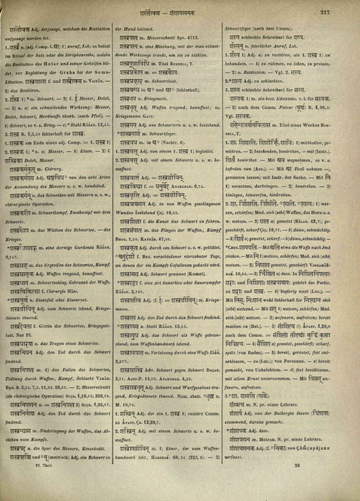
Original text · German · substantive masculine · substantive neuter
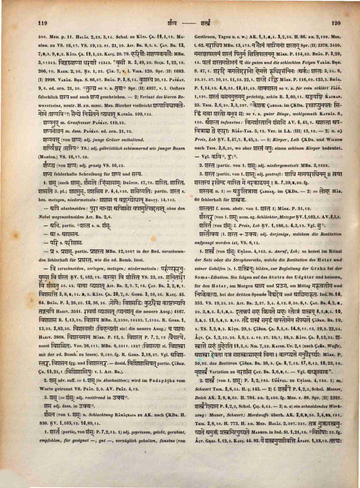
2. śástra — 1〉 *m. Schwert. — 2〉 f. ī Messer, Dolch. — 3〉 n. — a〉 ein schneidendes überh. (auch Pfeil). — b〉 Schwert, so v. a. Krieg. — c〉 *Stahl RĀJAN. 13,45.
Original text · German · substantive neuter
1. śastrá n. (adj. Comp. f. ā) — 1〉 Anruf, Lob; so heisst im Ritual der Satz oder die Strophenreihe, welche die Recitation des Hotar und seiner Gehülfen bildet, zur Begleitung der Graha bei der Soma Libation. śastrayājyā f. und śastroktha n. VAITĀN. — 2〉 das Recitiren.
Original text · German · Word type unspecified
3. śastra R. 1,5,20 fehlerhaft für śāstra.
Apte 1890 substantive neuter
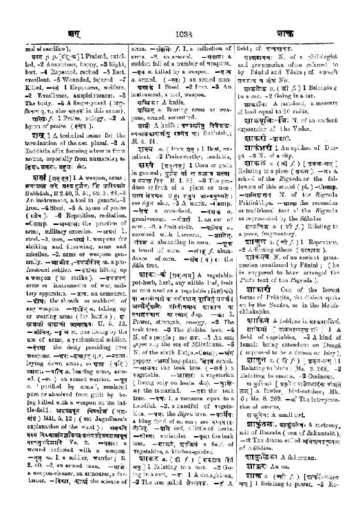
Original text · English · substantive neuter
śastraṃ [śas-ṣṭrn] 1 A weapon, arms; kṣamāśastraṃ kare yasya durjanaḥ kiṃ kariṣyati Subhāṣ., R. 2. 40, R. 3. 51, R. 3. 62; R. 5. 28. 2 An instrument, a tool in general. 3 Iron. 4 Steel. 5 A hymn of praise (stotra). 6 Repetition, recitation. Comp. — abyāsaḥ the practice of arms. military exercise. — ayasaṃ 1 steel. 2 iron. — astraṃ 1 weapons for striking and throwing, arms and missiles. 2 arms or weapons generally. — ājīvaḥ, -upajīvin m. a professional soldier. — udyamaḥ lifting up a weapon (to strike). — upakaraṇaṃ arms or instruments of war, military apparatus. — kāraḥ an armourer. — koṣaḥ the sheath or scabbard of any weapon. — grāhin a. taking up or wearing arms (for battle); śastragrāhī brāhnaṇo jāmadagnayaḥ U. 5. 33. — jīvin, -vṛtti m. one living by the use of arms, a professional soldier. — devatā the deity presiding over weapons. — dharaḥ = śastrabhṛt q. v. — nyāsaḥ laying down arms; so śastra (pari) tyāgaḥ. — paṇi a. bearing arms, arm. ed. ( — m.) an armed warrior. — pūta a. ‘purified by arms’, rendered pure or absolved from guilt by being killed with a weapon on the battle-field; aśastrapūtaṃ nirvyājaṃ ( mahāmāṃsaṃ) Māl. 5. 12; (see Jagaddhara's explanation of the word); ahamapi tasya mithyāpratijñauvalakṣyasaṃpāditamaśastrapūtaṃ maraṇamupadiśāmi Ve. 2. — prahāraḥ a wound inflicted with a weapon. — bhṛt m. 1 a soldier, warrior; R. 2. 40. 2 an armed man. — mārjaḥ a weapon-cleaner, an armourer, a furbisher. — vidyā, -śāstraṃ the science of ([Page 1038-b]) arms. — saṃhatiḥ f. 1 a collection of arms. 2 an arsenal. — saṃpātaḥ a sudden fall of a number of weapons. — hata a. killed by a weapon. — hasta a. armed. — (staḥ) an armed man.
Cappeller 1887 substantive neuter
Original text · German · substantive neuter
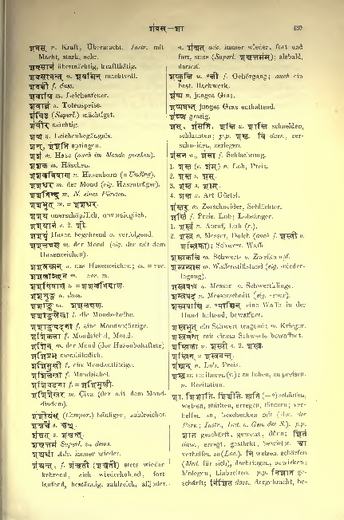
1. śastrá n. Anruff, Lob (r.).
Original text · German · substantive neuter
2. śástra n. Messer, Dolch (auch f. śastrī u. śastrīkā); Schwert, Waffe.
Burnouf 1866 substantive neuter
Original text · French · substantive neuter
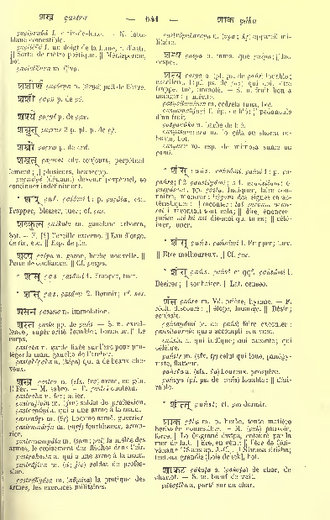
śastra śastra n. (sfx. tra) arme, en gén. Fer. — M. sabre. — F. śastrī couteau. śastraka n. fer; acier. śastrajīvin m. (jīv) soldat de profession. śastrapāṇi a. qui a une arme à la main. śastrabhṛt m. (bhṛ) homme armé, guerrier. śastramārja m. (mṛj) fourbisseur, armurier. śastrasampāta m. (sam; pat) la mêlée des armes, le croisement des flèches dans l'air. śastrahasta a. qui a une arme à la main. śastrājīva m. (ā; jīv) soldat de profession. śastrābhyāsa m. (abhyāsa) la pratique des armes, les exercices militaires. [Page641-2] śastropakaraṇa n. (upa; kṛ) appareil militaire.
Occurrences in source texts (1)
HP 1 occurrence
Continue with AYI Free
Image source: AYI archive.