

asat असत् – non-being; unreality; untruth
adjective · substantive masculine · substantive neuter · Word type unspecified
Dictionary sources
AYI dictionary substantive neuter
non-being; unreality; untruth
Monier-Williams 1872 Word type unspecified
Original text · English · Word type unspecified
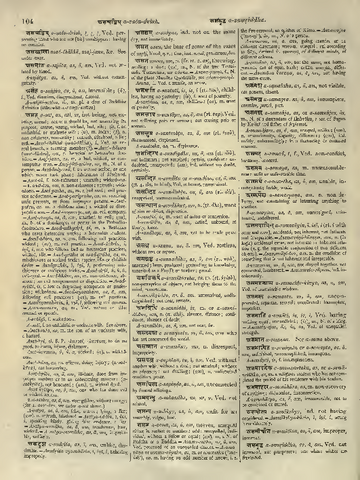
asat a-sat, an, atī, at, not being, not ex- isting, unreal; not as it should be, not answering its purpose, untrue, wrong, wicked, bad, vile; (ī), f. an unfaithful or unchaste wife; (n), m. Indra; (t), n. non-existence, non-entity; untruth, falsehood, a lie; evil.
Apte 1890 adjective · substantive masculine · substantive neuter
Original text · English · adjective · substantive masculine · substantive neuter
asat a. 1 Not being or existing; tadabhāve sadapyasat H. 3. 3; asati tvayi Ku. 4. 12; Ms. 9. 154. 2 Non-existent, unreal; ātmano brahmaṇo'bhedamasaṃtaṃ kaḥ kariṣyati. 3 Bad (opp. sat); sadasadvyaktihetavaḥ R. 1. 10. 4 Wicked, vile, evil; as ˚vicāra. 5 Not manifest. 6 Wrong, improper, false, untrue; iti yaduktaṃ tadasat (oft. occurring in controversial works). 7 Not answering its purpose. — m. (n) Indra. — n. (t) 1 Non-existence, non-entity; nāsadāsīnno sadāsīt Rv. 10. 129. 1; asadvā idamagra āsīt tato vai sadajāyata Ait. Br., Ms. 12. 118; Ms. 1. 11, Ms. 1. 14, Ms. 1. 74. 2 An evil, a harm. 3 Untruth, falsehood. — tī An unchaste woman; asatī bhavati salajjā Pt. 1. 418. Comp. — adhyetṛ m. a Brāhmaṇa who reads heterodox works, one who neglects his ownŚākhā and studies another; also cal led śākhāraṃḍaḥ; svaśākhāṃ yaḥ parityajya anyatra kurute śramaṃ . śākhāraṃḍaḥ sa vijñeyo varjayettaṃ kriyāsu ca ... — āgamaḥ 1 a heterodox Śāstra or doctrine. 2 acquisition (of wealth) by unfair or foul means. 3 a foul means itself. — ācāra a. following evil practices, wicked. — (raḥ) an evil practice. — ācārin a. one who follows evil practices, wicked, vile. — karman, -kriyā &c. see below. — kalpanā 1 an untrue action, one which never took place. 2 ([Page 0210-b]) fabrication of falsehood. — khyātiḥ f. wrong or improper perception or knowledge. — gra (grā) haḥ 1 a bad trick. 2 a bad opinion, prejudice. 3 childish desire. — ceṣṭitaṃ harm, injury; prāṇiṣvasacceṣṭitaṃ Ś. 5. 9. — janaḥ a bad, wicked, or contemptible man. — dṛś a. evil-eyed. — pathaḥ 1 a bad road (lit.). 2 evil practices or doctrines; nāśo haṃta satāmasatpathajuṣāmāyuḥ samānāṃ śataṃ Bv. 4. 36. — parigrahaḥ acceptance of a bad road. — putraḥ 1 a childless man. 2 a bad son or disreputable son. — pratigrahaḥ 1 present of bad things. 2 receiving unfit presents (such as tila) or from improper persons. — bhāvaḥ 1 non-existence, absence. 2 a bad or wicked opinion. 3 an evil disposition. — vṛtti, — vyavahāra a. following evil practices, wicked. ( — ttiḥ f.) 1 a low or degrading occupation. 2 wickedness. — vyavahāra a. following evil practices. — (raḥ) evil practice. — śāstraṃ 1 a wrong doctrine. 2 a heterodox doctrine (such as that of the Buddhas). — saṃsargaḥ bad company. — hetuḥ 1 a statement having exceptions (in nyāya). 2 a bad or fallacious hetu; see hetvābhāsa.

Burnouf 1866 adjective · Word type unspecified
Original text · French · adjective
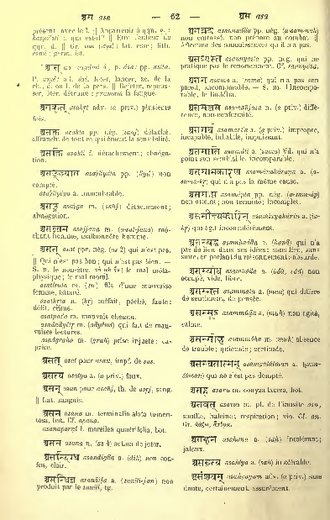
asat asat ppr. nég. (as 2) qui n'est pas. Qui n'est pas bon; qui n'est pas bien. — S. n. le non-être, τὸ μὴ ὄν; le mal métaphysique; le mal moral. asatīsuta m. (su) fils d'une mauvaise femme, bâtard. asatkṛta n. (kṛ) méfait, péché, faute; délit, crime. asatpatha m. mauvais chemin. asadadhyetṛ m. (adhyemi) qui fait de mauvaises lectures. asadgraha m. (grah) prise injuste; caprice.
Original text · French · Word type unspecified
asat asat pour asast, impf. de sas.
Occurrences in source texts (1)
MAN 1 occurrence
Continue with AYI Free
Image source: AYI archive.