

añjana अञ्जन – a kind of domestic lizard
substantive masculine · substantive neuter · Word type unspecified
Dictionary sources
Cappeller 1891 substantive neuter
Original text · English · substantive neuter
añjana ·n. smearing, anointing; suggesting (rh.); ointment, paint, esp. a collyrium made of antimony.
Monier-Williams 1872 substantive masculine
Original text · English · substantive masculine
Añjana, as, m. a kind of domestic lizard; N. of a fabulous serpent; of a tree; of a mountain; of a king of Mithilā; of the elephant of the west or south-west quarter; (am), n. act of applying an ointment or pig- ment, embellishing, &c.; black pigment or collyrium applied to the eye-lashes or the inner coat of the eye- lids; special kind or material of this pigment, as lamp-black, Antimony, an extract of Ammonium, Xanthorrhiza, &c.; paint, especially as a cosmetic; magic ointment; ink; night; fire. (In rhetoric) suggesting the special meaning alluded to in an ex- pression, as in a pun, &c.
Petersburger 1855 substantive masculine · substantive neuter · Word type unspecified
Original text · German · substantive masculine
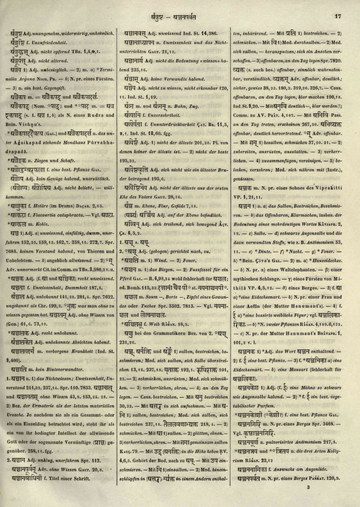
1. añjana m. 1〉 Hauseidechse TRIK. 2,5,12. MED. n. 27; vgl. añjanādhikā und añjanikā. — 2〉 N. pr. der Weltelephant des Westens AK. 1,1,2,5. H. 170 (vgl. Sch.). H. an. 3,355. MED. n. 26 (1. diggajayoḥ). HĀR. 147. VIŚVA_im_ŚKDR. R. 1,6,23. — 3〉 N. einer mythischen Schlange VĀYU-P._im_VP. 149, N. 16. — 4〉 N. eines Fürsten von Mithilā VP. 390. — 5〉 N. eines Berges R. 4,37,5 (vgl. 21, wo er mahāñjana genannt wird). VARĀH. BṚH._in_Verz. d. B. H. 240,14,5. PAÑCAT. 120,9; vgl. añjanāgiri. — 6〉 N. einer Pflanze; añjanavṛkṣadārumayastambhaḥ PAÑCAT. 10,7.
Original text · German · substantive neuter
2. añjana (von añj) n. 1〉 das Salben, Bestreichen, Schminken KĀTY. ŚR. 20,1,8 (ājyena). (varjayet) abhyaṅgamañjanaṃ cākṣṇoḥ M. 2,178. maitraṃ prasādhanaṃ snānaṃ dantadhāvanamañjanam (der Augen) . pūrvāhṇa eva kurvīta M. 4,152. — 2〉 Salbe ĀŚV. ŚR. 6,14. (taravaḥ) gairikāñjanasaṃśliṣṭāḥ R. 5,5,12. Uebertr.: nirañjana ungeschminkt: tadā vidvānpuṇyapāpe vidhūya nirañjanaḥ paramaṃ sāmyamupaiti MUṆḌ. UP. 3,1,3. ŚVETĀŚV. UP. 6,19. tattrayaṃ (asti, bhāti, priyam) tvekarūpakaṃ māyātītaṃ nirañjanam BĀLAB. 22. — 3〉 Augensalbe (als Cosmeticum) H. 686. MED. n. 26. R. 2,9,53. pramadālocananyastaṃ malīmasamivāñjanam HIT. II, 148. kurvannañjanamecakā iva diśo meghaḥ samujjṛmbhate MṚCCH. 84,24. nayanāñjana R. 2,95,19. nīlāñjanacaya R. 6,20,11. R. 6,37,31. kṛṣṇāñjanagiri R. 3,55,5. bhinnāñjana MEGH. 60. ṚT. 1,11. bhinnāñjanacaya R. 6,20,15. HARIV. 6453. bhinnāñjanapracaya ṚT. 3,5. prabhinnāñjanarāśi ṚT. 2,2, v. l. ajñānāndhasya lokasya jñānāñjanaśalākayā . cakṣurunmīlitaṃ yena tasmai pāṇinaye namaḥ .. ŚIKṢĀ 59; vgl. P. II, S. 3. — 4〉 Collyrium aus Amomum Xanthorrhiza H. 1053. H. an. 3,355. MED. n. 26. — 5〉 Antimonium (als Collyrium gebraucht) H. an. MED. SUŚR. 1,140,20. SUŚR. 2,61,1. SUŚR. 2,152,19. SUŚR. 2,392,11. u. s. w.; vgl. sroto'ñjana. — 6〉 Zaubersalbe Verz. d. B. H. No. 485. Verz. d. B. H. No. 486. Verz. d. B. H. No. 904. Verz. d. B. H. No. 905. — 7〉 Dinte H. an. 3,354. — 8〉 Nacht (aktau) H. an. 3,355. MED. — 9〉 Feuer VIŚVA_im_ŚKDR. — 10〉 in der Rhetorik: anekārthasya śabdasya vācakatve niyantrite . saṃyogādyairavācyārthadhīkṛdvyāpṛtirañjanam .. KĀVYA-PR. 14,3. KĀVYA-PR. 14,4.
Original text · German · Word type unspecified
1. añjana 5〉 HALĀY. 5,26.

Original text · German · Word type unspecified
2. añjana 2〉 tadañjanatāpatti das Annehmen der Färbung des (Andern) YOGAS. 1,41. — 3〉 Spr. 44. Für die SCHÜTZʼsche Auffassung (vgl. Th. 3, S. 357) spricht PAÑCAT. ed. orn. 3,13, wo das neutrum añjanam steht.
Original text · German · Word type unspecified
2. añjana 3〉 Z. 5 lies 6452 st. 6453.
Böhtlingk 1879 substantive masculine · substantive neuter · Word type unspecified
Original text · German · substantive masculine · substantive neuter
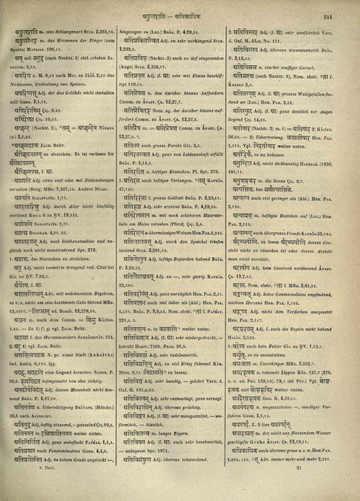
añjana — 1〉 n. — a〉 das Salben, Bestreichen, Beschmieren. — b〉 das Offenbaren, Klarmachen, insbes. der Bedeutung eines mehrdeutigen Wortes KĀVYAPR. 2,19. — c〉 Salbe. — d〉 schwarze Augensalbe und die dazu verwandten Stoffe, wie z. B. Antimonium Chr. 53,11. — e〉 *Dinte. — f〉 *Nacht. — g〉 *Feuer. — h〉 *Bein. Śivaʼs GAL. — 2〉 m. — a〉 *Hauseidechse. — b〉 N. pr. — α〉 eines Weltelephanten. — β〉 einer mythischen Schlange. — γ〉 eines Fürsten von Mithilā VP. 4,5,12. — δ〉 eines Berges. — 3〉 f. ā — a〉 *eine Eidechsenart. — b〉 N. pr. einer Frau und einer Aeffin (der Mutter Hanumantʼs). — 4〉 f. ī — a〉 *eine bossirte weibliche Figur; vgl. añjalikārikā. — b〉 *N. zweier Pflanzen RĀJAN. 4,189. 6,132. — c〉 N. pr. der Mutter Hanumantʼs BHĀVAPR. 1,101,3 v. l.
Original text · German · substantive masculine
añjana m. nach dem Comm. = śigru KĀŚĪKH. 1,26. — Zu 1〉f〉 g〉 vgl. ZACH. Beitr. [Nachtrag, Band 5]
Original text · German · Word type unspecified
añjana I. 5. [Nachtrag, Band 7]
Cappeller 1887 substantive neuter
Original text · German · substantive neuter
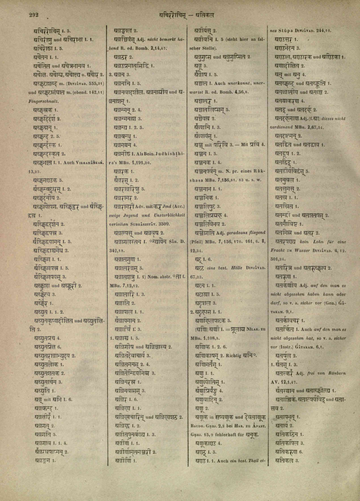
añjana n. das Salben, die Salbe, bes. schwarze Augensalbe, antimonium. ˚cūrṇa n. pulverisiertes Antimonium.
Burnouf 1866 substantive masculine · substantive neuter
Original text · French · substantive masculine
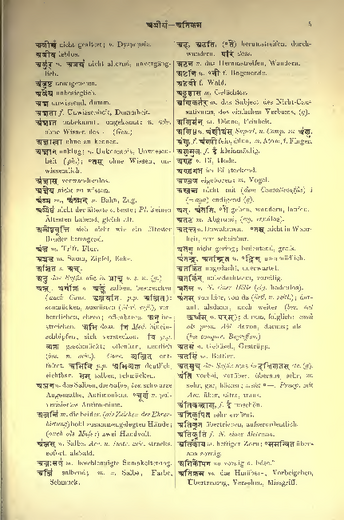
añjana añjana m. l'éléphant de l'ouest.
Original text · French · substantive neuter
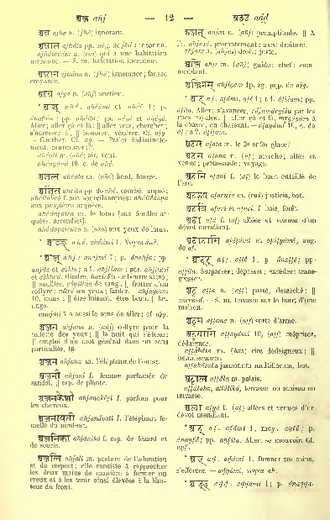
añjana añjana n. (añj) collyre pour la toilette des yeux; la nuit qui s'étend; emploi d'un mot général dans un sens particulier, tg.
Occurrences in source texts (2)
Continue with AYI Free
Image source: AYI archive.