

bāṇa बाण – a reed-shaft, shaft made of a reed, an arrow.
substantive masculine · substantive neuter · Word type unspecified
Dictionary sources
Cappeller 1891 substantive masculine · Word type unspecified
Original text · English · substantive masculine
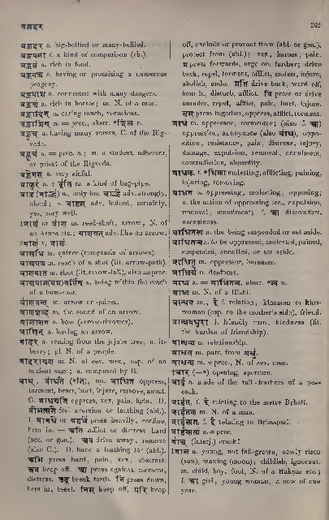
bāṇá1 bā́ṇa ·m. reed-shaft, arrow, N. of an Asura etc.; bāṇavat adv. like an arrow.
Original text · English · substantive masculine
bā́ṇa ·m. reed-shaft, arrow, N. of an Asura etc.; bāṇavat adv. like an arrow.
Original text · English · Word type unspecified
bāṇá2 ·-> vāṇá.
Monier-Williams 1872 substantive masculine
Original text · English · substantive masculine
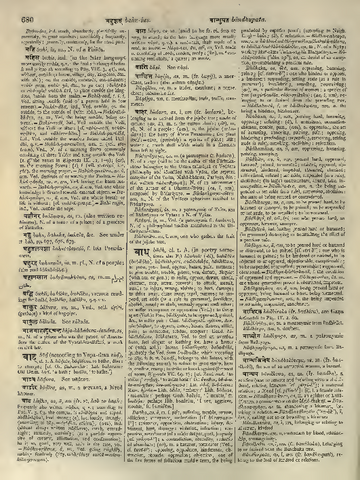
bāṇa bāṇa, as, m. (said to be fr. rt. baṇ or vaṇ, to sound; in the later language more usually written vāṇa, q. v.), a reed-shaft, shaft made of a reed, an arrow.
Petersburger 1855 substantive masculine · substantive neuter
Original text · German · substantive masculine · substantive neuter
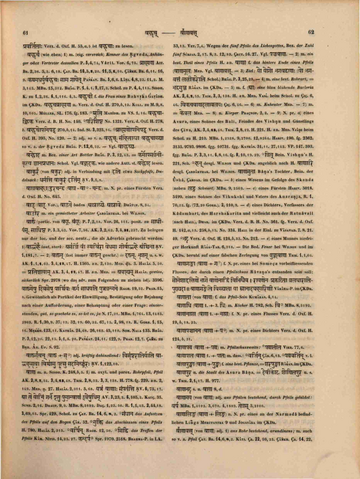
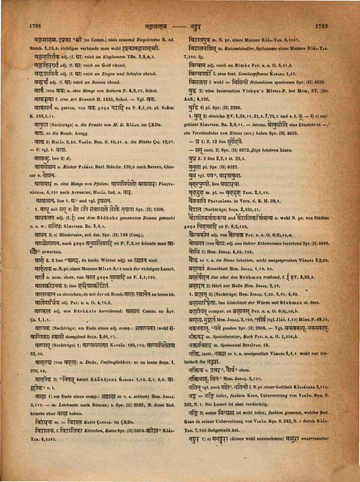
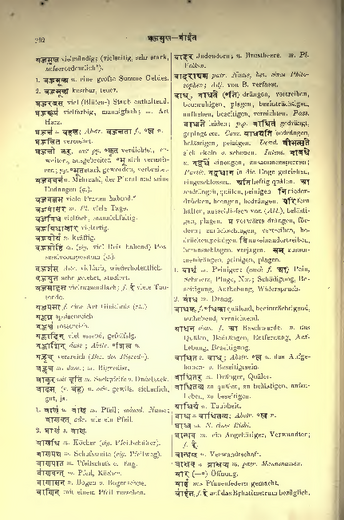
bāṇa m.n. SIDDH. K. 248,b,5. 1〉 m. oxyt. und parox. Rohrpfeil, Pfeil AK. 2,8,2,54. AK. 3,4,13,48. TRIK. 2,8,52. TRIK. 3,3,138. H. 778. fg. H. 229. H. an. 2,149. MED. ṇ. 27. HALĀY. 2,311. HALĀY. 5,68. yatrà bā̱ṇāḥ sa̱ṃpatànti ṚV. 6,75,17. ā te̱ yoni̱ṃ garbhà etu̱ pumā̱nbāṇà iveṣu̱dhim AV. 3,23,2. AV. 6,105,2. KAUŚ. 35. SUND. 2,16. DRAUP. 9,9. MBH. 8,3192. DAŚ. 1,23. DAŚ. 1,50. R. 1,1,43. R. 2,44,18. R. 3,69,15. Spr. 429. Schol. zu ŚAT. BR. 14,6,8,2. ˚saṃdhāna das Aufsetzen des Pfeils auf den Bogen ŚĀK. 52. ˚mukti das Abschiessen eines Pfeils H. 780. HALĀY. 2,315. ˚varṣin RAGH. 12,50. ˚siddhi das Treffen der Pfeile KĀM. NĪTIS. 14,25. KĀM. NĪTIS. 14,27. kandarpa˚ Spr. 1970. Spr. 2518. BRAHMA-P. in LA. 53,13. VET. 7,4. Wegen der fünf Pfeile des Liebesgottes, Bez. der Zahl fünf SŪRYAS. 2,17. SŪRYAS. 8,3. SŪRYAS. 12,89. ŚRUT. 16. ŚRUT. 27. Vgl. pañcabāṇa. — 2〉 m. ein best. Theil eines Pfeils H. an. bāṇā f. das hintere Ende eines Pfeils (bāṇamūla) MED. Vgl. bāṇavant. — 3〉 Ziel: yo yogo bhagavadbāṇaḥ (yo bhagavantaṃ lakṣīkaroti Schol.) BHĀG. P. 3,25,29. — 4〉 m. eine best. Rohrart, = bhadramuñja RĀJAN._im_ŚKDR. — 5〉 m. f. (ā) eine blau blühende Barleria AK. 2,4,2,55. TRIK. 3,3,138. H. an. MED. VAIJ. beim Schol. zu ŚIŚ. 6,46. vikacavāṇadalāvalayaḥ ŚIŚ. 6,46. — 6〉 m. Kuheuter MED. — 7〉 m. = kevala MED. — 8〉 n. Körper PRAŚNOP. 2,2. — 9〉 N. pr. a〉 eines Asura, eines Sohnes des Bali, Feindes des Viṣṇu und Günstlings des Śiva, AK. 3,4,13,48. TRIK. 2,8,22. H. 221. H. an. MED. VYĀḌI beim Schol. zu H. 210. MBH. 1,2528. MBH. 9,2700. MBH. 12,8264. HARIV. 190. fg. HARIV. 2362. HARIV. 3135. fg. HARIV. 9793. HARIV. 9806. fgg. HARIV. 10731. fgg. KATHĀS. 31,11. KATHĀS. 27,142. VP. 147. VP. 593. fgg. BHĀG. P. 3,3,11. fg. BHĀG. P. 6,8,16. BHĀG. P. 8,10,19. fg. BHĀG. P. 8,10,29. ˚jit Bein. Viṣṇuʼs H. 221, Sch. ˚han desgl. WILSON und ŚKDR. angeblich nach H. bāṇāri desgl. ŚABDĀRTHAK._bei_WILSON. bāṇasutā Bāṇaʼs Tochter, Bein. der Ūṣā, ŚABDAR._im_ŚKDR. — b〉 eines Wesens im Gefolge des Skanda (neben khaḍga Schwert) MBH. 9,2569. — c〉 eines Fürsten HARIV. 5018. HARIV. 5499. eines Sohnes des Vikukṣi und Vaters des Anaraṇya, R. 1,70,22. fg. (R. 1,72,20 GORR.). R. 2,110,9. — d〉 eines Dichters, Verfassers der Kādambarī, des Harṣacarita und vielleicht auch der Ratnāvalī (nach HALL.), DHAR._im_ŚKDR. Verz. d. B. H. No. 561. fg. Verz. d. Oxf. H. 142,a,15. Verz. d. Oxf. H. No. 258,b,15. Verz. d. Oxf. H. No. 258,b,334. HALL in der Einl. zu VĀSAVAD. 7. VĀSAVAD. 8. VĀSAVAD. 21. VĀSAVAD. 49. ˚bhaṭṭa Verz. d. Oxf. H. 124,b,33. Verz. d. Oxf. H. No. 124,b,212. — e〉 eines Mannes niedriger Herkunft RĀJA-TAR. 7,318. — Die Bed. Feuer bei WILSON und im ŚKDR. beruht auf einer falschen Zerlegung von juhūvāṇa TRIK. 1,1,66.
Original text · German · substantive neuter
bāṇa 1〉 am Schluss, Bez. der Zahl fünf SĀH. D. 264. — 5〉 n. die Blüthe KIR. 4,28 (bei MALLIN. zu lesen bāṇāni nīla˚). KIR. 10,24.
Original text · German · substantive neuter
bāṇa 5〉 HALĀY. 2,50. VARĀH. BṚH. S. 10,21. n. die Blüthe ŚIŚ. 12,37. — 6〉 vgl. 1. vāṇa.
Böhtlingk 1879 substantive masculine · substantive neuter
Original text · German · substantive masculine · substantive neuter
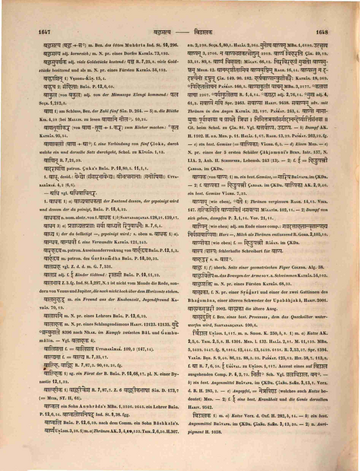
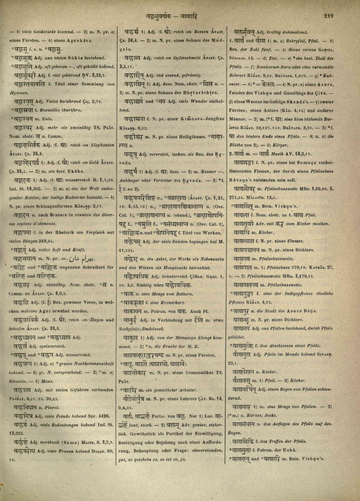
1. bāṇá und bā́ṇa — 1〉 m. — a〉 Rohrpfeil, Pfeil. — b〉 Bez. der Zahl fünf. — c〉 Sinus versus GAṆITA, SŪRYAGR. 14. — d〉 Ziel. — e〉 *ein best. Theil des Pfeils. — f〉 Saccharum sara oder eine verwandte Rohrart RĀJAN. 8,82. BHĀVAPR. 1,209. — g〉 *Kuheuter. — h〉 *= kevala. — i〉 N. pr. — α〉 eines Asura, Feindes des Viṣṇu und Günstlings des Śiva. — β〉 eines Wesens im Gefolge Skandaʼs. — γ〉 zweier Fürsten, eines Autors (KĀD. 4,14) und anderer Männer. — 2〉 m. (*f. ā) eine blau blühende Barleria RĀJAN. 10,137. 140. BHĀVAPR. 3,98. — 3〉 *f. ā das hintere Ende eines Pfeils. — 4〉 n. — a〉 die Blüthe von 2〉. — b〉 Körper.
Original text · German · substantive masculine · substantive neuter
1. bāṇá und bā́ṇa — 1〉 m. — a〉 Rohrpfeil, Pfeil. — b〉 Bez. der Zahl fünf. — c〉 Sinus versus GAṆITA, SŪRYAGR. 14. — d〉 Ziel. — e〉 *ein best. Theil des Pfeils. — f〉 Saccharum sara oder eine verwandte Rohrart RĀJAN. 8,82. BHĀVAPR. 1,209. — g〉 *Kuheuter. — h〉 *= kevala. — i〉 N. pr. — α〉 eines Asura, Feindes des Viṣṇu und Günstlings des Śiva. — β〉 eines Wesens im Gefolge Skandaʼs. — γ〉 zweier Fürsten, eines Autors (KĀD. 4,14) und anderer Männer. — 2〉 m. (*f. ā) eine blau blühende Barleria RĀJAN. 10,137. 140. BHĀVAPR. 3,98. — 3〉 *f. ā das hintere Ende eines Pfeils. — 4〉 n. — a〉 die Blüthe von 2〉. — b〉 Körper.
Original text · German · substantive masculine
2. bāṇá m. = vāṇá Musik AV. 10,2,17.
Apte 1890 substantive masculine · Word type unspecified
Original text · English · substantive masculine
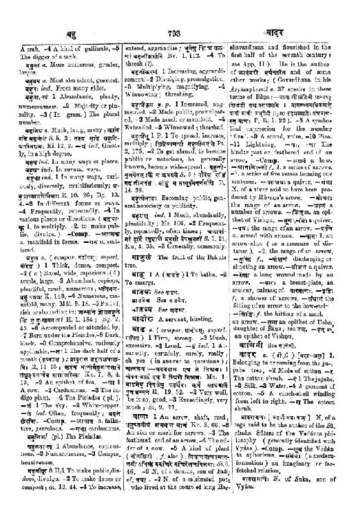
bāṇaḥ 1 An arrow, shaft, reed; dhanuṣyamoghaṃ samadhatta bāṇaṃ Ku. 3. 66. 2 An aim or mark for arrows. 3 The feathered end of an arrow. 4 The udder of a cow. 5 A kind of plant (nīlajhiṃṭī; f. also); vikacabāṇadalāvalayo 'dhikaṃ rurucire rucirekṣaṇavibhramāḥ Śi. 6. 46. 6 N. of a demon, son of Bali; cf. uṣā. 7 N. of a celebrated poet who lived at the court of king ([Page 0793-c]) Harshavardhana and flourished in the first half of the seventh century; (see App. II). He is the author of kādaṃbarī, harṣacarita and of some other works; (Govardhana in his Āryāsaptaśatī v. 37 speaks in these terms of Bāṇa: — jātā śikhaṃḍinī prāgyathā śikhaṃḍī tathāvagacchāmi . prāgalbhyamadhikamāptuṃ vāṇī bāṇo babhūvoti ..; so hṛdayavasatiḥ paṃcabāṇastu bāṇaḥ P. R. 1. 22). 8 A symbolical expression for the number ‘five’. 9 A sound, voice. 10 Fire. 11 Lightning. — ṇaḥ, -ṇā The hinder part or feathered end of an arrow. Comp. — asanaṃ a bow. — āvaliḥ -lī f. 1 a series of arrows. 2 a series of five verses forming one sentence. — āśrayaḥ a quiver. — gaṃgā N. of a river said to have been produced by Rāvaṇa's arrow. — gocaraḥ the range of an arrow. — jālaṃ a number of arrows. — jit m. an epithet of Viṣṇu. — tūṇaḥ, -dhiḥ a quiver. — pathaḥ the range of an arrow. — pāṇi a. armed with arrows. — pātaḥ 1 an arrow-shot (as a measure of distance). 2 the range of an arrow. — mukti f., — mokṣaṇaṃ discharging or shooting an arrow. — yojanaṃ a quiver. — rekhā a long wound made by an arrow. — vāraḥ a breast-plate, an armour, cuirass; cf. vārabāṇaḥ. — vṛṣṭiḥ f. a shower of arrows. — saṃdhānaṃ the fitting of an arrow to the bow-string. — siddhiḥ f. the hitting of a mark by an arrow. — sutā an epithet of Uṣā, daughter of Bāṇa; see uṣā. — han m. an epithet of Viṣṇu.
Original text · English · Word type unspecified
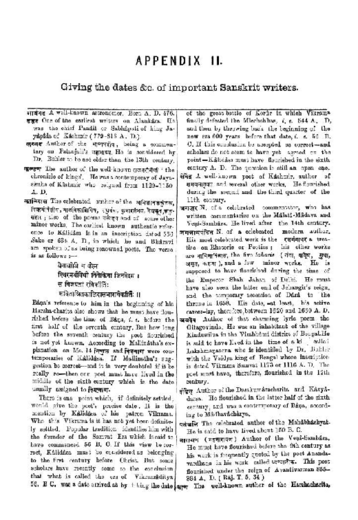
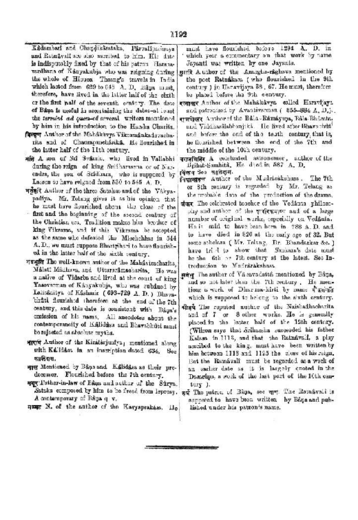
bāṇa The well-known author of the Harṣacarita, ([Page 1192-a]) Kādambarī and Caṇḍikāśataka. Pārvatīpariṇaya and Ratnāvalī are also ascribed to him. His date is indisputably fixed by that of his patron Harshavardhana of Kānyakubja who was reigning during the whole of Hiouen Thsang's travels in India which lasted from 629 to 645 A. D. Bāṇa must, therefore, have lived in the latter half of the sixth or the first half of the seventh century. The date of Bāṇa is useful in ascertaining the dates-at least the termini ad quem -of several writers mentioned by him in his introduction to the Harṣa Carita.
Cappeller 1887 substantive masculine · Word type unspecified
Original text · German · substantive masculine
1. bāṇá u. bā́ṇa m. Pfeil; männl. Name; bāṇavat adv. wie ein Pfeil.
Original text · German · Word type unspecified
2. bāṇá s. vāṇa.
Burnouf 1866 substantive masculine
Original text · French · substantive masculine
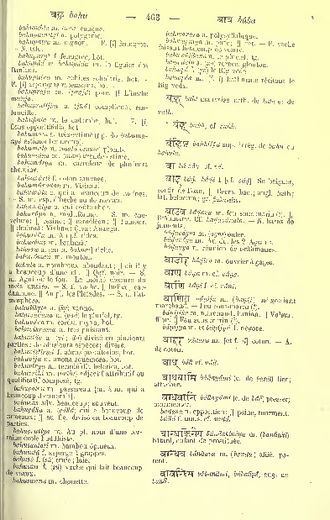
bāṇa bāṇa m. cf. vāṇa.
Occurrences in source texts (2)
SiSa 2 occurrences
SiSa 5.113-5.120: Anāhata 2 occurrences
Direct occurrences
-
SiSa 5.114 Segment 13
-
SiSa 5.119 Segment 5
Continue with AYI Free
Image source: AYI archive.