

cārvāka चार्वाक – cārvāka
adjective · substantive masculine · Word type unspecified
Dictionary sources
AYI dictionary substantive masculine
cārvāka
Cappeller 1891 substantive masculine
Original text · English · substantive masculine
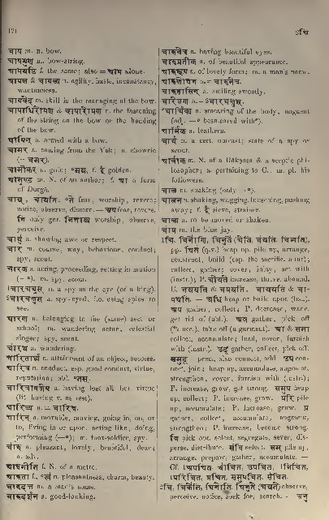
cārvāka ·m. N. of a Rakṣasa & a sceptic philosopher; a. pertaining to C., m. pl. his followers.
Monier-Williams 1872 substantive masculine
Original text · English · substantive masculine
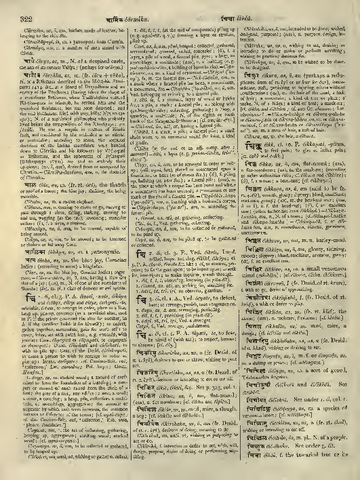
cārvāka cārvāka, as, m. (fr. cāru + vāka), N. of a Rākṣasa described in the Mahā-bh. Śānti- parva 1414, &c., as a friend of Duryodhana and an enemy of the Pāṇḍavas; (having taken the shape of a mendicant Brāhman, when Yudhiṣṭhira entered Hāstina-pura in triumph, he reviled him and the assembled Brāhmans, but was soon detected; and the real Brāhmans, filled with fury, killed him on the spot); N. of a sophistical philosopher who probably lived before the composition of the Rāmāyaṇa; see jāvāli. He was a sceptic in matters of Hindū faith, and considered by the orthodox as an atheist or materialist; according to some, the sceptical doctrines of the Indian materialists were handed down to Cārvāka and his followers by Vācas-pati or Bṛhaspati, and the aphorisms of Bṛhaspati (Bārhaspatya sūtras) are said to embody their opinions; (as, ī, am), derived from or composed by Cārvāka.
Petersburger 1855 adjective · substantive masculine · Word type unspecified
Original text · German · adjective · substantive masculine
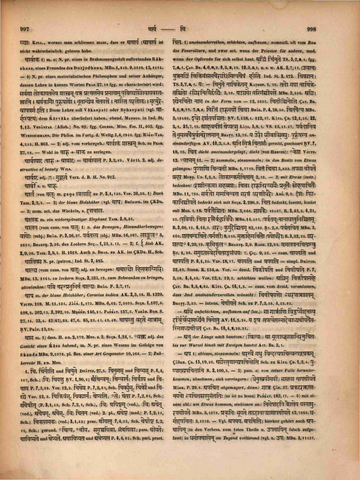
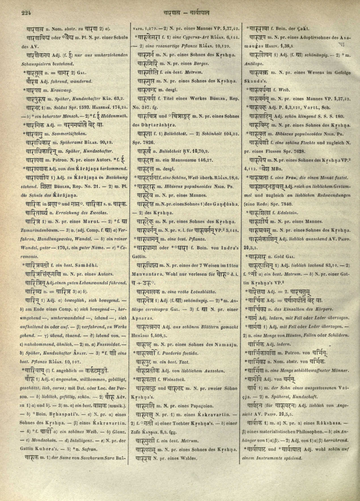
cārvāka 1〉 m. a〉 N. pr. eines in Brahmanengestalt auftretenden Rākṣasa, eines Freundes des Duryodhana, MBH. 1,349. MBH. 9,3619. MBH. 12,1414. — b〉 N. pr. eines materialistischen Philosophen und seiner Anhänger, dessen Lehre in kurzen Worten PRAB. 27,18. fgg. so characterisirt wird: sarvathā lokāyatameva śāstram yatra pratyakṣameva pramāṇam pṛthivyaptejovāyavastattvāni . arthakāmau puruṣārthau . bhūtānyeva cetayante . nāsti paralokaḥ . mṛtyurevāpavarga iti . Diese Lehre soll Vākaspati oder Bṛhaspati (vgl. bārhaspatya) dem Cārvāka überliefert haben, ebend. MADHUS._in_Ind. St. 1,13. VEDĀNTAS. (Allah.) No. 82. fgg. COLEBR. Misc. Ess. II, 402. fgg. WINDISCHMANN, Die Philos. im Fortg. d. Weltg. I, 4,1940. fgg. RĀJA-TAR. 4,345. H. 863. — 2〉 adj. vom vorhergeh.: cārvākaṃ śāstram Sch. zu PRAB. 27,18. — Wohl in cāru + vāka zu zerlegen.
Original text · German · Word type unspecified
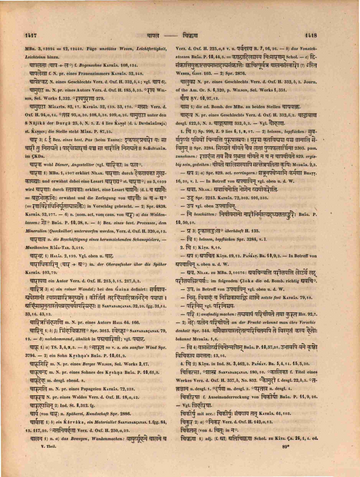
cārvāka 1〉b〉 Cārvāka, ein Materialist SARVADARŚANAS. 1. fgg. SARVADARŚANAS. 84,15. fgg. SARVADARŚANAS. 117,20. ˚matanibarhaṇa Verz. d. Oxf. H. 250,a,29.
Böhtlingk 1879 adjective · substantive masculine
Original text · German · adjective · substantive masculine
cārvāka — 1〉 m. — a〉 N. pr. — α〉 eines Rākṣasa. — β〉 eines materialistischen Philosophen. — b〉 ein Anhänger von 1〉a〉β〉. — 2〉 Adj. von 1〉a〉β〉. herrührend.
Apte 1890 substantive masculine
Original text · English · substantive masculine
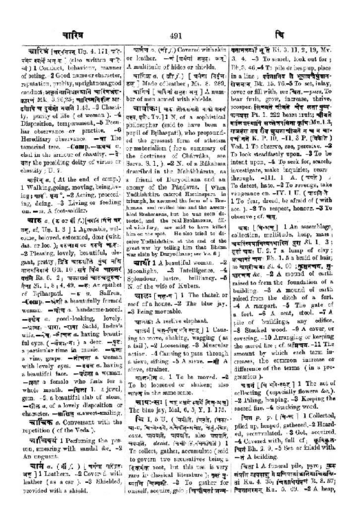
cārvākaḥ [cāruḥ lokasaṃmato vāko vākyaṃ yasya, pṛṣo˚ Tv.] 1 N. of a sophistical philosopher (said to have been a pupil of Bṛhaspati), who propounded the grossest form of atheism or materialism (for a summary of the doctrines of Cārvāka, see Sarva. S. 1.). 2 N. of a Rākṣasa described in the Mahābhārata, as a friend of Duryodhana and an enemy of the Pāṇḍavas. [When Yudhiṣṭhira entered Hastināpura in triumph, he assumed the form of a Brāhmaṇa and reviled him and the assembled Brāhmaṇas, but he was soon detected, and the real Brāhmaṇas, filled with fury, are said to have killed him on the spot. He also tried to deceive Yudhiṣṭhira at the end of the great war by telling him that Bhīma was slain by Duryodhana; see Ve. 6].
Cappeller 1887 substantive masculine
Original text · German · substantive masculine
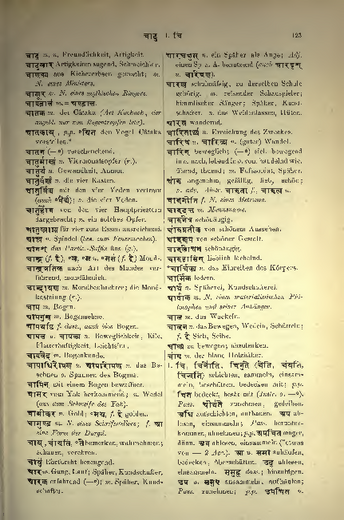
cārvāka m. N. eines materialistischen Philosophen und seiner Anhänger.
Burnouf 1866 substantive masculine
Original text · French · substantive masculine
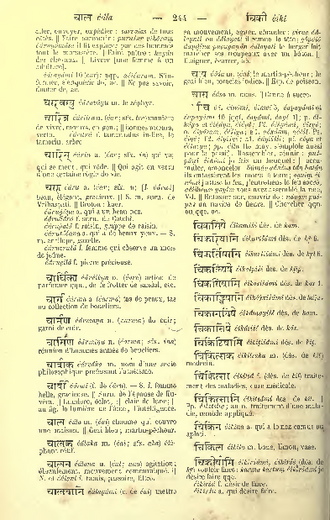
cārvāka cārvāka m. nom d'une secte philosophique professant l'athéisme.
Occurrences in source texts (1)
DYS 1 occurrence
Continue with AYI Free
Image source: AYI archive.