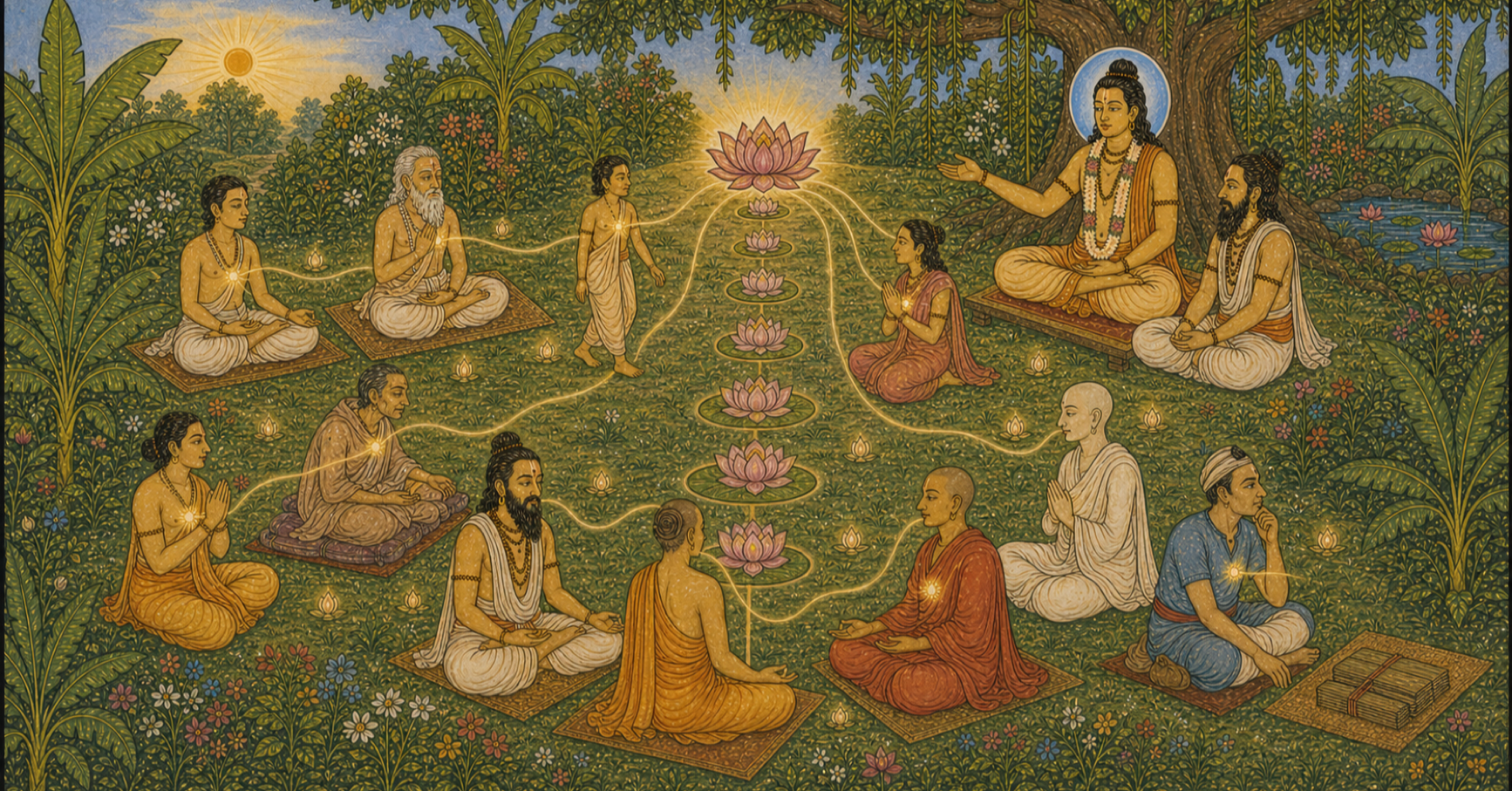
DYS 39–42: Practice Matters

Dattātreyayogaśāstra 39–42: Success in Yoga Is Open to Every Serious Practitioner

Age, health, social position, and religious identity do not decide success: regular practice, perseverance, and confidence in the path do.

Dr. Ronald Steiner Dr. Ronald Steiner Nils Jacob Liersch Nils Jacob Liersch
Dattātreyayogaśāstra 39
सांकृते शृणु सत्त्वस्थो योगाभ्यासक्रमं मया |
sāṃkṛte śṛṇu sattva-stho; yogābhyāsa-kramaṃ mayā | Analysis ▾ Analysis ▴
sāṃkṛte
vokative singular
substantive masculine
O Sāṃkṛti
śṛṇu
2nd person singular aktive imperative
verbal root
listen
sattva
tatpuruṣa-compound lokative
substantive neuter
clarity of Citta
sthaḥ
nominative singular masculine
adjective
situated
yoga
tatpuruṣa-compound genitive
substantive masculine
yoga
abhyāsa
tatpuruṣa-compound genitive
substantive masculine
practice
kramam
accusative singular
substantive masculine
the progression, path
mayā
instrumental case singular
pronoun pers 1p
by me
वक्ष्यमाणं प्रयत्नेन योगानां सर्वलक्षणैः ||39||
vakṣyamāṇaṃ prayatnena; yogānāṃ sarva-lakṣaṇaiḥ ||39|| Analysis ▾ Analysis ▴
vakṣyamāṇam
accusative singular masculine future participle medial
verbal root
which will be explained
prayatnena
instrumental case singular
substantive masculine
carefully
yogānām
genitive plural
substantive masculine
of the yogas
sarva
karmadhāraya-compound
adjective
all
lakṣaṇaiḥ
instrumental case plural
substantive neuter
with characteristics
Metre: Anuṣṭubh
O Sāṃkṛti (sāṃkṛte | voc sg), listen attentively (sattvasthaḥ | nom sg) to the sequence of yoga practice (yogābhyāsa-kramam | acc sg), which I shall carefully explain (mayā prayatnena) together with all the defining features of the yogas (yogānāṃ sarva-lakṣaṇaiḥ).
Dr. Ronald Steiner - 2026 - historically literal
Dattātreya asks Sāṃkṛti to listen attentively as he explains the sequence and defining features of the different forms of yoga.
Dr. Ronald Steiner - 2026 - modern transfer
mayā JM2024 ] yathā DYŚ
Critical Apparatus
Dattātreyayogaśāstra 40
युवावस्थो ऽपि वृद्धो वा व्याधितो वा शनैः शनैः |
yuvāvastho 'pi vṛddho vā; vyādhito vā śanaiḥ śanaiḥ | Analysis ▾ Analysis ▴
yuva
bahuvrīhi-compund
adjective
young
avasthaḥ
nominative singular masculine
substantive feminine
state, stage
api
particle
even
vṛddhaḥ
nominative singular masculine
adjective
old
vā
particle
or
vyādhitaḥ
nominative singular masculine
adjective
ill
vā
particle
or
śanaiḥ
adverb
gradually
śanaiḥ
adverb
gradually
अभ्यासात्सिद्धिमाप्नोति सर्वयोगेष्वतन्द्रितः ||40||
abhyāsāt siddhim āpnoti; sarva-yogeṣv atandritaḥ ||40|| Analysis ▾ Analysis ▴
abhyāsāt
ablative singular
substantive masculine
through practice
siddhim
accusative singular
substantive feminine
accomplishment
āpnoti
3rd person singular aktive present
verbal root
attains
sarva
karmadhāraya-compound
adjective
all
yogeṣu
lokative plural
substantive masculine
in yogas
atandritaḥ
nominative singular masculine
adjective
untiring
Metre: Anuṣṭubh
Whether young, old, or ill (yuvāvastho ’pi vṛddho vā vyādhito vā), a person gradually (śanaiḥ śanaiḥ) attains accomplishment in all yogas (sarva-yogeṣu | loc pl) through practice (abhyāsāt | abl sg), provided he is untiring (atandritaḥ | nom sg).
Dr. Ronald Steiner - 2026 - historically literal
Whether young, old, or ill, anyone who practises tirelessly can gradually attain accomplishment in every form of yoga.
Dr. Ronald Steiner - 2026 - modern transfer
sarvayogeṣv JM2024 ] yoge sarvo ’py DYŚ
Critical Apparatus
Dattātreyayogaśāstra 41
ब्राह्मणः श्रमणो वापि बौद्धो वाप्यार्हतो ऽपि वा |
brāhmaṇaḥ śramaṇo vāpi; bauddho vāpy ārhato 'pi vā | Analysis ▾ Analysis ▴
brāhmaṇaḥ
nominative singular
substantive masculine
a Brahmin
śramaṇaḥ
nominative singular
substantive masculine
an ascetic
vā
particle
or
api
particle
also
bauddhaḥ
nominative singular
substantive masculine
a Buddhist
vā
particle
or
api
particle
also
ārhataḥ
nominative singular
substantive masculine
a Jain
api
particle
also
vā
particle
or
कापालिको वा चार्वाकः श्रद्धया सहितः सुधीः ||41||
kāpāliko vā cārvākaḥ; śraddhayā sahitaḥ sudhīḥ ||41|| Analysis ▾ Analysis ▴
kāpālikaḥ
nominative singular
substantive masculine
a Kāpālika
vā
particle
or
cārvākaḥ
nominative singular
substantive masculine
a Cārvāka
śraddhayā
instrumental case singular
substantive feminine
with conviction
sahitaḥ
nominative singular masculine
adjective
endowed
sudhīḥ
nominative singular
substantive masculine
an intelligent person
Metre: Anuṣṭubh
Whether someone is a Brahmin (brāhmaṇaḥ | nom sg), an ascetic (śramaṇaḥ | nom sg), a Buddhist (bauddhaḥ | nom sg), a Jain (ārhataḥ | nom sg), a Kāpālika (kāpālikaḥ | nom sg), or a Cārvāka (cārvākaḥ | nom sg), [what matters is] an intelligent person (sudhīḥ | nom sg) endowed (sahitaḥ | nom sg) with faith (śraddhayā | ins sg).
Dr. Ronald Steiner - 2026 - historically literal
Birth and religious affiliation are not decisive. What matters is an intelligent person with faith.
Dr. Ronald Steiner - 2026 - modern transfer
’pi vā JM2024 ] ’thavā DYŚ
Critical Apparatus
Dattātreyayogaśāstra 42
योगाभ्यासरतो नित्यं सर्वसिद्धिमवाप्नुयात् |
yogābhyāsa-rato nityaṃ; sarva-siddhim avāpnuyāt | Analysis ▾ Analysis ▴
yoga
tatpuruṣa-compound genitive
substantive masculine
yoga
abhyāsa
tatpuruṣa-compound genitive
substantive masculine
practice
rataḥ
nominative singular masculine past participle passive
verbal root
devoted
nityam
adverb
constantly
sarva
karmadhāraya-compound
adjective
all
siddhim
accusative singular
substantive feminine
success, perfection
avāpnuyāt
3rd person singular aktive optative
previx
verbal root
would attain
क्रियायुक्तस्य सिद्धिः स्यादक्रियस्य कथं भवेत् ||42||
kriyā-yuktasya siddhiḥ syād; akriyasya kathaṃ bhavet ||42|| Analysis ▾ Analysis ▴
kriyā
tatpuruṣa-compound instrumental case
substantive feminine
through practice
yuktasya
genitive singular masculine past participle passive
verbal root
of one who is engaged
siddhiḥ
nominative singular
substantive feminine
accomplishment
syāt
3rd person singular aktive optative
verbal root
would arise
akriyasya
genitive singular masculine
adjective
of one without practice
katham
adverb
how
bhavet
3rd person singular aktive optative
verbal root
could arise
Metre: Anuṣṭubh
If constantly (nityam) devoted to yoga practice (yogābhyāsa-rataḥ | nom sg), one can attain (avāpnuyāt | 3p sg act opt) every accomplishment (sarva-siddhim | acc sg). Accomplishment (siddhiḥ | nom sg) may arise for one engaged in practice (kriyā-yuktasya | gen sg); how (katham) could it arise (bhavet | 3p sg act opt) for one without practice (akriyasya | gen sg)?
Dr. Ronald Steiner - 2026 - historically literal
Those who practise steadily can attain mastery. Success comes through practice; without practice it cannot arise.
Dr. Ronald Steiner - 2026 - modern transfer

Continue with AYI Free

Illustrations: AI-generated.

Editor

Dr. Ronald Steiner

From Ulm

The "Yoga Doc" - Dr. Ronald Steiner is the founder of the AYI method. This method links traditional Ashtanga Yoga with innovative Yogatherapy and living Philosophy. This forms a practice that is personal for each and... more ›

Nils Jacob Liersch

Meine Begeisterung für Yoga, indische Philosophie und Sanskrit führte mich zum Studium der Indologie und Religionswissenschaft an der Universität Heidelberg. Seit 2004 befinde ich mich auf meinem persönlichen Yogaweg... more ›

Messages and ratings
2 messages Ø

Please log in to write a message. Go to login

Meine Frage zu Satz 36: sind die Arme gestreckt und die Hände in Chin Mudra (also Zeigefinger eingerollt unter dem Daumen) oder liegen die Hände tatsächlich im Schoß, also Hände in Dhyana Mudra (Handflächen aufeinander, Daumenspitzen berühren sich)? Läßt sich das aus dem Text erschließen?
Hall Andreas,
aus dem Text ergibt sich das nicht. Ich würde es aber (am Text) jedoch so verstehen, dass die Hände einfach im Schoß liegen.
- Für uns Ashtanga Yogis ist natürlich alles genau wie im Ashtanga Yoga. Sogar "Sapta" mit gestreckten Beinen. :)
Viel Freude wünsche ich Dir
Ronald