

dhruva ध्रुव – eternal; constant
adjective · substantive feminine · substantive masculine · substantive neuter · Word type unspecified
Dictionary sources
AYI dictionary adjective · substantive masculine
Cappeller 1891 adjective
Original text · English · adjective
dhruvá ·a. steady, firm, constant, certain, safe; n. adv. -- m. the polar star, a man's name; f. ā́ the largest of the three sacrificial, ladles.
Monier-Williams 1872 adjective
Original text · English · adjective
Dhruva, as, ā, am, fixed, firm, remaining fixed in one place, firmly fixed, fast, immovable, stable, enduring, constant, lasting, permanent, continual, per- petual, eternal, invariable, unchangeable, inevitable; certain, sure, well-ascertained; firm, strong, fixed, settle (as a day); fixed (in astrology, as a karaṇa, q. v.; the fixed Karaṇas are four, viz. Śakuni, Nāga, Catuṣpada, and Kiṃstughna or Kintu-ghna (?): the seven A-dhruvāṇi are given under karaṇa: some of the Nakṣatras are also called Dhruvāṇi, see nakṣa- tra); fixed (in anatomy, as certain members or organs of the body which cannot be severed without causing death, those which are separable being called a-dhruva, q. v.); tenacious, retentive (e. g. dhruvā smṛtiḥ, a retentive memory); (as), m. the polar star or the north pole itself (personified in mythology as son of Uttāna-pāda and grandson of the first Manu); the pole of any great circle (especially either of the celestial poles); polar longitude, the distance of a planet from the beginning of the sidereal zodiac; a constant arc; N. of one of the twenty-seven astronomical Yogas or the Yoga star of the twelfth lunar asterism (supposed to = ß Leonis?); a knot (?); the trunk of a lopped tree or pollard, a post, stake; the Indian fig-tree; the tip or point of the nose (?); a sort of bird, = śarāri, (perhaps incorrectly for sma- rāri, meaning Śiva); the introductory stanza of a poem or song (‘the constantly recurring verse,’ which is repeated as a kind of burden or chorus); time, epoch, era, any fixed period from which dates are computed; an epithet of Brahmā; of Viṣṇu [cf. dhruvākṣara]; of Śiva; N. of one of the serpents supporting the earth; N. of one of the Vasus; of a son of Vasu-deva and Rohiṇī; of an Āṅgirasa, sup- posed to be the author of a Ṛg-veda hymn (Ṛg- veda X. 173); of a son of Nahuṣa; of a hero on the side of the Pāṇḍus; of a son of Ranti-nāra (or Ranti-bhāra); (ā), f. the largest of the three sacri- ficial ladles (made in the shape of the Indian fig-leaf and of the wood of the Flacourtia Sapida?); the plant Desmodium Gangeticum; the plant Sanseviera Zey- lanica, a small tree from the fibres of which bow- strings are made (= mūrvā); a virtuous woman; a cow which stands quiet when milked; scil. diś, the point of the heavens directly under the feet, the point of the lower hemisphere directly opposite to the zenith; (am), n. ‘the enduring sound,’ a sound heard or supposed to be heard after the Abhinidhāna, probably the mere prolongation of the preceding sound; heaven, sky, atmosphere; (am), ind. cer- tainly, surely, assuredly; eternally; (āya), ind. for ever. (According to grammarians, dhruva at the end of a comp. may give a bad sense to the word with which it is compounded, Pāṇ. II. 1, 53); [cf. Hib. dearbh, ‘sure, true;’ Goth. triggvs; Angl. Sax. treowe, for-truwyan; Old Germ. triu, triuwi, ga-triu, ga-triuwi, ga-triwi, = Mod. Germ. treu, treue, ge-treu, = Eng. true, trusty.]
Petersburger 1855 adjective · substantive feminine · substantive masculine · substantive neuter · Word type unspecified
Original text · German · adjective · substantive feminine · substantive masculine · substantive neuter
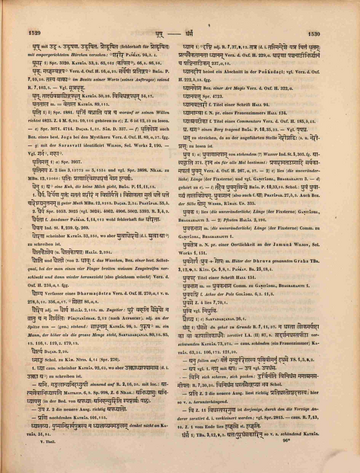
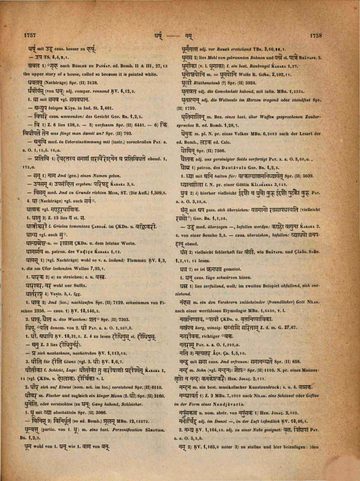
dhruvá UJJVAL._zu_UṆĀDIS. 2,61. 1〉 adj. f. ā a〉 am Ort verharrend, feststehend; bleibend, dauernd; beständig, unveränderlich; mit einem loc. bei Jmd bleibend (Gegens. ejant, carant u. s. w.); = sthira H. an. 2,526. fg. = nitya, śāśvata P. 4,2,104, Vārtt. 3. AK. 3,2,2. AK. 4,27,213. H. 1453. H. an. MED. v. 13. Verz. d. Oxf. H. No. 414, Śl. 4. = ajasra H. an. = saṃtata MED. u̱ta cyàvante̱ acyùtā dhru̱vāṇì ṚV. 1,167,8. ṚV. 3,54,8. ṚV. 10,5,3. kṣiti ṚV. 1,73,4. ṚV. 7,88,7. sadas ṚV. 2,41,5. yoni AIT. BR. 1,3. parvata ṚV. 6,52,4. sthūṇā ṚV. 8,17,14. dhruvamapāye 'pādānam P. 1,4,24. cakra MBH. 1,808. vasumatī MBH. 3,10929. nakṣatrāṇi R. 1,60,27. svāṅga ein Glied, ein Theil des Körpers, der feststeht, unbeweglich ist (vgl. dagegen adhruva) P. 6,2,177. vrata ṚV. 1,36,5. ṚV. 2,5,8 und oft. ṛ̱tubhìrdhru̱vebhìḥ ṚV. 1,84,18. tasmìnra̱yirdhru̱vo àstu̱ dāsvā̀n ṚV. 4,2,7. ṚV. 9,20,4. dhru̱vā gāvo̱ mayi̱ gopàtau AV. 2,26,4. VS. 1,1. sūrye̱ na ra̱śmayò dhru̱vāsàḥ ṚV. 1,59,3. dhru̱vaṃ jyoti̱rnihìtaṃ dṛ̱śaye̱ kam ṚV. 6,9,5. dhru̱vāsò asya kī̱rayo̱ janā̀saḥ ṚV. 7,100,4. ṚV. 10,173,1. fgg. i̱haivà dhru̱vā pratì tiṣṭha śāle AV. 3,12,2. AV. 14,1,47. VS. 9,22. VS. 13,16. dhenu eine beim Melken stillhaltende Kuh AV. 12,1,45. — ŚAT. BR. 11,8,1,2. ŚAT. BR. 14,4,3,22. ŚAT. BR. 14,7,2,23. dhruvā dik heisst in der Reihe der Himmelsrichtungen der Fusspunkt AV. 3,27,5. AV. 15,6,1. AV. 12,3,59. AIT. BR. 8,14. ŚAT. BR. 14,6,9,25. ˚graha der bleibende d. h. aufbewahrte Graha, welcher Morgens geschöpft erst Abends geopfert wird, ŚAT. BR. 4,2,3,3. ŚAT. BR. 4,2,4,1. ŚAT. BR. 5,1,2,19. KĀTY. ŚR. 9,5,17. LĀṬY. 1,11,1. ähnlich ist vielleicht zu verstehen dhruvaṃ haviḥ ṚV. 10,173,3. ṚV. 10,173,6. smṛti ein festes, starkes Gedächtniss CHĀND. UP. 7,26,2. — yasmindākṣyaṃ dhṛtirdānam u. s. w. dhruvāṇi beständig N. 6,10. dhruvamakṣarameva ca HARIV. 11298. dhruvākṣara von Viṣṇu MBH. 1,2430. yadadhruvasya dehasya — dhruvāṇi manyate mohādgṛhakṣetravasūni ca BHĀG. P. 3,30,3. svasvāmyabhāva BHĀG. P. 5,10,12. SUŚR. 1,332,15. mitra M. 7,208. bhartar KUMĀRAS. 7,85. dhruvecchā KUMĀRAS. 5,5. mati R. 5,80,32. ātmanā BHĀG. P. 6,10,8. adhruvā capalā ca tvaṃ (śrīḥ) MBH. 13,3861. nakṣatre 'hani ca dhruve bestimmt, festgesetzt MBH. 14,1888. muhūrto 'yaṃ dhruvaśca divaso hyayam R. 2,56,21. Ueber die beweglichen (adhruva) und unbeweglichen (dhruva) Karaṇa s. u. karaṇa 3,m und VARĀH. BṚH. S. 99,5. SŪRYAS. 2,67. dhruvāṇi nakṣatrāṇi heissen Rohiṇī und die 3 doppelten (Uttaraphalgunī u. s. w.) VARĀH. BṚH. S. 32,19. VARĀH. BṚH. S. 54,31. VARĀH. BṚH. S. 59,21. VARĀH. BṚH. S. 98,3. dhruvā sc. strī eine tugendhafte (beständige, zuverlässige) Frau ŚABDAR._im_ŚKDR. dhruvam adv. bleibend, für die Dauer: dhru̱vamàyā dhru̱vamu̱tāśàmiṣṭhāḥ ṚV. 3,29,16. dhruvāya zum Feststehen, fest, auf die Dauer: taṃ giriśreṣṭhaṃ sve sthāne — niveśayāmāsa dhruvāya HARIV. 3959. dhruvāya tatra nyavasatkeśavaḥ saha yādavaiḥ HARIV. 6417. — b〉 feststehend so v. a. sicher, gewiss; = niścita AK. 3,4,27,213. H. an. MED. Verz. d. Oxf. H. No. 414, Śl. 4. nityaṃ kalyāṇaṃ tatra vai dhruvam M. 3,60. yadāvagacchedāyatyāmādhikyaṃ dhruvamātmanaḥ M. 7,169. M. 7,183. jātasya hi dhruvo mṛtyurdhruvaṃ janma mṛtasya ca BHAG. 2,27. duḥkhānāmāgamo dhruvaḥ BRĀHMAṆ. 1,15. N. 26,11. MBH. 1,5787. R. 2,105,25. SUŚR. 1,58,6. maraṇa SUŚR. 102,19. yo dhruvāṇi parityajya adhruvāṇi niṣevate . dhruvāṇi tasya naśyanti adhruvaṃ naṣṭameva ca .. HIT. I, 105 (vgl. CĀṆ. 63). KATHĀS. 26,206. AK. 3,6,4,36. dhruvam adv. jedenfalls, sicherlich, gewiss (tarke H. an. MED. Verz. d. Oxf. H. a. a. O.; daher bei WILSON: logic, reasoning, discussion) ṚV. PRĀT. 11,24. M. 12,16. YĀJÑ. 3,19. YĀJÑ. 3,298. BRĀHMAṆ. 1,9. HIḌ. 1,26. MBH. 3,2558. R. 2,27,2. R. 2,92,12. R. 3,39,42. ŚĀK. 17. ŚRUT. 18. VARĀH. BṚH. S. 8,19. VARĀH. BṚH. S. 46,12 (13). RĀJA-TAR. 1,110. PAÑCAT. I, 315. PAÑCAT. I,II, 146. VET. 32,16. BHĀG. P. 1,19,2. ŚIŚ. 9,29. — c〉 = pāpa TRIK. 3,1,21. am Ende eines comp. einen Tadel ausdrückend GAṆARATN._zu_P. 2,1,53. — 2〉 m. a〉 der Polarstern; in der Mythol. ein Sohn Uttānapādaʼs und Enkel Manuʼs, AK. 1,1,2,21. AK. 3,4,27,213. TRIK. 1,1,95. H. 122. H. an. MED. HĀR. 37. ĀŚV. GṚHY. 1,7. ŚĀṄKH. GṚHY. 1,17. LĀṬY. 3,3,6. dhruvasya pracalanam MAITRĀYAṆOP._in_Ind. St. 2,396. MBH. 8,2105. tamanvayuḥ — śaratprasannairjyotirbhirvibhāvarya iva dhruvam RAGH. 17,35. RAGH. 18,33. KUMĀRAS. 7,85. VARĀH. BṚH. S. 11,34. VARĀH. BṚH. S. 46,12 (13). KATHĀS. 18,5. VP. 230. fgg. VP. 238. fgg. MATSYAP._in_Verz. d. Oxf. H. 41,a, Kap. 114. SKANDA-P. ebend. 69,b, Kap. 19—ebend. 69,b, Kap. 21. dhruva auttānapādaḥ MBH. 13,195. HARIV. 62. fgg. VP. 86. fgg. BHĀG. P. 2,7,43 (?). BHĀG. P. 4,8,8. fgg. dhruvo (pātu) bhruvau SUŚR. 1,17,12; vgl. u. i. — b〉 Himmelspol SŪRYAS. 12,44. SŪRYAS. 12,72. SŪRYAS. 12,73. — c〉 polar longitude (= dhruvaka) SŪRYAS. 8,1. — d〉 a constant arc KĀLAS. 363_bei_HAUGHT. — e〉 N. eines der 27 Yoga H. an. MED. Journ. of the Am. Or. S. 6,236. KOṢṬHĪPR._im_ŚKDR. — f〉 Knoten (?) VS. 5,21. VS. 5,30. — g〉 Baumstumpf AK. 2,4,1,8. H. an. MED. — h〉 der indische Feigenbaum TRIK. 3,3,416. H. an. MED. — i〉 angeblich die Nasenspitze: arundhatīṃ dhruvaṃ caiva viṣṇostrīṇi padāni ca . āsannamṛtyurno paśyeccaturthaṃ mātṛmaṇḍalam .. arundhatī bhavejjihvā dhruvo nāsāgramucyate . viṣṇoḥ padāni bhrūmadhye netrayormātṛmaṇḍalam .. KĀŚIKH. 12,13. KĀŚIKH. 12,14_im_ŚKDR. Man sieht nicht wohl ein, warum in der so einfachen Stelle die 4 Wörter nicht auf eine ganz natürliche Weise als Gestirne am Himmel aufgefasst werden. — k〉 ein best. Vogel, = śarāri ŚKDR. und WILS. nach TRIK. Die Calc. Ausg. TRIK. 3,3,416 liest sarāri, welches nach den Corrigg. in smarāri zu verändern ist; darnach wäre Śiva gemeint. — l〉 der Eingangsvers eines Gesanges, der später immer wiederholt wird (der beständige Vers), SAM̃GĪTADĀM._im_ŚKDR. — m〉 die Zeit Verz. d. Oxf. H. No. 414, Śl. 4. — n〉 Bein. Brahmanʼs H. 212. ŚABDAR._im_ŚKDR. Viṣṇuʼs MED. MBH. 12,1510 (vgl. dhruvākṣara MBH. 1,2430). Śivaʼs H. an. MED. Verz. d. Oxf. H. a. a. O. ŚIV. — o〉 N. einer die Erde tragenden Schlange ĀŚV. GṚHY. 2,1. TAITT. ĀR. 10,68. PĀR. GṚHY. 2,14. — p〉 N. eines Vasu H. an. MED. MBH. 1,2582. MBH. 13,7094. HARIV. 152. HARIV. 11538. HARIV. 13175. HARIV. 13269. VP. 120. BHĀG. P. 6,6,11. BHĀG. P. 6,6,12. — q〉 N. pr. eines Sohnes des Vasudeva von der Rohiṇī BHĀG. P. 9,24,45. — r〉 N. pr. eines Āṅgirasa, Verfassers von ṚV. 10,173, wo der N. aus dem Liede entnommen ist. — s〉 N. pr. eines Sohnes des Nahuṣa MBH. 1,3155. — t〉 N. pr. eines Helden auf Seiten der Pāṇḍu MBH. 7,7009. — u〉 N. pr. eines Sohnes des Rantināra (Rantibhāra) VP. 448. BHĀG. P. 9,20,6. LIA. I, Anh. xx. — 3〉 f. a〉 der grösste unter den drei Opferlöffeln (sruc) AK. 2,7,24. TRIK. 3,3,416. H. 829. H. an. MED. Verz. d. Oxf. H. No. 414, Śl. 4 (wo sru st. vā zu ergänzen ist). juhū, upabhṛt, dhruvā AV. 18,4,5. AV. 18,4,6. VS. 2,6. dhruvāṃ vai ricyàmānāṃ ya̱jño 'nùricyate TS. 1,7,5,1. ŚAT. BR. 1,3,2,2. ŚAT. BR. 1,8,3,13. ĀŚV. ŚR. 2,6. GṚHY. 4,3. KAUŚ. 81. dhruvam (sic) HARIV. 2158 (LANGLOIS hat das f. vor Augen gehabt). — b〉 N. zweier Pflanzen: α〉 Desmodium gangeticum Dec. AK. 2,4,4,3. H. an. MED. RATNAM. 9. — β〉 Sanseviera zeylanica (mūrvā) H. an. MED. — c〉 = dhruva l〉 TRIK. 3,3,416. H. an. MED. Verz. d. Oxf. H. No. 414, Śl. 4. — d〉 = āḍhī (?) MED. — 4〉 n. a〉 das Beharrende heisst in der Grammatik ein nach dem tönenden Abhinidhāna eintretender (oder angenommener) Laut; wohl eig. das Fortklingen des vorangehenden Lautes ṚV. PRĀT. 6,11. ṚV. PRĀT. 6,12. — b〉 Luft, Luftraum H. an. — Ist schon von LASSEN auf dhar (vgl. Bed. 22) zurückgeführt worden. Vgl. a˚.
Original text · German · Word type unspecified
dhruva 1〉a〉 dhruvāṇāmapām von stehendem(?) Wasser Ind. St. 5,305. fg. ājyahuti Ind. St. 371. dāna ein für alle Mal bestimmt: prapārāmataḍāgādi sarvakāmaphalaṃ dhruvam Verz. d. Oxf. H. 267,a,37. — 2〉c〉 lies (die unveränderliche) Länge (der Fixsterne) und vgl. GAṆITĀDHY., BHAGRAHAYUTI 3. — d〉 gehört zu c〉. — l〉 tadaiva dhruvamunninye BHĀG. P. 10,33,10. Schol. dhruvaṃ dhruvākhyaṃ tālaviśeṣam. dhruvāgāna (also auch f. ā) PRATĀPAR. 27,b,3. Auch Bez. der Silbe om WEBER, RĀMAT. UP. 335.
Original text · German · Word type unspecified
dhruva 2〉i〉 hierher vielleicht īdṛśau ca dhruvau kuru īdṛśau puṭakau kuru PAT. a. a. O. 3,28,a.
Böhtlingk 1879 adjective · substantive feminine · substantive masculine · substantive neuter · Word type unspecified
Original text · German · adjective · substantive masculine · substantive neuter
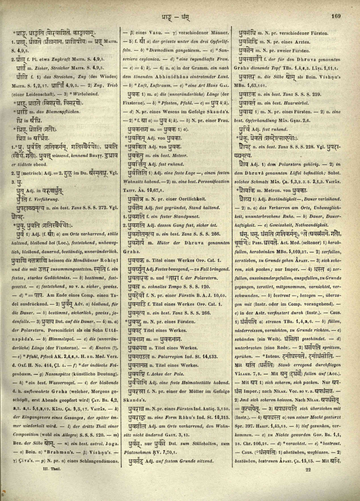
dhruvá — 1〉 Adj. (f. ā́) — a〉 am Orte verharrend, stille haltend, bleibend bei (Loc.), feststehend, unbeweglich, bleibend, dauernd, beständig, unveränderlich. dhruvāṇi nakṣatrāṇi heissen die Mondhäuser Rohiṇī und die mit uttara zusammengesetzten. smṛti f. ein festes, starkes Gedächtniss. — b〉 bestimmt, festgesetzt. — c〉 feststehend, so v. a. sicher, gewiss. — d〉 *= pāpa. Am Ende eines Comp. einen Tadel ausdrückend. — 2〉 dhruvám Adv. — a〉 bleibend, für die Dauer. — b〉 bestimmt, sicherlich, gewiss, jedenfalls. — 3〉 dhruvāya Dat. auf die Dauer. — 4〉 m. — a〉 der Polarstern. Personificirt als ein Sohn Uttānapādaʼs. — b〉 Himmelspol. — c〉 die (unveränderliche) Länge (der Fixsterne). — d〉 Knoten (?). — e〉 *Pfahl, Pflock AK. 2,4,1,8. H. an. Med. Verz. d. Oxf. H. No. 414, Śl. 4. — f〉 *der indische Feigenbaum. — g〉 Nasenspitze (künstliche Deutung). — h〉 *ein best. Wasservogel. — i〉 der bleibende d. h. aufbewahrte Graha (welcher, Morgens geschöpft, erst Abends geopfert wird) ŚAT. BR. 4,2,3,3. ŚAT. BR. 4,2,4,1. ŚAT. BR. 5,1,2,19. KĀTY. ŚR. 9,5,17. VAITĀN. — k〉 der Eingangsvers eines Gesanges, der später immer wiederholt wird. — l〉 der dritte Theil einer Composition (wohl ein Allegro) S. S. S. 120. — m〉 Bez. der Silbe om. — n〉 ein best. astrol. Yoga. — o〉 Bein. — α〉 *Brahmanʼs. — β〉 Viṣṇuʼs. — γ〉 Śivaʼs. — p〉 N. pr. — α〉 eines Schlangendämons. [Page3-169-b] — β〉 eines Vasu. — γ〉 verschiedener Männer. — 5〉 f. ā́ — a〉 der grösste unter den drei Opferlöffeln. — b〉 *Desmodium gangeticum. — c〉 *Sansevieria ceylonica. — d〉 *eine tugendhafte Frau. — e〉 = 4〉k〉. — 6〉 n. — a〉 in der Gramm. ein nach dem tönenden Abhinidhāna eintretender Laut. — b〉 *Luft, Luftraum. — c〉 *eine Art Haus GAL.
Original text · German · substantive feminine
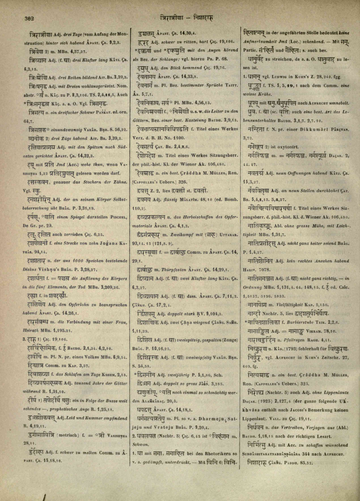
dhruva , f. ā (sc. vṛtti) auch eine best. Art des Lebensunterhaltes BAUDH. 3,1,7. BAUDH. 3,2,7. BAUDH. 3,2,10. [Nachtrag, Band 6]
Original text · German · Word type unspecified
dhruva III. 6. [Nachtrag, Band 7]
Apte 1890 adjective · substantive masculine · substantive neuter
Original text · English · adjective · substantive masculine · substantive neuter
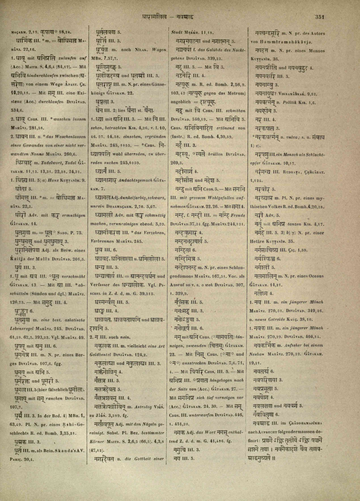
dhruva a. 1 (a) Fixed, firm, immovable, stable, permanent, constant, unchangeable; iti dhruvecchāmanuśāsatī sutāṃ Ku. 5. 5. (b) Perpetual, everlasting, eternal; dhruveṇa bhartrā Ku. 7. 85; Ms. 7. 208. 2 Fixed (in astrology). 3 Certain, sure, inevitable; jātasya hi dhruvo mṛtyardhruvaṃ janma ([Page 0602-c]) mṛtasya ca Bg. 2. 27; yo dhruvāṇi parityajya adhruvaṃ pariṣevate Chāṇ. 63; Pt. 1. 419. 4 Retentive, tenacious; as in dhruvā smṛtiḥ 5 Strong, fixed, settled (as a day). — vaḥ 1 The polar star; R. 17. 35; R. 18. 34; Ku. 7. 85. 2 The pole of any great circle. 3 The distance of a planet from the beginning of the sidereal zodiac, polar longitude. 4 The Indian fig-tree. 5 A post, stake. 6 The stem or trunk (of a tree lopped off). 7 The introductory stanza of a song (repeated as a kind of chorus; see Gīt.). 8 Time, epoch, era. 9 An epithet of Brahmā. 10 Of Viṣṇu. 11 Of Śiva. 12 A constant arc. 13 The tip of the nose. 14 A sacrificial vessel. 15 N. of the son of Uttānapāda and grandson of Manu. [Dhruva is the polar star, but personified in mythology as the son of Uttāna. pāda. The account of the elevation of an ordinary mortal to the position of the polar star runs thus. Uttānapāda had two wives, Suruci and Sunīti, but the latter was disliked by him. Suruci had a son named Uttama, and Sunīti gave birth to Dhruva. One day the boy tried, like his elder brother, to take a seat in his father's lap, but he was contemptuously treated both by the King and his favourite wife. The poor child went sobbing to its mother who told him in consolatory terms that fortune and favour were not attainable without hard exertions. At these words the youth left the paternal roof, retired to the woods, and, though quite a lad, performed such rigorous austerities that he was at last raised by Viṣṇu to the position of the Polar Star]. — vaṃ 1 The sky, atmosphere. 2 Heaven. — vā 1 A sacrificial ladle (made of wood). 2 A virtuous woman. 3 A cow who stands still when being milked. — vaṃ ind. Certainly, surely, verily; R. 8. 49; Ś. 1. 18. Comp. — akṣaraḥ an epithet of Viṣṇu. — āvartaḥ the point on the crown of the head from which the hair radiate. — tārā, -tārakaṃ the Polar star.
Cappeller 1887 Word type unspecified
Original text · German · Word type unspecified
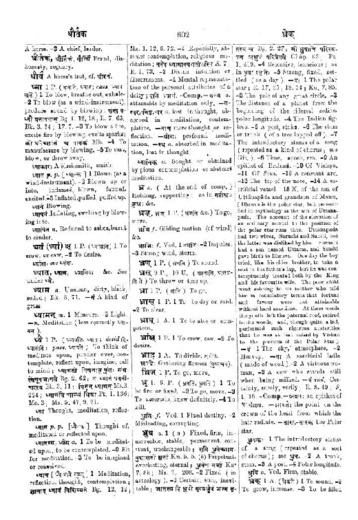
dhruvá beharrend, feststehend, beständig, bestimmt, gewiss; n. adv. m. der Polarstern, Mannsn. f. dhā́ ein best. Opferlöffel.
Burnouf 1866 adjective
Original text · French · adjective
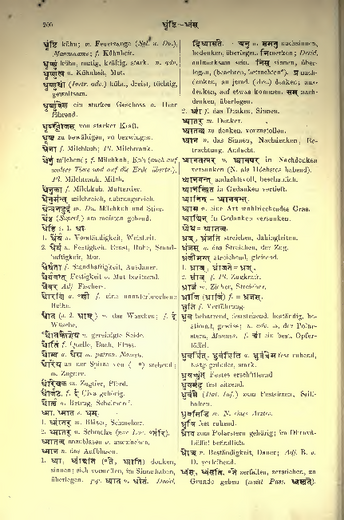
dhruva dhruva a. (dru; sfx. a) ferme, solide, fixe. Au fig. permanent, perpétuel; certain; sûr. — À l'ac. dhruvam certainement. — S. n. stabilité; chose sûre, certitude; raisonnement vrai, conclusion certaine. Son intercalé, dans la dissolution d'un sandhi, tg. Refrain inséré dans des stances. Distance entre deux positions, t. d'astron. Le ciel. — S. m. l'étoile polaire: dhruvapracalana n. le déplacement de l'étoile polaire. Dhruva [l'étoile polaire personnifiée], fils d'Uttānapāda et petit-fils de Manu. Un des 8 Vasus. Brahmā; Viṣṇu; Śiva. Figuier de l'Inde. — S. f. femme vertueuse, sur laquelle on peut compter. Vase sacré fait de bois de flacourtia sapida. Hedysarum gangeticum; la mūrvā, bot. dhruvaka m. tronc d'arbre ébranché. — F. refrain de stances.
Occurrences in source texts (3)
PYS 1 occurrence
SiSa 1 occurrence
SVU 1 occurrence
Continue with AYI Free
Image source: AYI archive.