

dī दी – shine; radiate
verbal root · substantive feminine · Word type unspecified · verb
Dictionary sources
AYI dictionary verbal root
shine; radiate
Cappeller 1891 Word type unspecified · verb
Original text · English · verb
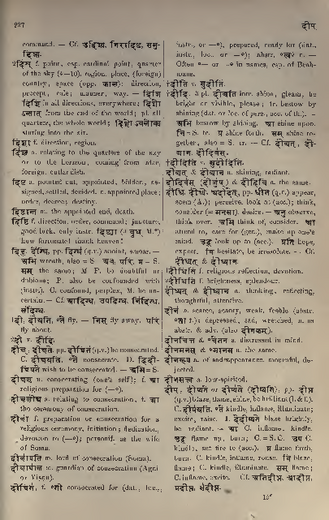
dī dī́yati dī́ya°te1 ·v fly. --nis fly away. pari fly about.
Original text · English · Word type unspecified
dī2 ·-> dīdi.
Monier-Williams 1872 substantive feminine · Word type unspecified · verb
Original text · English · substantive feminine
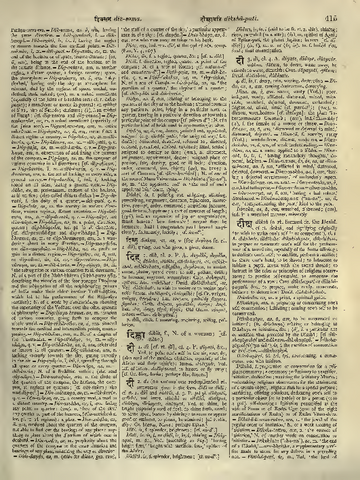
4. dī, īs, f. decay, ruin, wasting, destruction.
Original text · English · Word type unspecified
dī 1 . dī [cf. rt. ḍī], cl. 4. P. dīyati, &c., Ved. to poise one's self in the air, soar, fly, (also used of the motions of deities, especially of the Aśvins and their vehicle): Intens. dedīyate, Ved. inf. of Intens. dedīyitavai, to hasten or fly away; [cf. Gr. δίνω, δινέω; perhaps δίω, δίεμαι.]
Original text · English · Word type unspecified
dī 2 . dī (an anomalous reduplicated rt. sometimes given in the form dīdī or dīdi; cf. rt. 1. dhī and dīdhī), cl. 3. P. 3rd pl. dīdyati, adīdet, 2nd impv. dīdihi or didīhi, dīdiyus, dīdāya, dīdayati, dīdayat, Ved. to shine, be bright (especially used of fire), to shine forth, excel; to shine upon, bestow by shining; to seem or appear good or eminent, to please, be admired; [cf. 2. div, dīp: Gr. δέαται, δέατο; perhaps δῆλος..]
Original text · English · verb
dī 3 . dī, cl. 4. A. dīyate, didīye, dāsyate, adāsta, dātum, to decay, waste away, be ruined; to waste, diminish: Caus. dāpayati, -yitum: Desid. didīṣate, didāsate.
Petersburger 1855 substantive feminine · Word type unspecified
Original text · German · substantive feminine
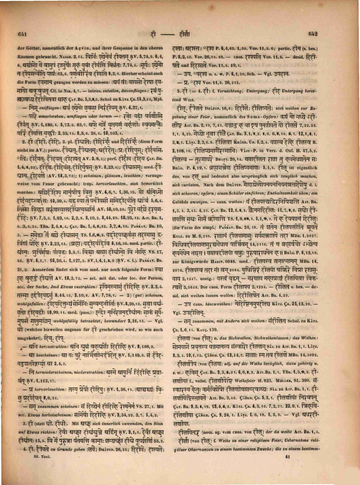
5. dī (= 4. dī) f. Vernichtung, Untergang; dīda Untergang bereitend WILS.
Original text · German · Word type unspecified
1. dī (vgl. ḍī), dī́yati schweben, fliegen; auch von der Bewegung der Götter, namentlich der Aśvin, und ihrer Gespanne in den oberen Räumen gebraucht. NAIGH. 2,14. vibhìḥ śye̱nevà dīyatam ṚV. 5,74,9. ṚV. 6,4,6. aśvā̀so̱ ye vā̱mupà dā̱śuṣò gṛ̱haṃ yu̱vāṃ dīyànti̱ bibhràtaḥ ṚV. 7,74,4. (sūryaḥ) śye̱no na dīya̱nnanvèti̱ pāthàḥ ṚV. 7,63,5. pa̱rṇa̱vīrìva dīyati ṚV. 9,3,1. Hierher scheint auch die Form dayamāna gezogen werden zu müssen: (ayaṃ vāṃ) vāyaso doṣā dayamāno abūbudhat Cit. in NIR. 4,7. — intens. enteilen, davonfliegen: rathaṃ yuktvābadhya dedīyitavā āha ŚAT. BR. 5,3,2,6. Schol. zu KĀTY. ŚR. 15,3,42, Mpt. — nis entfliegen: adhà śye̱no ja̱vasā̱ niràdīyam ṚV. 4,27,1. — pari umschweben, umfliegen oder herum —: ratho̱ yadvā̱ṃ paryarṇā̀ṃsi̱ dīyàt ṚV. 1,180,1. ṚV. 5,73,3. ṚV. 5,83,7. apo̱ naptrè ghṛ̱tamanna̱ṃ vahàntīḥ sva̱yamatkai̱ḥ parì dīyanti ya̱hvīḥ ṚV. 2,35,14. ṚV. 8,5,8. ṚV. 8,26,6. ṚV. 10,103,4.
Original text · German · Word type unspecified
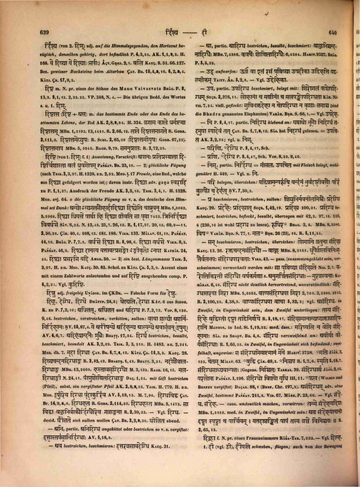
2. dī (dīdī, dīdi), 3. pl. dīdyati; dīdihí und didīhí (diese Form nicht im AV.); partic. dī́dyat, dī́dyatam; adīdet; (pra) dīdiyus; dīdáyasi, ˚ti; dīdáyat, dī́dayat (dīdāyat AV. 3,8,3); perf. dīdā́ya (dīdaya ŚAT. BR. 1,4,1,32), dīdétha, dīdivaṃs, dīdiyúṣas (ṚV. 8,23,4); dīdyāsam; med. dī́dyāna, dīdayante (AV. 18,3,73); 1〉 scheinen, glänzen, leuchten; vorzugsweise vom Feuer gebraucht; trop. hervorleuchten, sich bemerklich machen: a̱gnirdī̀dāya̱ mānùṣīṣu vi̱kṣu ṚV. 4,6,7. ṚV. 1,36,19. yo àni̱dhmo dīdàyada̱psva1̱̀ntaḥ ṚV. 10,30,4. yaddha̱ syā te̱ panī̀yasī sa̱middī̱dayàti̱ dyavì ṚV. 5,6,4. ti̱sro ji̱hvā varùṇasyā̱ntardīdyatyā̱sanì AV. 10,10,28. puro̱ yadàgne da̱raya̱nnadī̀deḥ ṚV. 7,5,3. ṚV. 1,93,10. ṚV. 2,2,8. ṚV. 3,10,2. ṚV. 8,44,29. ṚV. 10,95,12. AIT. BR. 1,8. AIT. BR. 3,8. AIT. BR. 3,34. TBR. 2,4,1,4. ŚAT. BR. 1,4,1,32. ŚAT. BR. 3,7,4,10. PAÑCAV. BR. 10,5. — sa̱me̱ddhā tè agne dīdyāsam TS. 1,6,6,2. yaddī̱daya̱cchavàsā̱ tada̱smāsu̱ dravìṇaṃ dhehi ṚV. 2,23,15. (brahma) yaddī̱dayàddi̱vi ṚV. 6,16,36. med. partic.: dīdyā̀na̱ḥ śucìrṛ̱ṣvaḥ pā̀va̱kaḥ ṚV. 3,5,7. viśvā̱ āśā̱ dīdyā̀no̱ vi bhā̀hi VS. 17,66. ṚV. 6,1,7. ṚV. 10,20,4. ṚV. 1,127,3. SV. I, 4,1,5,9 ?(ṚV. v. l.). PAÑCAV. BR. 21,3. Ausserdem findet sich vom med. nur noch folgende Form: svā i̱ha bṛ̱hadù dīdyante AV. 18,3,73. — act. mit dat. oder loc. der Person, acc. der Sache, Jmd Etwas zustrahlen: ra̱yima̱smāsù dīdihi ṚV. 2,2,6. tasmā̱ iddī̀daya̱dvasù ṚV. 8,44,15. ṚV. 3,10,8. AV. 7,78,1. — 2〉 (gut) scheinen, wohlgefallen: dī̱daya̱dittubhya̱ṃ somèbhiḥ su̱nvanda̱bhītìḥ ṚV. 6,20,13. sutvā̱ yadyàja̱to dī̱daya̱dgīḥ ṚV. 10,99,11. med. (pass.): indro̱ nṛbhìrajana̱ddīdyā̀naḥ sā̱kaṃ sūryàmu̱ṣasàṃ gā̱tuma̱gnim wohlgefällig betrachtet, bewundert ṚV. 3,31,15. — Vgl. dhī (welches bisweilen ungenau für dī geschrieben wird, so wie auch umgekehrt), div, dīp. — abhi herzustrahlen: a̱bhi dyu̱mnaṃ bṛ̱hadyaśò didīhi ṚV. 9,108,9. — ā bescheinen: ā yaḥ pura̱ṃ nārmìṇī̱madī̀det ṚV. 1,149,3. sa dī̀dayaduśa̱tīrūrmyā̱ ā ṚV. 2,4,3. — ni herniederscheinen, niederstrahlen: a̱sme āyu̱rni dìdīhi pra̱jāvàt ṚV. 1,113,17. — pra hervorleuchten: tasya̱ preṣò dīdiyuḥ ṚV. 1,36,11. (āśvaśvyaṃ) vi̱kṣu pra̱dīdàyat ṚV. 8,6,24. — sam zusammen scheinen: saṃ di̱vyenà dīdihi roca̱nenà VS. 27,1. Mit acc. Etwas herbeischeinen: samiṣò didīhi ṚV. 3,54,22. ṚV. 3,3,7. ṚV. 5,4,2.
Original text · German · Word type unspecified
3. dī (statt dhī, dīdhī). Mit accha sich innerlich zuwenden, den Sinn auf Etwas richten: de̱vām̐ acchā̱ dīdyàdyu̱ñje adrìm ṚV. 3,1,1. de̱vām̐ acchā̱ dīdyā̀naḥ ṚV. 3,15,5. vi mè puru̱trā pàtayanti̱ kāmā̱ḥ śamyacchā̀ dīdye pū̱rvyāṇì ṚV. 3,55,3.
Original text · German · Word type unspecified
4. dī , dī́yate zu Grunde gehen (kṣaye) DHĀTUP. 26,25; didīye; dāsyate; dātā; adāsta; ˚dāya P. 6,4,63. P. 6,1,50. VOP. 11,5. VOP. 11,6; partic. dīna (s. bes.) P. 8,2,45. VOP. 26,88. VOP. 26,89. — caus. dāpayati VOP. 11,6. — desid. didīṣate und didāsate VOP. 11,6. VOP. 19,1. — upa, ˚padāya u. s. w. P. 6,1,50, Sch. — Vgl. upadāna. — pra, ˚dāya VOP. 11,6. VOP. 26,212.
Böhtlingk 1879 verbal root · substantive feminine
Original text · German · verbal root
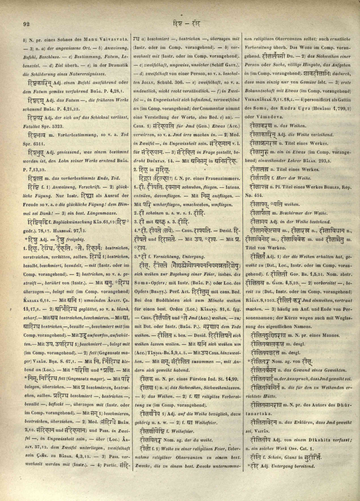
1. √dī , dī́yati, dayamāna schweben, fliegen. — Intens. enteilen, davonfliegen. — Mit nis entfliegen. — Mit pari umherfliegen, umschweben, umfliegen.
Original text · German · verbal root
2. √dī scheinen u. s. w. s. 1. dīdi.
Original text · German · verbal root
3. √dī mit accha s. 3. dīdi.
Original text · German · verbal root
4. *√dī , dīyate (kṣaye). — Caus. dāpayati. — Desid. didīṣate und didāsate. — Mit upa, ˚dāya. pra, ˚dāya.
Original text · German · substantive feminine
5. *dī f. Vernichtung, Untergang.
Whitney Roots 1885 verbal root
Original text · English · verbal root
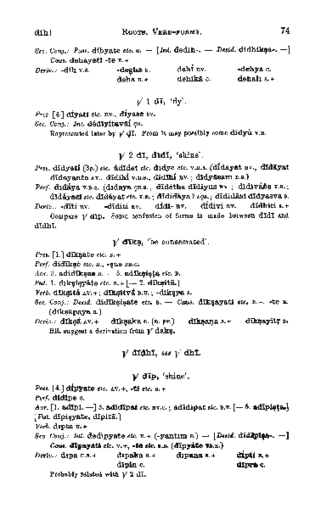
dī [1] — fly
Original text · English · verbal root
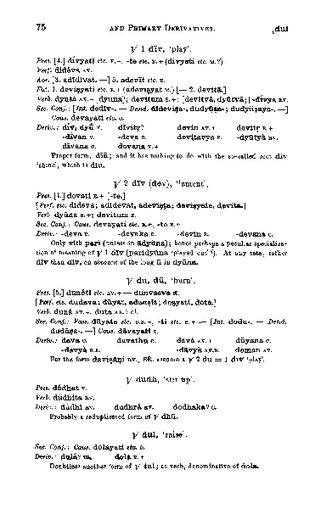
dī [2], dīdī — shine
Apte 1890 verbal root · substantive feminine
Original text · English · verbal root
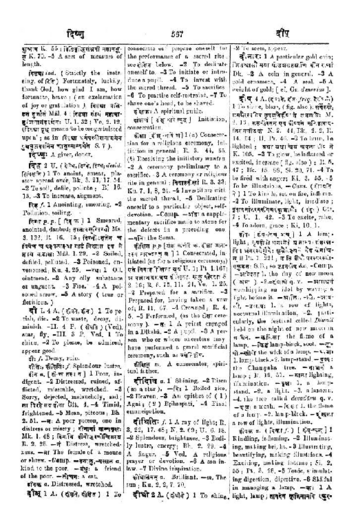
dī I. 4 A. (dīyate, dīna) 1 To perish, die. 2 To waste, decay, diminish II. 4 P. (dīyati) (Ved.) soar, fly. III. 3 P. Ved. 1 To shine. 2 To please, be admired, appear good.
Original text · English · substantive feminine
dīḥ f. Decay, ruin.
Cappeller 1887 Word type unspecified · verb
Original text · German · Word type unspecified
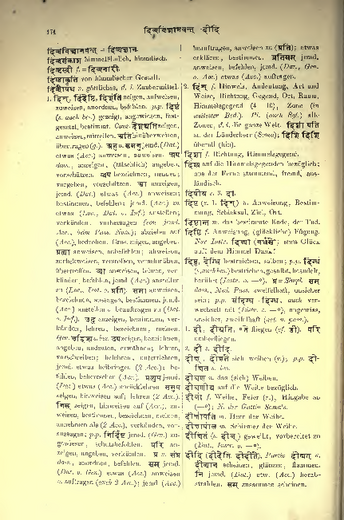
2. dī s. dīdi.
Original text · German · verb
1. dī dī́yati, ˚te fliegen (cf. ḍī). pari umherfliegen.
Burnouf 1866 verbal root
Original text · French · verbal root
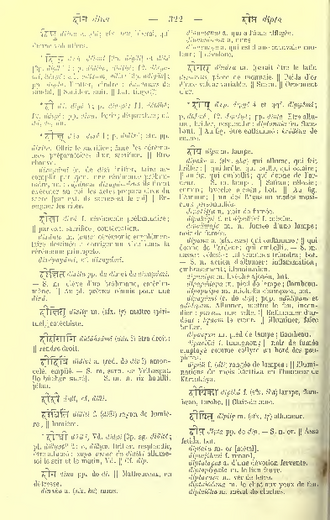
*dī dī. dīye 4; p. didīye; f1. dātāhe; f2. dāsye; pp. dīna. Périr; disparaître; cf. dā, do, du.
Occurrences in source texts (1)
HP 1 occurrence
Continue with AYI Free
Image source: AYI archive.