

kośa कोश – vagina; receptacle
substantive masculine · substantive neuter · Word type unspecified
Dictionary sources
AYI dictionary substantive masculine
vagina; receptacle
Cappeller 1891 substantive masculine
Original text · English · substantive masculine
kóśa ·m. cask, bucket (fig. of a cloud), box, chest, inner part of a carriage, sheath, scabbard, case, cover; ball, globe (--°); bud, seed-cup (esp. of the lotus plant); pod, husk, shell; cocoon, womb, scrotum; store-room, treasury; treasure, dictionary, anthology.
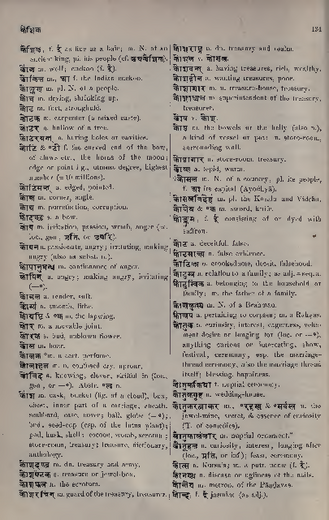
Monier-Williams 1872 substantive masculine · substantive neuter
Original text · English · substantive masculine · substantive neuter
kośa kośa, as, am, m. n. (fr. rt. kuś or kuṣ ?, related to kukṣi and koṣṭha?; in the earlier literature generally spelt kośa; later books read both kośa and koṣa), a cask, a vessel for holding liquids; (metaphorically) a cloud; a pail; a bucket; a drink- ing-vessel, a cup, a vessel in general; a box, a cup- board, a drawer, a trunk; the interior or inner part of a carriage; a sheath, a scabbard, &c.; a case, a covering, a cover; store-room, store, provisions; a treasury, the apartment where money or plate is kept; treasure, accumulated wealth, money; gold or silver, wrought or unwrought, as plate, jewellery, &c.; a kind of bandage (in surgery); a dictionary, lexicon, or vocabulary; a bud; the sheath or integument of a plant; a pod or any similar seed-vessel; a nutmeg, a nut-shell; the inner part of the fruit Artocarpus Integrifolia; the cocoon of a silk-worm; the vulva, the womb; the penis; a testicle or the scrotum; an egg; (in the Vedānta philosophy) a term for the three sheaths or succession of cases which make up the various frames of the body enveloping the soul, (these are, 1. the ānanda-mayaḥ kośaḥ or ‘sheath of pleasure,’ forming the kāraṇa-śarīra or ‘causal frame;’ 2. the vijñāna-mayaḥ or buddhi- mayaḥ or mano-mayaḥ or prāṇa-mayaḥ kośaḥ, ‘the sheath of intellect or will or life,’ forming the sūkṣma-śarīra or ‘subtile frame;’ 3. the anna- mayaḥ kośaḥ, ‘the sheath of nourishment,’ forming the sthūla-śarīra or ‘gross frame’); a ball or globe (e. g. sūtra-koṣa, a ball of thread; netra-koṣa, the eye-ball &c.); judicial trial, ordeal by fire, water, poison, the balance, heated balls of iron, boiling oil &c., attesting a deity with thrice-repeated drinking of the water in which some idol has been washed; the water used at an ordeal; an oath; (ā), f., N. of a river; (ī), f. a bud; a seed-vessel; the beard of corn; a shoe, a sandal; [cf. Hib. gucog, ‘a bud, a sprout;’ Gr. κόκκος]
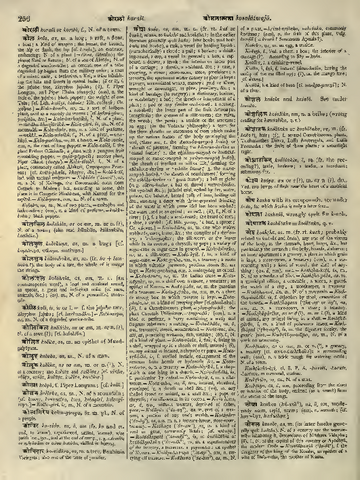
Petersburger 1855 substantive masculine · substantive neuter · Word type unspecified
Original text · German · substantive masculine · substantive neuter
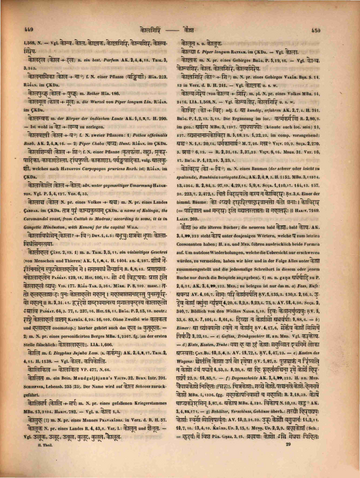
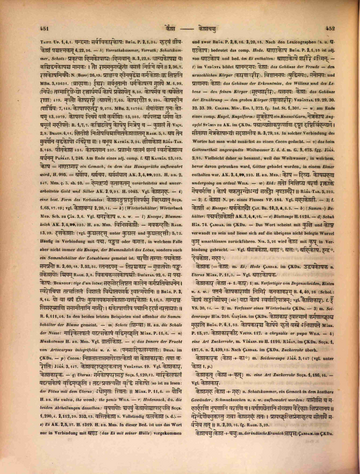
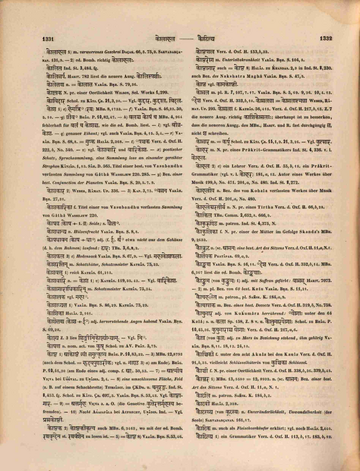
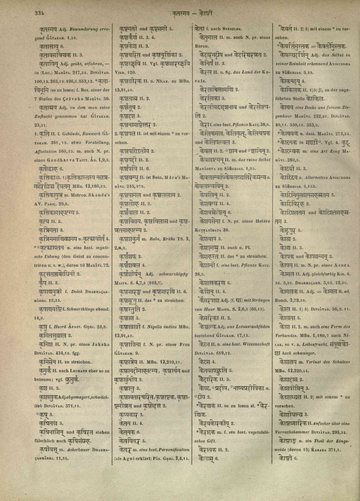
kóśa (so alle älteren Bücher; die neueren bald kośa, bald koṣa. AK. 3,4,29,223 steht koṣa unter denjenigen Wörtern, welche ṣa zum letzten Consonanten haben; H. an. und MED. führen ausdrucklich beide Formen auf. Um nutzlose Wiederholungen, welche die Uebersicht nur erschweren würden, zu vermeiden, haben wir hier und in der Folge Alles unter kośa zusammengestellt und die jedesmalige Schreibart in diesem oder jenem Buche nur durch die Beispiele angegeben). 1〉 m.n. gaṇa ardharcādi zu P. 2,4,31. AK. 3,4,29,223. MED.; zu belegen ist nur das m. a〉 Fass. Kufe: abandhra AV. 4,16,7. soma̱ḥ pari̱kośàmarṣati ṚV. 1,135,2. ṚV. 1,130,2. ṚV. 2,16,5. u̱dneva̱ kośa̱ṃ vasùnā̱ nyṛ̀ṣṭam ṚV. 4,20,6. ṚV. 8,2,8. ṚV. 9,23,4. ṚV. 9,75,3. AV. 18,4,30. SUŚR. 2,340,7. Bildlich von den Wolken NAIGH. 1,10. di̱vaḥ kośa̱macùcyavuḥ ṚV. 5,53,6. ṚV. 5,83,8. ṚV. 7,101,4. ṚV. 8,61,8. di̱vyā na kośā̀so a̱bhravàrṣāḥ ṚV. 9,88,6. — b〉 Eimer: ā cyā̀vayāmo 'va̱te na kośàm ṚV. 4,17,6. sektèva̱ kośàṃ sisice̱ pibàdhyai ṚV. 3,32,15. — c〉 Gefäss, Trinkgeschirr H. an. MED. Vgl. karakoṣa. — d〉 Kiste, Kasten, Truhe: yathā ha vā idaṃ kośaḥ samubjita evamime lokā apsvantaḥ ŚAT. BR. 10,5,4,3. AV. 19,72,1. ṚV. 6,47,23. — e〉 Kasten des Wagens: ścotànti̱ kośā̱ upà vo rathe̱ṣvā ṚV. 1,87,2. pū̱ṣṇaśca̱kraṃ na rìṣyati̱ na kośo 'và padyate ṚV. 6,53,3. ṚV. 8,20,8. ā hi ru̱hatàmaśvinā̱ rathe̱ kośè hira̱ṇyayè ṚV. 22,9. ṚV. 10,85,7. — f〉 Degenscheide AK. 3,4,29,223. H. an. MED. vaiyāghrakośe nihitaḥ (tsaruḥ), citrakośaḥ, gavye kośe, pāñcanakhe kośe, hemamaye kośe MBH. 4,1336, fgg. mahākoṣanivāsī ca mahāsiḥ R. 3,18,39. koṣe cāpyakarodasim R. 5,87,6. akoṣa MBH. 4,321. vikoṣa N. 10,18. khaṅga˚ AK. 3,4,25,171. — g〉 Behälter, Verschluss, Gehäuse überh.: tasyā̀ṃ hira̱ṇyaya̱ḥ kośàḥ sva̱rgo jyoti̱ṣāvṛ̀taḥ AV. 10,2,31. AV. 10,2,32. u̱ruḥ kośò vasu̱thānàḥ AV. 11,2,11. AV. 10,7,10. AV. 13,4,10. CHĀND. UP. 3,15,1. MUṆḌ. UP. 2,2,9. brahmakośaṃ (Sch.: = hṛdayaṃ) me viśa PĀR. GṚHY. 3,15. brahmaṇaḥ kośo 'si medhayā pihitaḥ TAITT. UP. 1,4,1. candramāḥ sarvavikārakoṣaḥ BHĀG. P. 2,1,34. hṛdayaṃ jīvakośaṃ pañcātmakam BHĀG. P. 4,22,26. — h〉 Vorrathskammer, Vorrath; Schatzkammer, Schatz: prakṛtyā himakoṣāḍhyaḥ (himavān) R. 3,22,9. dhānyakoṣaśca yaḥ kaściddhanakoṣaśca māmakaḥ . tau rāmamanugacchetāṃ vasantaṃ nirjane vane .. R. 2,36,7. ratnakoṣanicayaiḥ N. (BOPP) 26,19. prājñasya hīnabuddheśca karmakośaḥ kva tiṣṭhati MBH. 3,12631. (brāhmaṇaḥ) īśvaraḥ sarvabhūtānāṃ dharmakoṣasya guptaye M. 1,99. (nidheḥ) tasmāddvijebhyo dattvārdhamardhaṃ koṣe praveśayet M. 8,38. koṣameva ca (avekṣeta rājā) M. 419. nṛpatau koṣarāṣṭre (āyatte) M. 7,65. koṣadaṇḍau M. 9,294. koṣahīna (pārthiva) M. 7,148. koṣāpahatar M. 9,275. MBH. 3,14704. saṃcayitvā punaḥ koṣam MBH. 13,3079. koṣasya nicaye yatnaṃ kurvīthāḥ MBH. 15,205. vardhayantaśca dharmeṇa koṣamūlaṃ mahīpateḥ R. 1,7,7. kaccidbaleṣu koṣeṣu mitreṣu ca — kuśalaṃ te VIŚV. 2,9. DRAUP. 4,11. kṣitīśaṃ niḥśeṣaviśrāṇitakośajātam RAGH. 5,1. atha tena suvarṇena vṛddhakoṣo 'cireṇa saḥ . babhūva KATHĀS. 3,24. kṣīṇakośa RĀJA-TAR. 5,165. pītakośa RĀJA-TAR. 421. koṣagaṇana RĀJA-TAR. 237. prajānāṃ pālanaṃ śasyaṃ svargakośasya vardhanam PAÑCAT. I, 248. Am Ende eines adj. comp. f. ā KATHĀS. 13,103. koṣa = bhāṇḍāgāra ein Gemach, in dem das Hausgeräthe aufbewahrt wird, H. 995. = arthaugha, arthacaya, arthasaṃghāta AK. 3,4,29,223. H. an. 2,547. MED. ś. 5. MED. ś. ṣ. 10. = hemarūpyaṃ kṛtākṛtam verarbeitetes und unverarbeitetes Gold und Silber AK. 2,9,91. H. 1045. Vgl. kośagṛha. — i〉 eine best. Form des Verbandes: kośamaṅguṣṭhāṅguliparvasu vidadhyāt SUŚR. 1,65,17. SUŚR. 1,65,19; vgl. kośabandha SUŚR. 2,20,14. — k〉 (Wörterbehälter) Wörterbuch MED. Sch. zu ŚĀK. 3,6. Vgl. amarakoṣa u. s. w. — l〉 Knospe, Blumenkelch AK. 3,4,29,223. H. an. MED. vibhinnakośaiḥ — navakandalaiḥ RAGH. 13,29. dantakośāḥ (vgl. kuḍmaladant unter kuḍmala und kuḍmaladantī) RAGH. 5,72. Häufig in Verbindung mit padma, paṅkaja oder kamala, in welchem Falle aber nicht immer die Knospe, der Blumenkelch des Lotus, sondern auch ein Samenbehälter der Lotusblume gemeint ist. caraṇau tasyāḥ padmakośasamaprabhau R. 2,60,18. R. 3,52,34. stanadvayam — tiraścakāra — sujātayoḥ paṅkajakośayoḥ śriyam RAGH. 3,8. vikacakamalakoṣaśrīḥ DHŪRTAS. 92,6. sa padmakoṣaḥ (BURNOUF: tige dʼun lotus) sahasodatiṣṭhata kālena karmapratibodhanena . svarociṣā tatsalilaṃ viśālaṃ vidyotayannarka ivātmayoniḥ .. BHĀG. P. 3,8,14. yo vā ayaṃ dvīpaḥ kuvalayakamalakośābhyantarakośaḥ BHĀG. P. 5,16,5. tānyañjalisahasrāṇi samānītāni nāgaraiḥ . akoṣāṇīva padmāni dadarśa bharatāgrajaḥ .. R. 6,111,46. In den beiden letzten Beispielen sind offenbar die Samenbehälter der Blume gemeint. — m〉 Schote (śimbā) H. an. die Schale der Nüsse: nārikelaphalaṃ yadvatsakoṣaṃ vṛddhimṛcchati MĀRK. P. 11,6. — n〉 Muskatnuss H. an. MED. Vgl. jātīkośa. — o〉 das Innere der Frucht von Artocarpus integrifolia u. s. w. (panasādiphalasyāntaḥ) DHAR._im_ŚKDR. — p〉 Cocon: nijalālāsamāyogātkośaṃ vā kośakārakaḥ (yathā karoti) YĀJÑ. 3,147. kośavadācchādakatvāt VEDĀNTAS. 19. Vgl. kośakāra, kośakāraka. — q〉 Uterus: garbhakoṣaparāsaṅga SUŚR. 1,120,12. nārikelaphalaṃ yadvatsakoṣaṃ vṛddhimṛcchati . tadvatprayātyasau vṛddhiṃ sakoṣo (so ist zu lesen: der Fötus mit dem Uterus) 'dhomukhaḥ sthitaḥ .. MĀRK. P. 11,6. = yoni H. an. the vulva, the womb; the penis WILS. — r Hodensack, du. die beiden Abtheilungen desselben: vṛṣaṇayoḥ śvayathuṃ kośayoścāpādayati SUŚR. 1,290,4. SUŚR. 2,112,20. SUŚR. 2,352,13. vastikośa SUŚR. 5. Vollständig phalakośa (s. d.). — s〉 Ei AK. 2,5,37. H. 1319. H. an. MED. In dieser Bed. ist uns das Wort nur in Verbindung mit aṇḍa (das Ei mit seiner Hülle) vorgekommen und zwar BHĀG. P. 2,8,16. BHĀG. P. 3,20,15. Nach den Lexicographen (s. u. aṇḍakoṣa) bedeutet das comp. Hode. āṇḍakoṣa BHĀG. P. 2,1,25 ist adj. von aṇḍakoṣa und bed. im Ei enthalten: āṇḍakoṣe śarīre 'smin. — t〉 im VEDĀNTA bildet ānandamayaḥ kośaḥ das Gehäuse der Freude — den ursachlichen Körper (kāraṇaśarīra), vijñānamayaḥ (buddhimayaḥ), manomayaḥ und prāṇamayaḥ kośaḥ das Gehäuse der Erkenntniss, des Willens und des Lebens — den feinen Körper (sūkṣmaśarīra), annamayaḥ kośaḥ das Gehäuse der Ernährung — den groben Körper (sthūlaśarīra) VEDĀNTAS. 19. VEDĀNTAS. 29. VEDĀNTAS. 30. VEDĀNTAS. 32. VEDĀNTAS. 33. VEDĀNTAS. 39. COLEBR. Misc. Ess. I, 372. fg. Ind. St. 1,301. — u〉 am Ende eines comp. Kugel, Kugelform: sūtrakoṣa ein Knauel Garn, netrakoṣa Augapfel SVĀMIN_zu_AK._im_ŚKDR. padmānyaśokapuṣpāṇi daṣṭvā dṛṣṭirvihanyate . sītāyā netrakoṣābhyāṃ sadṛśānīva R. 3,79,28. In solcher Verbindung des Wortes hat man wohl zunächst an einen Cocon gedacht. — v〉 das beim Gottesurtheil angewandte Weihwasser Z. d. d. m. G. 9,675. fgg. YĀJÑ. 2,95. Vielleicht daher so benannt, weil das Weihwasser, in welchem, bevor davon getrunken ward, Götter gebadet wurden, in einem Eimer enthalten war. AK. 3,4,29,223. H. an. MED.: koṣa = divya. koṣagrahaṇa undergoing an ordeal WILS. — w〉 Eid: tato nikṣipya caraṇaṃ raktākte meṣacarmaṇi . koṣaṃ cakraturanyo'nyaṃ sakhaṅgau nṛpaḍāmarau .. RĀJA-TAR. 5,325. — 2〉 f. kośā N. pr. eines Flusses VP. 184. Vgl. mahākośī. — 3〉 f. kośī a〉 Knospe: arkakośyau ŚAT. BR. 10,3,4,3. ŚAT. BR. 10,3,4,5. — b〉 (Samen-)Behälter: padmavījakośī AK. 3,4,1,16. — c〉 Blattauge H. 1124. — d〉 Schuh HĀR. 74. ŚABDAR._im_ŚKDR. — Das Wort scheint mit kukṣi und koṣṭha verwandt zu sein und liesse sich auf die übrigens nicht belegte Wurzel kuś umschliessen zurückführen. NIR. 5,26 wird kośa mit kuṣ in Verbindung gebracht. — Vgl. aṃsatrakośa, aṇḍa˚, antaḥ˚, ahikoṣa, indra˚, devakośa, mahā˚.
Original text · German · Word type unspecified
kośa 1〉e〉 hematri˚ (ratha) MBH. 8,1733. — f〉 VARĀH. BṚH. S. 46,23. VARĀH. BṚH. S. 50,5. VARĀH. BṚH. S. 50,10. — g〉 jīva˚ BHĀG. P. 10,82,47. — h〉 balaśca koṣaṃ ca MBH. 4,964 fehlerhaft für balaṃ ca kośaśca, wie die ed. Bomb. liest. — l〉 vgl. bījakośa. — q〉 genauer Eihaut; vgl. auch VARĀH. BṚH. 4,15. VARĀH. BṚH. 5,4. — r〉 VARĀH. BṚH. S. 68,8. = muṣka HALĀY. 2,368. — t〉 ˚pañcaka Verz. d. Oxf. H. 222,b, No. 540. — v〉 vgl. kośavāri und vārikośa. — x〉 poetischer Schatz, Spruchsammlung, eine Sammlung lose an einander gereihter Strophen KĀVYĀD. 1,13. SĀH. D. 565. Titel einer best. von Vasubandhu verfassten Sammlung von Gāthā WASSILJEW 220. WASSILJEW 285. — y〉 Bez. einer best. Conjunction der Planeten VARĀH. BṚH. S. 20,5. VARĀH. BṚH. S. 20,7. VARĀH. BṚH. S. 20,9.
Böhtlingk 1879 substantive masculine · substantive neuter · Word type unspecified
Original text · German · substantive masculine · substantive neuter
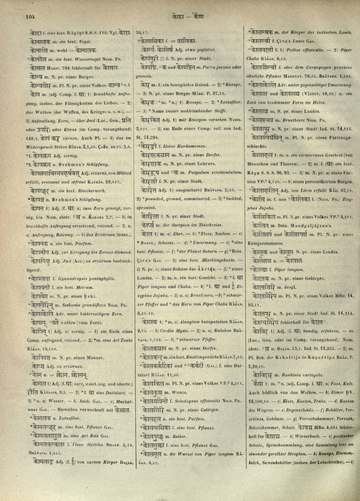
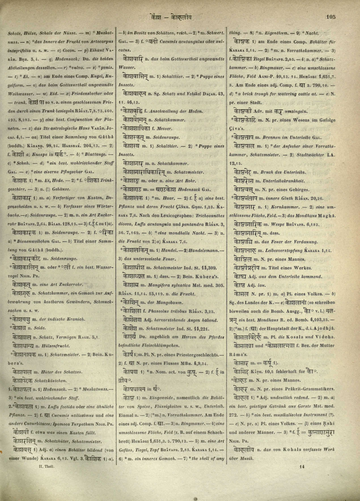
kóśa — 1〉 m. *n. (adj. Comp. f. ā) — a〉 Fuss, Kufe. Auch bildlich von den Wolken. — b〉 Eimer ṚV. 10,100,10. — c〉 Kiste, Kasten, Truhe. — d〉 Kasten des Wagens. — e〉 Degenscheide. — f〉 Behälter, Verschluss, Gehäuse. — g〉 Vorrathskammer, Vorrath, Schatzkammer, Schatz. koṣañca MBH. 4,964 fehlerhaft für kośaśca. — h〉 Wörterbuch. — i〉 poetischer Schatz, Spruchsammlung, eine Sammlung lose an einander gereihter Strophen. — k〉 Knospe, Blumenkelch, Samenbehälter (insbes. der Lotusblüthe). — l〉 [Page2-105-a] Schote, Hülse, Schale der Nüsse. — m〉 *Muskatnuss. — n〉 *das Innere der Frucht von Artocarpus integrifolius u. s. w. — o〉 Cocon. — p〉 Eihaut VARĀH. BṚH. 5,4. — q〉 Hodensack; Du. die beiden Abtheilungen desselben. — r〉 *vulva. — s〉 *penis. — t〉 *Ei. — u〉 am Ende eines Comp. Kugel, Kugelform. — v〉 das beim Gottesurtheil angewandte Weihwasser. — w〉 Eid. — x〉 Friedensbecher oder -trank. kośam pā so v. a. einen geschlossenen Frieden durch einen Trunk besiegeln RĀJAT. 7,8. RĀJAT. 7,75. RĀJAT. 7,460. RĀJAT. 7,493. RĀJAT. 8,283. — y〉 eine best. Conjunction der Planeten. — z〉 der 2te astrologische Haus VARĀH. YOGAY. 4,1. — aa〉 Titel einer Sammlung von Gāthā (buddh.) KĀRAṆḌ. 98,24. HARṢAC. 204,13. — 2〉 f. kośī — a〉 Knospe in arka˚. — b〉 *Blattauge. — c〉 *Schuh. — d〉 *ein best. wohlriechender Stoff GAL. — e〉 *eine eiserne Pflugschar GAL.
Original text · German · Word type unspecified
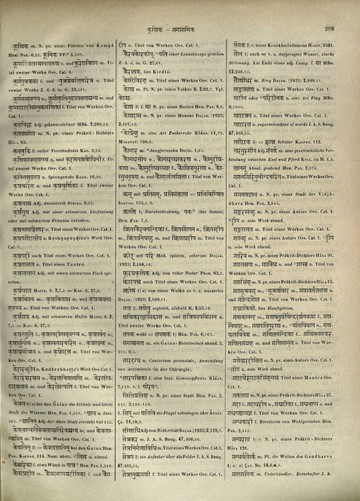
kośa 3〉 f. ā N. pr. einer Hetäre HEM. PAR. 8,8. [Nachtrag, Band 2]
Original text · German · Word type unspecified
kośa II. 2. m. auch eine Form des Verbandes. MBH. 1,180,7 nach NĪLAK. so v. a. Leibesfrucht. saṃpūrṇakośā hoch schwanger. [Nachtrag, Band 7]
Apte 1890 substantive masculine · substantive neuter
Original text · English · substantive masculine
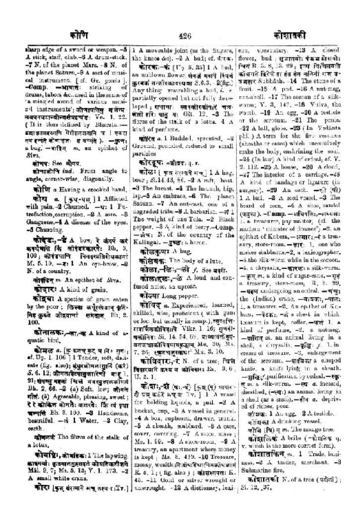
kośaḥ, -śaṃ (ṣaḥ, -ṣaṃ) [kuś(ṣ) ādhārādau ghañ kartari ac vā Tv.] 1 A vessel for holding liquids, a pail. 2 A bucket, cup. 3 A vessel in general. 4 A box, cupboard, drawer, trunk. 5 A sheath, scabbard. 6 A case, cover, covering. 7 A store, mass; Ms. 1. 99. 8 A store-room. 9 A treasury, an apartment where money is kept; Ms. 8. 419. 10 Treasure, money, wealth; niḥśeṣaviśrāṇitakoṣajātaṃ R. 5. 1; (fig. also); kośastapasaḥ K. 45. 11 Gold or silver wrought or unwrought. 12 A dictionary, ([Page 0426-c]) lexicon, vocabulary. 13 A closed flower, bud; sujātayoḥ paṃkajakośayoḥ śriyaṃ R. 3. 8, R. 13. 29; itthaṃ viciṃtayati kośagate dvirephe hā haṃta haṃta nalinīṃ gaja ujjahāra Subhāṣ. 14 The stone of a fruit. 15 A pod. 16 A nut-meg, nut-shell. 17 The cocoon of a silkworm; Y. 3. 147. 18 Vulva, the womb. 19 An egg. 20 A testicle or the scrotum. 21 The penis. 22 A ball, globe. 23 (In Vedānta phil.) A term for the five vestures (sheaths or cases) which successively make the body, enshrining the soul. 24 (In law) A kind of ordeal; cf. Y. 2. 112. 25 A house. 26 A cloud. 27 The interior of a carriage. 28 A kind of bandage or ligature (in surgery). 29 An oath. — śī (ṣī) 1 A bud. 2 A seed-vessel. 3 The beard of corn. 4 A shoe, sandal (pādukā). Comp. — adhipatiḥ, -adhyakṣaḥ 1 a treasurer, pay-master; (cf. the modern ‘minister of finance’). 2 an epithet of Kubera. — agāraḥ, -raṃ a treasury, store-room. — kāraḥ 1 one who makes scabbards. 2 a lexicographer. 3 the silk-worm while in the cocoon. 4 a chrysalis. — kārakaḥ a silk-worm. — kṛt m. a kind of sugar-cane. — gṛhaṃ a treasury, store-room; R. 5. 29. — grahaṇaṃ undergoing an ordeal. — caṃcuḥ the (Indian) crane. — nāyakaḥ, -pālaḥ 1 a treasurer. 2 An epithet of Kubera. — peṭakaḥ, -kaṃ a chest in which treasure is kept, coffer. — phalaṃ 1 a kind of perfume. 2 a nutmeg. — vasin m. an animal living in a shell, a chrysalis. — vṛddhiḥ f. 1 increase of treasure. 2 enlargement of the scrotum. — śāyikā a clasped knife, a knife lying in a sheath. — śuddhiḥ f. purification by ordeal. — skṛt m. a silk-worm. — stha a. incased, sheathed. — (sthaḥ) an animal living in a shell (as a snail). — hīna a. deprived of riches, poor.
Original text · English · substantive neuter
kośaḥ, -śaṃ (ṣaḥ, -ṣaṃ) [kuś(ṣ) ādhārādau ghañ kartari ac vā Tv.] 1 A vessel for holding liquids, a pail. 2 A bucket, cup. 3 A vessel in general. 4 A box, cupboard, drawer, trunk. 5 A sheath, scabbard. 6 A case, cover, covering. 7 A store, mass; Ms. 1. 99. 8 A store-room. 9 A treasury, an apartment where money is kept; Ms. 8. 419. 10 Treasure, money, wealth; niḥśeṣaviśrāṇitakoṣajātaṃ R. 5. 1; (fig. also); kośastapasaḥ K. 45. 11 Gold or silver wrought or unwrought. 12 A dictionary, ([Page 0426-c]) lexicon, vocabulary. 13 A closed flower, bud; sujātayoḥ paṃkajakośayoḥ śriyaṃ R. 3. 8, R. 13. 29; itthaṃ viciṃtayati kośagate dvirephe hā haṃta haṃta nalinīṃ gaja ujjahāra Subhāṣ. 14 The stone of a fruit. 15 A pod. 16 A nut-meg, nut-shell. 17 The cocoon of a silkworm; Y. 3. 147. 18 Vulva, the womb. 19 An egg. 20 A testicle or the scrotum. 21 The penis. 22 A ball, globe. 23 (In Vedānta phil.) A term for the five vestures (sheaths or cases) which successively make the body, enshrining the soul. 24 (In law) A kind of ordeal; cf. Y. 2. 112. 25 A house. 26 A cloud. 27 The interior of a carriage. 28 A kind of bandage or ligature (in surgery). 29 An oath. — śī (ṣī) 1 A bud. 2 A seed-vessel. 3 The beard of corn. 4 A shoe, sandal (pādukā). Comp. — adhipatiḥ, -adhyakṣaḥ 1 a treasurer, pay-master; (cf. the modern ‘minister of finance’). 2 an epithet of Kubera. — agāraḥ, -raṃ a treasury, store-room. — kāraḥ 1 one who makes scabbards. 2 a lexicographer. 3 the silk-worm while in the cocoon. 4 a chrysalis. — kārakaḥ a silk-worm. — kṛt m. a kind of sugar-cane. — gṛhaṃ a treasury, store-room; R. 5. 29. — grahaṇaṃ undergoing an ordeal. — caṃcuḥ the (Indian) crane. — nāyakaḥ, -pālaḥ 1 a treasurer. 2 An epithet of Kubera. — peṭakaḥ, -kaṃ a chest in which treasure is kept, coffer. — phalaṃ 1 a kind of perfume. 2 a nutmeg. — vasin m. an animal living in a shell, a chrysalis. — vṛddhiḥ f. 1 increase of treasure. 2 enlargement of the scrotum. — śāyikā a clasped knife, a knife lying in a sheath. — śuddhiḥ f. purification by ordeal. — skṛt m. a silk-worm. — stha a. incased, sheathed. — (sthaḥ) an animal living in a shell (as a snail). — hīna a. deprived of riches, poor.
Cappeller 1887 substantive masculine
Original text · German · substantive masculine
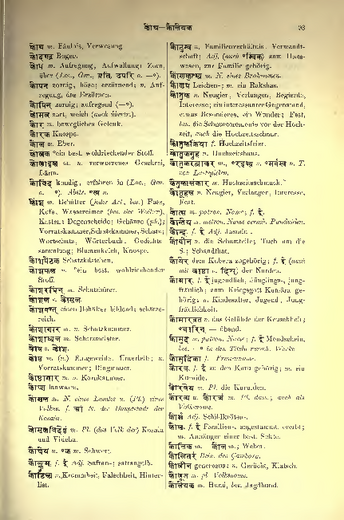
kóśa m. Behälter (jeder Art, bes.) Fass, Kufe, Wassereimer (ber. der Wolken), Kasten; Degensheide; Gehäuse (ph.); vorratskammer, Schatzkammer, Schatz; Wortschatz, Wörterbuch, Gedichtssammlung; Blumenkelch, Knospe.
Burnouf 1866 substantive masculine
Original text · French · substantive masculine
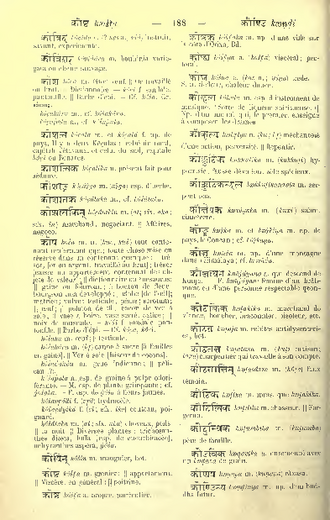
kośa kośa m. (kuś) œuf. Or travaillé ou brut. Dictionnaire. — kośī f. sandale, pantouffle. Barbe d'épi. — Cf. koṣa. Gr. ϰόϰϰος. kośakāra m., cf. koṣakāra. kośaphala n., cf. koṣaphala.
Occurrences in source texts (2)
DYS 1 occurrence
SiSa 1 occurrence
Continue with AYI Free
Image source: AYI archive.