

nārāyaṇa नारायण – nārāyaṇa
adjective · substantive masculine · Word type unspecified
Dictionary sources
AYI dictionary substantive masculine
nārāyaṇa
Cappeller 1891 adjective · substantive masculine
Original text · English · substantive masculine
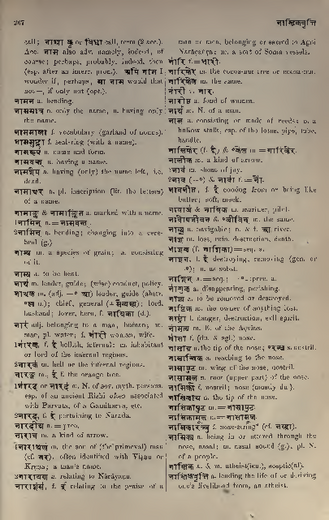
nārāyaṇá1 ·m. the son of (the primeval) man (cf. nara), often identified with Viṣṇu or Kṛṣṇa; a man's name.
Original text · English · adjective
nārāyaṇa2 ·a. relating to Nārāyaṇa.
Monier-Williams 1872 substantive masculine · Word type unspecified
Original text · English · substantive masculine
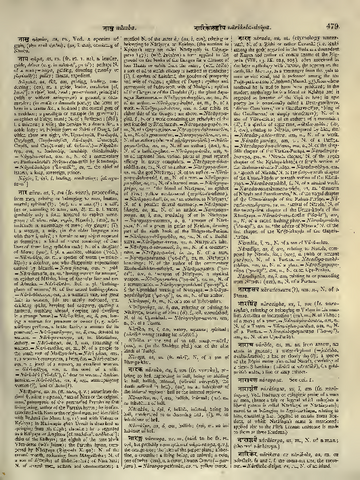
Nārāyaṇa, as, m. (fr. nara, q. v.; sometimes de- rived fr. nāra + ayana), ‘son of Nara or the original man,’ patronymic of the personfied Puruṣa or first living being, author of the Puruṣa hymn; he is often associated with Nara or the original man, and identified with Brahmā (in Manu I. 9, 11) and with Viṣṇu or Kṛṣṇa; in Hari-vaṃśa 4601 Urvaśī is described as springing from his thigh; elsewhere he is regarded as a Kāśyapa or Āṅgirasa [cf. mahā-n˚, ardha-n˚]; chief of the Sādhyas; the eighth of the nine black Vāsu-devas (with Jainas); the Puruṣa hymn, com- posed by Nārāyaṇa (Ṛg-veda X. 90); N. of the second month, reckoning from Mārgaśīrṣa; N. of a son of Ajāmila; of Bhūmi-mitra; of Nara-hari; N. of several men, authors and commentators; a mystical N. of the letter ā; (as, ī, am), relating or belonging to Nārāyaṇa or Kṛṣṇa, (the warriors in Kṛṣṇa's army are called Nārāyaṇāḥ in Udyoga- parva 147); (with kṣetra) a term applied to the ground on the banks of the Ganges for a distance of four Hastas or cubits from the water; (with taila) a sort of oil to which efficacy is ascribed in medicine; (ī), f. epithet of Lakṣmī, the goddess of prosperity and wife of Viṣṇu; epithet of Durgā; epithet and patronymic of Indra-senā, wife of Mudgala; epithet of the Ganges or of the Gaṇḍakī (?); the plant Aspa- ragus Racemosus.
Original text · English · Word type unspecified
nārāyaṇa nārāyaṇa. See col. 1.
Petersburger 1855 adjective · substantive masculine · Word type unspecified
Original text · German · adjective · substantive masculine
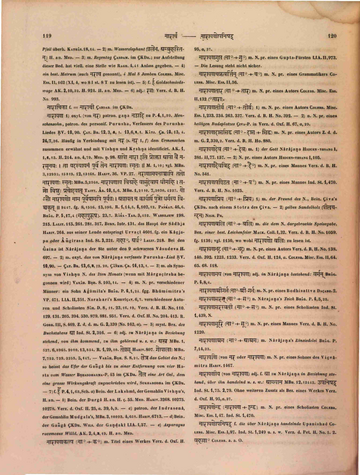
nārāyaṇa 1〉 oxyt. (von nara) patron. gaṇa naḍādi zu P. 4,1,99. Menschensohn, patron. des personif. Puruṣa, Verfassers des Puruṣa Liedes ṚV. 10,90. ŚAT. BR. 12,3,4,1. ŚAT. BR. 13,6,1,1. KĀTY. ŚR. 10,13,4. KĀTY. ŚR. 24,7,36. Häufig in Verbindung mit nara (s. nara 1,f) dem Urmenschen zusammen erwähnt und mit Viṣṇu und Kṛṣṇa identificirt. AK. 1,1,1,13. H. 214. H. an. 4,79. MED. ṇ. 98. āpo nārā iti proktā āpo vai narasūnavaḥ . tā yadasyāyanaṃ pūrvaṃ tena nārāyaṇaḥ smṛtaḥ .. M. 1,10; vgl. MBH. 3,12952. MBH. 3,15819. MBH. 12,13168. HARIV. 36. VP. 27. narāṇāmayanāccāpi tato nārāyaṇaḥ smṛtaḥ MBH. 5,2568. nārāyaṇāya vidmahe vāsudevāya dhīmahi . tanno viṣṇuḥ pracodayāt TAITT. ĀR. 10,1,6. MBH. 1,2110. MBH. 7,2030. MBH. 7,4227. yo 'sau nārāyaṇo nāma pūrveṣāmapi pūrvajaḥ . ajāyata ca kāryārthaṃ putro dharmasya viśvakṛt .. MBH. 7,9447. fg. MBH. 8,1556. MBH. 13,596. R. 1,14,5. R. 6,102,12. PAÑCAT. 46,6. BHĀG. P. 5,17,4 (mahāpuruṣa). BHĀG. P. 23,7. RĀJA-TAR. 3,452. WASSILJEW 198. WASSILJEW 215. LALIT. 115. LALIT. 261. LALIT. 281. LALIT. 317. BURN. Intr. 131. das Haupt der Sādhya HARIV. 264. aus seiner Lende entspringt Urvaśī HARIV. 4601. fg. ein Kāśyapa oder Āṅgirasa Ind. St. 3,221. mahā˚, ardha˚ LALIT. 218. Bei den Jaina ist Nārāyaṇa der 8te unter den 9 schwarzen Vāsudeva H. 697. — 2〉 m. oxyt. das von Nārāyaṇa verfasste Puruṣa-Lied ṚV. 10,90. — ŚAT. BR. 13,6,2,12. ŚAT. BR. 13,6,2,20. ŚĀṄKH. ŚR. 16,13,1. — 3〉 m. als Synonym von Viṣṇu N. des 2ten Monats (wenn mit Mārgaśīrṣa begonnen wird) VARĀH. BṚH. S. 105,14. — 4〉 m. N. pr. verschiedener Männer: ein Sohn Ajāmilaʼs BHĀG. P. 6,1,24. fgg. Bhūmimitraʼs VP. 471. LIA. II, 351. Narahariʼs KṢITĪŚAV. 6,7. verschiedener Autoren und Scholiasten SĀH. D. 8,11. SĀH. D. 23,16. SĀH. D. 23,19. Verz. d. B. H. No. 110. Verz. d. B. H. No. 129. Verz. d. B. H. No. 131. Verz. d. B. H. No. 205. Verz. d. B. H. No. 394. Verz. d. B. H. No. 530. Verz. d. B. H. No. 879. Verz. d. B. H. No. 881. Verz. d. B. H. No. 951. Verz. d. Oxf. H. No. 204. Verz. d. Oxf. H. No. 413. R. GORR. III, S. 469. Z. d. d. m. G. 2,339 (No. 162,a). — 5〉 myst. Bez. des Buchstabens ā Ind. St. 2,316. — 6〉 adj. zu Nārāyaṇa in Beziehung stehend, von ihm kommend, zu ihm gehörend u. s. w.: astra MBH. 1,537. MBH. 6,8965. MBH. 6,9010. MBH. 13,854. R. 1,29,10. tejas HARIV. 807. gopālāḥ MBH. 7,752. MBH. 7,759. MBH. 7,3255. MBH. 5,147. — VARĀH. BṚH. S. 8,21. kṣetra das Gebiet des N.; so heisst das Ufer der Gaṅgā bis zu einer Entfernung von vier Hasta vom Wasser BṚHADDHARMA-P. 45_im_ŚKDR. taila eine Art Oel, dem eine grosse Wirkungskraft zugeschrieben wird, SUKHABODHA_im_ŚKDR. — 7〉 f. ī́ P. 4,1,63, Sch. a〉 Bein. der Lakṣmī, der Gemahlin Viṣṇuʼs, H. an. — b〉 Bein. der Durgā H. an. H. ś. 55. MED. HARIV. 3268. HARIV. 10275. HARIV. 10278. Verz. d. Oxf. H. 25,a. 39,b,9. — c〉 patron. der Indrasenā, der Gemahlin Mudgalaʼs, MBH. 3,10093. MBH. 4,651. HARIV. 6713. — d〉 Bein. der Gaṅgā ŚKDR. WILS. der Gaṇḍakī LIA. I, 57. — e〉 Asparagus racemosus Willd. AK. 2,4,3,19. H. an. MED.
Original text · German · Word type unspecified
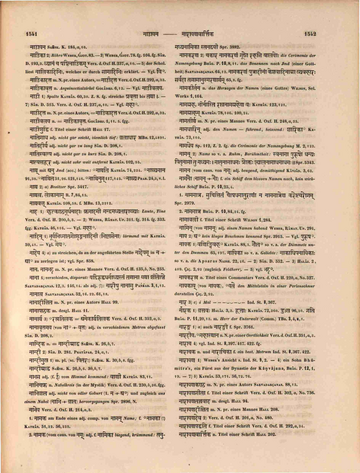
nārāyaṇa 1〉 WEBERʼs Ansicht s. Ind. St. 9,2. — 4〉 ein Sohn Bhūmitraʼs, ein Fürst aus der Dynastie der Kāṇvāyana, BHĀG. P. 12,1. BHĀG. P. 12,19. — 7〉b KATHĀS. 53,171. KATHĀS. 56,72. KATHĀS. 56,76.
Original text · German · Word type unspecified
nārāyaṇa 6〉 am Ende, das Oel ŚĀRṄG. SAṂH. 2,9,19. CAKRAD. 169. cūrṇa ein best. Heilpulver CARAKA 8,11. ŚĀRṄG. SAṂH. 2,6,32.
Böhtlingk 1879 adjective · substantive masculine · Word type unspecified
Original text · German · adjective
2. nārāyaṇa — 1〉 Adj. zu 1. nārāyaṇa 1〉 in Beziehung stehend, von ihm kommend, zu ihm gehörend u. s. w. kṣetra n. Bez. der Ufer der Gaṅgā bis zu einer [Page3-197-b] Entfernung von vier Hasta vom Wasser. taila n. ein best. heilkräftiges Oel BHĀVAPR. 3,124. Mat. med. 261. cūrṇa n. ein best. Heilpulver BHĀVAPR. 4,150. — 2〉 f. ī — a〉 Bein. — α〉 *der Lakṣmī. — β〉 der Durgā. — γ〉 *der Gaṅgā und der Gaṇḍakī. — b〉 Patron. der Indrasenā. — c〉 *Asparagus racemosus.
Original text · German · substantive masculine
1. nārāyaṇá m. — 1〉 Patron. des personificirten Puruṣa. Häufig in Verbindung mit nara genannt und mit Viṣṇu oder Kṛṣṇa identificirt. — 2〉 das von Nārāyaṇa 1〉 verfasste Puruṣa-Lied ṚV. 10,90. — 3〉 als Synonym von Viṣṇu Bez. des zweiten Monats. — 4〉 mystische Bez. des Lautes ā. — 5〉 N. pr. verschiedener Männer.
Original text · German · Word type unspecified
nārāyaṇa III. m. Pl. neben gāpālāḥ MBH. 7,18,31. MBH. 7,19,7. [Nachtrag, Band 7]

Apte 1890 substantive masculine · Word type unspecified
Original text · English · substantive masculine
nārāyaṇaḥ 1 An epithet of Viṣṇu; (the word is thus derived in Ms. 1. 10; āpo nārā iti proktā āpo vai narasūnavaḥ . tā yadasyāyanaṃ pūrvaṃ tena nārāyaṇaḥ smṛtaḥ ..). 2 N. of an ancient sage said to be a companion of Nara and to have produced Urvaśī from his thigh: cf. ūrūdbhavā narasakhasya muneḥ surastrī V. 1. 3; see naranārāyaṇa under nara also. — ṇī 1 An epithet of Lakṣmī the goddess of wealth. 2 An epithet of Durgā. Comp. — priyaḥ 1 N. of Śiva. 2 yellow sandal-wood.
Original text · English · Word type unspecified
nārāyaṇa (bhaṭṭanārāyaṇa) Author of the Veṇī-Saṃhāra. He must have flourished before the 9th century as his work is frequently quoted by the poet Anandavardhana in his work called dhyanyāloka. This poet flourished under the reign of Avantivarman 855-884 A. D. (Rāj. T. 5. 34)
Cappeller 1887 substantive masculine
Original text · German · substantive masculine
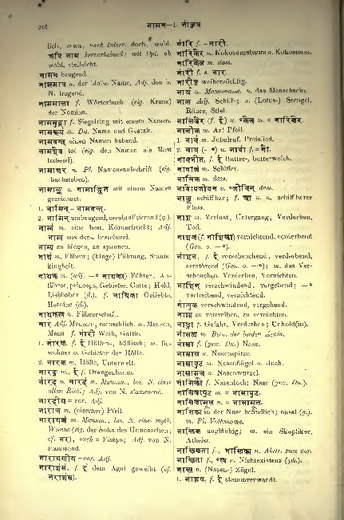
nārāyaṇá m. Mannsn., bes. N. eines myth. Wesens (eig. der Sohn des Urmenschen; cf. nara), auch = Viṣṇu; Adj. von N. stammend.
Burnouf 1866 substantive masculine
Original text · French · substantive masculine
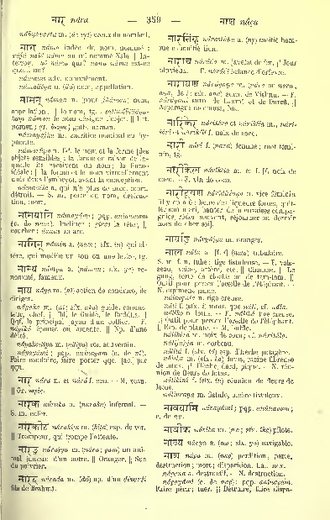
nārāyaṇa nārāyaṇa m. (nāra ou nara; aya, de i; sfx. ana) surn. de Viṣṇu. — F. nārāyaṇī surn. de Lakṣmī et de Durgā. Asparagus racemosa, bot.
Occurrences in source texts (1)
DYS 1 occurrence
Continue with AYI Free
Image source: AYI archive.