

pāra पार – crossing [cf. duṣ-p˚]
adjective · substantive masculine · substantive neuter · Word type unspecified
Dictionary sources
Cappeller 1891 adjective · substantive masculine
Original text · English · adjective
pārá1 ·a. carrying over. m. crossing (only --°), a man's name; n. (m.) the further shore or bank, i.g. limit, end, aim. pāraṃ gam cross over, go through, carry out. f. pārā N. of a river, pārī milk-pail.
Original text · English · substantive masculine
pāra2 ·m. = pāla keeper, protector.
Monier-Williams 1872 substantive masculine
Original text · English · substantive masculine
pāra pāra, as, m. (fr. rt. 1. pṛ or rt. pṝ), cross- ing [cf. duṣ-p˚]; the further shore or opposite bank of a river; the further side, concluding bound; the end or limit of anything, the utmost reach or extent; quicksilver; N. of a sage, a son of Pṛthu-ṣeṇa and father of Nīpa; of a son of Samara and father of Pṛthu; of a son of Aṅga and father of Divi-ratha; (ās), m. pl., N. of a class of deities under the ninth Manu; (ā), f., N. of a river (said to flow from the Pāriyātra mountains or the central and western portion of the Vindhya chain); (ī), f. a quantity of water; a small water-jar, drinking-vessel, glass, cup; a milk-pail; a rope for tying an elephant's feet; pollen; (am), n. (according to some also as, m.), the further or opposite end or bank of a river; the totality of an object, the fullest extent (with gen., e. g. tamasas, of darkness; kāraṇānām, of tor- tures); extremity, end, aim (in this sense also m.); pāraṃ gam, to cross over; to fulfil (e. g. pratijñā- yāḥ pāraṃ sa gataḥ, he fulfilled his promise); to become proficient in; pāraṃ nī, to bring to a close; [cf. para, param; Gr. πόρο-ς, πέρα πέρᾱν, περαίνω, πείρω, περαῖο-ς, περά-τη, Πειραιεύ-ς, πέρας, πεῖραρ, ἀπειρέσ-ιο-ς; Lat. per; Lith. per, ‘across;’ Slav. polŭ, ‘the opposite bank.’]
Petersburger 1855 adjective · substantive masculine · substantive neuter · Word type unspecified
Original text · German · adjective
pārá adj. hinüberbringend, übersetzend ṚV. 5,31,8. m. eine best. Personification SĀMAVIDH. BR. 1,2,5.
Original text · German · substantive masculine · substantive neuter
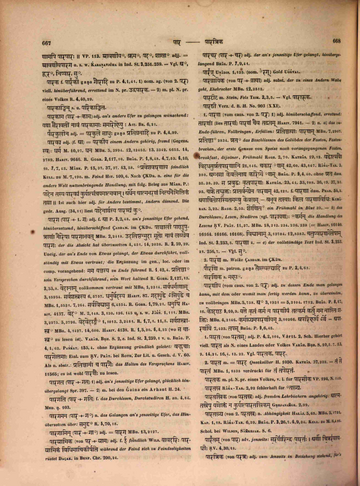
pāra 1〉 m. a〉 (von 2. par) das Ueberschiffen: duṣpāra. — b〉 das jenseitige Ufer u. s. w. s. u. dem neutr. — c〉 = pārada Quecksilber SĀRASUNDARĪ_zu_AK. 2,9,100. ŚKDR. — d〉 N. pr. eines Weisen MĀRK. P. 63,14. MĀRK. P. 64,5. eines Sohnes des Pṛthuṣeṇa (Rucirāśva) und Vaters des Nīpa HARIV. 1060. BHĀG. P. 9,21,24. eines Sohnes des Samara und Vaters des Pṛthu HARIV. 1063. VP. 452. eines Sohnes des Aṅga und Vaters des Diviratha VP. 445. pl. N. einer Klasse von Göttern unter dem 9ten Manu VP. 268. BHĀG. P. 8,13,19. — 2〉 f. ā N. pr. eines Flusses MED. r. 57. MBH. 1,2926. MĀRK. P. 57,20. VP. 182, N. 22 (v. l. für parā). — 3〉 f. ī AK. 3,6,1,10. a〉 Wassermasse, = pūra MED. statt dessen pura Stadt H. an. 2,436. — b〉 Wasserkrug, = karkarī MED. Trinkgeschirr H. 1024. TRIK. 2,10,16 (lies pārī st. pāri). HĀR. 63. karpūrapārīpatitaṃ maireyamiva RĀJA-TAR. 5,368. Schüssel (pātrī) VIŚVA_im_ŚKDR. Melkkübel TRIK. 2,9,15. JAṬĀDH._im_ŚKDR. — c〉 ein Strick zum Binden der Füsse des Elephanten TRIK. 2,8,40. MED. — d〉 Blüthenstaub (vgl. parāga) H. an. VIŚVA_im_ŚKDR. — 4〉 n. oxyt. (von 2. par) das jenseitige Ende, — Ufer; das Letzte, das Aeusserste, Ziel NIR. 2,24. AK. 1,2,3,8. H. 1079. H. an. HALĀY. 3,45. = parataṭa und prānta (in dieser Bed. auch m.; nach AK. 3,6,4,35 und SIDDH. K. 249,b,4 überhaupt m.n.) MED. abhū̀du pā̱rametàve̱ panthā̀ ṛ̱tasyà sādhu̱yā ṚV. 1,46,11. adhvànaḥ ṚV. 5,54,10. KAṬHOP. 3,9. rajàsaḥ ṚV. 1,33,7. ṚV. 1,52,12. ā̱rdrasyà ṚV. 1,116,4. nā̱vyā̀nām ṚV. 1,121,13. sa̱mu̱drasyà ṚV. 1,167,2. MBH. 3,16035. MBH. 4,899. R. 5,8,22. Spr. 533. VID. 165. VID. 224. KATHĀS. 42,16. KATHĀS. 43,197. RĀJA-TAR. 3,78. na̱dīnā̀m ṚV. 8,85,11. sindhòḥ ṚV. 10,155,3. HIḌ. 1,2. MBH. 1,5854. MBH. 3,8147. MBH. 8,2381. R. 2,32,37. VARĀH. BṚH. S. 2,4. VARĀH. BṚH. S. 16,10. MĀRK. P. 23,92. RĀJA-TAR. 3,345. RĀJA-TAR. 3,358. Spr. 1807. PAÑCAT. 226,14. salilasya ŚAT. BR. 3,6,2,4. TS. 7,5,1,2. TS. 7,5,1,3. KĀṬH. 33,5. svargapāraṃ titīrṣuḥ MBH. 1,4647. yuddhapāraṃ titīrṣavaḥ MBH. 9,1266. pratariṣye mahāpāraṃ bhujābhyāṃ samarodadhim MBH. 6,4334. apāre bhava naḥ pāramaplave bhava naḥ plavaḥ MBH. 5,4559. MBH. 7,7831. MBH. 8,263. atā̀riṣma̱ tamàsaspā̱rama̱sya (vgl. P. 8,3,53. P. 8,3,54) ṚV. 1,92,6. paraṃ jyotistamaḥpāre vyavasthitam KUMĀRAS. 2,58. sva̱sti nàḥ pipṛhi pā̱ramā̀sām ṚV. 3,31,20. dū̱re pā̱re ṚV. 2,11,8. ṚV. 10,49,6. aṃhàsaḥ ṚV. 2,33,3. du̱ri̱tasyà ṚV. 10,161,3. AV. 1,27,1. AV. 6,133,1. AV. 19,47,2. citrā̀vaso sva̱sti tè pā̱ramàśīya VS. 3,18. VS. 30,16 yo vai saṃvatsarasyāvāraṃ ca pāraṃ ca veda sa vai svasti saṃvatsarasya pāramaśnute AIT. BR. 4,14. sūktasya KAUŚ. 10. ŚAT. BR. 11,5,5,10. dūra˚ (s. auch bes.) NIR. 4,18. abhayasya KATHOP. 2,11. finis coitus CHĀND. UP. 2,13,1. asya pāraṃ na paśyanti bahavaḥ pāracintakāḥ . eṣa pāraṃ paraṃ caiva lokānāṃ veda mādhavaḥ .. HARIV. 2799. pratijñāyāśca pāraṃ sa gataḥ so v. a. hat sein Versprechen gelöst MBH. 2,630. R. 6,97,9. brahmavadhyāyāḥ MBH. 3,10801. MBH. 5,962. MBH. 5,1251. sa teṣāṃ (vyasanānāṃ) pāramabhyeti PAÑCAT. II, 6. karmaṇā pāramapārakarmaṇaḥ BHĀG. P. 3,13,44. duḥkhasya N. 16. N. 18. anavāpyaiva roṣasya pāram R. GORR. 2,62,1. dhanurvede gatāḥ pāram vollkommen erlernt habend MBH. 7,4311. HARIV. 16150. PAÑCAT. ed. orn. 49,12. pāraṃ saṃprāpya vidyānām KATHĀS. 2,2. KATHĀS. 44,23. śruterapi paraṃ pāraṃ gate locane doppelsinnig Spr. 739. pūrvajanmāntaradṛṣṭapārāḥ — vidyāḥ RAGH. 18,49. pāraṃ nī zu Ende bringen: vedaṃ vratāni vā pāraṃ nītvā YĀJÑ. 1,51. Das m. in folgenden Stellen: na vācā durgamaḥ pāraḥ kāryāṇām R. 6,67,10. pāraṃ paraṃ viṣṇurapārapāraḥ paraṃ parebhyaḥ paramārtharūpī . sa brahmapāraḥ parapārabhūtaḥ paraḥ parāṇāmapi pārapāraḥ .. VP. 113. śrāvaṇīya˚, krama˚, pada˚, śākhā˚ adjj. = śrāvaṇīyapāraga u. s. w. CARAṆAVYŪHA_in_Ind. St. 3,251. Ind. St. 3,259. — Vgl. a˚, dūra˚, niṣpāra, su˚.
Original text · German · substantive masculine
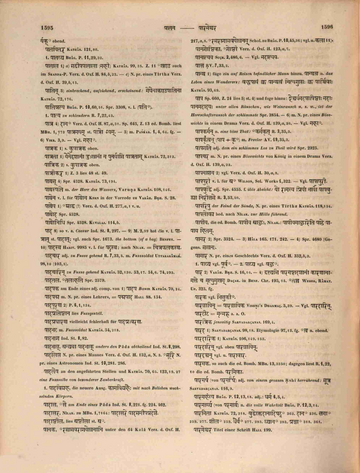
pāra m. = pāla Hüter in brahmadvāra˚ MAITRYUP. 6,28.
Original text · German · Word type unspecified
pāra 2〉 VARĀH. BṚH. S. 16,10. — 4〉 drakṣyasi pāramaṣṭādaśānāṃ kāraṇānāmante ca mṛtyumukham DAŚAK._in_BENF. Chr. 195,15. ˚tattva WEBER, RĀMAT. UP. 325. fg.
Böhtlingk 1879 adjective · substantive masculine · substantive neuter · Word type unspecified
Original text · German · adjective · substantive masculine · substantive neuter
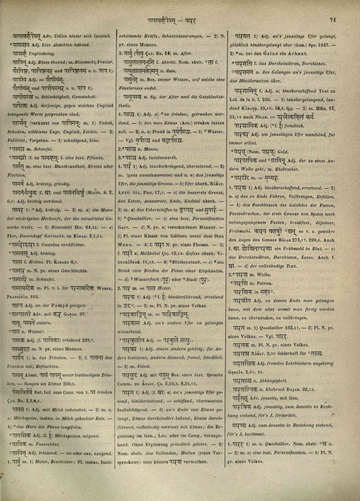
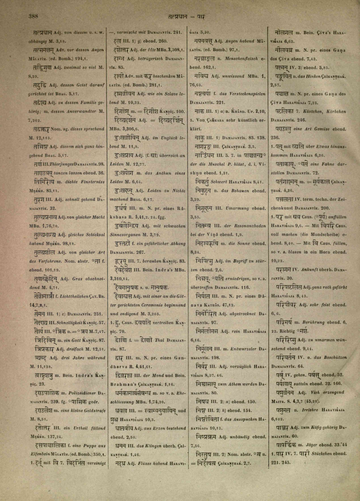
1. pārá — 1〉 Adj. hinüberbringend, übersetzend. — 2〉 m. (ganz ausnahmsweise) und n. — a〉 das jenseitige Ufer, die jenseitige Grenze. — b〉 Ufer überh. RĀJAT. 4,536. RĀJAT. 4,554. PRIY. 17,1. — c〉 die äusserste Grenze, das Letzte, Aeusserste, Ende, Endziel überh. — 3〉 m. — a〉 das Ueberschiffen in duṣpāra und supārá — b〉 *Quecksilber. — c〉 eine best. Personification GAUT. — d〉 N. pr. — α〉 verschiedener Männer. — β〉 Pl. einer Klasse von Göttern unter dem 9ten Manu. — 4〉 f. pārā N. pr. eines Flusses. — 5〉 f. pārī — a〉 Melkkübel ŚIŚ. 12,40. Gefäss überh. VIKRAMĀṄKAC. 11,58. — b〉 *Blüthenstaub. — c〉 *ein Strick zum Binden der Füsse eines Elephanten. — d〉 *Wasserfluth (pūra) oder *Stadt (pura).
Original text · German · substantive masculine
2. pāra m. = pāla Hüter.
Original text · German · Word type unspecified
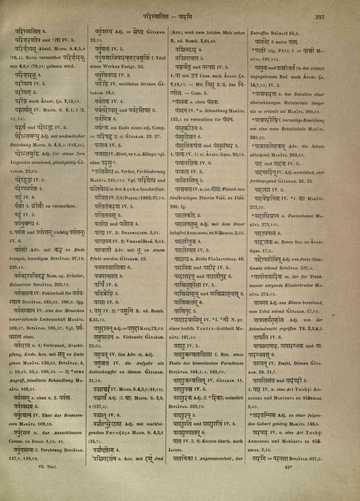
1. pāra IV. n. eine Art Tuṣṭi ANIRUDDHA und MAHĀDEVA zu SĀṂKHYAS. 3,43. [Nachtrag, Band 7]
Original text · German · Word type unspecified
1. pāra IV. 7. pārī Stückchen ebend. 221. 245. [Nachtrag, Band 7]
Apte 1890 substantive masculine · substantive neuter
Original text · English · substantive masculine
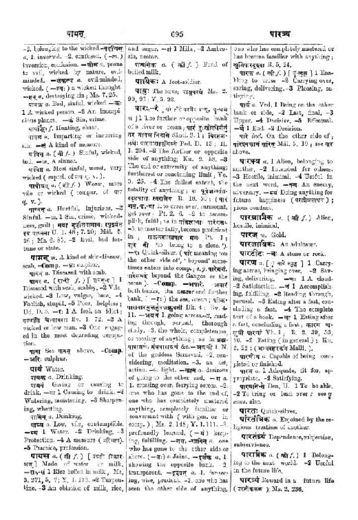
pāraḥ, -raṃ [paraṃ tīraṃ parameva aṇ, pṝ-ghañ vā] 1 The further or opposite bank of a river or ocean; pāraṃ duḥkhodadhergaṃtuṃ tara yāvanna bhidyate Śānti. 3. 1; virahajaladheḥ pāramāsādayiṣye Pad. D. 13; H. 1. 204. 2 The further or opposite side of anything; Ku. 2. 58. 3 The end or extremity of anything; furtherest or concluding limit; Ve. 3. 25. 4 The fullest extent, the totality of anything; sa pūrvajanmāṃtaradṛṣṭapārāḥ smaranniva R. 18. 50; (pāraṃ gam, -i, -yā 1 to cross over, surmount, get over; Pt. 2. 6. 2 to accomplish, fulfil; as in pratijñāyāḥ pāraṃgataḥ. 3 to master fully, become proficient in; sakalaśāstrapāraṃ gataḥ Pt. 1; pāraṃ nī ‘to bring to a close.’). — raḥ Quick-silver. (pāre meaning ‘on the other side of’, ‘beyond’ sometimes enters into comp.; e. g. pāregaṃgaṃ, pāresamadraṃ beyond the Ganges or theocean). Comp. — apāraṃ, -avāraṃ both banks, the nearer and further bank. — (raḥ) the sea, ocean; śokapārāvāramuttartumaśaknuvatī Dk. 4; Bv. 4. 11. — ayaṇaṃ 1 going across. 2 reading through, perusal, thorough study. 3 the whole, completeness, or totality of anything; as in brahmapārāyaṇaṃ, maṃtrapārāyaṇaṃ &c. — ayaṇī 1 N. of the goddess Sarasvatī. 2 considering, meditation. 3 an act, action. 4 light. — kāma a. desirous of going to the other end. — ga a. 1 crossing over, ferrying across. 2 one who has gone to the end of, one who has completely mastered anything, completely familiar or conversant with (with gen. or in comp.); Ms. 2. 148; Y. 1. 111. 3 profoundly learned. — (gaṃ) keeping, fulfilling. — gata, -gāmin a. one who has gone to the other side or shore. — (taḥ) a Jaina. — darśaka a. 1 showing the opposite bank. 2 transparent. — dṛśvan a. 1 far-seeing, wise, prudent. 2 one who has seen the other side of anything, ([Page 0695-c]) one who has completely mastered or has become familiar with anything; śrutipāradṛśvā R. 5. 24.
Original text · English · substantive masculine · substantive neuter
pāraḥ, -raṃ [paraṃ tīraṃ parameva aṇ, pṝ-ghañ vā] 1 The further or opposite bank of a river or ocean; pāraṃ duḥkhodadhergaṃtuṃ tara yāvanna bhidyate Śānti. 3. 1; virahajaladheḥ pāramāsādayiṣye Pad. D. 13; H. 1. 204. 2 The further or opposite side of anything; Ku. 2. 58. 3 The end or extremity of anything; furtherest or concluding limit; Ve. 3. 25. 4 The fullest extent, the totality of anything; sa pūrvajanmāṃtaradṛṣṭapārāḥ smaranniva R. 18. 50; (pāraṃ gam, -i, -yā 1 to cross over, surmount, get over; Pt. 2. 6. 2 to accomplish, fulfil; as in pratijñāyāḥ pāraṃgataḥ. 3 to master fully, become proficient in; sakalaśāstrapāraṃ gataḥ Pt. 1; pāraṃ nī ‘to bring to a close.’). — raḥ Quick-silver. (pāre meaning ‘on the other side of’, ‘beyond’ sometimes enters into comp.; e. g. pāregaṃgaṃ, pāresamadraṃ beyond the Ganges or theocean). Comp. — apāraṃ, -avāraṃ both banks, the nearer and further bank. — (raḥ) the sea, ocean; śokapārāvāramuttartumaśaknuvatī Dk. 4; Bv. 4. 11. — ayaṇaṃ 1 going across. 2 reading through, perusal, thorough study. 3 the whole, completeness, or totality of anything; as in brahmapārāyaṇaṃ, maṃtrapārāyaṇaṃ &c. — ayaṇī 1 N. of the goddess Sarasvatī. 2 considering, meditation. 3 an act, action. 4 light. — kāma a. desirous of going to the other end. — ga a. 1 crossing over, ferrying across. 2 one who has gone to the end of, one who has completely mastered anything, completely familiar or conversant with (with gen. or in comp.); Ms. 2. 148; Y. 1. 111. 3 profoundly learned. — (gaṃ) keeping, fulfilling. — gata, -gāmin a. one who has gone to the other side or shore. — (taḥ) a Jaina. — darśaka a. 1 showing the opposite bank. 2 transparent. — dṛśvan a. 1 far-seeing, wise, prudent. 2 one who has seen the other side of anything, ([Page 0695-c]) one who has completely mastered or has become familiar with anything; śrutipāradṛśvā R. 5. 24.
Cappeller 1887 substantive masculine · Word type unspecified
Original text · German · substantive masculine
2. pāra m. (—˚) = 1. pāla.
Original text · German · Word type unspecified
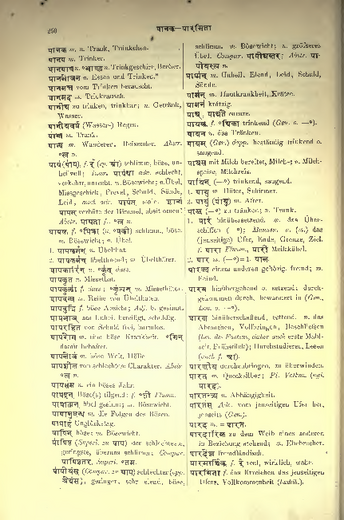
1. pārá hinübersetzend. m. das Überschiffen (—˚); Mannsn. n. (m.) das (jenseitige) Ufer, Ende, Grenze, Ziel. f. pārā Flussn., pārī Melkkübel.
Burnouf 1866 substantive masculine
Original text · French · substantive masculine
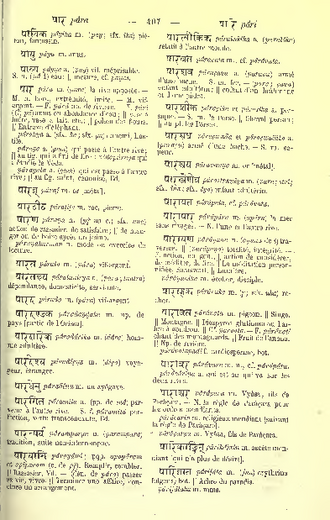
pāra pāra m. (para) la rive opposée. — M. n. bord, extrémité, limite. — M. vifargent. — F. pārā np. de rivière. — F. pārī ((?) pā) amas ou abondance d'eau; vase à boire, vase à lait, etc.; pollen des fleurs. Entrave d'éléphant. pārakya a. (sfx. ka; sfx. ya) ennemi, hostile. pāraga a. (gam) qui passe à l'autre rive; au fig. qui a fini de lire: vedapāraga qui a étudié le Veda. pāragata a. (gam) qui est passé à l'autre rive; au fig. saint, canonisé, Bd.
Occurrences in source texts (1)
SiSa 1 occurrence
Continue with AYI Free
Image source: AYI archive.