

padārtha पदार्थ – object; substance; content
substantive masculine · substantive neuter · Word type unspecified
Dictionary sources
AYI dictionary substantive neuter
object; substance; content
Cappeller 1891 substantive masculine
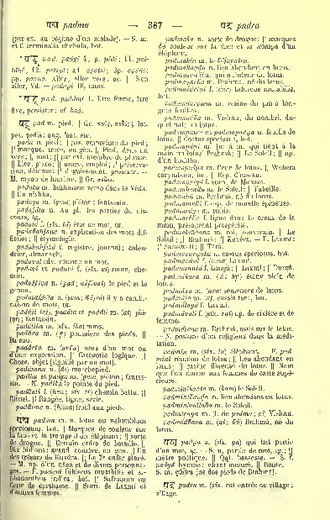
Original text · English · substantive masculine
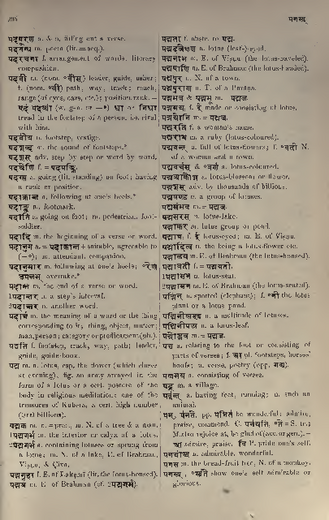
padārtha ·m. the meaning of a word or the thing corresponding to it; thing, object, matter; man, person; category or predicament (ph.).
Monier-Williams 1872 substantive masculine
Original text · English · substantive masculine
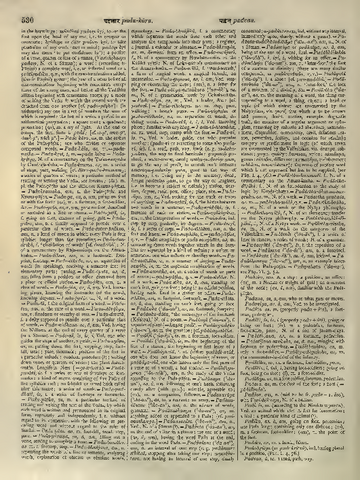
—Padārtha (˚da- ar˚), as, m. the meaning of a word, the thing cor- responding to a word, a thing, object; a head or topic (of which sixteen are enumerated by the Naiyāyikas, viz. proof, that which is to be known and proven, doubt, motive, example, dogmatic truth, the member of a regular argument or syllo- gism, reasoning by reductio ad absurdum, ascertain- ment, disquisition, controversy, cavil, fallacious rea- son, perversion, futility, and occasion for rebuke); category or predicament in logic (of which seven are enumerated by the Vaiśeṣikas, viz. dravya, sub- stance; guṇa, quality; karman, action; sāmānya, genus; viśeṣa, difference; samavāya, co-inherence; a-bhāva, non-existence); the sense of another word which is not expressed but has to be supplied, (see Pāṇ. I. 4, 96.)
Petersburger 1855 substantive masculine · Word type unspecified
Original text · German · substantive masculine
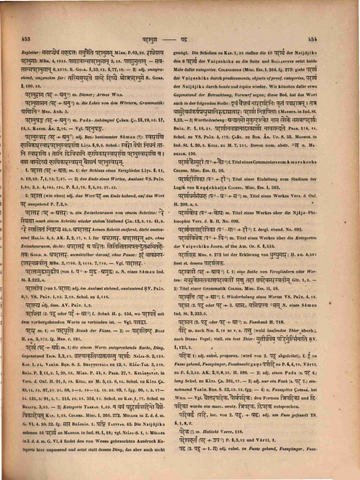
padārtha (pada + artha) m. 1〉 die einem Worte entsprechende Sache, Ding, Gegenstand TRIK. 3,2,21. jātyākṛtivyaktayastu padārthaḥ NYĀYA-S. 2,131. KAP. 1,24. VARĀH. BṚH. S. 2. BHAṬṬOTPALA_zu_VARĀH. BṚH. S. 15,1. RĀJA-TAR. 3,218. BHĀG. P. 3,11,2. BHĀG. P. 5,20,35. MĀRK. P. 44,8. PRAB. 27,7. KULĀRṆAVAT._in_Verz. d. Oxf. H. 91,b,18. KULL._zu_M. 5,42. M. 6,14. Schol. zu KĀTY. ŚR. 83,14. fgg. KĀTY. ŚR. 83,15. KĀTY. ŚR. 87,21. fgg. KĀTY. ŚR. 87,24. fgg. KĀTY. ŚR. 88,3—KĀTY. ŚR. , 88,5. fgg. KĀTY. ŚR. 87,10—KĀTY. ŚR. 87,13. fgg. KĀTY. ŚR. 87,18. KĀTY. ŚR. 87,20. fgg. KĀTY. ŚR. 89,7. KĀTY. ŚR. 90,1. fgg. KĀTY. ŚR. 90,2. fgg. KĀTY. ŚR. 90,17—KĀTY. ŚR. 90,24. fgg. KĀTY. ŚR. 131,3. KĀTY. ŚR. 91,2. fgg. KĀTY. ŚR. 91,7. KĀTY. ŚR. 214,20. fgg. KĀTY. ŚR. 214,21. fgg. KĀTY. ŚR. 354,11. Schol. zu KAP. 1,77. Schol. zu BHARTṚ. 3,65. — 2〉 Kategorie TARKAS. 1,59. na vayaṃ ṣaṭpadārthavādino vaiśeṣikādivat KAP. 1,25. COLEBR. Misc. I, 264. COLEBR. Misc. I,272. MÜLLER_in_Z. d. d. m. G. VI, 4. Z. d. d. m. G. VI,10. Z. d. d. m. G. VI,32. fg. sapta BHĀṢĀP. 1. ṣaṣṭi TATTVAS. 45. Die Naiyāyika nehmen 16 padārtha an MADHUS._in_Ind. St. 1,18; vgl. NYĀYA-S. 1,1. MÜLLER_in_Z. d. d. m. G. VI, 4 findet den von WEBER gebrauchten Ausdruck Kategorie hier unpassend und setzt statt dessen Ding, das aber auch nicht genügt. Die Scholien zu KAP. 1,25 stellen die 16 padārtha der Naiyāyika den 6 padārtha der Vaiśeṣika an die Seite und BALLANTYNE setzt beide Male dafür categories. COLEBROOKE (Misc. Ess. I, 264. fg. Misc. Ess. I,272) giebt padārtha der Vaiśeṣika durch predicaments, objects of proof, categories, padārtha der Naiyāyika durch heads und topics wieder. Wir könnten dafür etwa Gegenstand der Betrachtung, Vorwurf sagen; diese Bed. hat das Wort auch in der folgenden Stelle: evaṃ vaiṣṇavaṃ nāradādibhiḥ kṛtaṃ pañcarātram . tatra vāsudevasaṃkarṣapradyumnāniruddhāścatvāraḥ padārthā nirūpitāḥ . MADHUS._in_Ind. St. 1,23. — 3〉 Wortbedeutung: anyatamo mukundātko nāma loke bhagavatpadārthaḥ BHĀG. P. 1,18,21. padārthānavajñānādvākyārtho nāvagamyate PRAB. 114,14. Schol. zu VS. PRĀT. 4,179. ŚAṂK._zu_BṚH. ĀR. UP. S. 55. MADHUS._in_Ind. St. 1,20,6. KULL._zu_M. 7,211. Davon nom. abstr. ˚tva n. MADHYAM. 136.
Original text · German · Word type unspecified
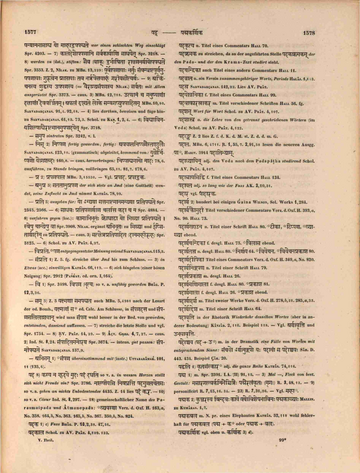
padārtha 2〉 hundert bei einigen Jaina WILSON, Sel. Works 1,284.
Original text · German · Word type unspecified
padārtha 1〉 padārthānāmanityatā HEM. YOGAŚ. 4,56.
Böhtlingk 1879 substantive masculine
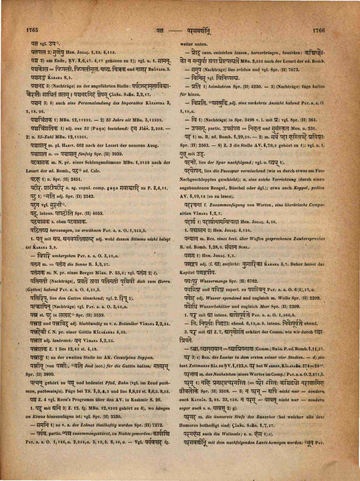
Original text · German · substantive masculine
padārtha m. — 1〉 die einem Worte entsprechende Sache, Ding, Gegenstand. — 2〉 Gegenstand der Betrachtung, Vorwurf. — 3〉 in der Philosophie Hauptbegriff, Kategorie. — 4〉 Wortbedeutung. P. 1,4,96 wird das Wort unnöthiger Weise durch Bedeutung eines nicht beigefügten Wortes erklärt. Ding, Gegenstand genügt.
Cappeller 1887 substantive masculine
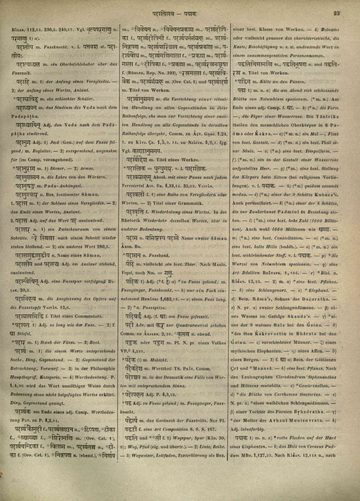
Original text · German · substantive masculine
padārtha m. Wortbedetung, Wortentsprechung, d. h. Ding, Gegenstand; Hauptbegriff, Kategorie (ph.).
Burnouf 1866 substantive masculine
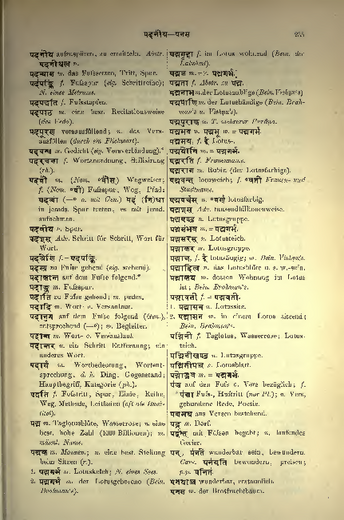
Original text · French · substantive masculine
padārtha m. (artha) sens d'un mot ou d'une expression. Catégorie logique. Chose, objet [signifié par un mot].
Occurrences in source texts (1)
HP 1 occurrence
Continue with AYI Free
Image source: AYI archive.