

rākā राका – the goddess presiding over the actual day of full moon (or regarded as the Full Moon's consort; Anu-mati is supposed…
substantive feminine
Dictionary sources
Cappeller 1891 substantive feminine
Original text · English · substantive feminine
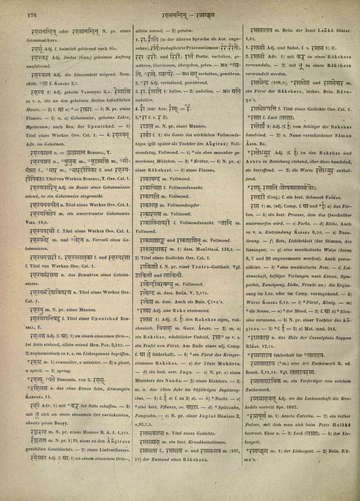
rākā́ ·f. the goddess or the day of full moon; N. of a Rākṣasī & a river.
Monier-Williams 1872 substantive feminine
Original text · English · substantive feminine
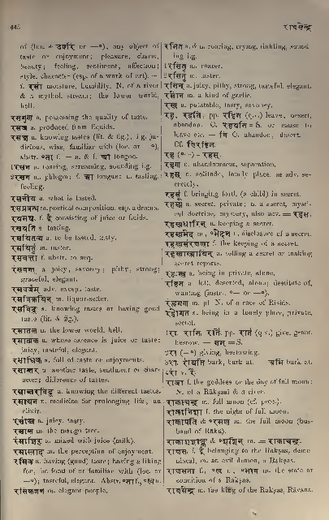
Rākā, f. (according to Uṇādi-s. III. 40. fr. rt. 1. rā above), the goddess presiding over the actual day of full moon (or regarded as the Full Moon's consort; Anu-mati is supposed to preside over the previous day); the day of full moon, full moon; N. of a daughter of Aṅgiras and Smṛti; of a daughter of Aṅgiras and Śraddhā; of the wife of Dhātṛ and mother of Prātṛ; of a Rākṣasī, mother of Khara and Śūrpa-ṇakhā; of a daughter of Su-mālin; of a river; itch, scab; a girl in whom menstruation has just commenced.
Petersburger 1855 substantive feminine
Original text · German · substantive feminine
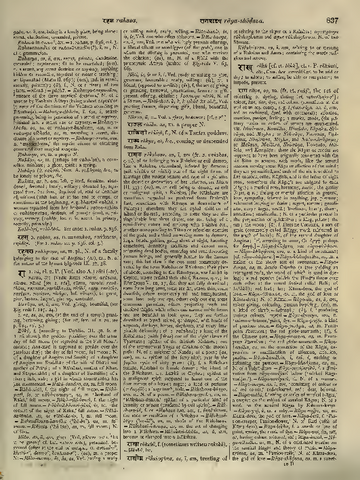
rākā́ f. UṆĀDIS. 3,40. Schol. zu P. 7,3,44. P. 7,4,13. 1〉 die Genie des wirklichen Vollmondstages (neben Anumati der Genie des vorangehenden Tages; s. Näheres Z. d. d. m. G. 9, LVII. Ind. St. 5,229. WEBER, JYOT. 60. fgg.*⁾); Vollmondstag, Vollmond NAIGH. 5,5. NIR. 11,30. AK. 1,1,3,8. TRIK. 3,3,39. H. 149. H. an. 2,14. fg. MED. k. 31. HALĀY. 1,112. VIŚVA_bei_UJJVAL. ṚV. 2,32,4. ṚV. 5,42,12. AIT. BR. 3,37. AIT. BR. 3,47. AIT. BR. 7,11. TS. 1,8,8,1. TS. 3,4,9,1. TS. 3,4,9,6. TBR. 1,7,2,1. ŚAT. BR. 9,5,1,38. ṢAḌV. BR. 4,6. KĀṬH. 12,8. ŚĀṄKH. ŚR. 1,15,3. MBH. 8,1486. WEBER, KṚṢṆAJ. 250. WEBER, KṚṢṆAJ. 268. VP. 225. maghārākāsamāgame BHĀG. P. 7,14,22. BHĀG. P. 7,15,54. ˚yajña PAÑCAV. BR. 16,13,1, Sch. eine Tochter des Aṅgiras (vgl. rāgā) und der Smṛti VP. 83. MĀRK. P. 52,21. des Aṅgiras und der Śraddhā BHĀG. P. 4,1,34. Gattin Dhātarʼs und Mutter Prātarʼs BHĀG. P. 6,18,3. Die Brāhmaṇa und Comm. führen das Wort auf 1. rā zurück. *⁾ BHĀG. P 6,59,13 ist, wie WEBER später erkannt hat, vivakṣite na zu trennen; demnach sind BHĀG. P. 62,4 die Worte «bei Somakāra und» zu streichen. — 2〉 N. pr. einer Rākṣasī, der Mutter Kharaʼs und der Śūrpaṇakhā MBH. 3,15893. MBH. 3,15896. einer Tochter des Sumālin R. 7,5,40. — 3〉 N. pr. eines Flusses H. an. MED. VIŚVA a. a. O. BHĀG. P. 5,20,10. — 4〉 Krätze TRIK. H. an. MED. VIŚVA. — 5〉 ein eben mannbar gewordenes Mädchen TRIK. H. 536. H. an. MED. HĀR. 130. HALĀY. 2,333. VIŚVA.
Böhtlingk 1879 substantive feminine
Original text · German · substantive feminine
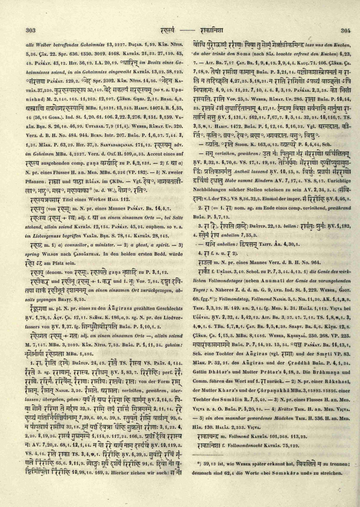
rākā́ f. — 1〉 die Genie des wirklichen Vollmondstages (gilt später als Tochter des Aṅgiras); Vollmondstag, Vollmond. — 2〉 *ein eben mannbar gewordenes Mädchen. — 3〉 *Krätze. — 4〉 N. pr. — a〉 einer Rākṣasī. — b〉 eines Flusses.
Apte 1890 substantive feminine
Original text · English · substantive feminine
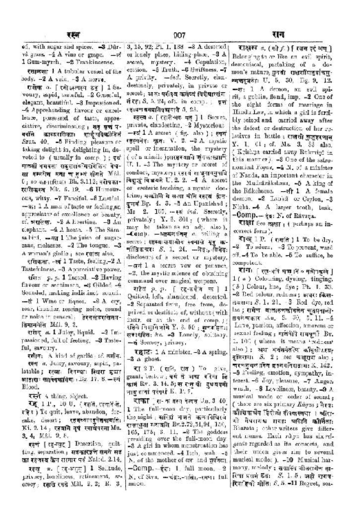
rākā [rā-ka tasya netvam Uṇ. 3. 40] 1 The full-moon day, particularly the night; dāridryaṃ bhajate kalānidhirayaṃ rākādhunā mlāyati Bv. 2. 72, Bv. 2. 54, Bv. 2. 94, Bv. 2. 150, Bv. 2. 165, Bv. 2. 175; Bv. 3. 11. 2 The goddess presiding over the full-moon day. 3 A girl in whom menstruation has just commenced. 4 Itch, scab. 5 N. of the mother of khara and śurpaṇakhā, Comp. — īśaḥ 1 full moon. 2 N. of Śiva. — caṃdraḥ, -patiḥ, -ramaṇaḥ full moon.
Cappeller 1887 substantive feminine
Original text · German · substantive feminine
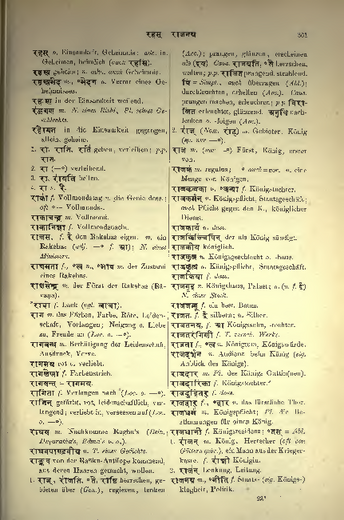
rākā́ f. Vollmondstag u. die Genie dess.; oft ˚— Vollmond.
Burnouf 1866 substantive feminine
Original text · French · substantive feminine
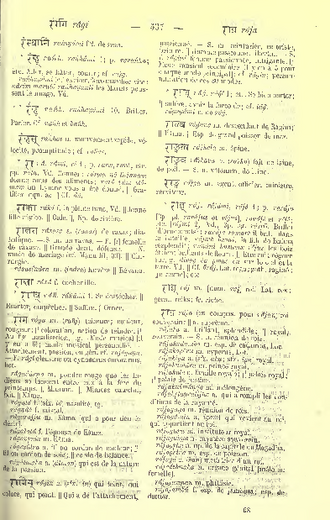
rākā rākā f. la pleine lune, Vd. Jeune fille réglée. Gale. Np. de rivière.
Occurrences in source texts (1)
HTK 1 occurrence
HTK 10.30–33*1: Nāḍī-viśudhy-ākhyaka-kumbha and Nāḍīśuddhi 1 occurrence
Direct occurrences
-
HTK 10.32 Segment 2
Continue with AYI Free
Image source: AYI archive.