

vedi वेदि – platform; altar
substantive feminine · substantive masculine · substantive neuter · Word type unspecified
Dictionary sources
AYI dictionary substantive feminine
platform; altar
Cappeller 1891 substantive feminine
Original text · English · substantive feminine
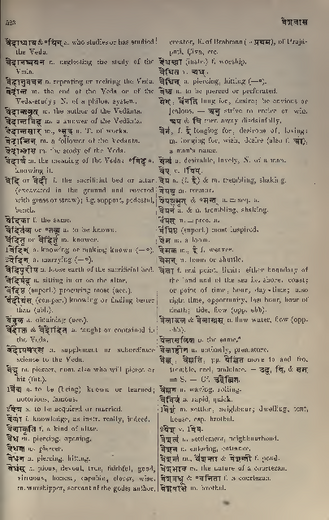
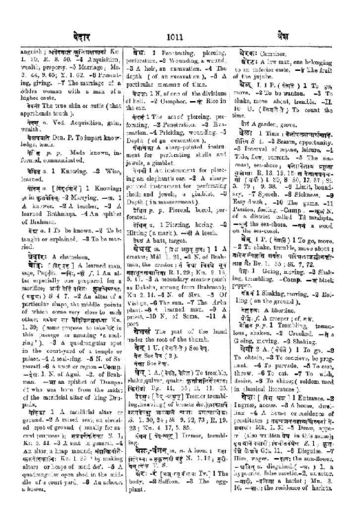
védi ·f. the sacrificial bed or altar (excavated in the ground and covered with grass or straw); i.g. support, pedestal, bench.
Monier-Williams 1872 Word type unspecified
Original text · English · Word type unspecified
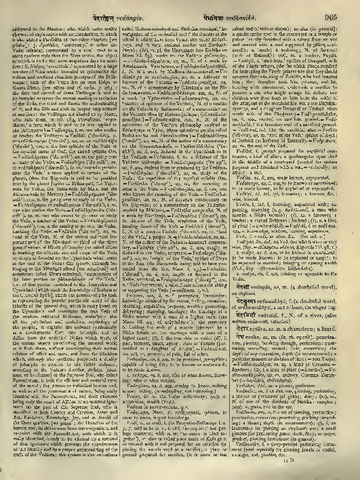
Vedi, is, or vedī, f. (in Śatapatha-Brāhmaṇa I. 2, 5, 7. said to be fr. rt. 1. vid, ‘to acquire;’ but per- haps connected with rt. ve, ‘to weave or bind to- gether’), an altar or raised place made of Kuśa grass or strewed with it and prepared for an oblation for placing the vessels used at a sacrifice, a place or ground prepared for sacrifice, (it is more or less raised and of various shapes); an altar (in general); a quadrangular spot in the court-yard of a temple or palace (usually furnished with a raised floor or seat and covered with a roof supported by pillars, = vi- tardi); a bench; a seal-ring; N. of Sarasvatī (wife of Brahmā); (is), m. a teacher, Paṇḍit.
Petersburger 1855 substantive feminine · substantive masculine · substantive neuter
Original text · German · substantive feminine · substantive masculine
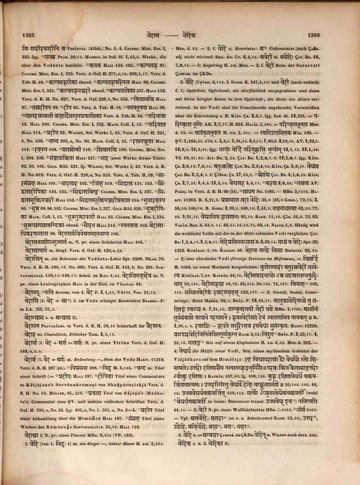
1. vedi (von 1. vid) 1〉 m. ein kluger —, weiser Mann H. an. 2,234. MED. d. 15. — 2〉 f. vedi a〉 Kenntniss: a˚ Unkenntniss (nach ŚAṂK. adj. nicht wissend) BṚH. ĀR. UP. 4,4,14. avedī st. avediḥ ŚAT. BR. 14,7,2,15. — b〉 Siegelring H. an. MED. — 3〉 f. vedī Bein. der Sarasvatī ŚABDAM._im_ŚKDR.
Original text · German · substantive feminine
2. védi (UṆĀDIS. 4,118. f. SIDDH. K. 247,b,15) und vedī (nach-vedisch) f. 1〉 Opferbett, Opferbank, ein oberflächlich ausgegrabener und dann mit Streu belegter Raum in dem Opferhofe, die Stelle des Altars vertretend. In der Vedi sind die Feuerheerde angebracht. Vorschriften über die Einrichtung z. B. KĀTY. ŚR. 2,6,1. fgg. Ind. St. 10,331. = pariṣkṛtā bhūmiḥ AK. 2,7,17. H. 824. HALĀY. 2,260. = pariṣkṛtabhūtala MED. d. 15. = alaṃkṛtabhūtala H. an. 2,234. = sthaṇḍilasitaka HĀR. 192. — ṚV. 1,164,35. ṚV. 1,170,4. ṚV. 2,3,4. ṚV. 5,31,12. ṚV. 6,1,10. ṚV. 7,60,9. ṚV. 8,19,18. AV. 5,22,1. AV. 10,9,2. AV. 11,1,21. fgg. yasyā̱ṃ vedìṃ parigṛ̱hṇanti̱ bhūmyā̀m AV. 12,1,13. AV. 13,1,46. VS. 18,21. VS. 18,63. AIT. BR. 2,22. ŚAT. BR. 1,2,5,7. ŚAT. BR. 1,2,5,9. ŚAT. BR. 10,2,3,1. fgg. KĀTY. ŚR. 2,8,19. KĀTY. ŚR. 7,6,10. catuḥsrakti ŚAT. BR. 2,6,1,10. KĀTY. ŚR. 5,8,21. vedyaṃsa ŚAT. BR. 3,5,1,5. ŚAT. BR. 3,5,1,6. ŚĀṄKH. ŚR. 17,15,2. ˚śroṇi ŚAT. BR. 5,1,5,28. KĀTY. ŚR. 2,7,22. KĀTY. ŚR. 5,4,9. KĀTY. ŚR. 13,3,10. vedyantara KĀTY. ŚR. 5,4,11. ˚karaṇa KĀTY. ŚR. 2,6,30. ˚lakṣaṇa AV. PARIŚ._in_Verz. d. B. H. 90 (24). ˚sādhana Verz. d. B. H. No. 1085. — MBH. 2,1313. HARIV. 11263. R. 1,21,5. prajajvāla tadā vediḥ R. 1,32,9 (R. 1,33,8 GORR.). R. 73,15. R. 2,56,29. R. 100,18. R. GORR. 2,99,3. R. GORR. 2,108,18. R. GORR. 3,43,9. yajñamadhyasthā R. GORR. 62,23. R. GORR. 77,23. R. GORR. 5,21,13. vedyāmiva hutāśanaḥ R. GORR. 3,92,19. RAGH. 11,25. ŚĀK. 31,6. ŚĀK. 31,75. ŚĀK. 31,83. VARĀH. BṚH. S. 44,8. VARĀH. BṚH. S. 44,14. VARĀH. BṚH. S. 48,34. VARĀH. BṚH. S. 48,36. VARĀH. BṚH. S. 48,45. VARĀH. BṚH. S. 48,75. VARĀH. BṚH. S. 68,48. NALOD. 1,9. Häufig wird die weibliche Taille mit der in der Mitte schmalen Vedi verglichen ŚAT. BR. 1,2,5,16. ŚAT. BR. 3,5,1,11. vedipratimamadhyamā R. 3,38,14. madhyaṃ ca vediḥ Spr. (II) 1322. KUMĀRAS. 1,39. CAURAP. 46. veiva majjhe kisā DHŪRTAS. 82,12. — 2〉 eine überdeckte Vedi-förmige Terrasse im Hofraume, = vitardi H. 1004. zu einer Hochzeit hergerichtet: klaptopacārāṃ caturasravedīṃ tāvetya KUMĀRAS. 7,88. KATHĀS. 44,78. vedīmakārayatso 'tra sadratnastambhakūṭṭimām KATHĀS. 50,131. vedīmāruhya KATHĀS. 16,79. KATHĀS. 45,312. KATHĀS. 50,134. KATHĀS. 71,167. vivāha˚ KATHĀS. 103,185. sajjitavedīkaṃ ratnadattagṛham KATHĀS. 123,177. — 3〉 Gestell, Sockel, Unterterlage; Bank MṚCCH. 92,4. BHĀG. P. 10,41,21. vālukāvedimadhye tu talliṅgaṃ sthāpya R. 7,31,43. jāmbunadamayī vedī dhvaje MBH. 4,1780. āsīnaṃ sūryasaṃkāśe kāñcane paramāsane . rukmavedīgataṃ devaṃ jvalantamiva pāvakam .. R. 3,36,4. R. 3,36,5 raṇāgniḥ — hūyate tvasuraistatra rathavedyāṃ susaṃskṛtaḥ HARIV. 13220. prāgdvāravediviniveśitapūrṇakumbha RAGH. 5,63. vidruma˚ BHĀG. P. 3,23,17. BHĀG. P. 4,25,16. mātaṅga˚ Sitz auf einem Elephanten H. an. 4,32. MED. k. 202. — 4〉 vedyardha die Hälfte einer Vedi, Bez. eines mythischen Gebietes der Vidyādhara auf dem Himālaya: ihaḥvidyādharāṇāṃ dvau vedyardhau sto himācale . uttaro dakṣiṇaścaiva nānātacchṛṅgabhūmigau .. parataḥ kila kailāsāduttaro 'rvāktu dakṣiṇaḥ . KATHĀS. 107,65. fg. KATHĀS. 108,126. kuru dakṣiṇavedyardhe cakravartitvamātmanaḥ . uttarasmiṃstu vedyardhe dehi tacchrutaśarmaṇe .. KATHĀS. 50,100. KATHĀS. 50,102. KATHĀS. 44,12. ubhayavedyardhacakravartin KATHĀS. 109,142. martyo 'pyubhayavedyekacakravartī (wohl ˚vedyardhacakravartī zu lesen; BROCKHAUS trennt ubhayavedy eka˚) bhaviṣyati KATHĀS. 44,10. — 5〉 vedī N. pr. eines Wallfahrtsortes MBH. 3,8025. ˚tīrtha MBH. 3,6069. — Vgl. antarvedi, antarā˚ (so v. a. Scheidewand RAGH. 12,93), uttara˚, udvedi, bahirvedi, brahma˚, makha˚, mahā˚.
Original text · German · substantive neuter
3. vedi n. = ambaṣṭhā ŚABDAC._im_ŚKDR. vedin n. WILSON nach ders. Aut.
Böhtlingk 1879 substantive feminine · substantive masculine · substantive neuter
Original text · German · substantive feminine · substantive masculine
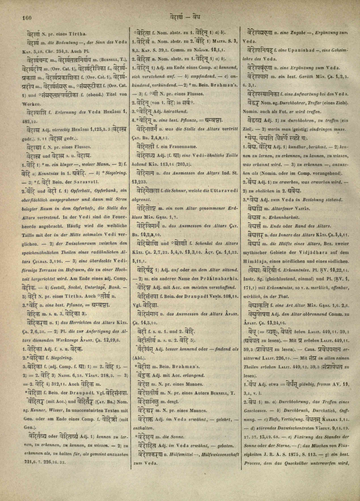
1. vedi — 1〉 *m. ein kluger —, weiser Mann. — 2〉 f. vedi — a〉 Kenntniss in 1. avedi — b〉 *Siegelring. — 3〉 *f. (vedi) Bein. der Sarasvatī.
Original text · German · substantive feminine
2. védi und vedī f. — 1〉 Opferbett, Opferbank, ein oberflächlich ausgegrabener und dann mit Streu belegter Raum in dem Opferhofe, die Stelle des Altars vertretend. In der Vedi sind die Feuerheerde angebracht. Häufig wird die weibliche Taille mit der in der Mitte schmalen Vedi verglichen. — 2〉 der Zwischenraum zwischen den speichenähnlichen Theilen eines radähnlichen Altars ŚULBAS. 3,196. — 3〉 eine überdeckte Vedi-förmige Terrasse im Hofraum, die zu einer Hochzeit hergerichtet wird. Am Ende eines adj. Comp. vedīka. — 4〉 Gestell, Sockel, Unterlage, Bank. — 5〉 vedī N. pr. eines Tīrtha. Auch ˚tīrtha n.
Original text · German · substantive neuter
3. *vedi n. eine best. Pflanze, = ambaṣṭhā.
Apte 1890 substantive masculine
Original text · English · substantive masculine
vediḥ [vid-in] A learned man, sage, Paṇḍita. — diḥ, -dī f. 1 An altar especially one prepared for a sacrifice; amī vediṃ paritaḥ kḷptadhiṣṇyāḥ (vahrayaḥ) Ś. 4. 7. 2 An altar of a particular shape, the middle points of which come very close to each other; madhyena sā vedivilagnamadhyā Ku. 1. 39; (some propose to take vedi in this passage as meaning ‘a sealring’). 3 A quadrangular spot in the court-yard of a temple or palace. 4 A seal-ring. 5 N. of Sarasvatī. 6 A tract or region. Comp. — īśaḥ 1 N. of Agni. 2 of Brahman. — jā an epithet of Draupadi who was born from the midst of the sacrificial altar of king Drupada.
Cappeller 1887 Word type unspecified
Original text · German · Word type unspecified
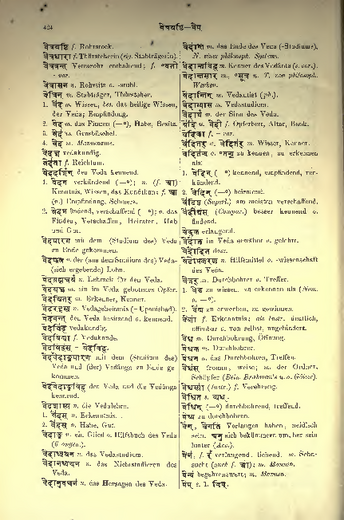
védi u. vedī f. Opferbett, Altar, Bank.
Burnouf 1866 Word type unspecified
Original text · French · Word type unspecified
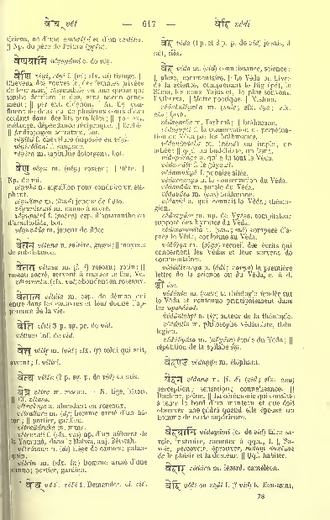
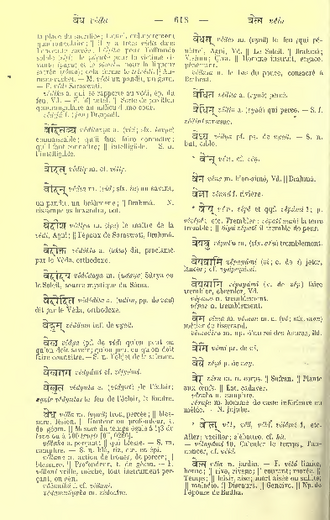
vedi vedi ou vedī f. (? vid) le lieu-saint, [Page618-1] la place du sacrifice; l'autel, ordinairement quadrangulaire; il y a trois vedis dans l'enceinte sacrée, l'esṭika pour l'offrande solide (iṣṭi), le pāśuka pour la victime vivante (paśu) et le somika pour la liqueur sacrée (soma); cela forme le trivedi. Anneau-cachet. — M. vedi un pandit, un guru. — F. vedī Sarasvatī. vedika a. qui se rapporte au vedi, ép. du feu, Vd. — F. [ā] autel. Sorte de pavillon quadrangulaire au milieu d'une cour. vedijā f. (jan) Draupadī.
Occurrences in source texts (1)
HP 1 occurrence
Continue with AYI Free
Image source: AYI archive.