

vibhu विभु – Omnipresent, powerful
adjective · substantive feminine · substantive masculine · Word type unspecified
Dictionary sources
AYI dictionary adjective · substantive masculine
Cappeller 1891 substantive feminine
Original text · English · substantive feminine
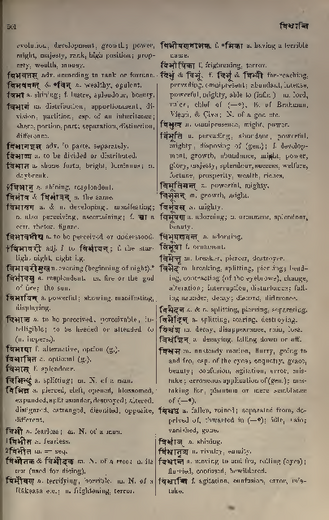
vibhú ·f. vibhū́ & vibhvī́ far-reaching, pervading, omnipresent; abundant, intense, powerful, mighty, able to (infin). m. lord, ruler, chief of (--°), E. of Brahman, Viṣṇu, & Śiva; N. of a god etc.
Monier-Williams 1872 Word type unspecified
Original text · English · Word type unspecified
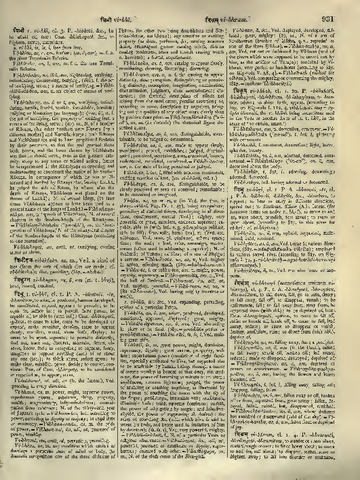
Vi-bhu, us, us, or vī, u (in Ved. the fem. is always vibhvī, Pāṇ. IV. 1, 47), being everywhere, pervading all material things, developing in all direc- tions, omnipresent, eternal (Ved.); mighty, very powerful or great, excellent, eminent, supreme; ca- pable, able to (with inf., e. g. pūrayituṃ vibhuḥ, able to fill); firm, solid, hard; (us), m. (Ved. acc. vibhvam, Ved. nom. pl. vibhvas), ether; space; time; the soul; a lord, ruler, sovereign, master, owner (often used in addressing a superior); N. of Brahmā; of Viṣṇu; of Śiva; of a son of Bhṛgu; a servant.
Petersburger 1855 adjective · substantive masculine
Original text · German · adjective · substantive masculine
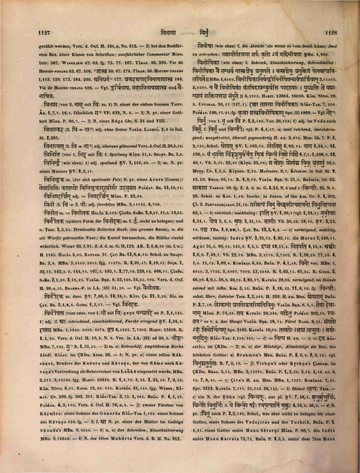
vibhú (von 1. bhū mit vi P. 3,2,180. VOP. 26,168) 1〉 adj. im Veda auch vibhū́. f. vibhū́ und vibhvī́; vgl. P. 4,1,47. a〉 weit reichend, durchdringend; ausgebreitet, überall gegenwärtig H. an. 2,312. MED. bh. 7. P. 3,2,180, Schol. ojas ṚV. 1,165,10. jyotis ṚV. 8,90,12. yāma ṚV. 1,34,1. ṚV. 10,138,5. yaṃ bhṛgàvo vìruru̱curvanèṣu ci̱traṃ vi̱bhvàṃ vi̱śe vìśe ṚV. 4,7,1. ṚV. 1,188,5. ṚV. 10,40,1. VS. 5,31. VS. 22,30 (KĀṬH. 35,10). sa ota̱ḥ protàśca vi̱bhūḥ pra̱jāsù VS. 32,8. MUṆḌ. UP. 1,1,6. KĀṬHOP. 2,22. MAITRYUP. 6,7. CŪLIKOP._in_Ind. St. 9,15. Ind. St. 9,19. BHAG. 10,12. R. 6,8,16. VARĀH. BṚH. S. 51,1. BHĀṢĀP. 50. BHĀṢĀP. 93. ākāśa TARKAS. 10. fg. Z. d. d. m. G. 6,24, N. 3 und 4 (vibhvī). Z. d. d. m. G. 25, N. 1. Z. d. d. m. G. 6,26. Schol. zu KAP. 1,49. Inschr. in Journ. of the Am. Or. S. 6,502, Śl. 3. SARVADARŚANAS. 51,13. tannityaṃ vibhu cecchantītyātmano vibhunityatā SARVADARŚANAS. 85,1. — b〉 reichlich; nachhaltig: rāti ṚV. 5,38,1 (vgl. ṚV. 1,34,1). ma̱nī̱ṣāḥ ṚV. 6,34,1. poṣa ṚV. 5,5,9. a̱paḥ ṚV. 3,31,16. kāmā̀ḥ VS. 20,23. VS. 18,10. ṚV. 2,24,10. yajña TBR. 3,9,19,1. ŚAT. BR. 13,3,7,2. — c〉 vermögend, mächtig, wirksam, tüchtig: Indra ṚV. 3,33,13. ṚV. 8,85,11. die Marut ṚV. 1,166,11. Agni ṚV. 31,2. ṚV. 65,10. ṚV. 141,9. ṚV. 5,4,2. drapsa ṚV. 10,11,4. viśpati ṚV. 6,15,8. aśvā̀ḥ ṚV. 3,6,9. ṚV. 7,48,1. VS. 22,19. MBH. 3,2118. MBH. 5,7202. R. 1,38,29. R. 1,77,29. R. 4,1,4. R. 4,11,12. R. 5,89,8. KUMĀRAS. 6,95. BHĀG. P. 4,1,48. vibho voc. MBH. 1,6040. MBH. 3,1752. MBH. 5,6067. MBH. 5,7009. MBH. 13,2250. R. 1,62,14. R. 1,65,34. R. GORR. 2,66,29. R. GORR. 4,9,4. R. GORR. 4,36,9. R. GORR. 4,40,12. R. GORR. 5,83,17. KATHĀS. 28,95. vermögend, im Stande seiend mit infin. KIR. 5,43. BHĀG. P. 5,18,23. BHĀG. P. 11,6,18. fg. (vibhvī). subst. Herr, Gebieter TRIK. 3,3,289. H. 359. H. an. MED. śreyasām BHĀG. P. 2,7,49. lokānāṃ pralayodbhavasthitivibhuḥ VARĀH. BṚH. S. 1,1. teṣāṃ devānām MĀRK. P. 74,58. tava KATHĀS. 26,280. madvibhu PAÑCAT. 202,10. svajana˚ so v. a. das Haupt VARĀH. BṚH. 18,14. Fürst RAGH. 8,31. saṃmato 'haṃ vibhornityam Spr. 3193. KATHĀS. 19,59. tāvato 'kṣaśca tatsutaḥ . varṣānabhūdvibhuḥ RĀJA-TAR. 1,340. RĀJA-TAR. 1,351. — d〉 = nitya H. an. — e〉 = dṛḍha AJAYAPĀLA_im_ŚKDR. — 2〉 m. a〉 der Mächtige, Allmächtige als Bez. des höchsten Gottes: α〉 Brahmanʼs MED. BHĀG. P. 2,9,6. BHĀG. P. 9,3,29; vgl. vibhuścaturmukhaḥ R. 7,5,12. — β〉 Viṣṇuʼs oder Kṛṣṇaʼs ŚABDAM._im_ŚKDR. BHAG. 5,15. MBH. 3,15591. BHĀG. P. 1,2,30. BHĀG. P. 1,3,16. BHĀG. P. 1,5,16. BHĀG. P. 1,2,40. BHĀG. P. 1,8,13. BHĀG. P. 7,8,34. — γ〉 Śivaʼs H. an. MED. MBH. 1,7297. KUMĀRAS. 7,31. Spr. 3313. KATHĀS. 7,111. KATHĀS. 21,143. KATHĀS. 39,153. — b〉 Diener (bhṛtya) TRIK. — c〉 ein N. der Ṛbhu (vgl. vibhvan), nur pl. ṚV. 7,48,1. ṛ̱bhurṛ̱bhubhìḥ, vibhvò vi̱bhubhìḥ ṚV. 7,48,2. ye vibhvo̱ naràḥ svapa̱tyānì ca̱kruḥ ṚV. 4,34,9. ṚV. 4,36,3. — d〉 N. pr. (vibhū nach P. 3,2,180, Schol., was aber nicht zu belegen ist) eines Gottes, eines Sohnes des Vedaśiras und der Tuṣitā, BHĀG. P. 8,1,21. eines Gottes unter Manu Sāvarṇi MĀRK. P. 80,7. des Indra unter Manu Raivata MĀRK. P. 75,72. BHĀG. P. 8,5,3. BHĀG. P. 8,5,unter dem 7ten Manu Verz. d. Oxf. H. 52,a,41. N. pr. eines Sohnes des Viṣṇu von der Dakṣiṇā BHĀG. P. 4,1,7. des Bhaga von der Siddhi BHĀG. P. 6,18,2. eines Bruders des Śakuni MBH. 7,6944 (mit der ed. Bomb. zu lesen: śakunerbhrātaro vīrā gavākṣaḥ śarabho vibhuḥ . subhago bhānudattaśca śūrāḥ pañca mahārathāḥ ..). eines Sohnes des Śambara HARIV. 9253. eines Sohnes des Satyaketu und Vaters des Suvibhu HARIV. 1594. fg. VP. 409. eines Sohnes des Dharmaketu und Vaters des Sukumāra ebend. N. 14. eines Sohnes des Varṣaketu (Satyaketu) und Vaters des Ānarta HARIV. 1751. VP. 409, N. 14. eines Sohnes des Prastāva von der Niyutsā BHĀG. P. 5,15,5. — Vgl. vaibhava.
Böhtlingk 1879 adjective · substantive masculine · Word type unspecified
Original text · German · adjective · substantive masculine
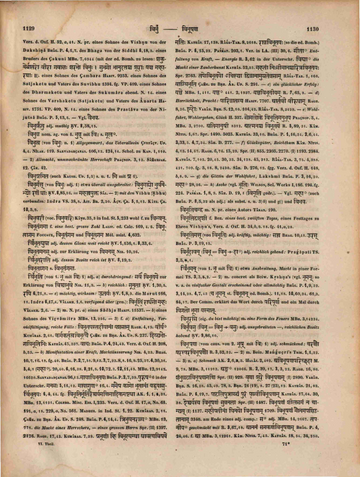
vibhú und vibhū́ (vedisch) — 1〉 Adj. (f. vibhū́ und vibhvī́) — a〉 weit reichend, durchdringend; ausgebreitet, überall gegenwärtig. — b〉 reichlich, nachhaltig. — c〉 vermögend, mächtig, wirksam, tüchtig, vermögend, zu (Infin.). — d〉 *= nitya. — e〉 *= dṛḍha. — 2〉 m. — a〉 Herr, Gebieter, Fürst, das Haupt von (im Comp. vorangehend). — b〉 der Mächtige, Allmächtige als Bez. des höchsten Gottes; — α〉 Brahmanʼs. — β〉 Viṣṇuʼs oder Kṛṣṇaʼs. — γ〉 Śivaʼs. — c〉 *Diener. — d〉 Pl. ein Name der Ṛbhu. — e〉 N. pr. — α〉 eines Gottes, eines Sohnes des Vedaśiras und der Tuṣitā. — β〉 einer Götterschaar unter Manu Sāvarṇi. — γ〉 des Indra unter Manu Raivata und unter dem 7ten Manu. — δ〉 eines Sohnes des Viṣṇu von der Dakṣiṇā. — ε〉 eines Sohnes des Bhaga von der Siddhi. — ζ〉 verschiedener anderer Personen.
Original text · German · Word type unspecified
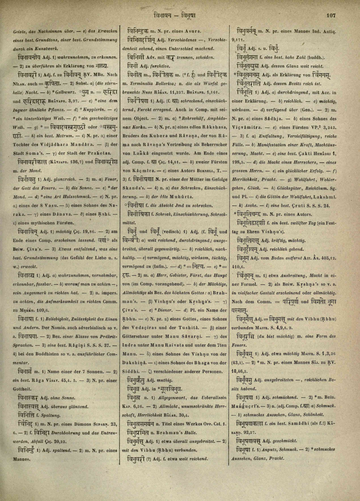
vibhu VI. m. *Bez. Buddhaʼs MAHĀVY. 1. [Nachtrag, Band 7]
Apte 1890 adjective · substantive masculine
Original text · English · adjective · substantive masculine
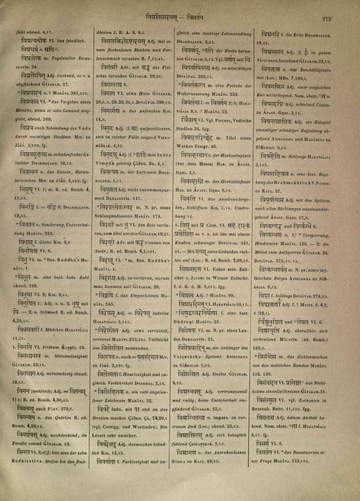
vibhu a. (bhū-bhvī f.) 1 Mighty, powerful. 2 Eminent, supreme. 3 Able to, capable of (with inf.); (dhanuḥ) pūrayituṃ bhavaṃti vibhavaḥ śikharamaṇiucaḥ Ki. 5. 43. 4 Self-subdued, firm, self-controlled; kamaparamavaśaṃ na viprakuryarvibhumapi taṃ yadamī spṛśati bhāvāḥ Ku. 6. 95. 5 (In Nyāya phil.) Eternal, existing everywhere, all-pervading, pervading all material things; sarvamūrtadravyasaṃyogitvaṃ vibhutvam. 6 Firm, hard. — bhuḥ 1 Ether. 2 Space. 3 Time. 4 The soul. 5 A lord, ruler, master, sovereign, king. 6 The supreme ruler; Bg. 5. 15; Bg. 10. 12. 7 A servant. 8 N. of Brahman. 9 Of Śiva; Ku. 6. 95; Ku. 7. 31; Mu. 1. 1. 10 Of Viṣṇu.
Cappeller 1887 Word type unspecified
Original text · German · Word type unspecified
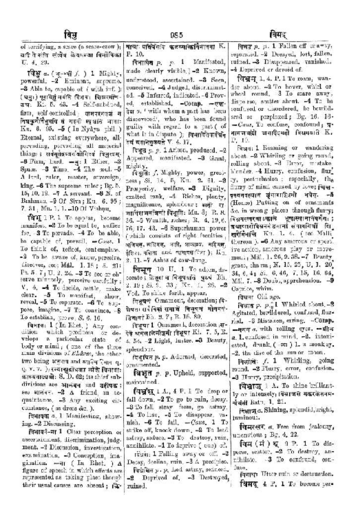
vibhú u. vibhū́, f. vibhū́ u. vibhvī́ ausgebreitet, durchdringend, gewaltig, kräfrig, mächtig, vermögend zu (Inf.). m. Herr, Gebieter, Fürst (auch von Göttern).
Burnouf 1866 adjective
Original text · French · adjective
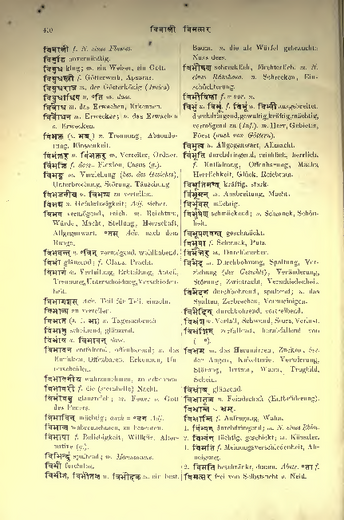
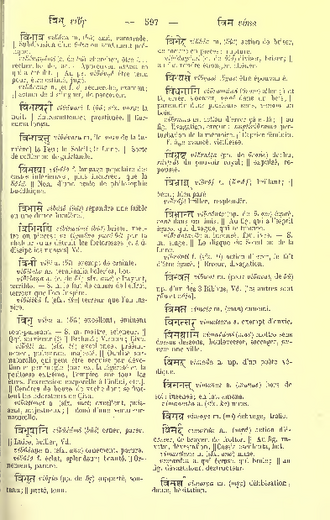
vibhu vibhu a. (bhū) excellent, éminent tout-puissant. — S. m. maître, seigneur. Qqf. serviteur (?) Brahmā; Viṣṇu; Śiva. vibhūti m. (sfx. ti) excellence, prééminence, puissance, majesté. Qualité surnaturelle, qui peut être acquise par dévotion et par magie [par ex. la légèreté et la petitesse extrême, l'empire sur tous les êtres, l'extension corporelle à l'infini, etc.]. Cendres de bouze de vache dont se frottent les adorateurs de Śiva. vibhūtimat a. (sfx. mat) excellent, puissant, majestueux; doué d'une vertu surnaturelle.
Occurrences in source texts (2)
Continue with AYI Free
Image source: AYI archive.