

āśrama आश्रम – Einsiedelei.
Substantiv Maskulin · Substantiv Neutrum · Worttyp nicht bestimmt
Wörterbuchquellen
Monier-Williams 1872 Substantiv Maskulin · Substantiv Neutrum
Originaltext · Englisch · Substantiv Maskulin · Substantiv Neutrum
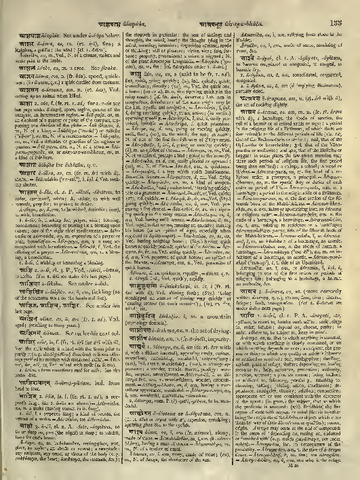
āśrama ā-śrama, as, am, m. n. (fr. rt. śram with ā), a hermitage, the abode of ascetics, the cell of a hermit or of retired saints or sages; a period in the religious life of a Brāhman, of which there are four referable to the different periods of life (viz. 1st, that of the Brahma-cārin or student; 2nd, that of the Gṛha-stha or householder; 3rd, that of the Vāna- prastha or anchorite; and 4th, that of the Bhikṣu or beggar: in some places the law-givers mention only three such periods of religious life, the first period being then omitted); a college, a school; a wood or thicket.
Petersburger 1855 Substantiv Maskulin · Substantiv Neutrum · Worttyp nicht bestimmt
Originaltext · Deutsch · Substantiv Maskulin · Substantiv Neutrum
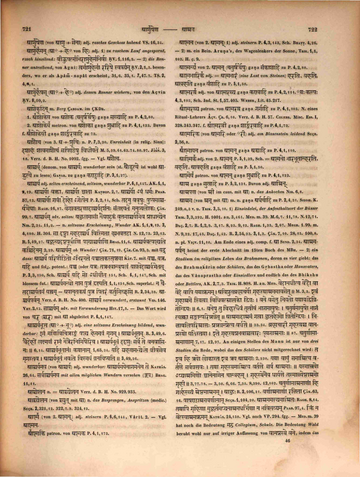
āśrama (von śram mit ā) m.n. gaṇa ardharcādi zu P. 2,4,31. SIDDH. K. 249,a,3 v. u. TRIK. 3,5,10. 1〉 Einsiedelei, der Aufenthaltsort der Büsser TRIK. 3,3,292. H. 1001. H. an. 3,461. MED. m. 39. M. 6,7. M. 11,78. N. 12,71. DAŚ. 2,7. R. 1,2,9. R. 1,3,17. R. 1,8,23. R. 1,9,12. RAGH. 1,35. RAGH. 2,67. MEGH. 1. MEGH. 99. m. N. 9,22. N. 17,45. DAŚ. 1,42. R. 2,54,23. R. 3,1,2. ŚĀK. 7,10. ŚĀK. 28,15. ŚĀK. 100,8. n. pl. VIŚV. 11,10. Am Ende eines adj. comp. f. ā SUND. 2,24. āśramaparvan heisst der erste Abschnitt im 15ten Buch des MBH. — 2〉 ein Stadium im religiösen Leben des Brahmanen, deren es vier giebt: das des Brahmacārin oder Schülers, das des Gṛhastha oder Hausvaters, das des Vānaprastha oder Einsiedlers und endlich das des Bhikṣu oder Bettlers, AK. 2,7,3. TRIK. H. 808. H. an. MED. vedānadhītya vedau vā vedaṃ vāpi yathākramam . aviplutabrahmacaryo gṛhasthāśramamāvaset .. M. 3,2. evaṃ gṛhāśrame sthitvā vidhivatsnātako dvijaḥ . vane vasettu niyato yathāvadvijitendriyaḥ .. M. 6,1. vaneṣu tu vihṛtyaivaṃ tṛtīyaṃ bhāgamāyuṣaḥ . caturthamāyuṣo bhāgaṃ tyaktvā saṅgānparivrajet .. āśramādāśramaṃ gatvā hutahomo jitondriyaḥ . bhikṣābalipariśrāntaḥ pravrajanpretya vardhate .. M. 6,33. M. 6,34. brahmacārī gṛhasthaśca vānaprastho yatistathā . ete gṛhasthaprabhavāścatvāraḥ pṛthagāśramāḥ .. M. 6,87. caturṇāmāśramāṇām M. 7,17. M. 12,97. An einigen Stellen des Manu ist nur von drei Stadien die Rede, wobei das des Schülers nicht mitgerechnet wird: ta eva hi trayo lokāsta eva traya āśramāḥ M. 2,230. yathā vāyuṃ samāśritya vartante sarvajantavaḥ . tathā gṛhasthamāśritya vartante sarva āśramāḥ .. yasmāttrayo 'pyāśramiṇo jñānenānnena cānvaham . gṛhasthenaiva dhāryante tasmājjyeṣṭhāśramo gṛhī .. M. 3,77. M. 3,78. -- M. 3,50. M. 6,66. M. 7,35. M. 8,390. M. 12,102. caturṇāmāśramāṇāṃ hi gārhasthyaṃ śreṣṭhamāśramam . āhuḥ R. 2,106,21. varṇāśramāṇāṃ rakṣitā ŚĀK. 63,16. pāṣaṇḍāśramavarṇānām SUŚR. 1,104,20. āśramamantyamāśritaḥ RAGH. 8,14. tathāpi gṛhiṇā muhūrtamapyanāśramadharmiṇā na bhavitavyam PRAB. 97,4. kiṃ na vetsyāśramakramam KATHĀS. 24,150. Vgl. noch VP. 294. fgg. — MED. m. 39 hat noch die Bedeutnng maṭha Collegium, Schule. Die Bedeutung Wald beruht wohl nur auf irriger Auffassung von vānaprasthe vane, indem das erste Wort aller Wahrscheinlichkeit nach adj. ist. — pitṛmātrāśrame VET. 32,3 falsche Lesart für ˚āśraye.
Originaltext · Deutsch · Worttyp nicht bestimmt
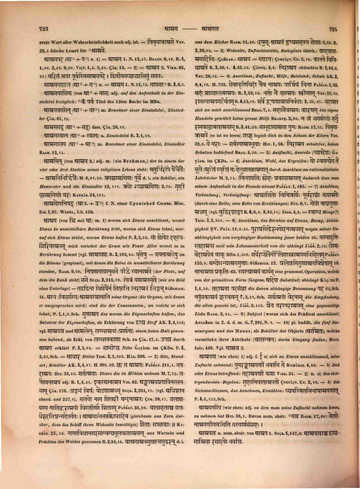
āśrama 3〉 eine Hütte, welche man bei feierlichen Gelegenheiten errichtet. VARĀH. BṚH. S. 44,8. VARĀH. BṚH. S. 44,16. — 4〉 unter den 11 Schülern Pṛthvīdharaʼs Verz. d. Oxf. H. 227,b,15. Wohl nur ein Beiwort, wie AUFRECHT annimmt.
Böhtlingk 1879 Substantiv Maskulin · Substantiv Neutrum
Originaltext · Deutsch · Substantiv Maskulin · Substantiv Neutrum
āśrama (adj. Comp. f. ā) — 1〉 m. n. Einsiedelei. — 2〉 m. eine zu feierlichen Gelegenheiten errichtete Hütte. — 3〉 m. ein Stadium im religiöse Leben, insbes. eines Brahmanen, deren 4 (Schüler, Haushälter, Einsiedler und Bettler) oder 3 (ohne Schüler) angenommen werden. — 4〉 m. N. pr. oder Bein. eines Schülers des Pṛthvīdhara.
Apte 1890 Substantiv Maskulin · Substantiv Neutrum
Originaltext · Englisch · Substantiv Maskulin
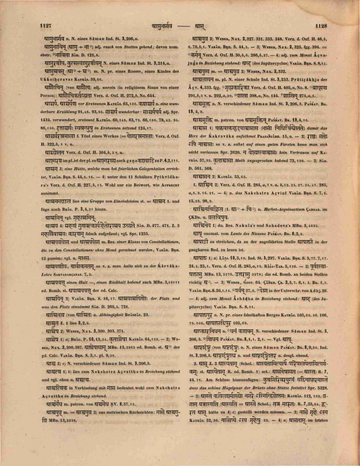
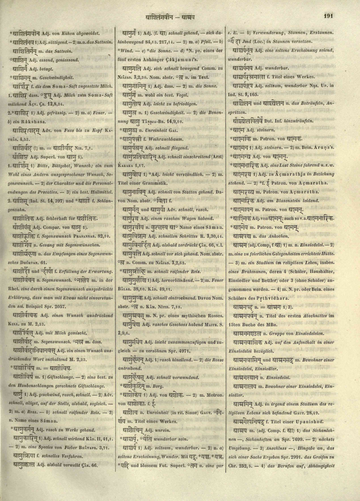
āśramaḥ, -maṃ [ā-śram ādhāre ghañ vṛddhya bhāvaḥ] 1 A hermitage, hut, cell, dwelling or abode of ascetics. 2 A stage, order, or period of the (religious) life of a Brāhmaṇa. These are four: — brahmacarya the life of a student; gārhasthya the life of a house holder: vānaprasya the life of an anchorite or hermit, and saṃnyāsa the life of a ([Page 0265-b]) Bhikṣu or beggar. Kṣatriyas (and Vaiśyas also) can enter upon the first three Āśramas; cf. Ś. 7. 20; V. 5; (according to some authorities they can enter the fourth also; cf. sakilāśramamaṃtyamāśritaḥ R. 8. 14); pūrvāśramaḥ Ku. 5. 50. 3 A college, school. 4 A wood or thicket (where ascetics practise penance). 5 N. of Viṣṇu. Comp. — guruḥ the head of a religious order, a preceptor, principal. — dharmaḥ 1 the special duties of each order or life. 2 the duties of one leading a hermit's life; ya imāmāśramadharme niyuṅkte Ś. 1. — padaṃ, -maṃḍalaṃ, -sthānaṃ 1 a hermitage (including the surrounding grounds), a penance forest (tapovanaṃ); śāṃtamidamāśramapadaṃ Ś. 1. 16. 2 a period in the religious life of a Brāhmaṇa. — bhraṣṭa a. fallen from any religious order, apostate. — vāsaḥ residence in a hermitage. — vāsika a. relating to residence in a hermitage; ˚kaṃ parva the 15th book of the Mb. — vāsin, — ālayaḥ, -sad m. an ascetic, hermit.
Originaltext · Englisch · Substantiv Neutrum
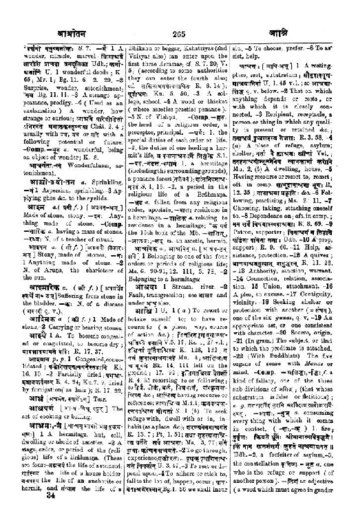
āśramaḥ, -maṃ [ā-śram ādhāre ghañ vṛddhya bhāvaḥ] 1 A hermitage, hut, cell, dwelling or abode of ascetics. 2 A stage, order, or period of the (religious) life of a Brāhmaṇa. These are four: — brahmacarya the life of a student; gārhasthya the life of a house holder: vānaprasya the life of an anchorite or hermit, and saṃnyāsa the life of a ([Page 0265-b]) Bhikṣu or beggar. Kṣatriyas (and Vaiśyas also) can enter upon the first three Āśramas; cf. Ś. 7. 20; V. 5; (according to some authorities they can enter the fourth also; cf. sakilāśramamaṃtyamāśritaḥ R. 8. 14); pūrvāśramaḥ Ku. 5. 50. 3 A college, school. 4 A wood or thicket (where ascetics practise penance). 5 N. of Viṣṇu. Comp. — guruḥ the head of a religious order, a preceptor, principal. — dharmaḥ 1 the special duties of each order or life. 2 the duties of one leading a hermit's life; ya imāmāśramadharme niyuṅkte Ś. 1. — padaṃ, -maṃḍalaṃ, -sthānaṃ 1 a hermitage (including the surrounding grounds), a penance forest (tapovanaṃ); śāṃtamidamāśramapadaṃ Ś. 1. 16. 2 a period in the religious life of a Brāhmaṇa. — bhraṣṭa a. fallen from any religious order, apostate. — vāsaḥ residence in a hermitage. — vāsika a. relating to residence in a hermitage; ˚kaṃ parva the 15th book of the Mb. — vāsin, — ālayaḥ, -sad m. an ascetic, hermit.
Cappeller 1887 Substantiv Maskulin
Originaltext · Deutsch · Substantiv Maskulin
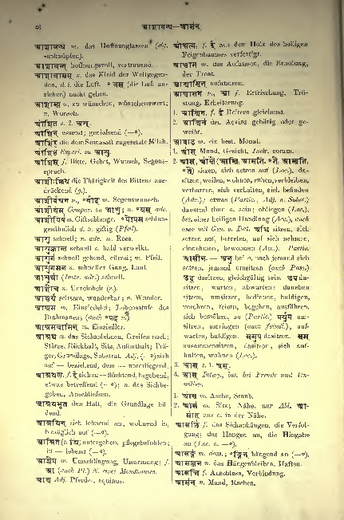
āśrama m. Einsiedelei; Lebensstufe des Brahmanen; (auch ˚pada n.)
Burnouf 1866 Substantiv Maskulin
Originaltext · Französisch · Substantiv Maskulin
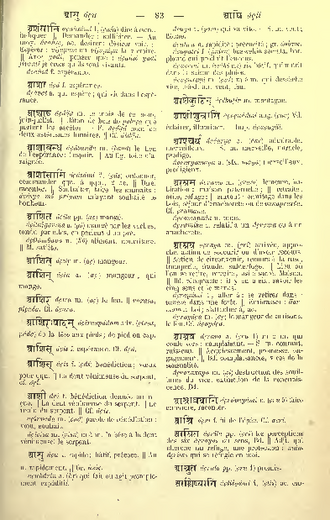
āśrama āśrama m. (śram) demeure, habitation; maison paternelle; retraite, asile, refuge; surtout: ermitage dans les bois, séjour d'anachorète ou de vanaprastha. Cf. śramaṇa. āśramapada n. mms. āśramika a. relatif à un āśrama ou à un anachorète.
Quelltextfundstellen (1)
SiSa 1 Fundstelle
Mit AYI Free weitermachen
Bildquelle: AYI Archiv.