

naraka नरक – Unterwelt, Hölle.
Substantiv Maskulin · Substantiv Neutrum · Worttyp nicht bestimmt
Wörterbuchquellen
Cappeller 1891 Substantiv Maskulin
Originaltext · Englisch · Substantiv Maskulin
náraka ·m. (n.) the lower world, hell (also personif.); m. N. of a demon killed by Kṛṣṇa.
Originaltext · Englisch · Substantiv Maskulin
naráka ·m. (n.) the lower world, hell (also personif.); m. N. of a demon killed by Kṛṣṇa.
Monier-Williams 1872 Substantiv Maskulin · Substantiv Neutrum
Originaltext · Englisch · Substantiv Maskulin · Substantiv Neutrum
naraka naraka, as, am, m. n. (said to be fr. rt. nṝ), hell, the place of torment (distinguished fr. pātāla, the lower regions, q. v.), including a num- ber of places of torture of various descriptions, gene- rally said to be twenty-one in number [cf. nāraka]; (Hell is sometimes personified as a son of Anṛta and Nirṛti or Nikṛti); (as), m., N. of a demon, a son of Bhūmi or Earth (therefore called Bhauma, haunting Prāg-jyotiṣa and slain there by Kṛṣṇa); N. of a man; N. of a district; of a place of pilgrimage.
Petersburger 1855 Substantiv Maskulin · Substantiv Neutrum · Worttyp nicht bestimmt
Originaltext · Deutsch · Substantiv Maskulin · Substantiv Neutrum
náraka UJJVAL._zu_UṆĀDIS. 5,35. 1〉 m. Unterwelt, Hölle AK. 1,2,2,1. TRIK. 3,3,28. H. 1359. H. an. 3,55. MED. k. 108. nejjihmāyantyo narakaṃ patāma NIR. 1,11. dakṣiṇāpūrvasyāṃ diśi visarpī narakaḥ TAITT. ĀR. 1,19,1. narakaṃ pratipadyate M. 2,116. M. 11,206. narakaṃ yānti M. 3,172. M. 3,249. M. 4,87. narakaṃ gacchataḥ M. 235. M. 8,128. M. 8,313. arvāṅnarakamabhyeti 75. narakaṃ vrajet M. 94. M. 307. narake hi patantyete M. 11,37. narake vaset 207. ghorānnarakānprāpya M. 12,54. narakeṣu vivartanam 75. kṛcchre sa narake majjet N. 6,12. MBH. 5,1589. MBH. 14,2736. VARĀH. BṚH. S. 2,13. PAÑCAT. 108,21. BHĀG. P. 2,7,22. BHĀG. P. 6,17,20. MĀRK. P. 15,80. MĀRK. P. 18,7. neutr. MĀRK. P. 25,17. BHĀG. P. 4,29,15. UJJVAL. a. a. O. Verschiedene Höllen (21 die gewöhnliche Zahl) aufgeführt M. 4,87. fgg. YĀJÑ. 3,221. fgg. VP. 48. VP. 207. fgg. BHĀG. P. 5,26,4. fgg. H. 1359. fgg. Hieher gehört wohl auch dhūrtā narakarūpiṇaḥ MBH. 12,6518. Vgl. nāraka. — 2〉 n. die personificirte Hölle ist ein Sohn des Anṛta von der Nirṛti (Nikṛti) MĀRK. P. 50,29. VP. 56. — 3〉 m. N. pr. eines Dämons, eines Sohnes der Erde (daher bhauma genannt), der in Prāgjyotiṣa hauste und hier von Kṛṣṇa erschlagen wurde, TRIK. H. 221. H. an. MED. MBH. 1,2537. MBH. 2,364. MBH. 3,477. MBH. 3,488. MBH. 3,10914. MBH. 5,1887. MBH. 12,8261. MBH. 12,12956. ARJ. 5,20. HARIV. 216. fgg. HARIV. 2287. HARIV. 2362. fgg. HARIV. 3117. HARIV. 3134. fgg. HARIV. 6791. HARIV. 9126. fgg. HARIV. 9132. HARIV. 9160. fgg. HARIV. 9790. HARIV. 12695. fgg. HARIV. 12848. R. 3,20,17. VP. 148. VP. 581. fgg. BHĀG. P. 8,10,32. RĀJA-TAR. 2,150. — 4〉 m. N. pr. eines Mannes: paphakanarakāḥ gaṇa tikakitavādi zu. P. 2,4,68. — 5〉 N. pr. eines Landstrichs: muruṃ ca narakaṃ caiva śāsti yo yavanādhipaḥ . — bhagadattaḥ MBH. 2,578. ein Wallfahrtsort: tato gaccheta narakaṃ tīrthasevī MBH. 3,7029. — 6〉 m. = devarātriprabheda (!) UṆĀDIK._im_ŚKDR. — 7〉 f. narikā P. 7,3,44, Vārtt. 1. = narānkāyati Schol.
Originaltext · Deutsch · Worttyp nicht bestimmt
naraka 1〉 ayaṃ bhaumo narakaḥ diese irdische Hölle, die Hölle auf Erden MBH. 1,3603. MBH. 1,3606. neutr. Spr. 4649. — 5〉 Z. 3 MBH. 3,7039 (so ist zu lesen st. MBH. 3,7029) hat die ed. Bomb. tato gacchedanarakaṃ (vgl. anarakeśvaratīrtha) tīrthasevī. — Vgl. mahā˚.
Böhtlingk 1879 Substantiv Maskulin · Substantiv Neutrum
Originaltext · Deutsch · Substantiv Maskulin · Substantiv Neutrum
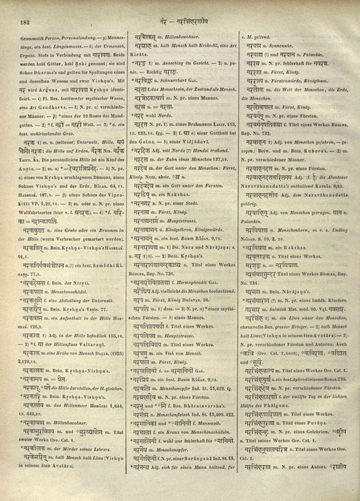
naraka — 1〉 m. n. (seltener) Unterwelt, Hölle. ayaṃbhaumo narakaḥ die Hölle auf Erden. náraka NIR. naráka TAITT. ĀR. Die personificirte Hölle ist ein Kind des Anṛta. — 2〉 m. — a〉 *= devarātriprabheda. — b〉 N. pr. — α〉 eines Von Kṛṣṇa erschlagenen Dämons, eines Sohnes Viṣṇuʼs und der Erde, BĀLAR. 64,11. HARṢAC. 187,8. — β〉 eines Sohnes des Vipracitti VP. 2,21,11. — 3〉 m. oder n. N. pr. eines Wallfahrtsortes (hier v. l. anaraka). — 4〉 *f. narikā = narānkāyati.
Apte 1890 Substantiv Maskulin · Substantiv Neutrum
Originaltext · Englisch · Substantiv Maskulin
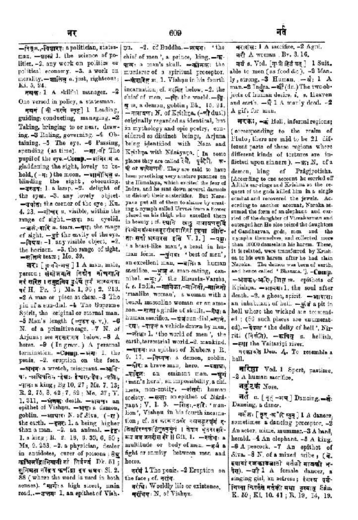
narakaḥ, -kaṃ Hell, infernal regions; (corresponding to the realm of Pluto; there are said to be 21 different parts of these regions where different kinds of tortures are inflicted upon sinners). — kaḥ N. of a demon, king of Prāgjyotiṣa. [According to one account he carried off Aditi's ear-rings and Kṛṣṇa at the request of the gods killed him in a single combat and recovered the jewels. According to another account, Naraka assumed the form of an elephant and carried off the daughter of Viśvakarman and outraged her. He also seized the daughters of Gandharvas, gods, men and the nymphs themselves, and collected more than 16000 damsels in his harem. These, it is related, were transferred by Kṛṣṇa to his own harem after he had slain Naraka. The demon was born of earth, and hence called ‘Bhauma.’]. Comp. — aṃtakaḥ, -ariḥ, -jit m. epithets of Kṛṣṇa. — āmayaḥ 1 the soul after death. 2 a ghost, spirit. — āvāsaḥ an inhabitant of hell. — kuṃḍaṃ a pit in hell where the wicked are tormented; (86 such places are enumerated). — devatā ‘the deity of hell’, Nirṛti (nirṛti). — rūpin a. hellish. — sthā the Vaitariṇī river.
Originaltext · Englisch · Substantiv Maskulin · Substantiv Neutrum
narakaḥ, -kaṃ Hell, infernal regions; (corresponding to the realm of Pluto; there are said to be 21 different parts of these regions where different kinds of tortures are inflicted upon sinners). — kaḥ N. of a demon, king of Prāgjyotiṣa. [According to one account he carried off Aditi's ear-rings and Kṛṣṇa at the request of the gods killed him in a single combat and recovered the jewels. According to another account, Naraka assumed the form of an elephant and carried off the daughter of Viśvakarman and outraged her. He also seized the daughters of Gandharvas, gods, men and the nymphs themselves, and collected more than 16000 damsels in his harem. These, it is related, were transferred by Kṛṣṇa to his own harem after he had slain Naraka. The demon was born of earth, and hence called ‘Bhauma.’]. Comp. — aṃtakaḥ, -ariḥ, -jit m. epithets of Kṛṣṇa. — āmayaḥ 1 the soul after death. 2 a ghost, spirit. — āvāsaḥ an inhabitant of hell. — kuṃḍaṃ a pit in hell where the wicked are tormented; (86 such places are enumerated). — devatā ‘the deity of hell’, Nirṛti (nirṛti). — rūpin a. hellish. — sthā the Vaitariṇī river.
Cappeller 1887 Substantiv Maskulin · Substantiv Neutrum
Originaltext · Deutsch · Substantiv Maskulin · Substantiv Neutrum
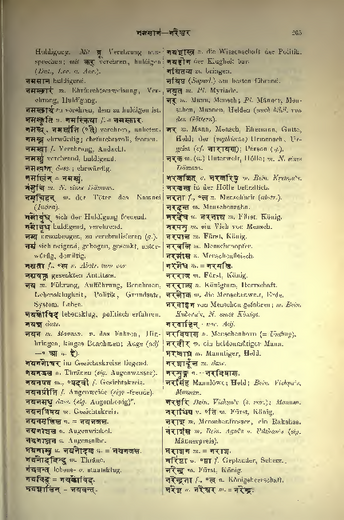
naraka m. (n.) Unterwelt, Hölle; m. N. eines Dämons.
Burnouf 1866 Substantiv Maskulin · Substantiv Neutrum
Originaltext · Französisch · Substantiv Maskulin · Substantiv Neutrum
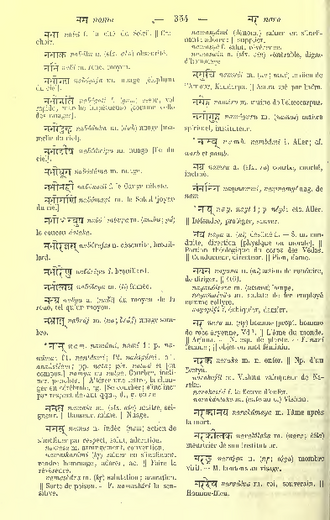
naraka naraka m. n. enfer. Np. d'un Daitya. narakajit m. Viṣṇu vainqueur de Naraka. narakasthā f. le fleuve d'enfer. narakāntaka m. (anta au c.) Viṣṇu.
Quelltextfundstellen (4)
Mit AYI Free weitermachen
Bildquelle: AYI Archiv.