

tārkṣya तार्क्ष्य – Tārkṣya; mythisches Wesen
Substantiv Maskulin · Substantiv Neutrum · Worttyp nicht bestimmt
Wörterbuchquellen
AYI Wörterbuch Substantiv Maskulin
Tārkṣya; mythisches Wesen
Monier-Williams 1872 Substantiv Maskulin
Originaltext · Englisch · Substantiv Maskulin
Tārkṣya, as, m. (a patronymic fr. tṛkṣa), N. of a mythical being, described either as a horse or bird, and originally one of the personifications of the sun, which was represented under these forms; (the most ancient representation seems to have been that of the horse: in Mahā-bh. 1. 2548, Tārkṣya, Ariṣṭa-nemi, Garuḍa, Aruṇa, and Āruṇī are described as children of Kaśyapa and Vinatā; Tārkṣya is also called Garuḍāgra-ja, the elder brother of Garuḍa: in Mahā-bh. III. 12660, mention is made of a Muni called Ariṣṭa-nemi Tārkṣya, but in the epic and later literature Tārkṣya is generally identified with Garuḍa, the bird and vehicle of Viṣṇu and destroyer of the race of snakes); a N. of Garuḍa; a N. of Śiva; a Vedic hymn supposed to be composed by Ariṣṭa-nemi Tārkṣya; a horse in general; a car, a chariot; a bird in general; N. of a race; a snake; the tree Vatica Robusta [cf. tārkṣya-prasava]; a sort of antidote; gold; (ī), f. a wild creeper; (am), n. a kind of drug; a sort of collyrium.
Petersburger 1855 Substantiv Maskulin · Substantiv Neutrum · Worttyp nicht bestimmt
Originaltext · Deutsch · Substantiv Maskulin · Substantiv Neutrum
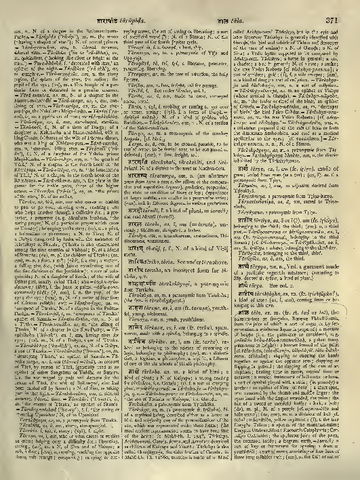
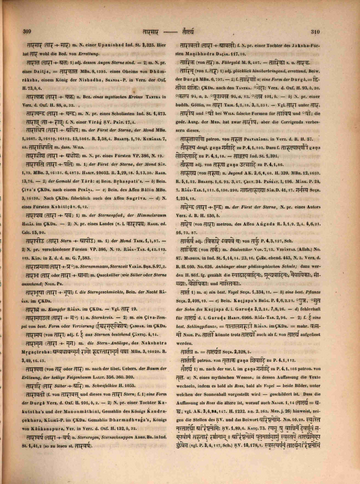
tā́rkṣya 1〉 m. nach der var. l. im gaṇa gargādi zu P. 4,1,105 patron. von tṛkṣa. a〉 N. eines mythischen Wesens, in dessen Auffassung die Texte wechseln, indem es bald als Ross, bald als Vogel — beide Bilder, unter welchen der Sonnenball vorgestellt wird — geschildert ist. Dass die Auffassung als Ross die ältere ist, worauf auch NAIGH. 1,14 (tārkṣya = aśva; vgl. AK. 3,4,24,147. H. 1232. H. an. 2,363. MED. y. 26) hinweist, zeigen die Stellen des ṚV. und das Beiwort ariṣṭanemi. NIR. 10. NIR. 28. sva̱sti na̱stārkṣyo̱ arìṣṭanemiḥ ṚV. 1,89,6. KAUŚ. 73. tyamū̱ ṣu vā̱jinàṃ de̱vajū̀taṃ sa̱hāvā̀naṃ taru̱tāra̱ṃ rathā̀nām . arìṣṭanemiṃ pṛta̱nājàmā̱śuṃ sva̱staye̱ tārkṣyàmi̱hā hùvema (vgl. P. 3,4,117, Sch.) ṚV. 10,178,1. sva̱styayàna̱ṃ tārkṣya̱marìṣṭanemiṃ ma̱hadbhū̀taṃ vāyasaṃ de̱vatā̀nām Einschiebung an ṚV. 5,51 (ed. MÜLLER III, S. xxx). tārkṣyo vaipaścitastasya vayāṃsi viśaḥ ĀŚV. ŚR. 10,7; dagegen heisst er vaipaśyata in der entsprechenden Stelle ŚAT. BR. 13,4,3,13. Neben ariṣṭanemi als besondere Person: tasya̱ tārkṣya̱ścārìṣṭanemiśca senānīgrāma̱ṇyaù VS. 15,18. Tārkṣya, Ariṣṭanemi, Garuḍa, Aruṇa und Āruṇi Kinder Kaśyapaʼs (vgl. tārkṣa) von der Vinatā MBH. 1,2548. MBH. 1,4830. HARIV. 12468. HARIV. 14175. tārkṣya = garuḍāgraja ein älterer Bruder des Garuḍa H. an. MED. = Aruṇa (!) COLEBR._zu_AK. und WILS. Tārkṣya Ariṣṭanemi als Muni MBH. 3,12660. MBH. 3,12665. MBH. 12,10615. Im Epos und später wird Tārkṣya gleichgesetzt dem Garuḍa, dem raschen Vogel, der Viṣṇu als Vehikel dient und die Schlangen verfolgt. AK. 1,1,1,24. AK. 3,4,7,32. AK. 3,4,24,147. TRIK. 1,1,42. H. 231. H. an. HĀR. 10. tārkṣyamārutaraṃhas MBH. 1,5886. RĀJA-TAR. 8,3192. gatiṃ khara ivāśvasya tārkṣyasyevapatatriṇaḥ . anugantuṃ na śaktirme gatiṃ tava R. 2,105,4. bhagavānāruroha — tārkṣyam HARIV. 7460. Kṛṣṇaʼs Wagen ist tārkṣyaketana MBH. 2,34. tārkṣyalakṣaṇa Bein. Kṛṣṇaʼs MBH. 12,1506. bhavanti nirviṣāḥ sarpā yathā tārkṣyasya darśanāt MBH. 13,1802. pūjayanti narā nāgānnaṃ tārkṣyaṃ nāgaghātinam PAÑCAT. I, 474. tārkṣyatrastā ivāhayaḥ BHĀG. P. 3,17,22. RAGH. 6,49. RĀJA-TAR. 1,31. RĀJA-TAR. 4,199. Als Bein. von Śiva ŚIV. Im pl. neben devāḥ, maharṣayaḥ, gandharvāḥ, yakṣāḥ und cāraṇāḥ R. 1,16,9. Vgl. garuḍa. — b〉 Bez. des dem Ariṣṭanemi Tārkṣya durch die ṚV. ANUKR. zugeschriebenen Liedes ṚV. 10,178. ĀŚV. ŚR. 9. ĀŚV. ŚR. 1. ŚĀṄKH. ŚR. 11,14,28. ŚĀṄKH. ŚR. 12,11,12. LĀṬY. 1,6,19. — c〉 Pferd überh.; s. oben u. a. — d〉 Wagen H. an. — e〉 viell. Vogel überh. in den Stellen: jāyante vivṛtāsyāśca vyāharanto 'śivā giraḥ . tripadāḥ śikhinastārkṣyāścaturdaṃṣṭrā viṣāṇinaḥ .. MBH. 6,71. sarvaṃ kilviṣaṃ tarati tārkṣyadarśanamutpadyate śatāyuśca bhavati SUŚR. 2,162,4. Vgl. tārkṣyanāyaka, tārkṣyanāśaka. — f〉 pl. N. pr. eines Volkes MBH. 2,1871. — g〉 Schlange MED. — h〉 N. eines Baumes, Vatica robusta W. u. A. (aśvakarṇa, śālavṛkṣa), H. an. ŚABDAR._im_ŚKDR. Vgl. tārkṣyaprasava. — i〉 ein best. Gegengift SUŚR. 2,275,21. — k〉 Gold (m.!) MED. — l〉 netrāñce keśe NIGH. PR. Ist etwa netrāñcale (vgl. u. añcala und BHARTṚ. 1,55, v. l.) zu lesen? — 2〉 f. tārkṣyī eine best. wildwachsende Schlingpflanze (vanalatāviśeṣa) ŚABDAR._im_ŚKDR. — 3〉 n. a〉 ein best. Arzeneimittel SUŚR. 2,69,13. — b〉 eine Art Kollyrium (rasāñjana) H. an. MED.
Originaltext · Deutsch · Worttyp nicht bestimmt
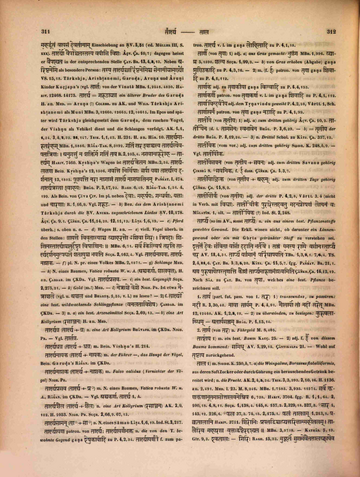
tārkṣya 1〉a〉 tārkṣya = garuḍa KATHĀS. 60,195. KATHĀS. 90,97. Tārkṣyaputra Suparṇa als Liedverfasser ṚV. ANUKR.

Böhtlingk 1879 Substantiv Maskulin · Substantiv Neutrum
Originaltext · Deutsch · Substantiv Maskulin · Substantiv Neutrum
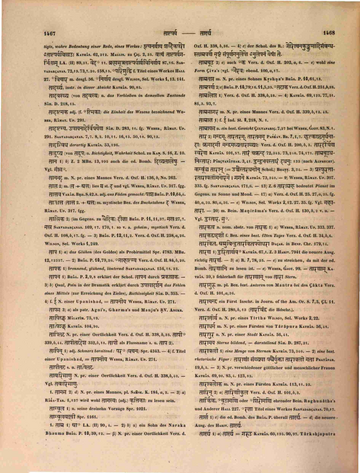
tā́rkṣya — 1〉 m. — a〉 N. pr. eines mythischen Wesens, welches in der älteren Zeit als Ross, später als Vogel aufgefasst wird. Vom Epos an = gāruḍa. Hier und da erscheint er als ein älterer Bruder Garuḍaʼs (als Vater Garuḍaʼs, d. i. Kaśyapa BHĀG. P. ed. Bomb. 6,6,2. 21), als ein Yakṣa (VP.² 2,285) und auch als Muni. Pl. die Nachkomme Tārkṣyaʼs. — b〉 Bez. des dem Tārkṣya Ariṣṭanemi zugeschriebenen Liedes ṚV. 10,178. — c〉 *Pferd. — d〉 Wagen. — e〉 Vogel. — f〉 *Schlange. — g〉 Vatica robusta SUŚR. 2,498,19, v. l. — h〉 ein best. Gegengift. — i〉 Gold (als m. !) — k〉 netrājce keśe (?). — l〉 Pl. N. pr. eines Volkes — 2〉 *f. tārkṣyī eine best. Schlingpflanze. — 3〉 n. eine Art Collyrium SUŚR. 2,69,13. Vgl. tarkṣa.
Apte 1890 Substantiv Maskulin
Originaltext · Englisch · Substantiv Maskulin
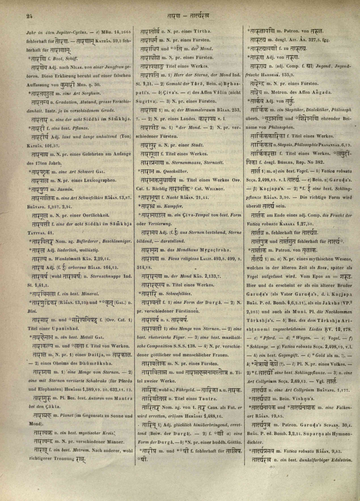
tārkṣyaḥ 1 An epithet of Garuḍa; trastena tārkṣyāt kila kāliyena R. 6. 49. 2 N. of Garuḍa's elder brother Aruṇa. 3 A car. 4 A horse. 5 A snake. 6 A bird in general. 7 N. of Śiva. 8 N. of Śiva. 9 Gold. 10 A kind of antidote. Comp. — dhvajaḥ an epithet of Viṣṇu. — nāyakaḥ an epithet of Garuḍa.
Cappeller 1887 Substantiv Maskulin
Originaltext · Deutsch · Substantiv Maskulin
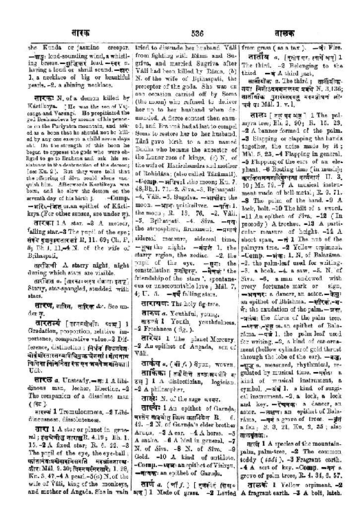
tā́rkṣya m. ein best. mythisches Wesen (erst als Ross, sp. als Vogel aufgefasst); auch = vor.
Burnouf 1866 Substantiv Maskulin
Originaltext · Französisch · Substantiv Maskulin
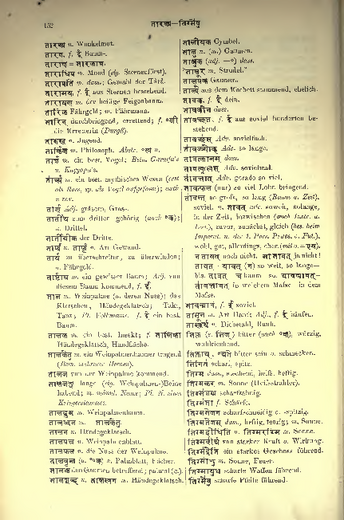
tārkṣya tārkṣya m. (tṛkṣ) cheval; chariot, véhicule. Serpent. Surn. de Garuḍa et d'Aruṇa. — (de tarkṣ 10) or [métal]. Shorea robusta, bot. — S. f. tārkṣyī liane sauvage. — S. n. tārkṣya sorte de collyre. tārkṣyadhvaja m. Viṣṇu [dont l'étendard porte l'image de Garuḍa. tārkṣyaśaila n. (śilā) sorte de collyre.
Quelltextfundstellen (1)
MAN 1 Fundstelle
Mit AYI Free weitermachen
Bildquelle: AYI Archiv.