
Utkaṭāsana: Intense Posture
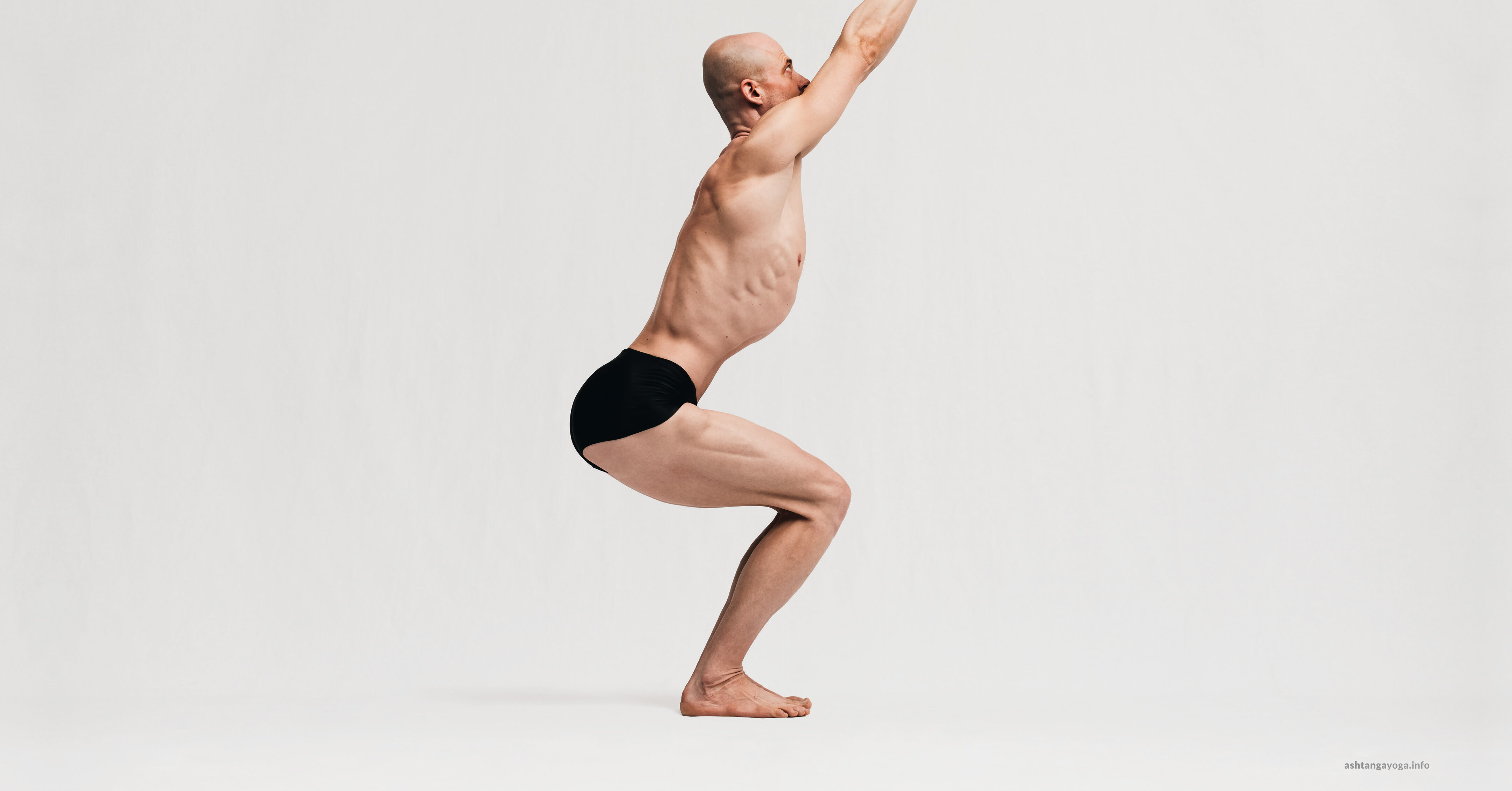
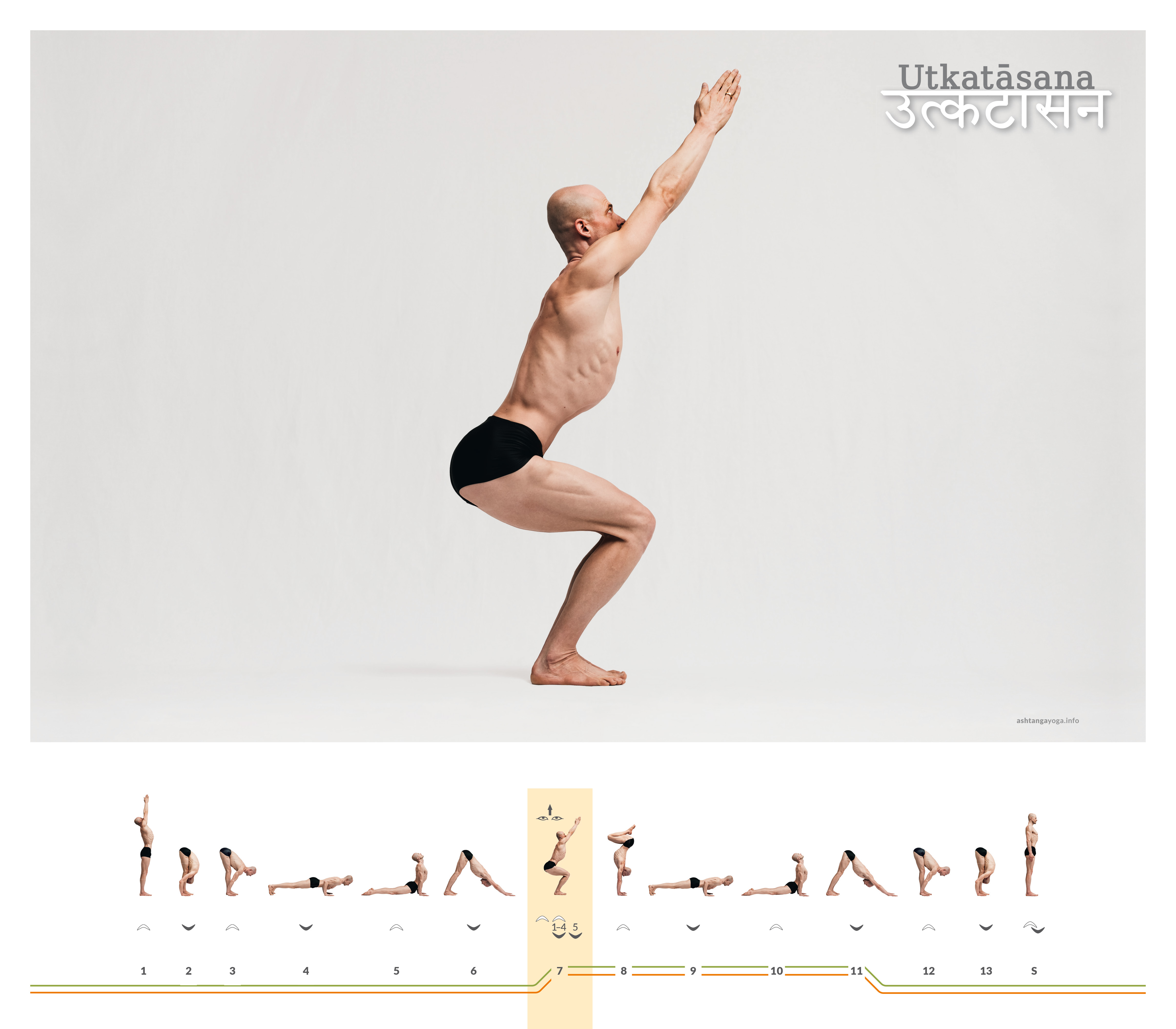
The „Intense Posture“ is a standing posture where the knees are bent in the same way as if you were to sit down on a chair. The arms lengthen powerfully toward the sky - Utkaṭāsana.
In the traditional count, start here from the vinyasa of the previous posture at downward dog.
Vinyāsa 7 - Inhale. 5 Breaths:
As you inhale lift both legs as you shift your weight to your arms and lower your closed feet as far forward on the mat as you can. In the same inhalation you bend your knees as you raise your arms and close your palms together. Traditionally your gaze is on your thumbs (Aṅguṣṭa Dṛṣṭi). Stay here and breathe 5 breaths.
Caution: Your knees should be above (not in front of) your toes. The pressure of the cartilage of the patella should be evenly distributed. This is only possible by drawing your pelvis further back. The spine is in a slight backbend.
Vinyāsa 8 – Inhale:
At the end of the fifth exhalation, lower the arms and place the hands on the floor. Press as much weight as possible into your hands, almost as if you were to go into a somersault. In this way your feet lift themselves from the floor.
Try this: Traditionally, your knees remain bent as you lift. When you are learning this transition, you can try to kick up into handstand and then draw the knees in.
Vinyāsa 9 to 11:
Follow the vinyasa as you know it until downward dog.
In the traditional count, change here directly to the next pose.
Effect: Utkaṭāsana is a powerful pose. It activates the quadriceps and the hamstrings as well as the glutes and the bak muscles. With Vinyāsa 8 you have the opportunity to practice the first arm balance of the primary series Aṣṭāṅga Yoga.
Continue with AYI Free
Photographer: Richard Pilnick - www.richardpilnick.com

Please log in to write a message. Go to login