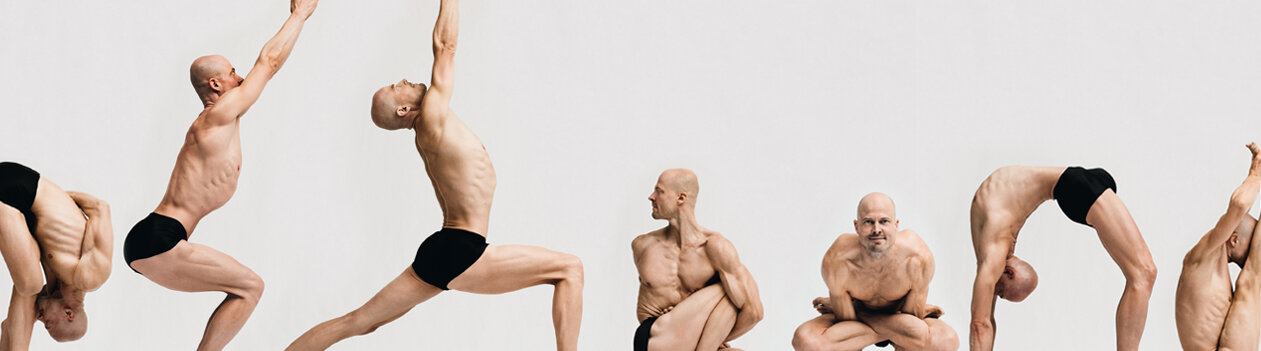
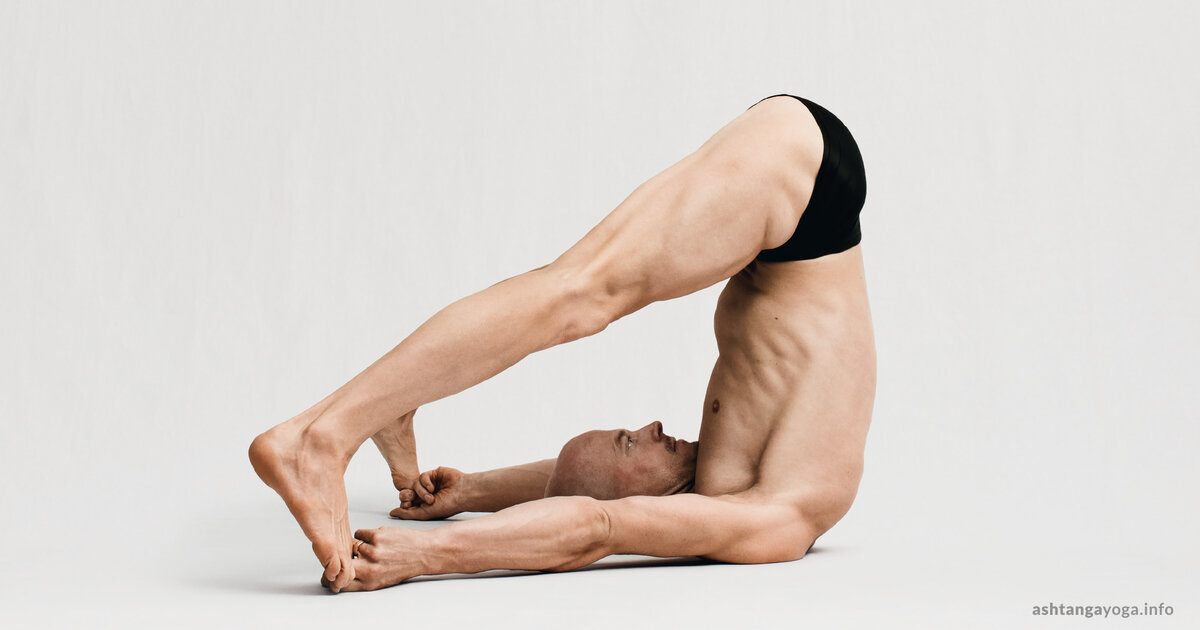
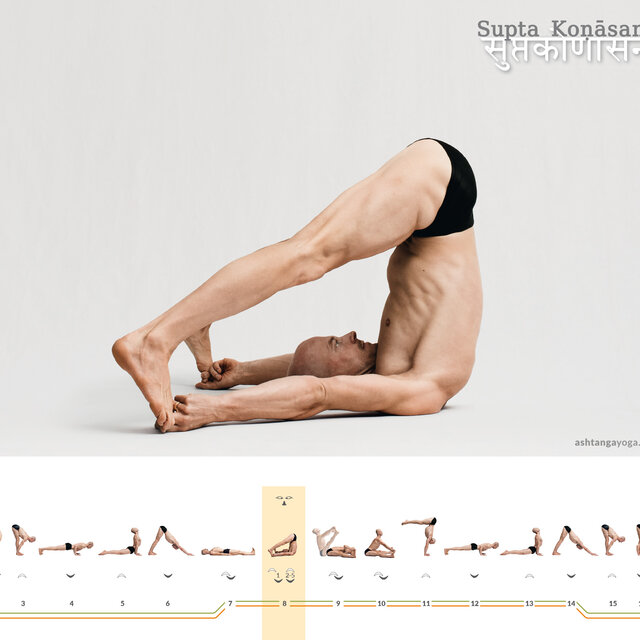
A collage of postures from the first series of Aṣṭāṅga Yoga.

Yoga Cikitsā: The first series of Aṣṭāṅga Yoga

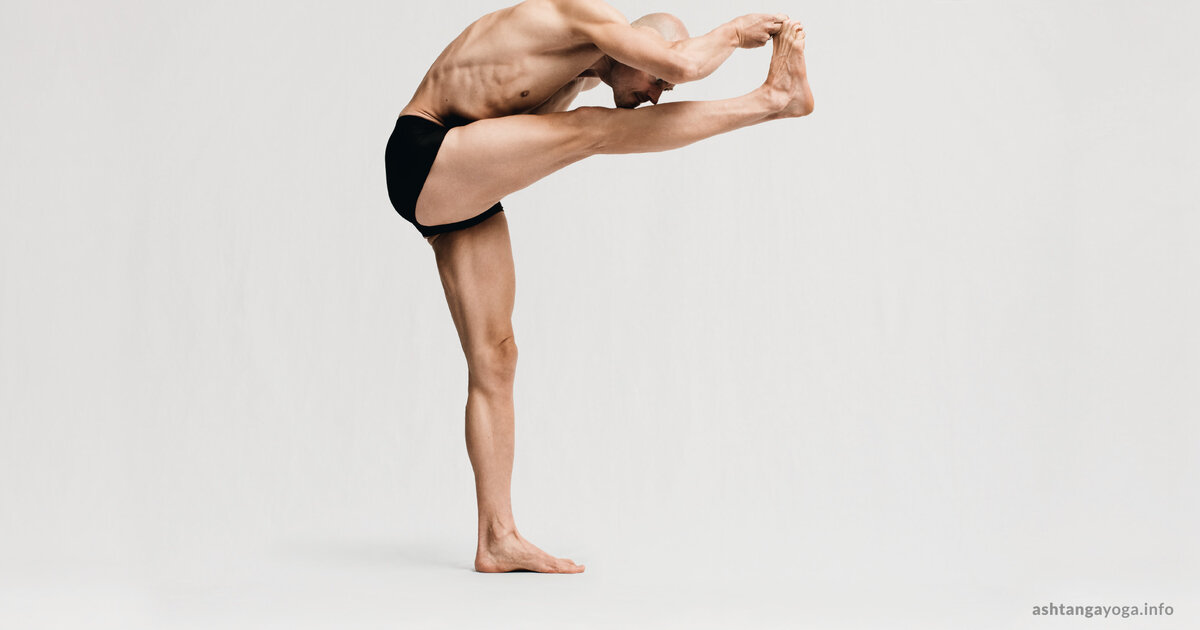
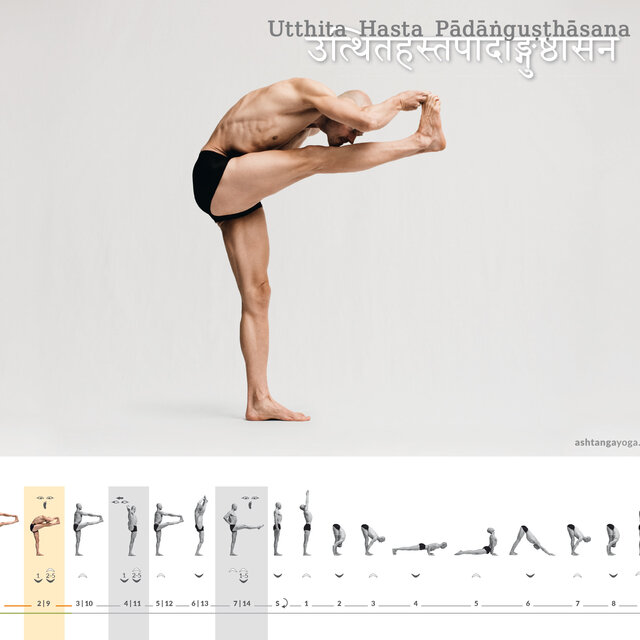
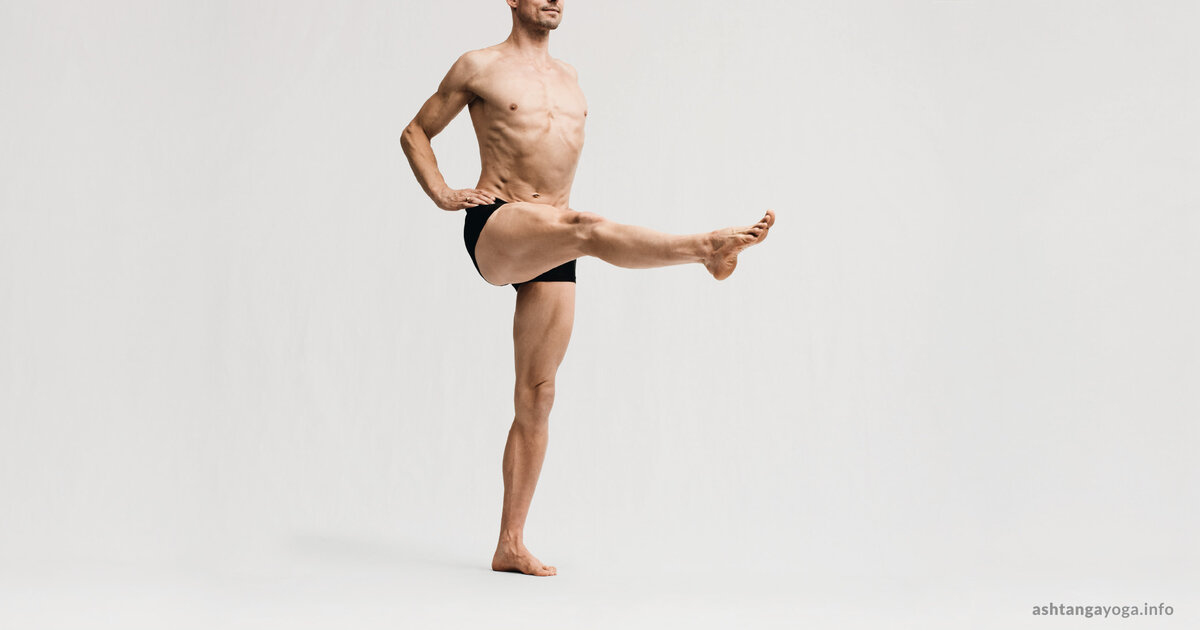
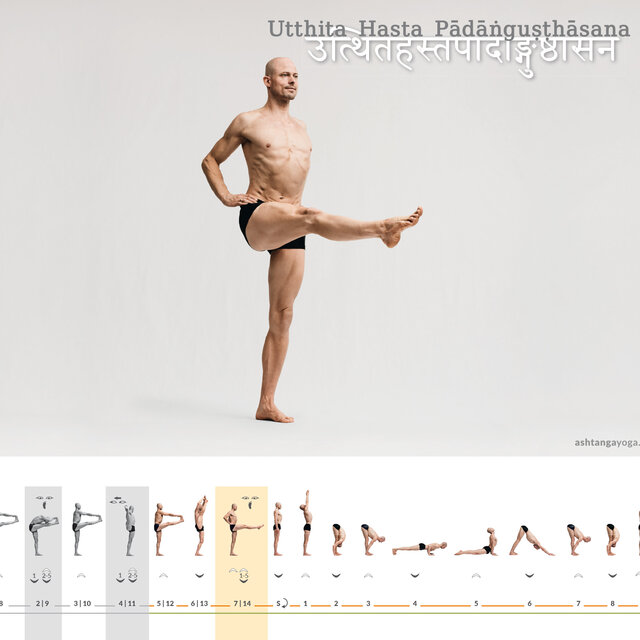
Utthita Hasta Pādāṅguṣṭhāsana A: The standing pose with the big toe to the hand

Utthita Hasta Pādāṅguṣṭhāsana A: The standing pose with the big toe to the hand

The "standing pose with the big toe to the hand“ is a one-legged balance pose. The lifted leg is extended forward horizontally - Utthita Hasta Pādāṅguṣṭhāsana.

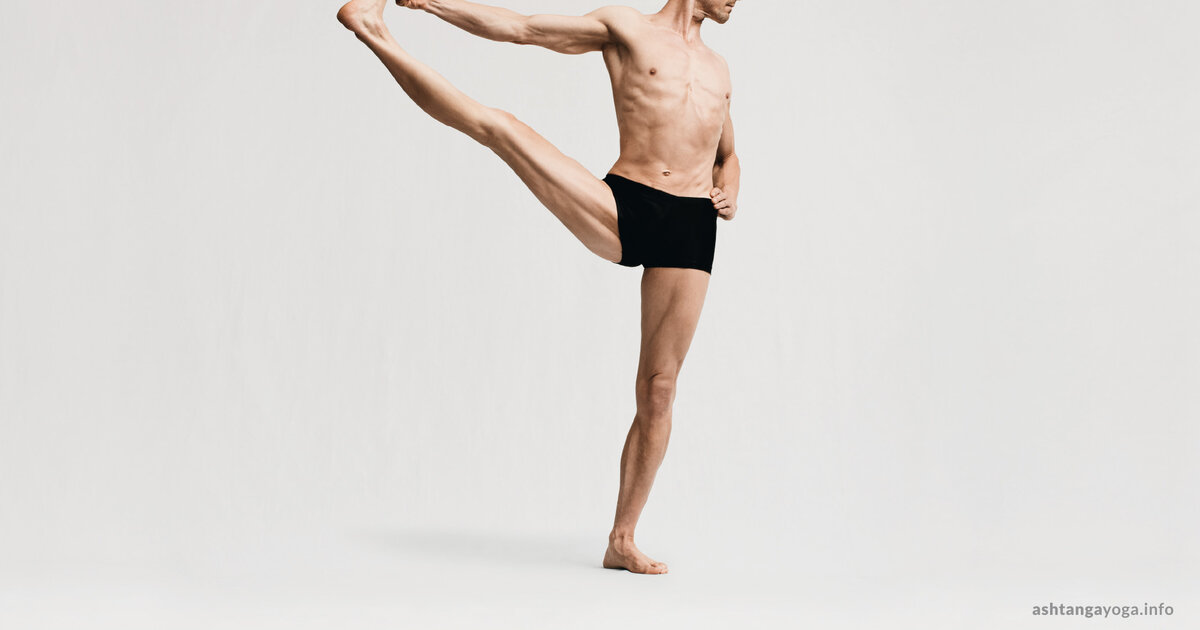
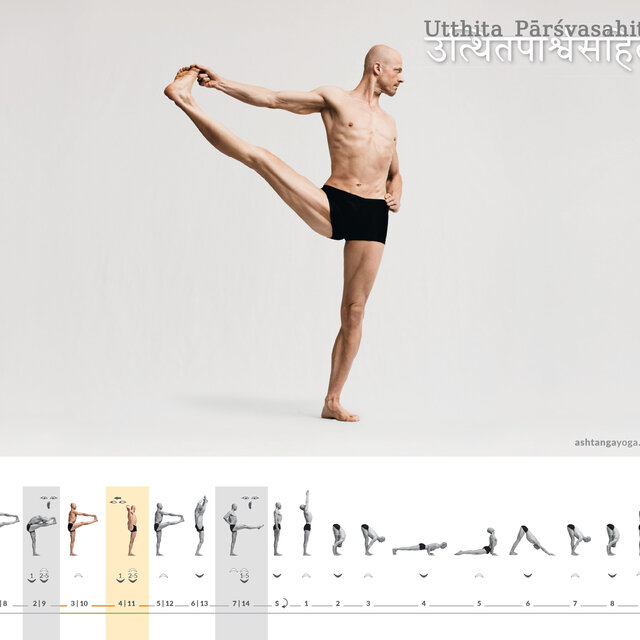
Utthita Pārśvasahita: Connected standing pose to the side

Utthita Pārśvasahita: Connected standing pose to the side

The "Connected standing pose to the side“ is a continuation of the previous pose. The practitioner lifts their leg far to the side - Utthita Pārśva Sahita.

Utthita Hasta Pādāṅguṣṭhāsana B: Continuation to the standing pose with the big toe to the hand

Utthita Hasta Pādāṅguṣṭhāsana B: Continuation to the standing pose with the big toe to the hand

In the „Continuation to the standing pose with the big toe to the hand“ the practitioner hold the legs in the air horizontally without the support of his...

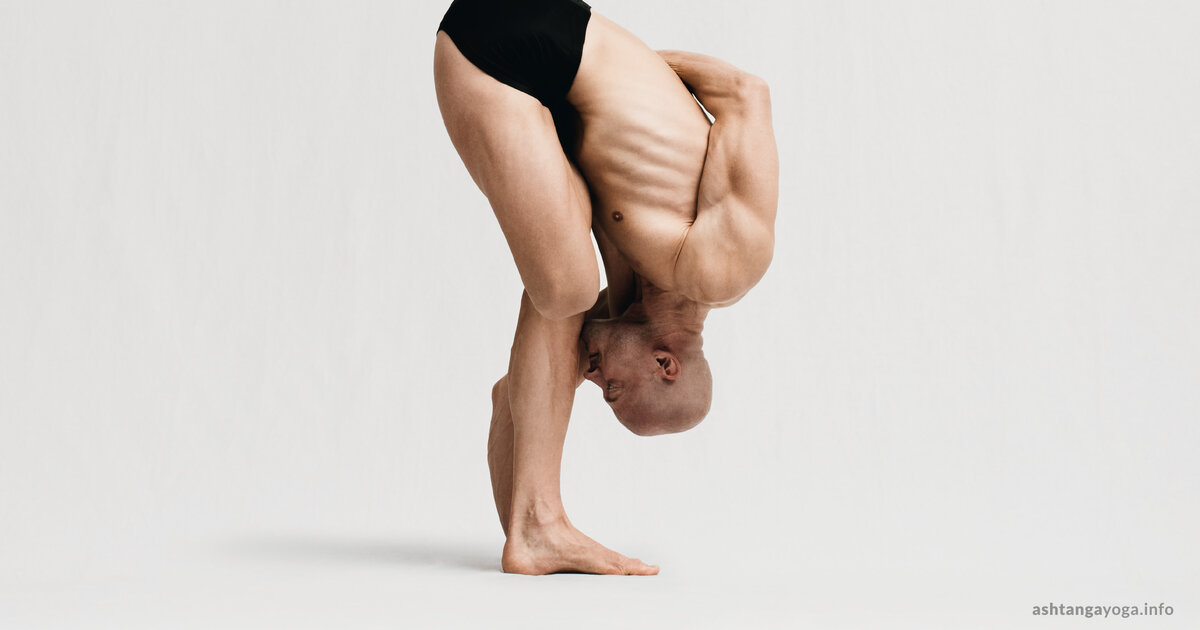
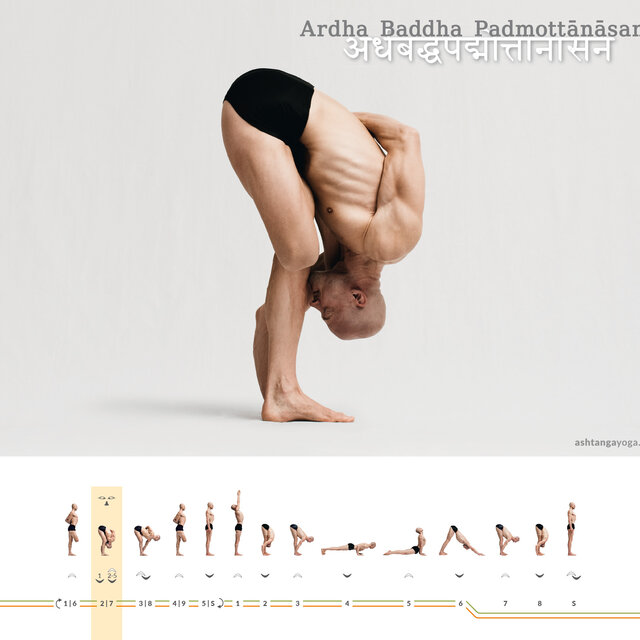
Ardha Baddha Padmottānāsana: Intense half-bound lotus pose

Ardha Baddha Padmottānāsana: Intense half-bound lotus pose

The "Intense half-bound lotus pose“ is a one-legged standing forward bend with the other leg in the lotus position - Ardha Baddha Padmotānāsana.

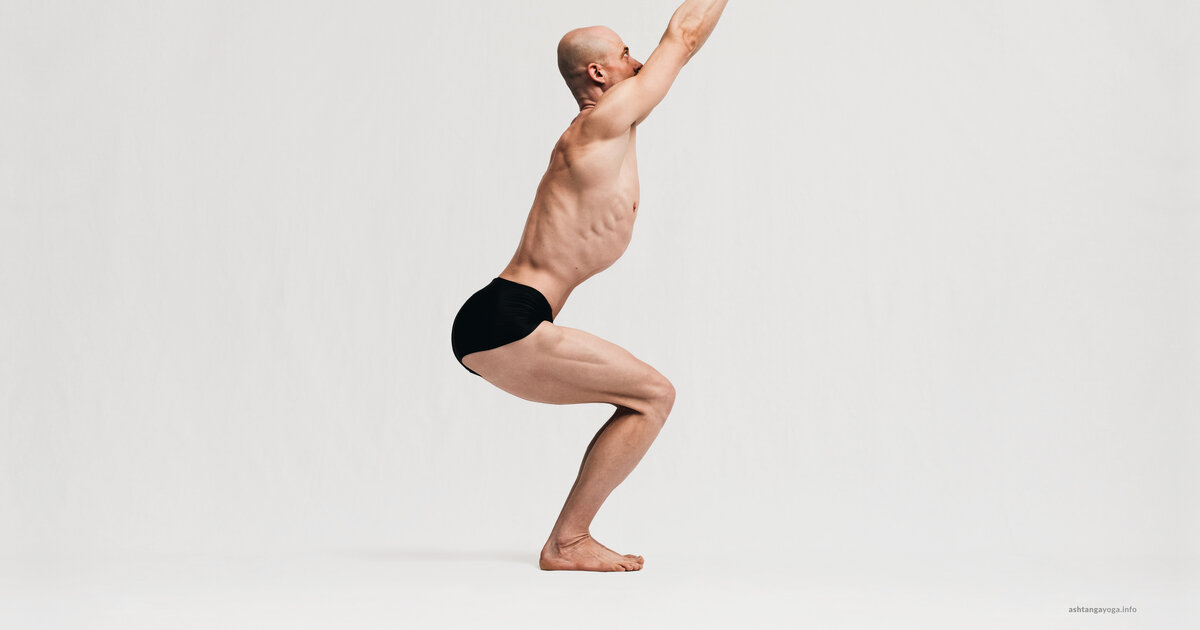
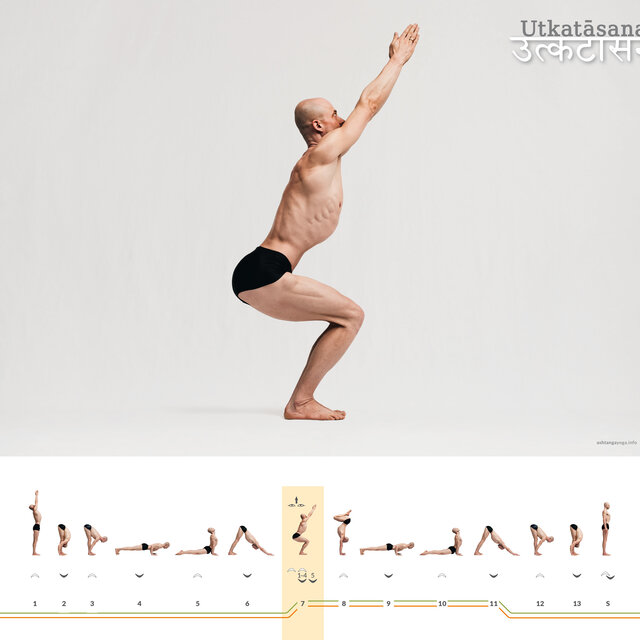
Utkaṭāsana: Intense Posture

Utkaṭāsana: Intense Posture

The „Intense Posture“ is a standing posture where the knees are bent in the same way as if you were to sit down on a chair. The arms lengthen powerfully...

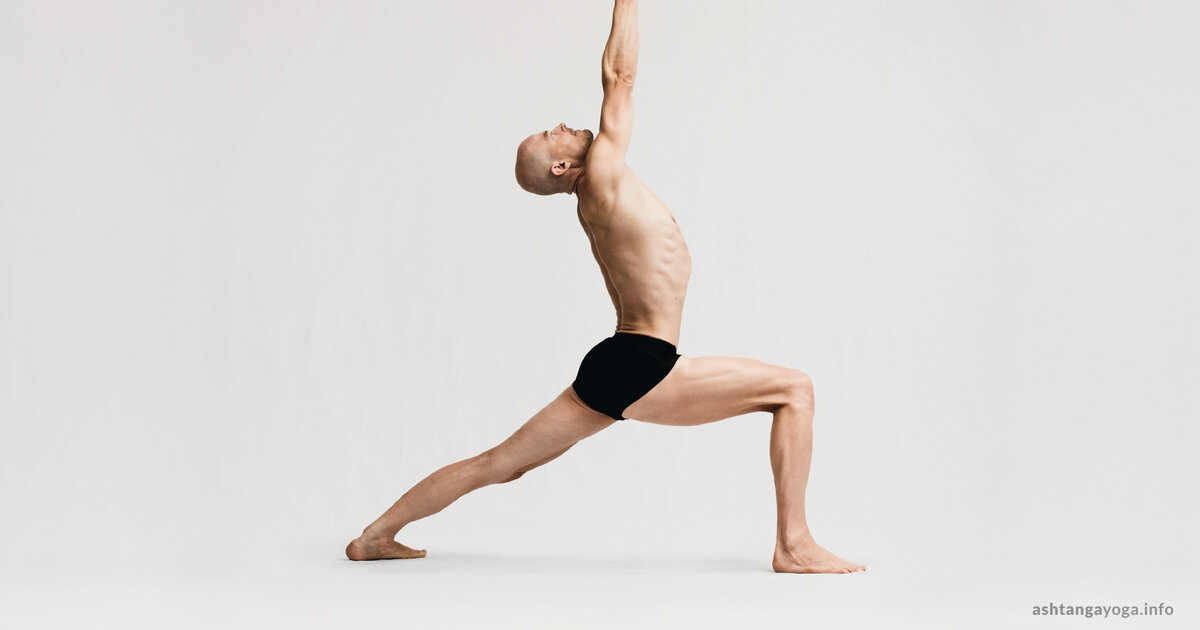
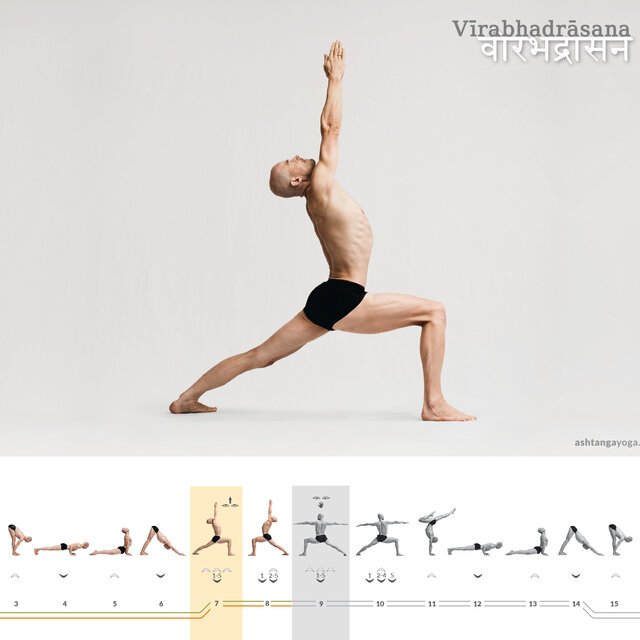
Vīrabhadrāsana A: The powerful warrior pose

Vīrabhadrāsana A: The powerful warrior pose

The "powerful warrior pose“ is reminiscent of base moves or postures found in a variety of martial arts. In the version - Vīrabhadrāsana, the arms are raised...

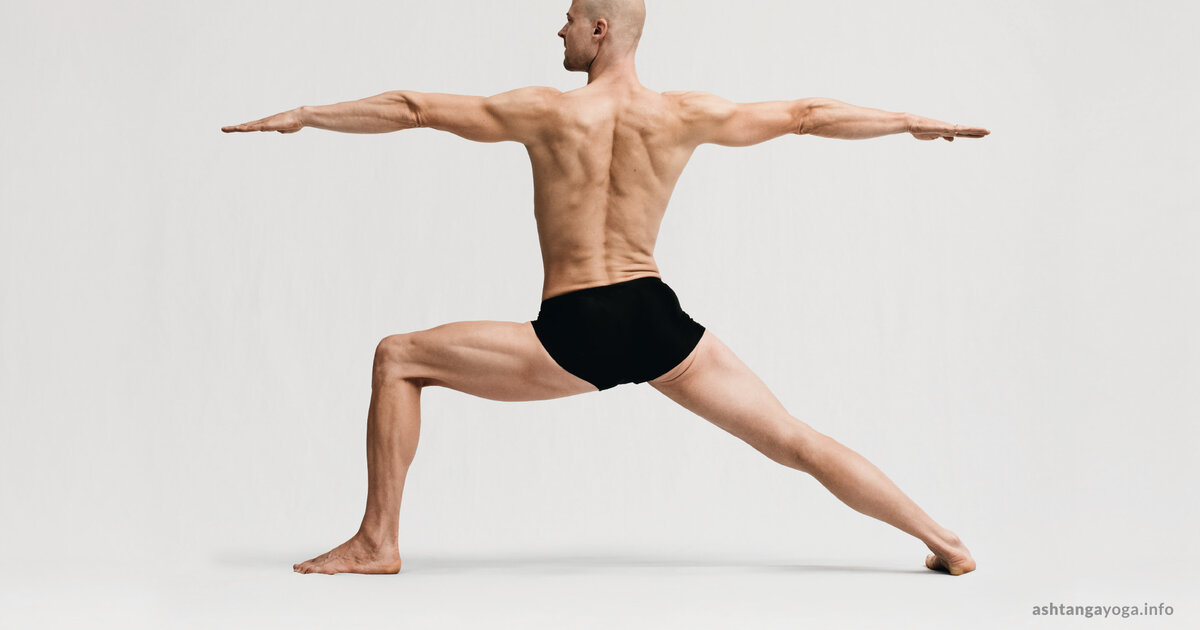
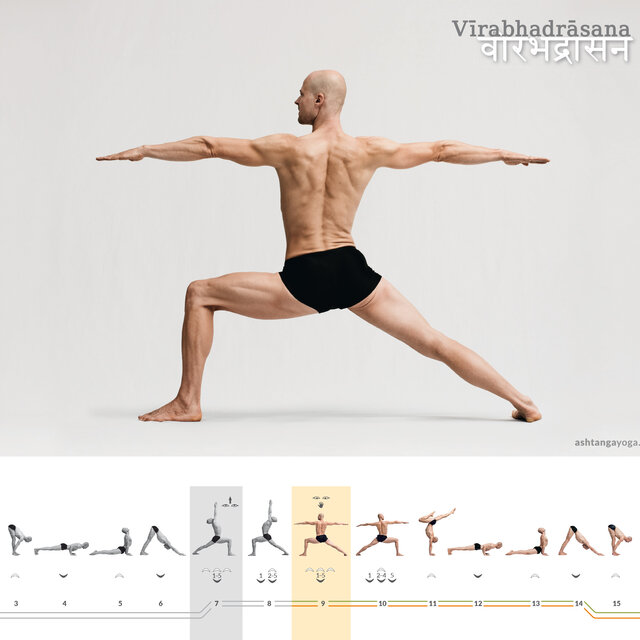
Vīrabhadrāsana B: The powerful warrior pose

Vīrabhadrāsana B: The powerful warrior pose

With the transition from Vīrabhadrāsana A to B the practitioner widens their step, lowers the arms stretching them horizontally to either side. This pose is...

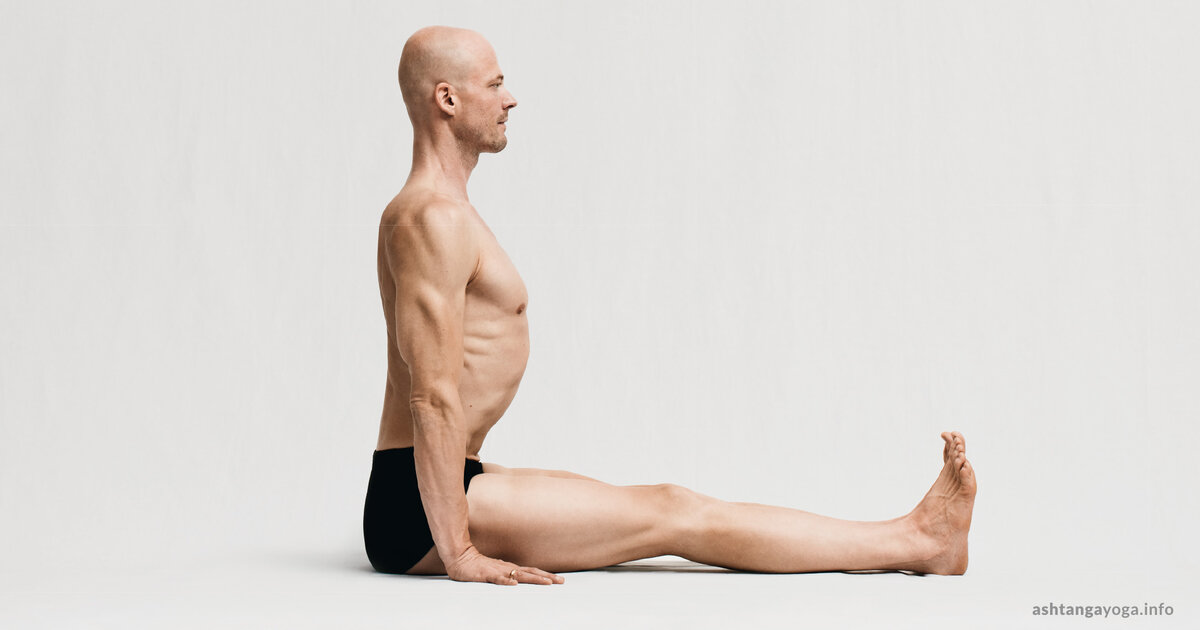
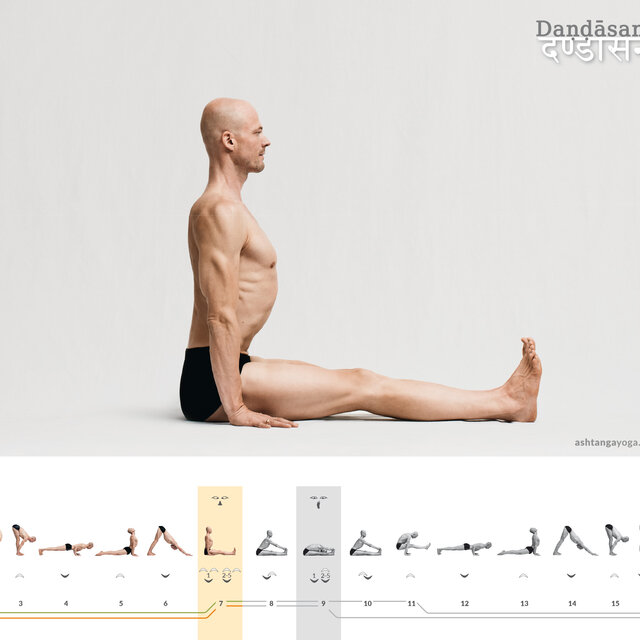
Daṇḍāsana: Staff pose

Daṇḍāsana: Staff pose

The first seated posture of Aṣṭāṅga Yoga Daṇḍāsana, the "Staff pose" couldn't be more puristic: you simply sit upright and stretch the legs in front of you.

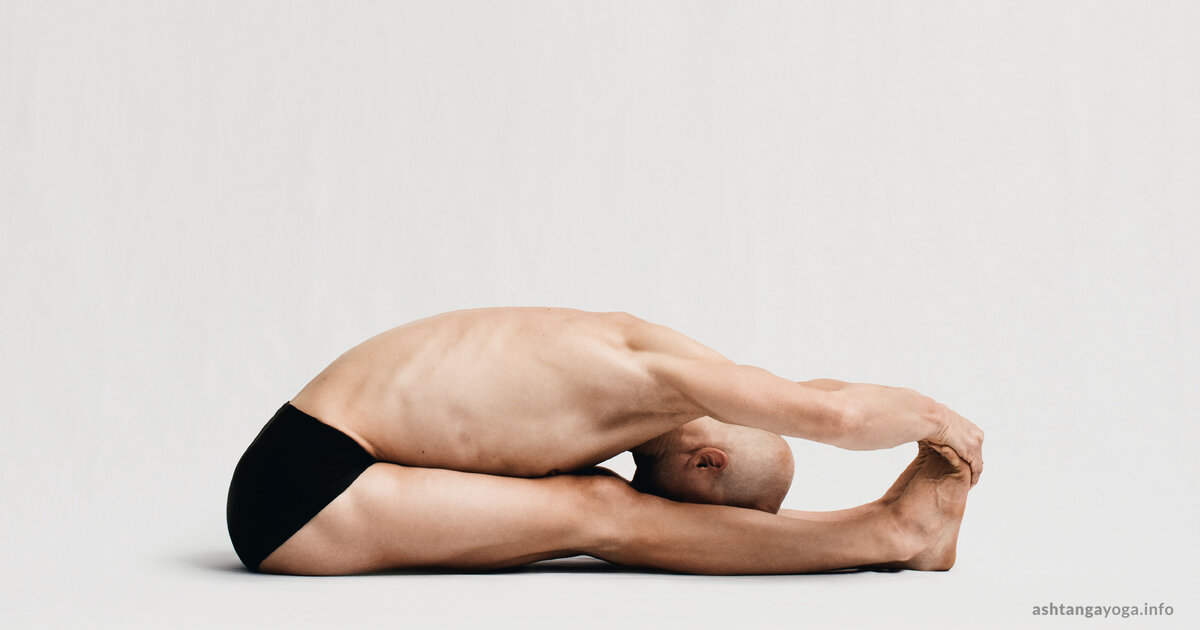
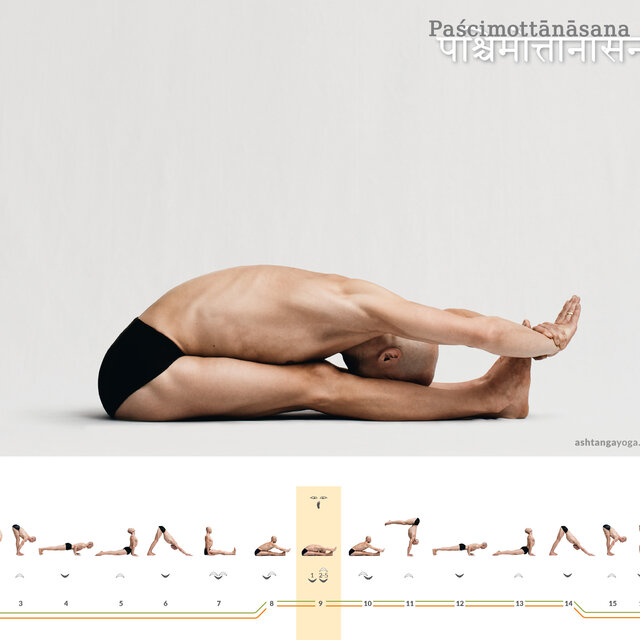
Paścimottānāsana A: Seated forward bend

Paścimottānāsana A: Seated forward bend

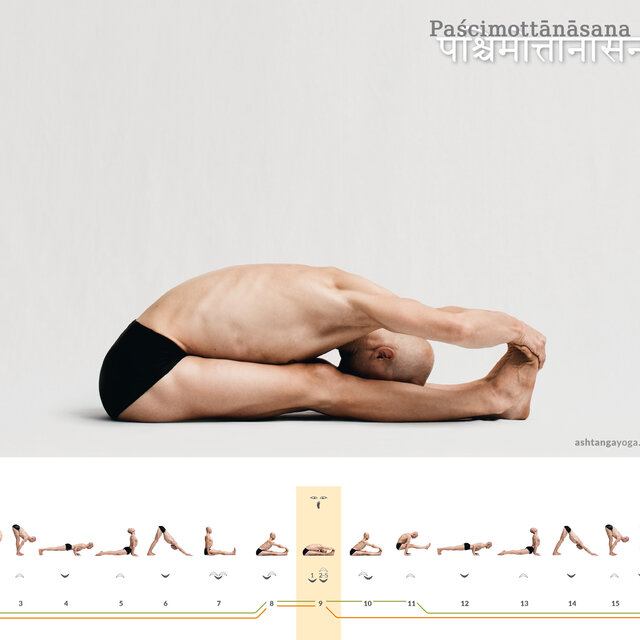
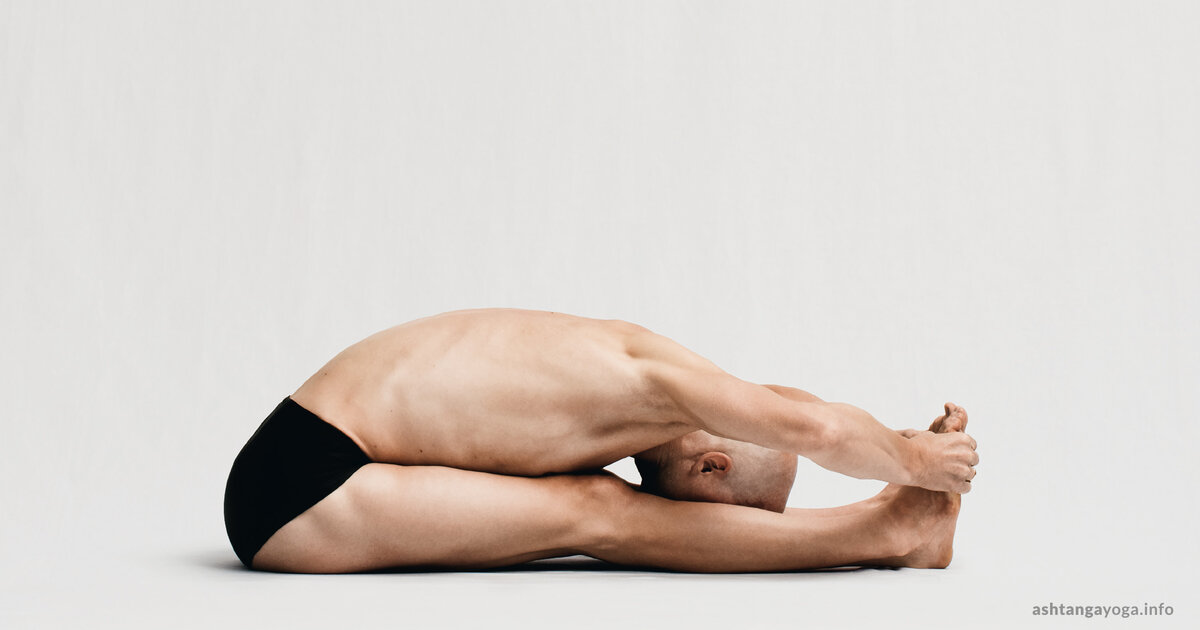
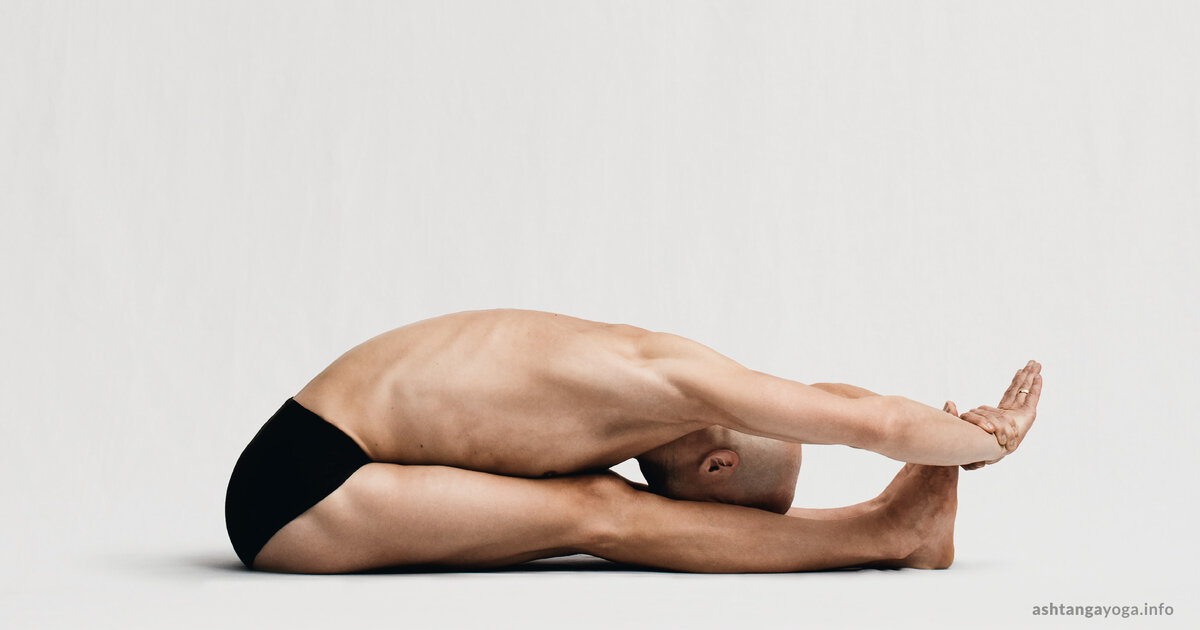
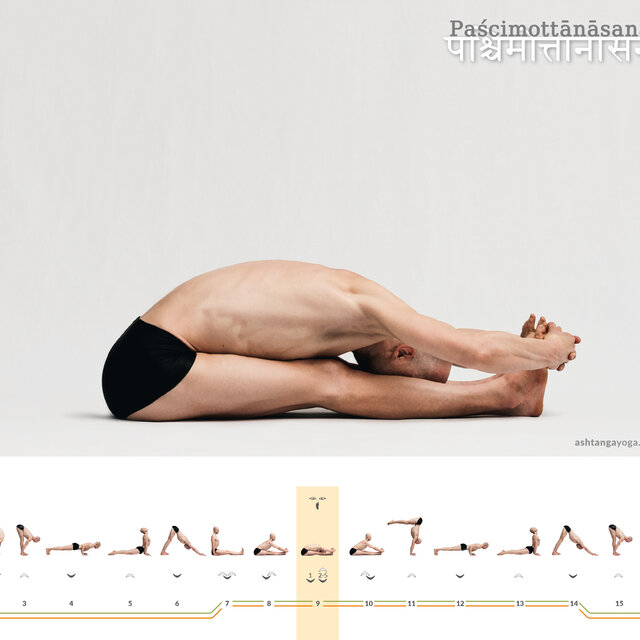
In the "seated forward bend" the practitioner places their torso over their extended legs. In variant A, the index and middle fingers grasp the big toes -...

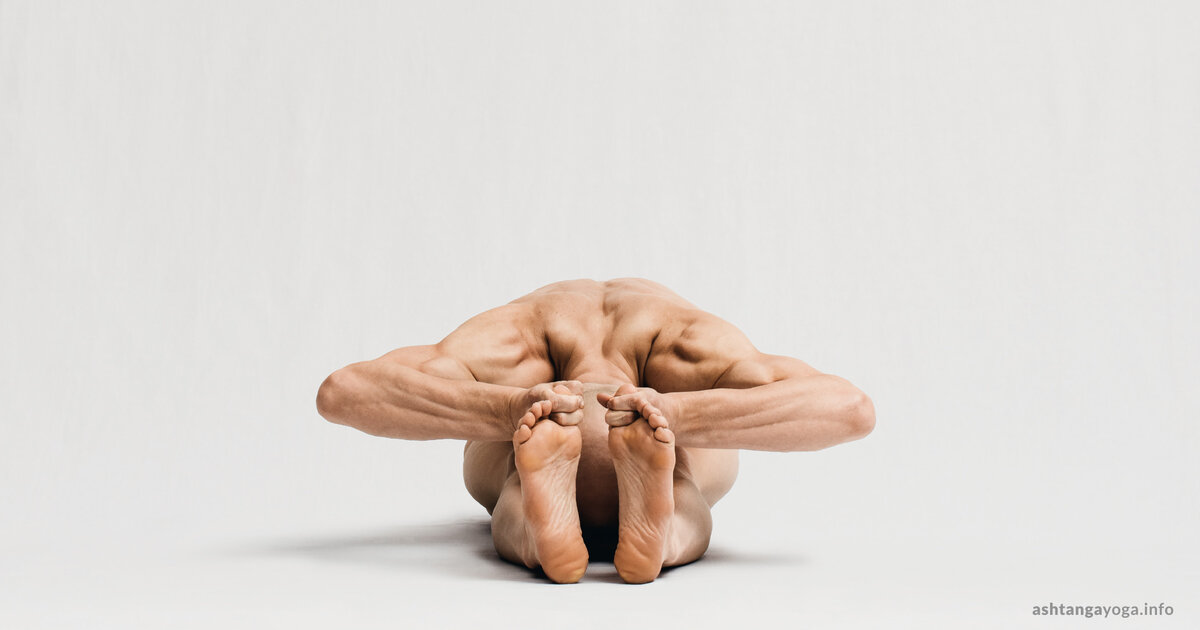
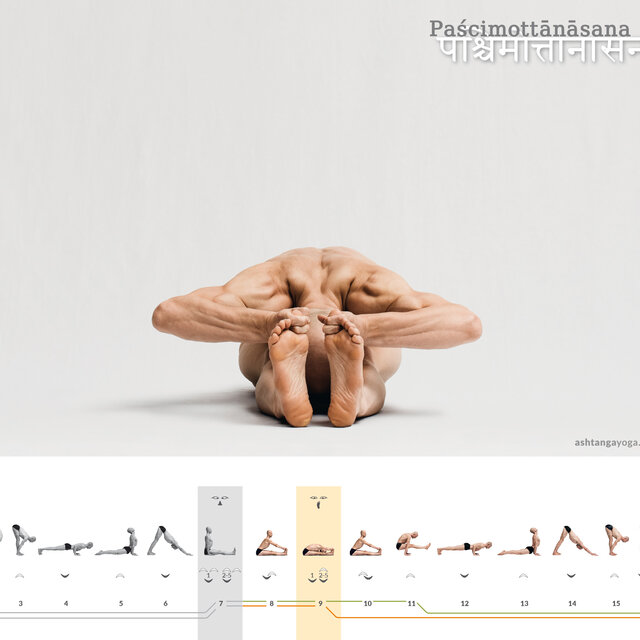
Paścimottānāsana B: Seated forward bend

Paścimottānāsana B: Seated forward bend

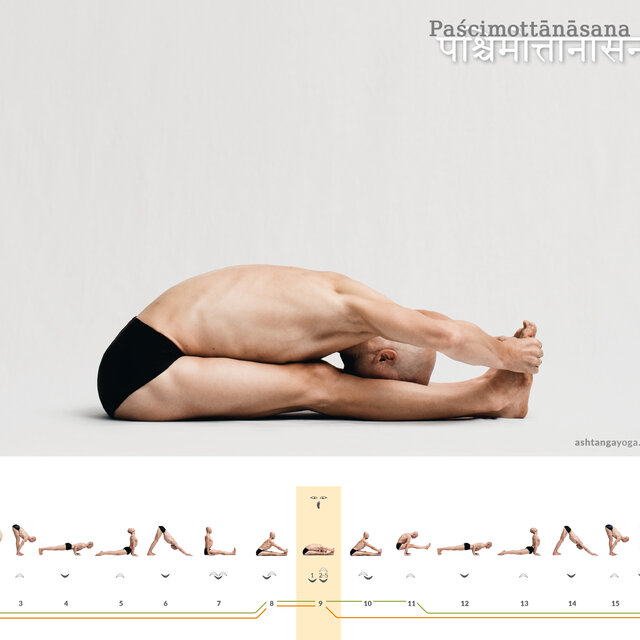
The variant B of the "seated forward bend" the practitioner grasps the feet from over the toes to the soles of the feet - Paścimottānāsana.

Paścimottānāsana C: Seated forward bend

Paścimottānāsana C: Seated forward bend

In the third variant of the "seated forward bend" (paścimottānāsana), the hands grab the outer edges of the feet and the thumb wraps across the base of the...

Paścimottānāsana D: Seated forward bend

Paścimottānāsana D: Seated forward bend

In the fourth version of the "seated forward bend" (paścimottānāsana), the hands grasp one another around the feet. The right hand grasps the left wrist.
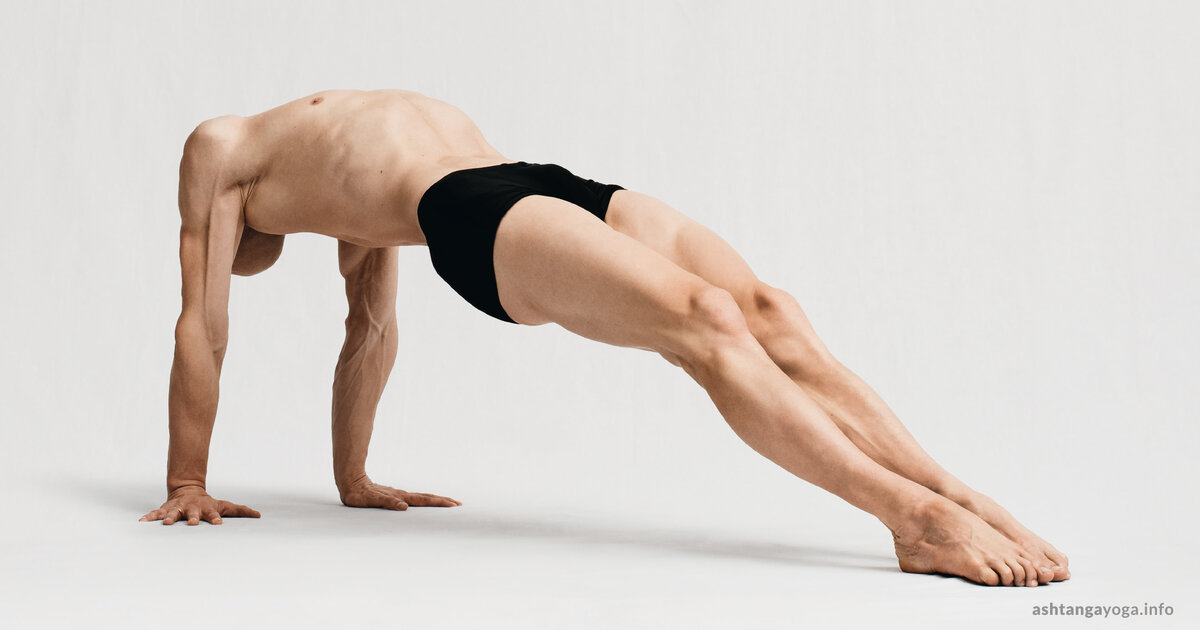
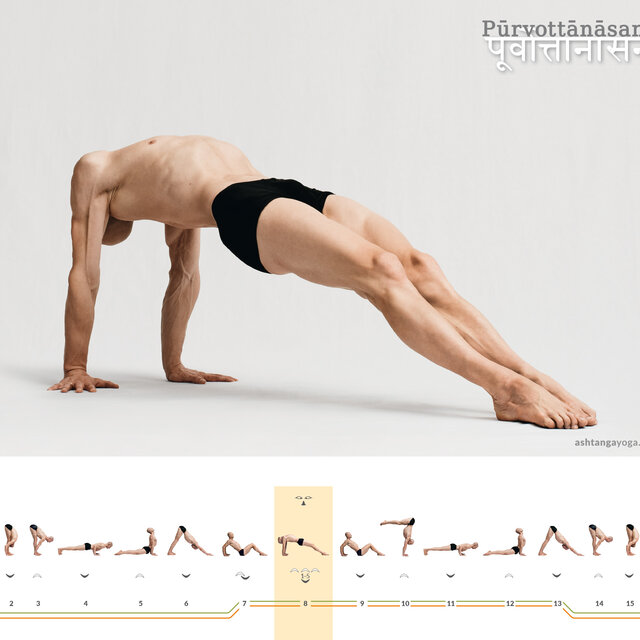
Pūrvottānāsana: Pose to stretch the front of the body

Pūrvottānāsana: Pose to stretch the front of the body

The 'pose to stretch the front of the body' is a powerful, arm-supported posture where the entire front body is stretched and facing upwards - Pūrvottānāsana.

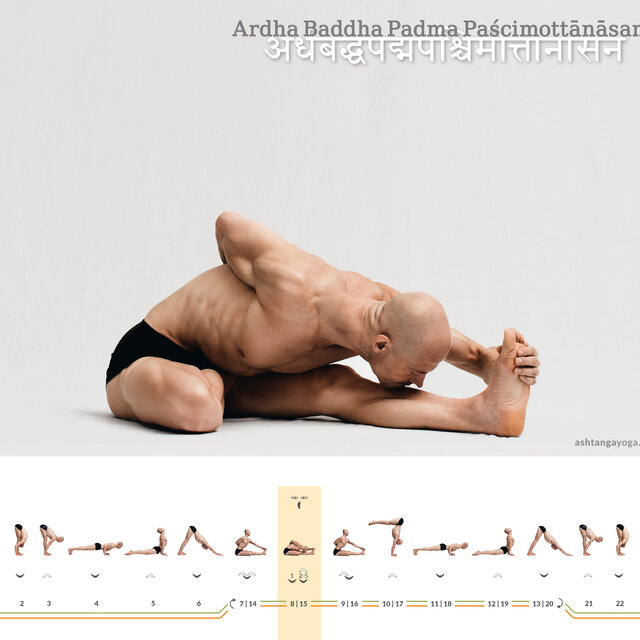
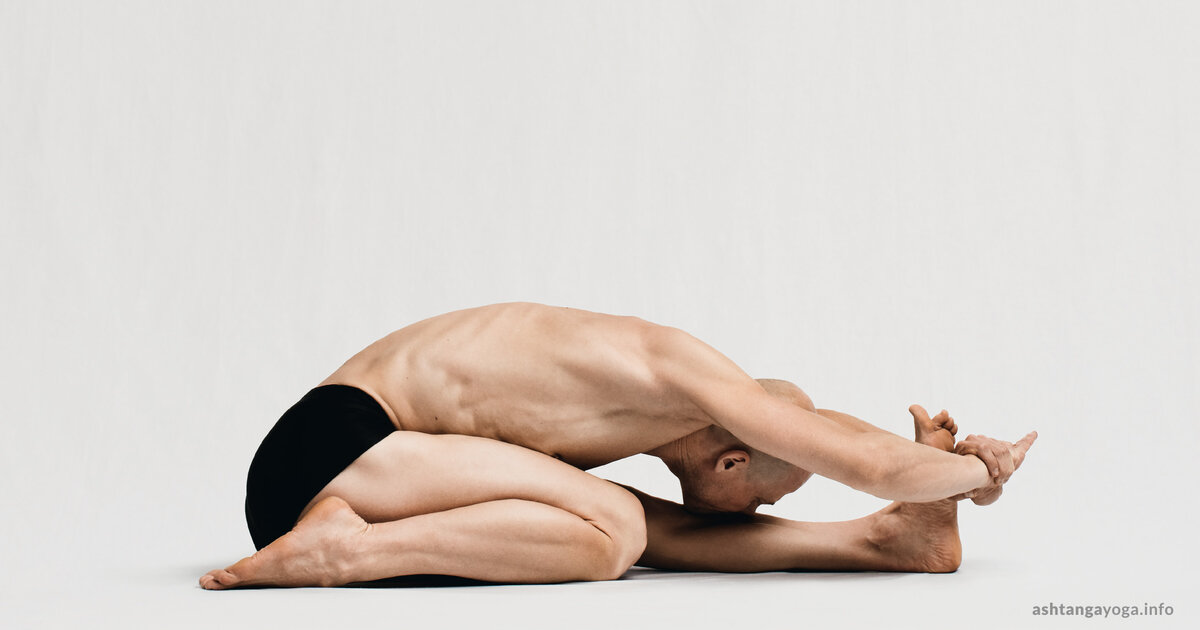
Ardha Baddha Padma Paścimottānāsana: Half bound lotus pose to stretch the back body

Ardha Baddha Padma Paścimottānāsana: Half bound lotus pose to stretch the back body

In the asymmetrical seated pose Ardha Baddha Padma Paścimottānāsana one leg is bound in lotus pose while the practitioner folds over the extended leg.

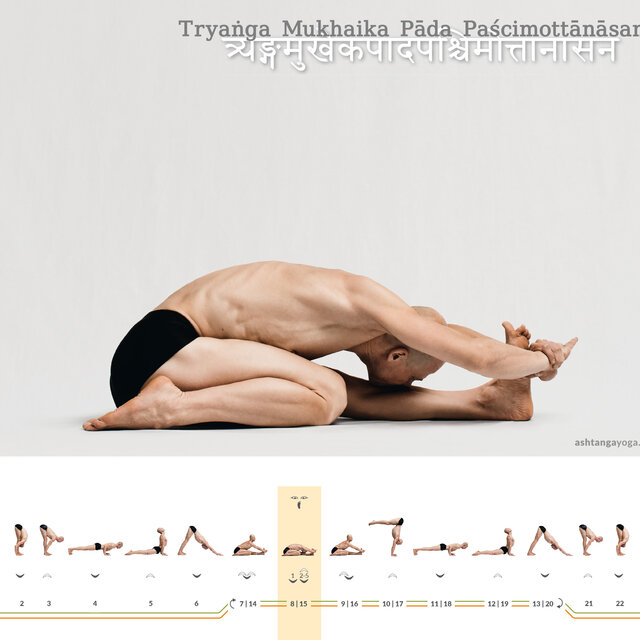
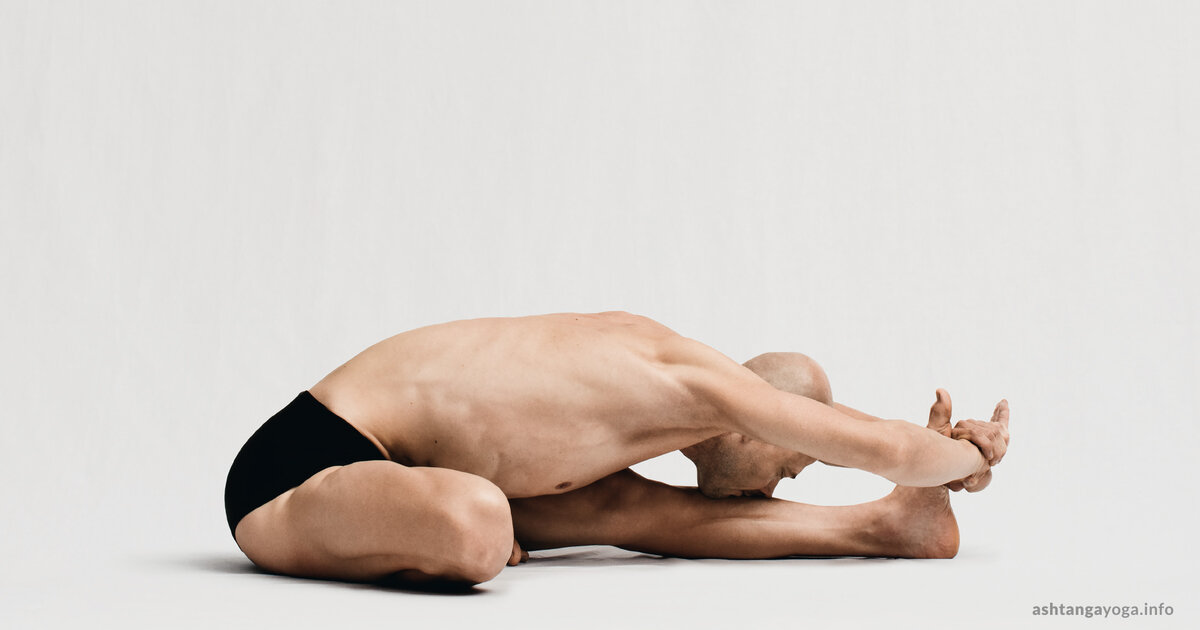
Try-aṅga Mukhaika Pāda Paścimottānāsana: Three-limbed pose with the face to foot to stretch the back body

Try-aṅga Mukhaika Pāda Paścimottānāsana: Three-limbed pose with the face to foot to stretch the back body

In the asymmetrical seated posture Try-aṅga Mukhaika Pāda Paścimottānāsana one leg is extended while the other is bent tight in internal rotation and the foot...

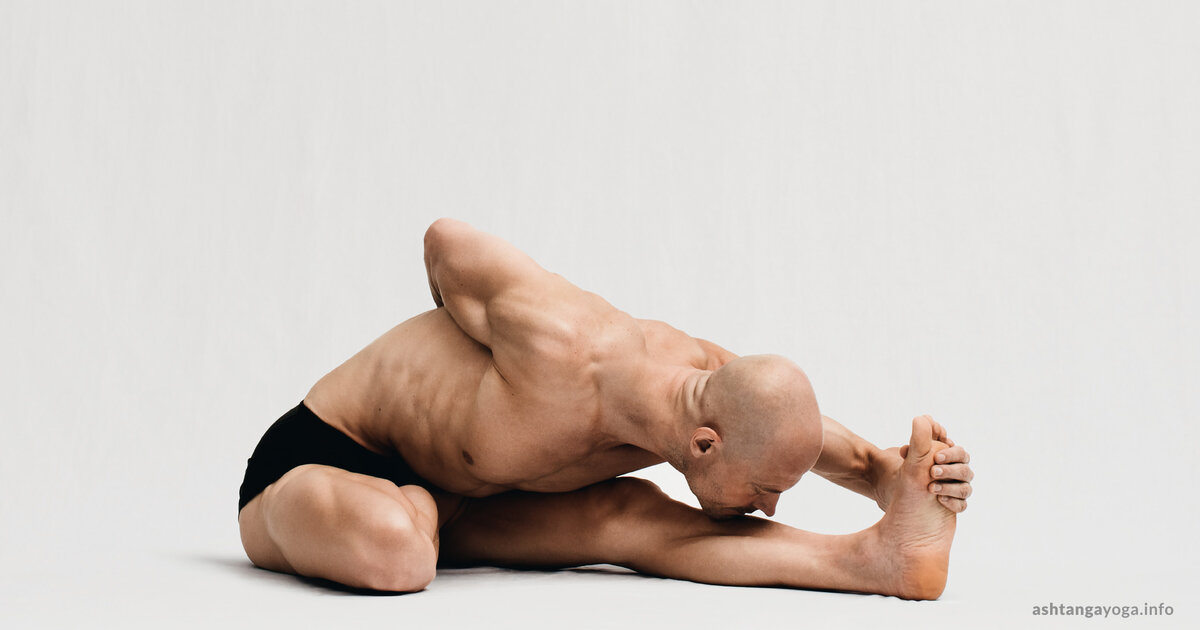
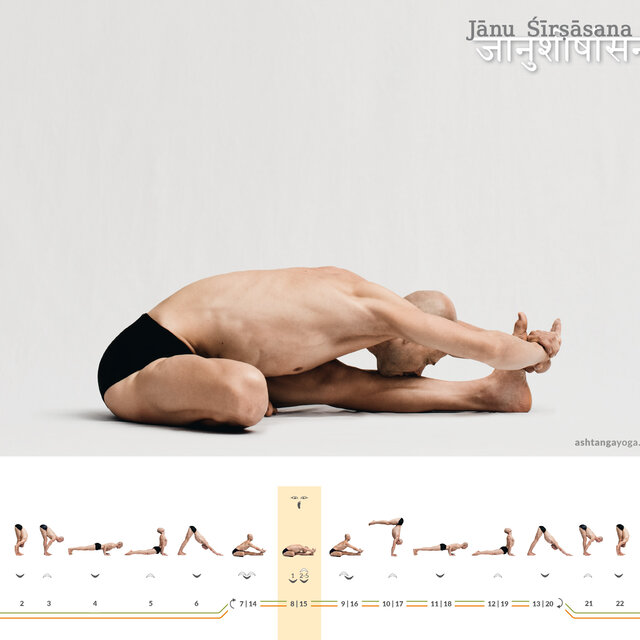
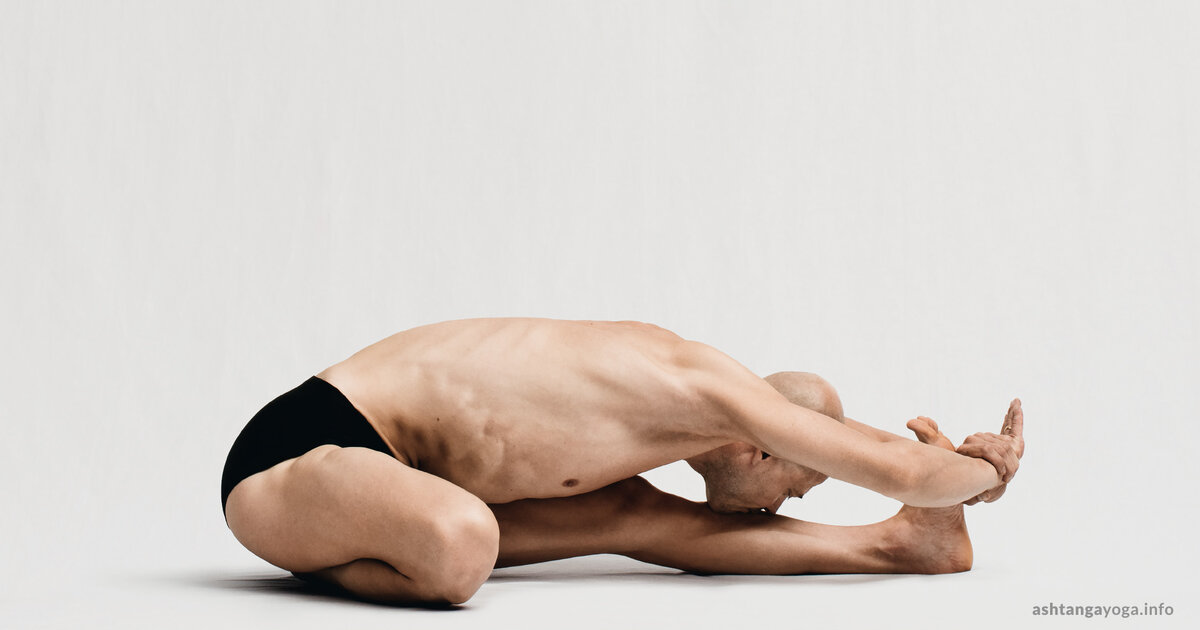
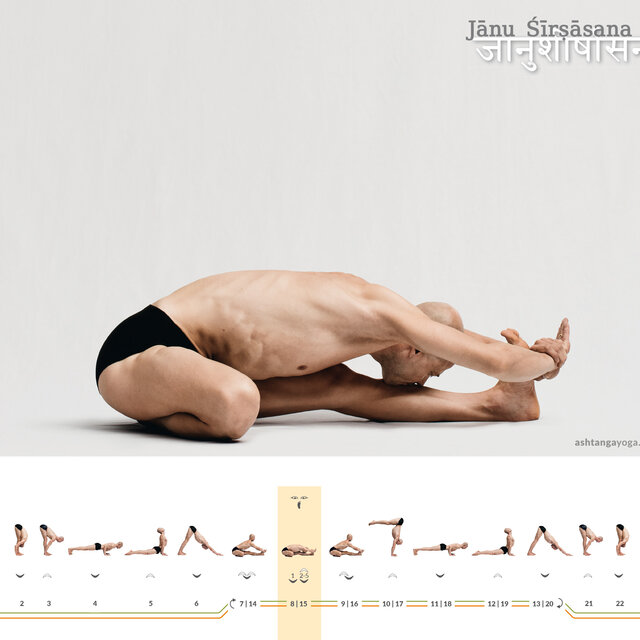
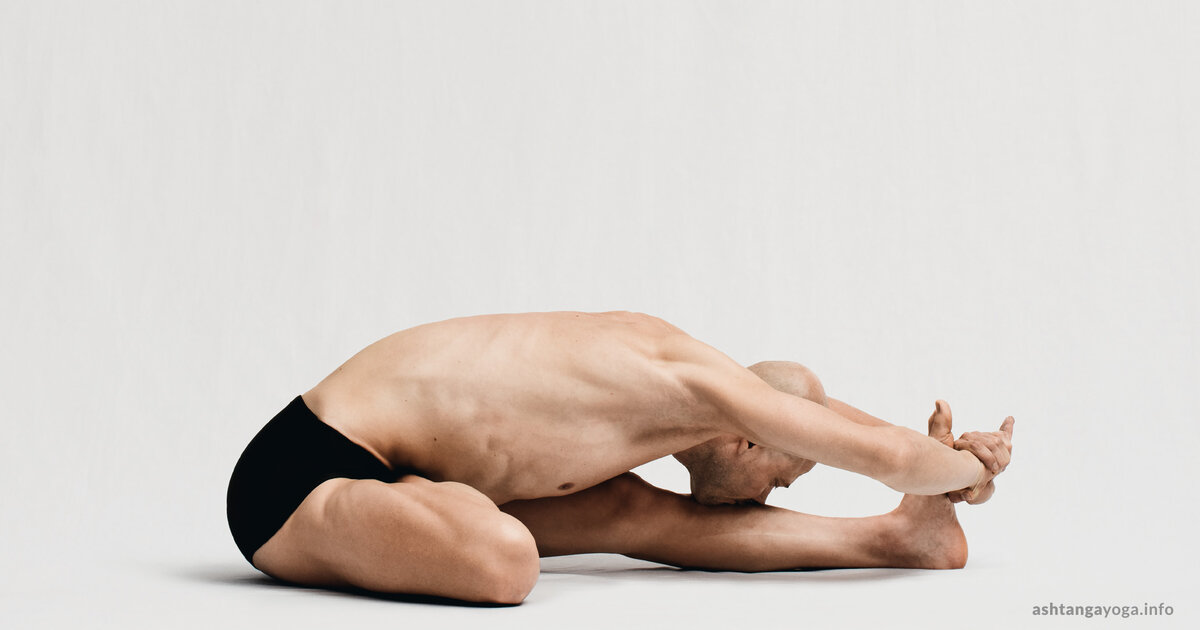
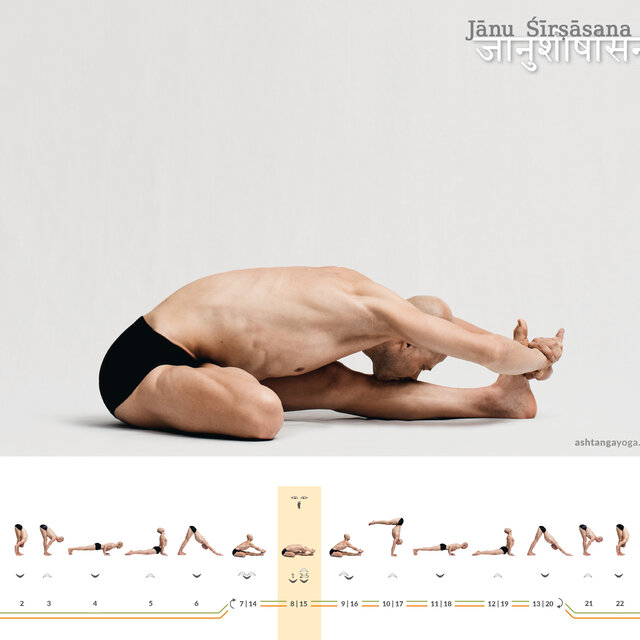
Jānu Śīrṣāsana A: Head and Knee Pose

Jānu Śīrṣāsana A: Head and Knee Pose

The “Head and Knee pose” is an asymmetrical seated pose. One leg is extended and the other is bent with the sole of the foot on the inner thigh of the...

Jānu Śīrṣāsana B: Head and Knee pose

Jānu Śīrṣāsana B: Head and Knee pose

In the second variant of the “Head and Knee pose” the practitioner sets the perineum directly on the heel of the bent leg. This same foot points straight...

Jānu Śīrṣāsana C: Head and Knee pose

Jānu Śīrṣāsana C: Head and Knee pose

In the third variant of the “Head and Knee pose” places the ball of the foot down with the heel raised and clamps the foot between both thighs - Jānu...

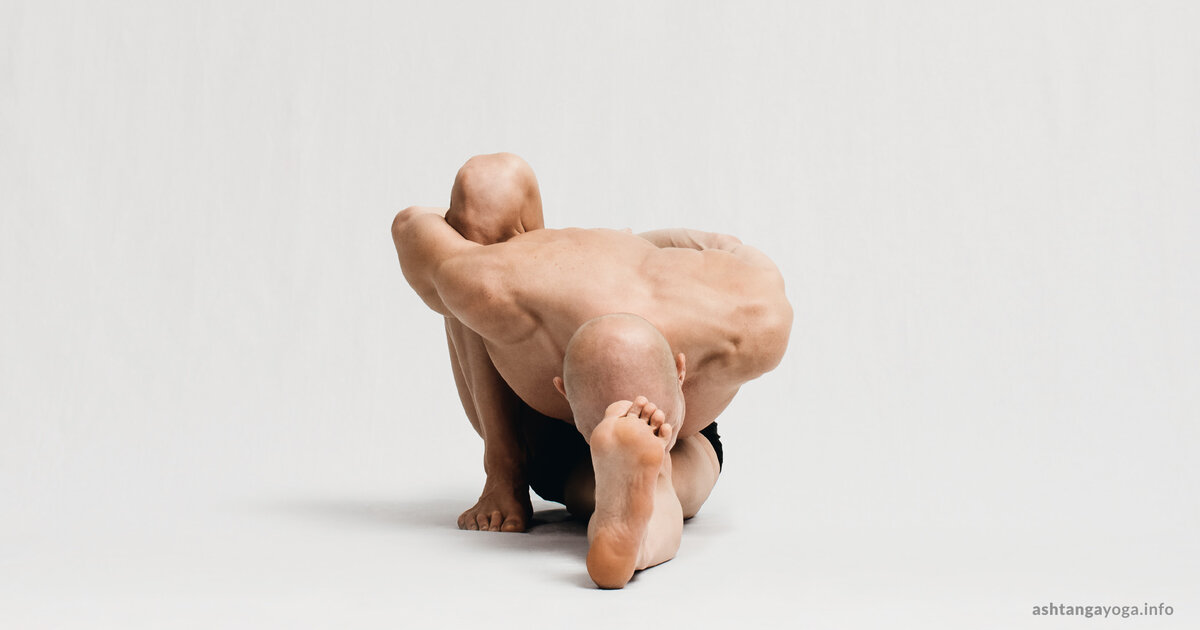
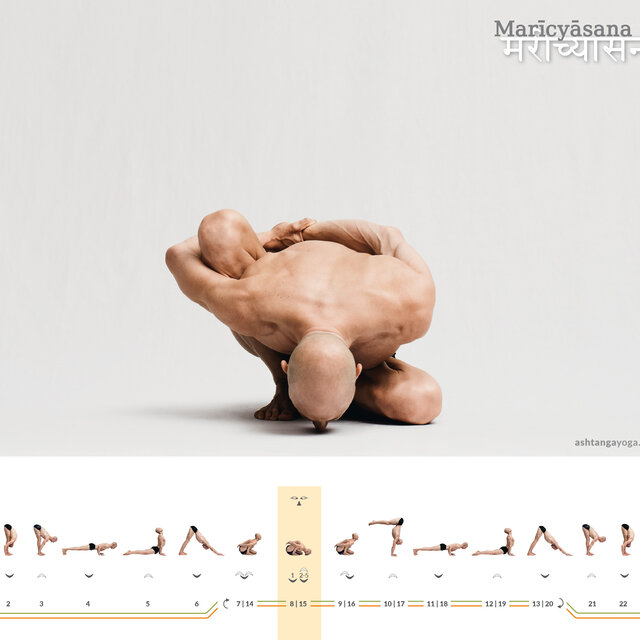
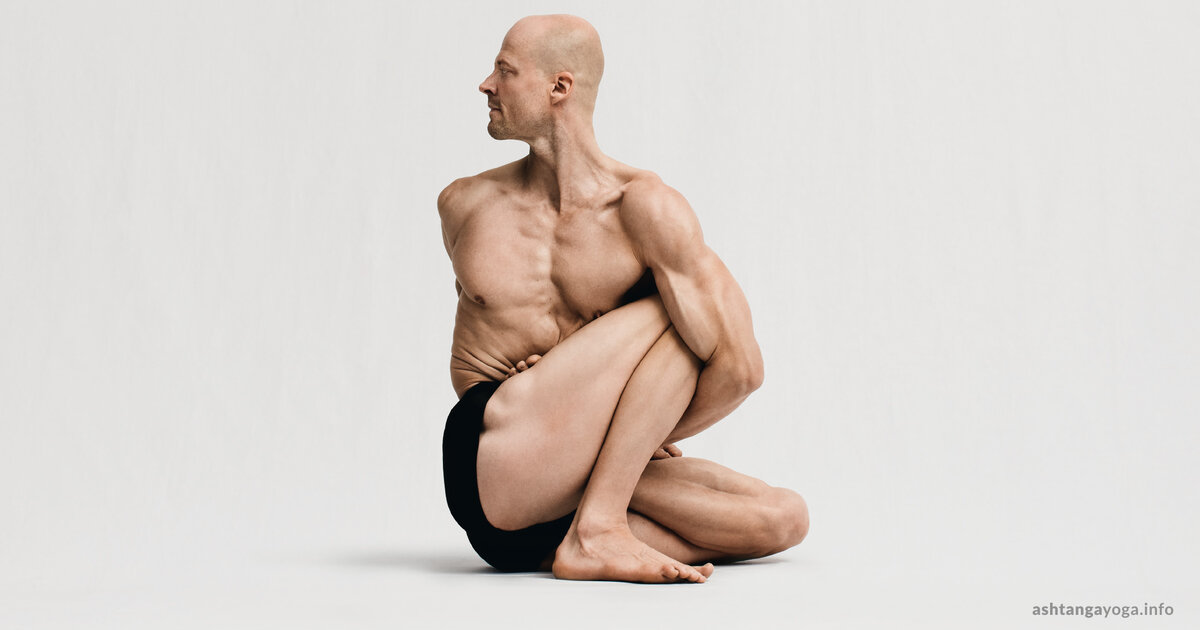
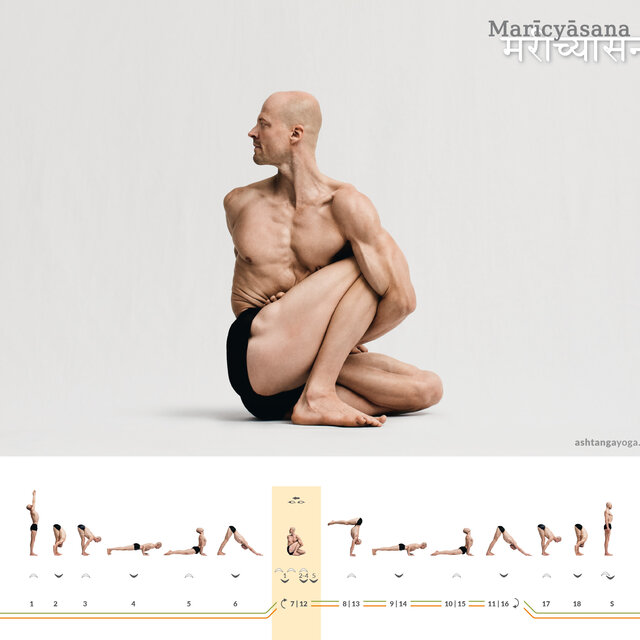
Marīcyāsana A: Pose of the sage Marīci

Marīcyāsana A: Pose of the sage Marīci

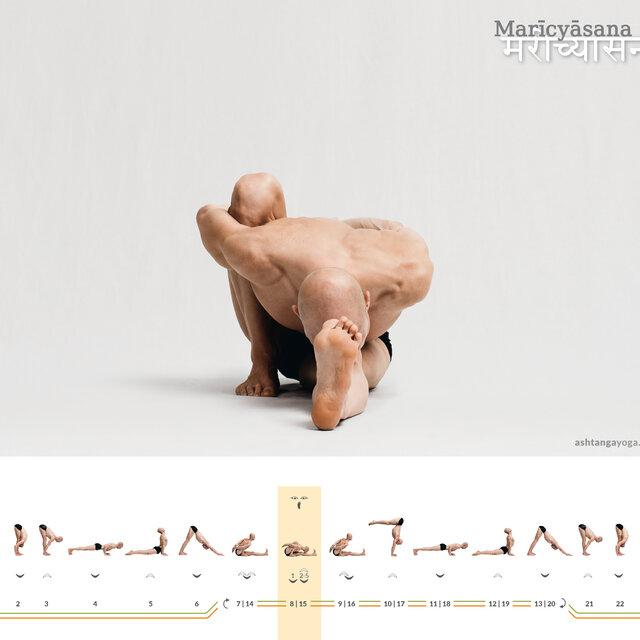
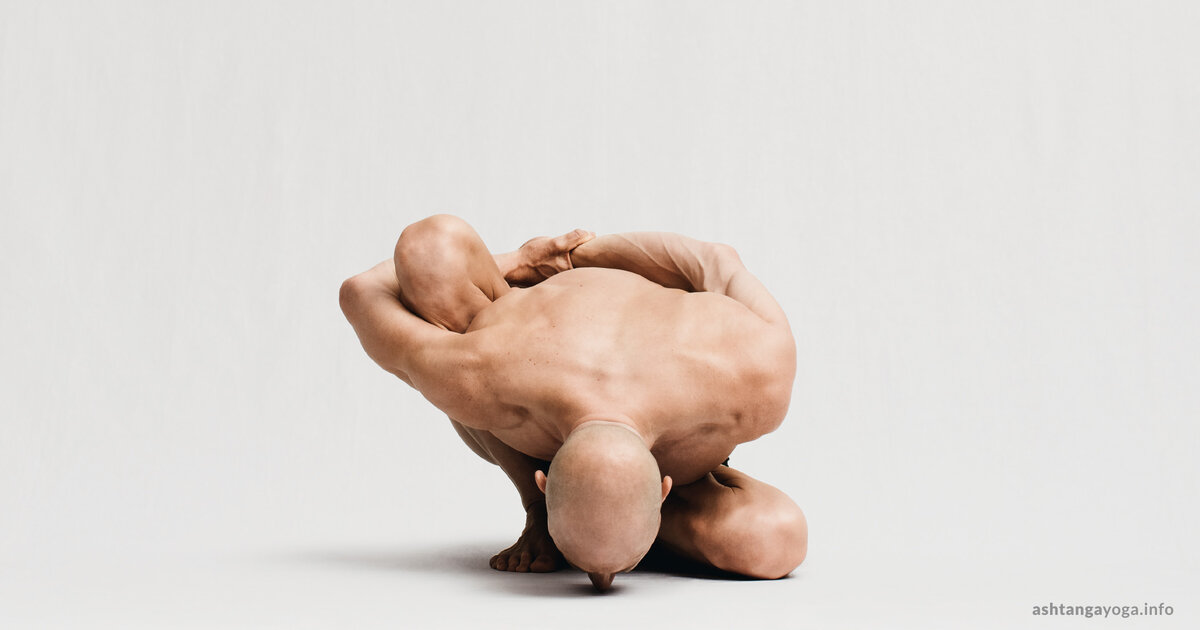
The first of four poses dedicated to the sage Marīci. Characteristic of this series of poses is the bent-knee leg which is placed down and drawn close to the...

Marīcyāsana B: Pose of the sage Marīci

Marīcyāsana B: Pose of the sage Marīci

Marīcyāsana B builds on Marīcyāsana A. The bents and drawn in knee remains the same while the other leg folds in the lotus position.

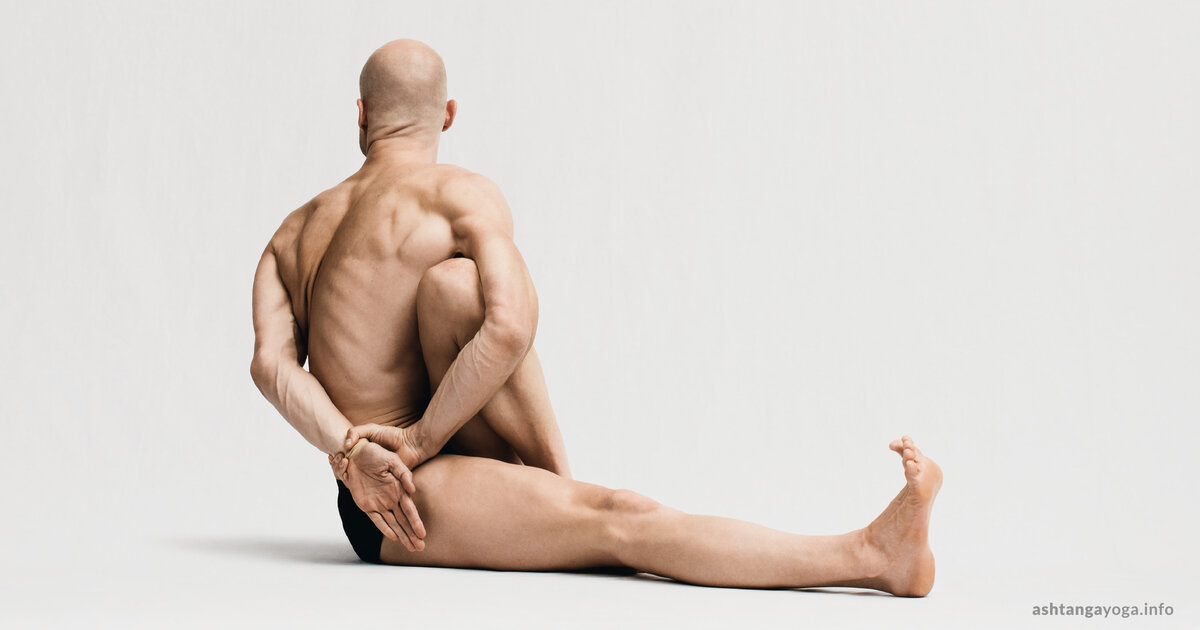
Marīcyāsana C: Pose of the sage Marīci

Marīcyāsana C: Pose of the sage Marīci

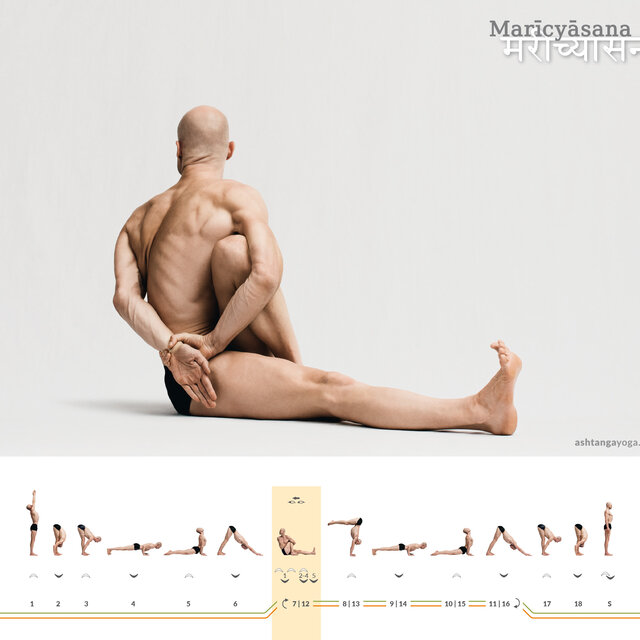
With the third of the poses dedicated to the sage Marīci there is a twist around the leg which ist bent and drawn into the body for all four variants-...

Marīcyāsana D: Posture of the Sage Marīci

Marīcyāsana D: Posture of the Sage Marīci

The fourth and final variation of Marīcyāsana combines the rotation from Marīcyāsana C with the leg position of Marīcyāsana B.

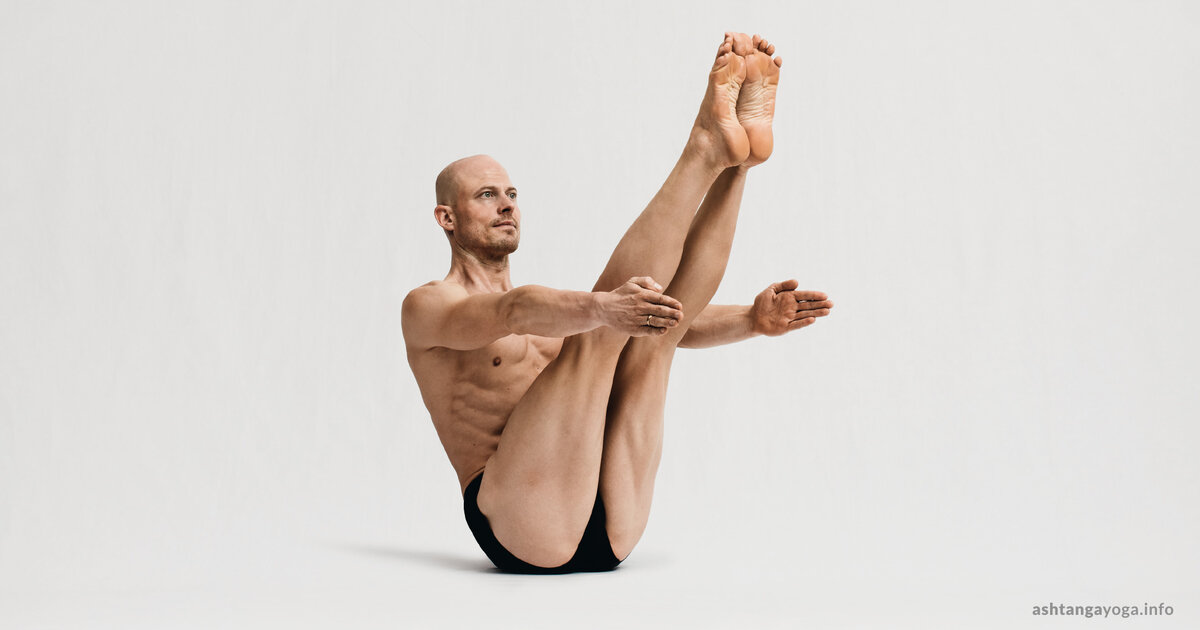
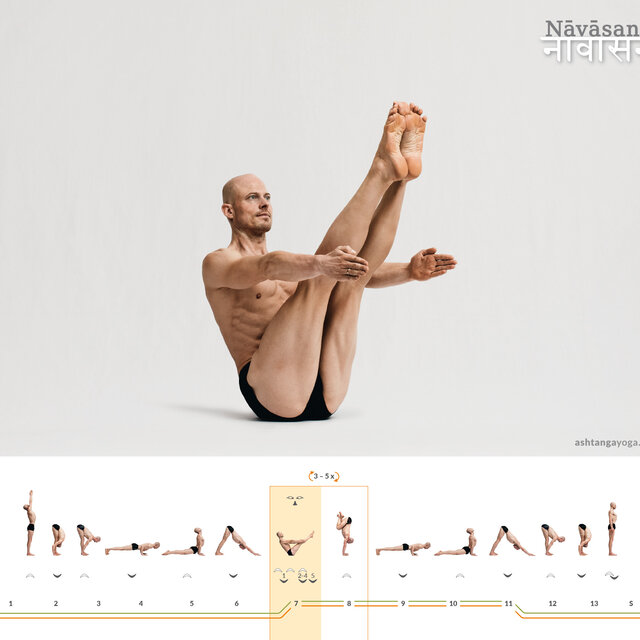
Navāsana: Boat pose
Navāsana: Boat pose

Navāsana: Boat pose

The "Boat Pose" is a balancing posture on the sitting bones. The legs and upper body form a V-shape. The arms are extended horizontally forward - Navāsana.

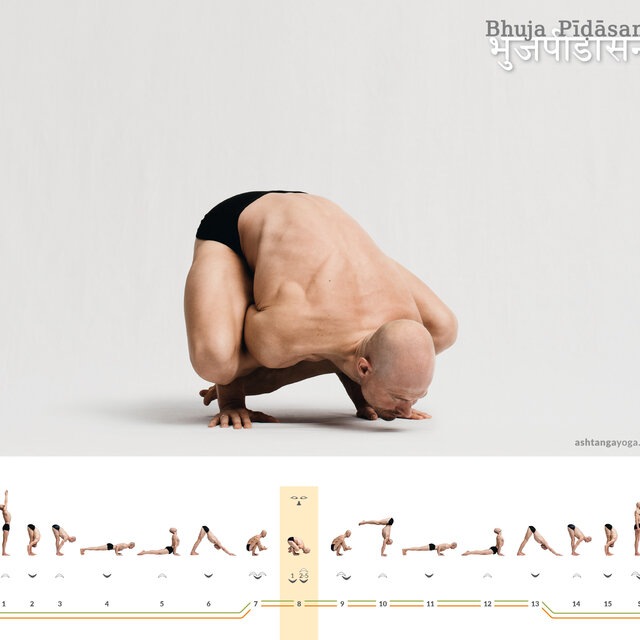
Bhuja Pīḍāsana: pose with pressure on the arms

Bhuja Pīḍāsana: pose with pressure on the arms

In Bhuja Pīḍāsana the thighs, placed sideways over the upper arms, transfer the full body weight to the arms while the chin hovers close above the floor.

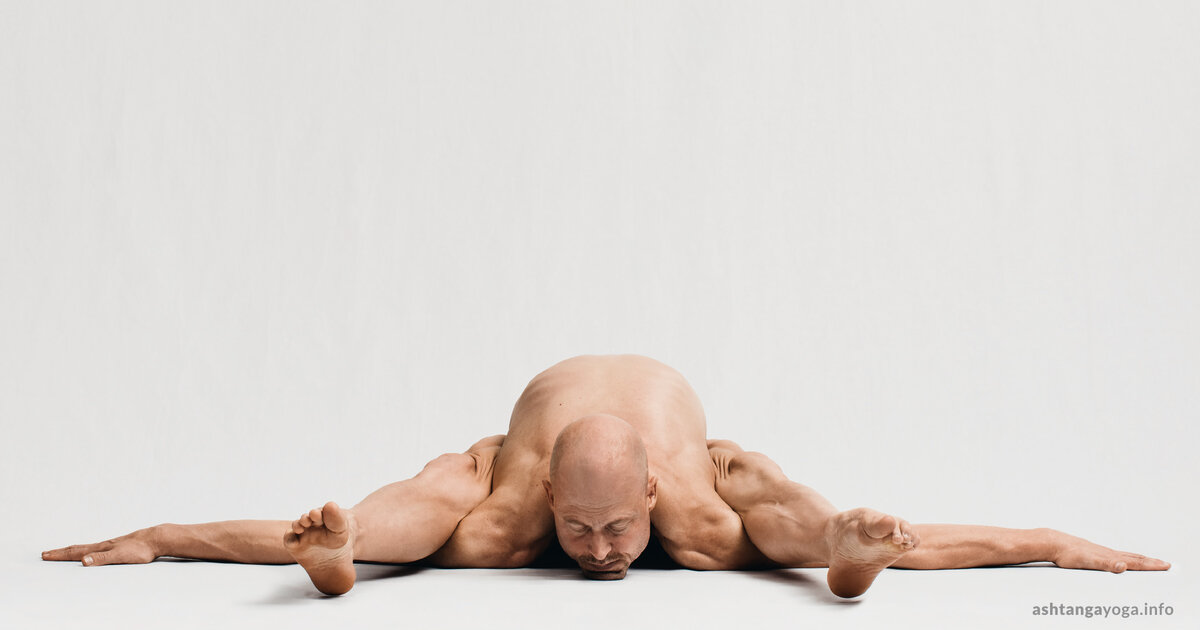
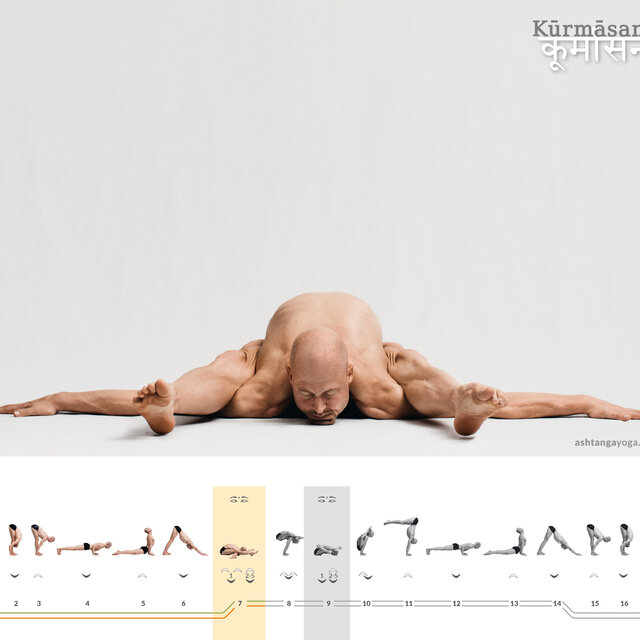
Kūrmāsana: turtle
Kūrmāsana: turtle

Kūrmāsana: turtle

The “turtle,” Kūrmāsana, is a forward bend with the legs slightly apart. The thighs rest on the shoulder blades while the arms point out to the sides.

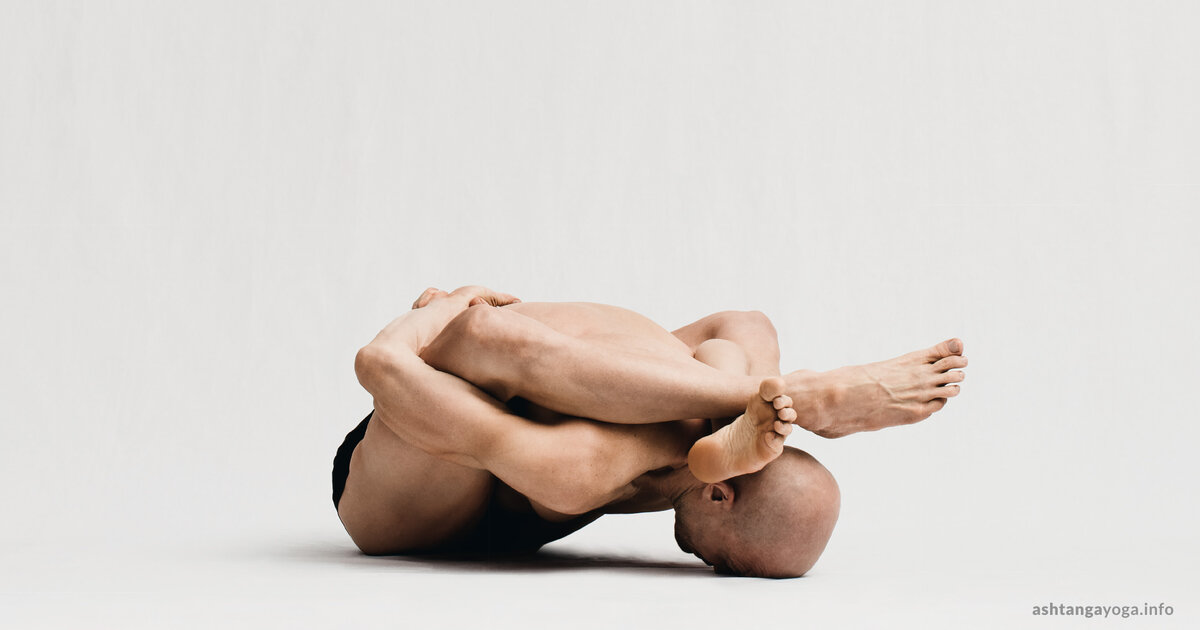
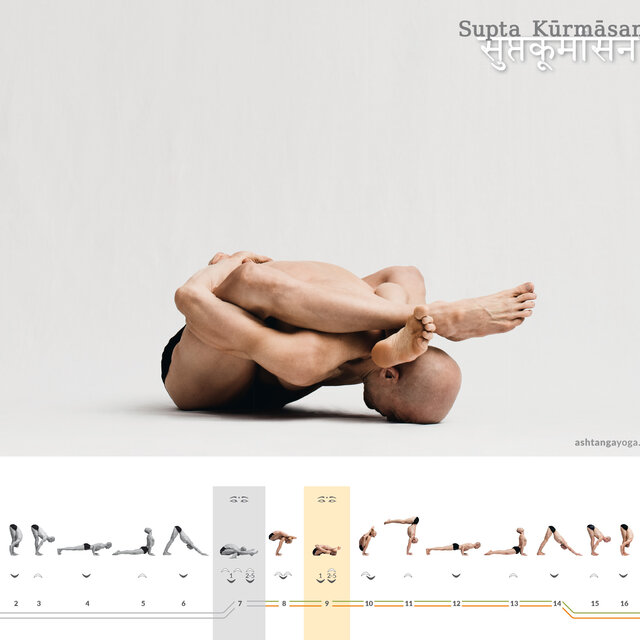
Supta Kūrmāsana: sleeping turtle

Supta Kūrmāsana: sleeping turtle

In the “sleeping turtle,” Supta Kūrmāsana, the practitioner crosses the feet behind the neck in the forward bend and clasps the hands behind the back.

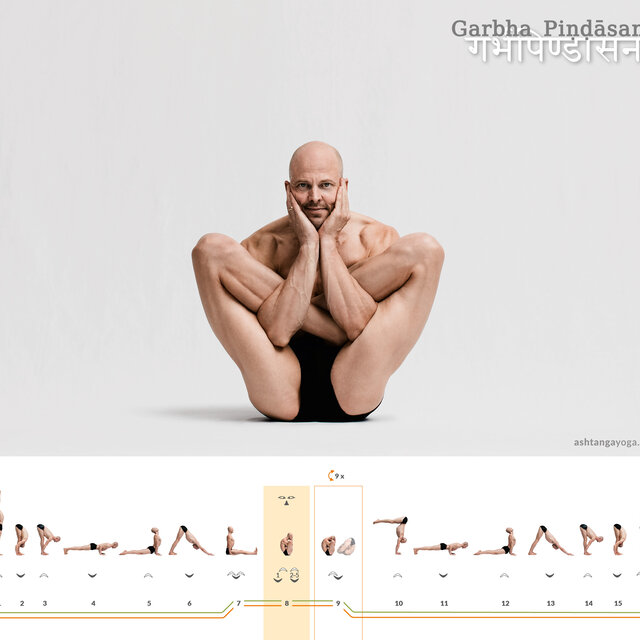
Garbha Piṇḍāsana: curled-up embryo

Garbha Piṇḍāsana: curled-up embryo

The “curled-up embryo,” Garbha Piṇḍāsana, develops out of lotus position. The arms slip through beneath the backs of the knees and the hands hold the head.

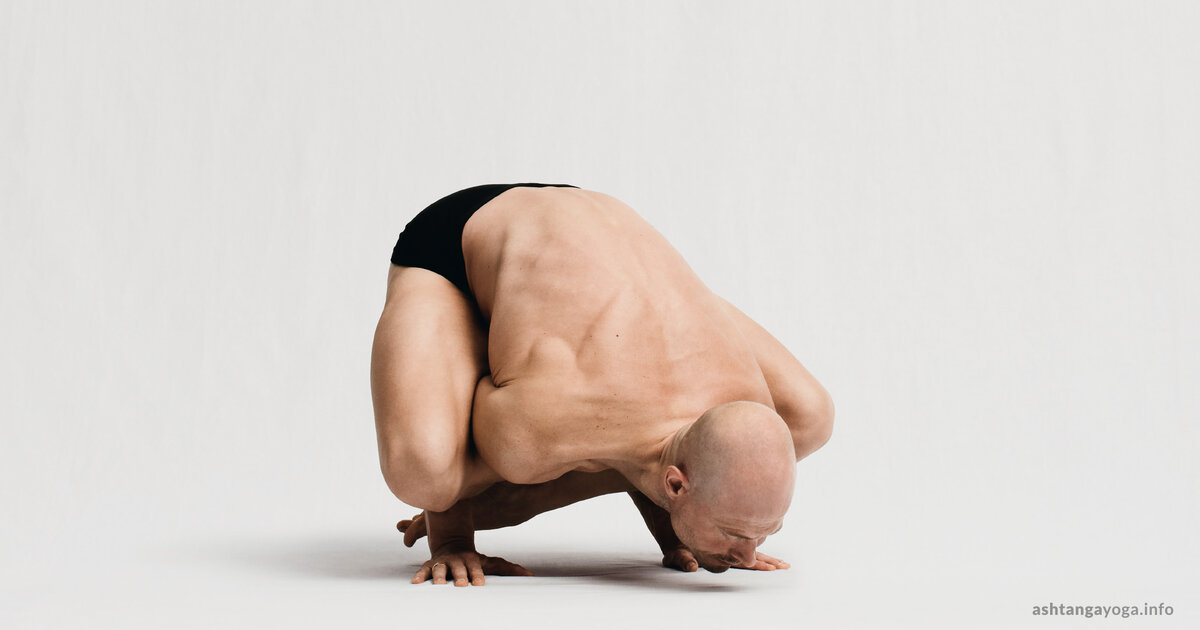
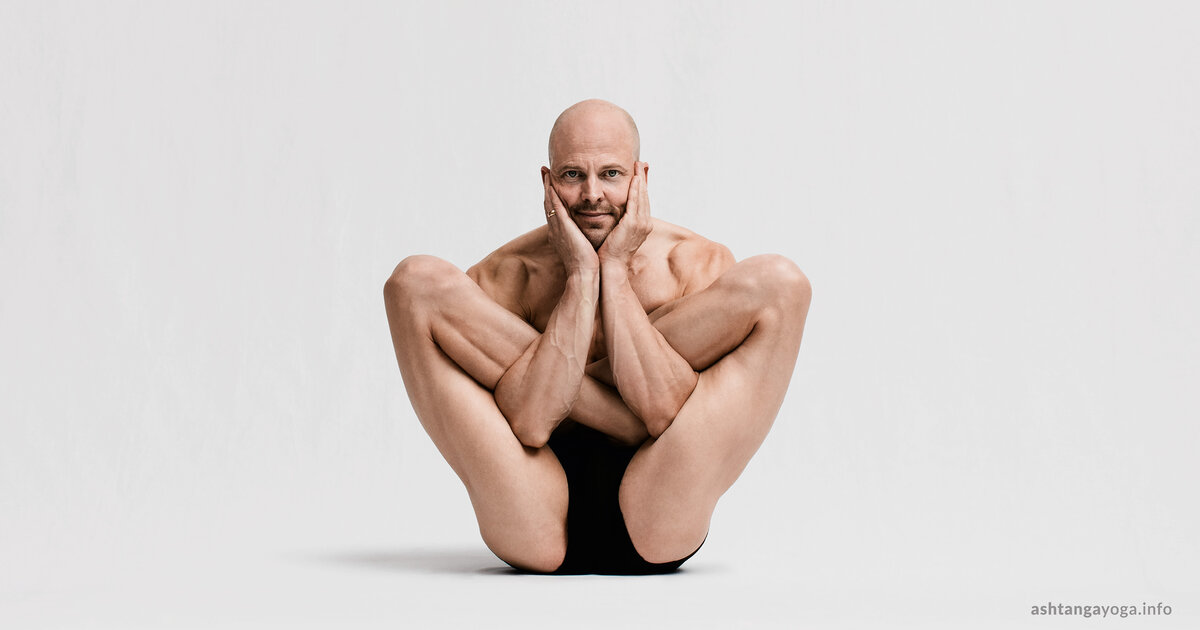
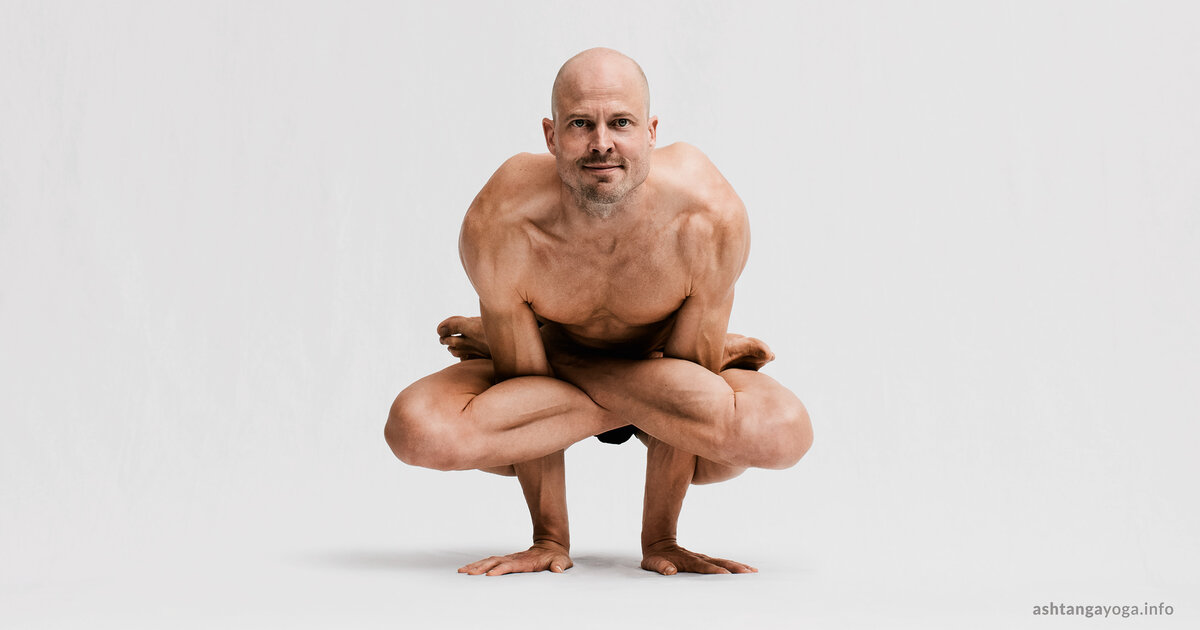
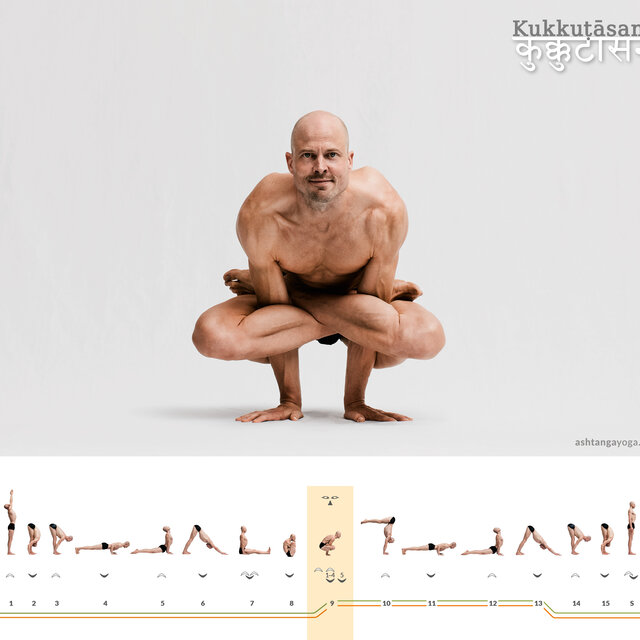
Kukkuṭāsana: rooster

Kukkuṭāsana: rooster

The “rooster,” Kukkuṭāsana, is an arm balance in which the arms support the body downward through lotus position.

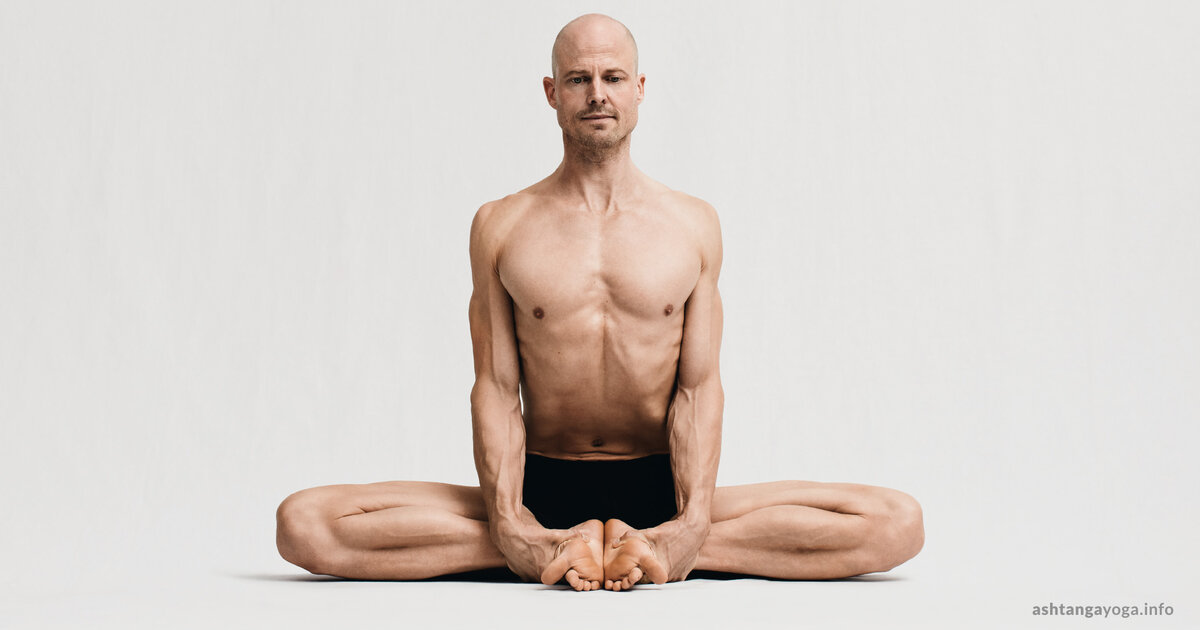
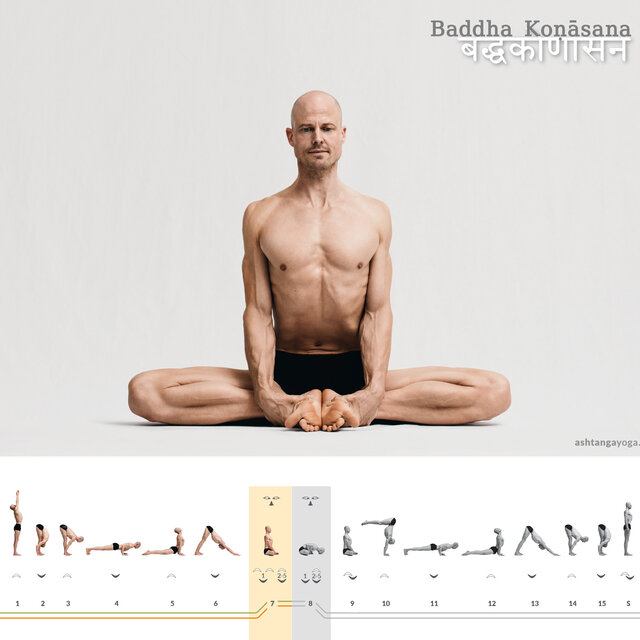
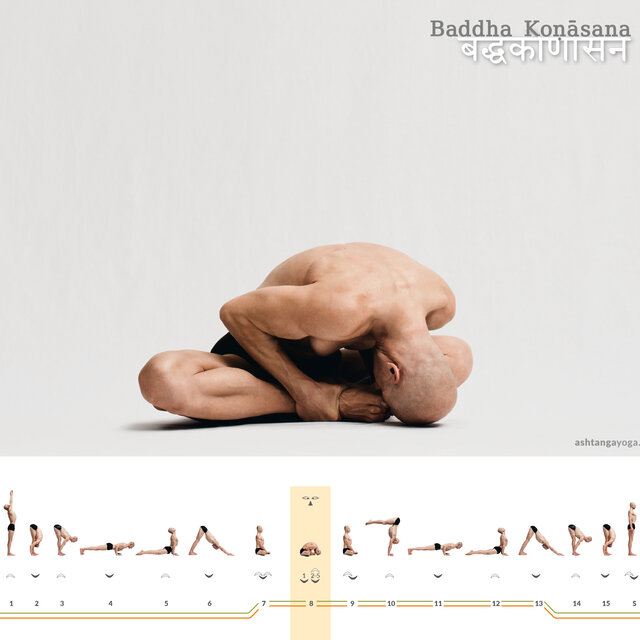
Baddha Koṇāsana A: bound angle pose

Baddha Koṇāsana A: bound angle pose

In the first version of “bound angle pose,” Baddha Koṇāsana A, the feet are together while the knees open to the sides. The upper body stays upright.

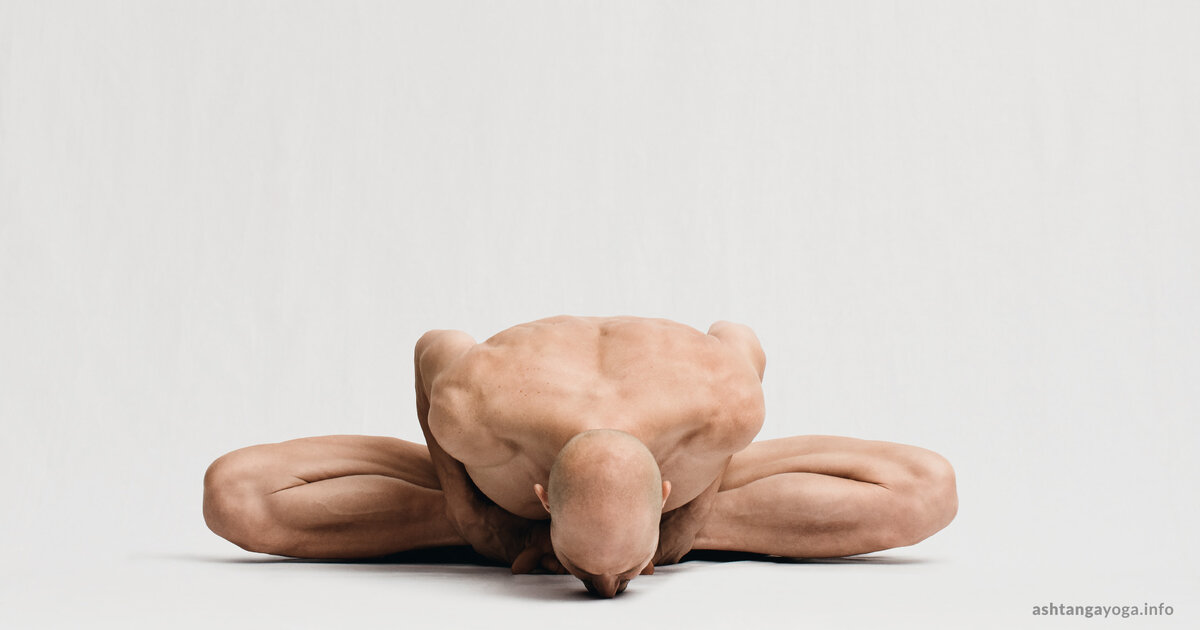
Baddha Koṇāsana B: bound angle pose

Baddha Koṇāsana B: bound angle pose

The second version of “bound angle pose,” Baddha Koṇāsana B, builds on the first. The torso now folds as flatly forward as possible until the navel finally...

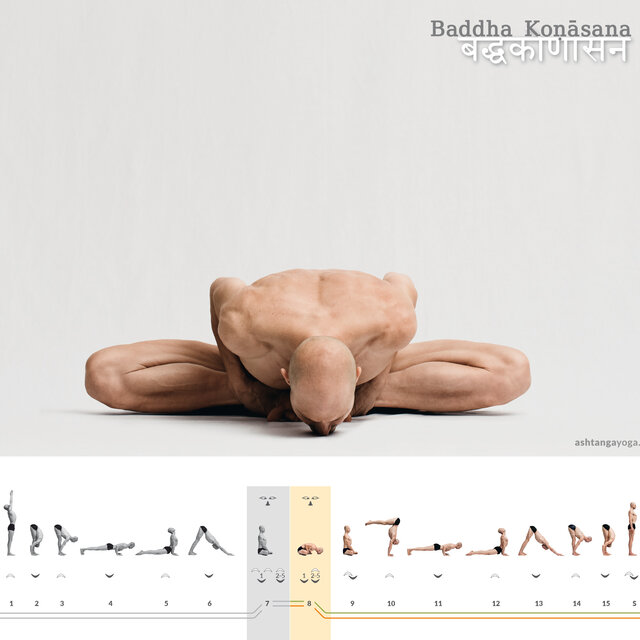
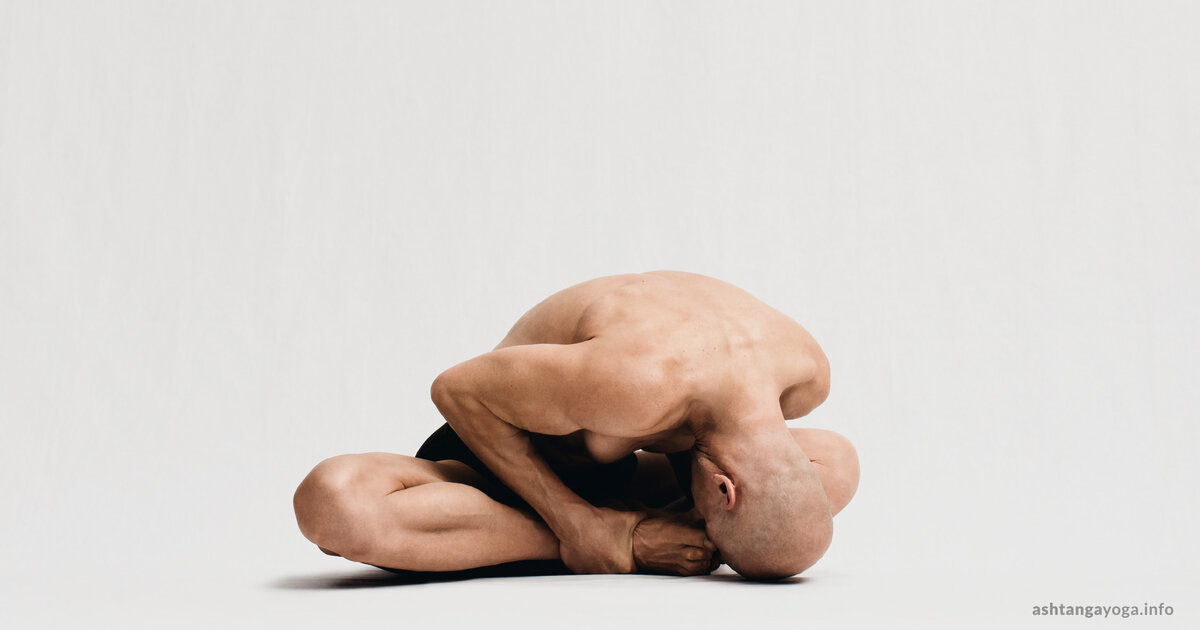
Baddha Koṇāsana C: bound angle pose

Baddha Koṇāsana C: bound angle pose

The third version of “bound angle pose,” Baddha Koṇāsana C, is quite similar to the second version. Now, however, the torso rounds deeply until the forehead...

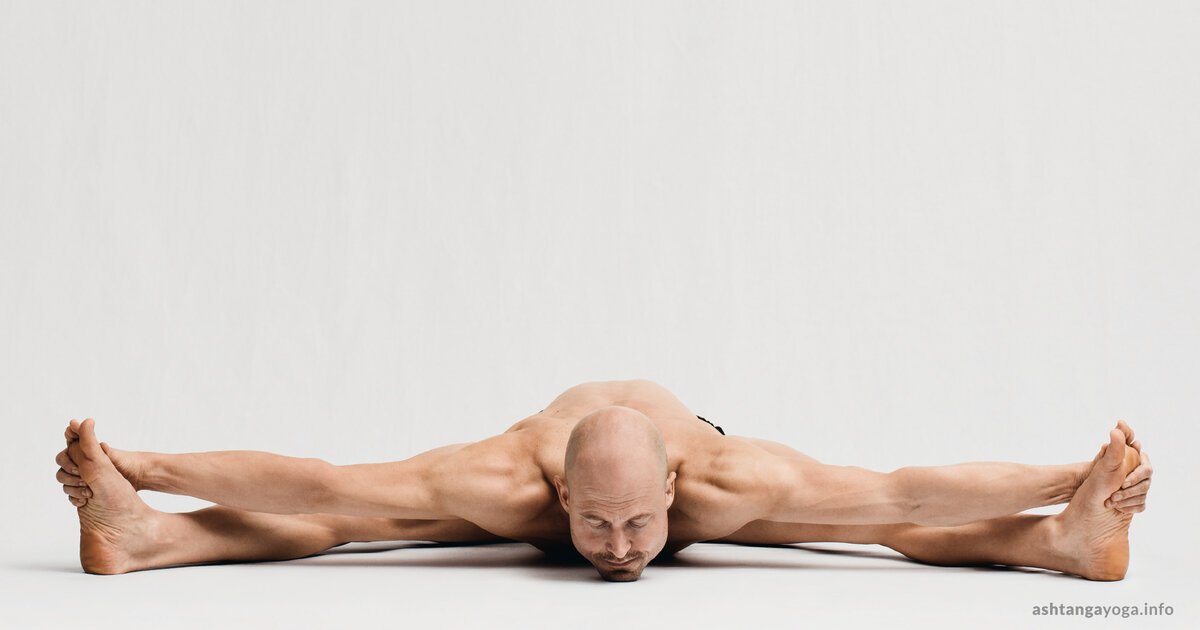
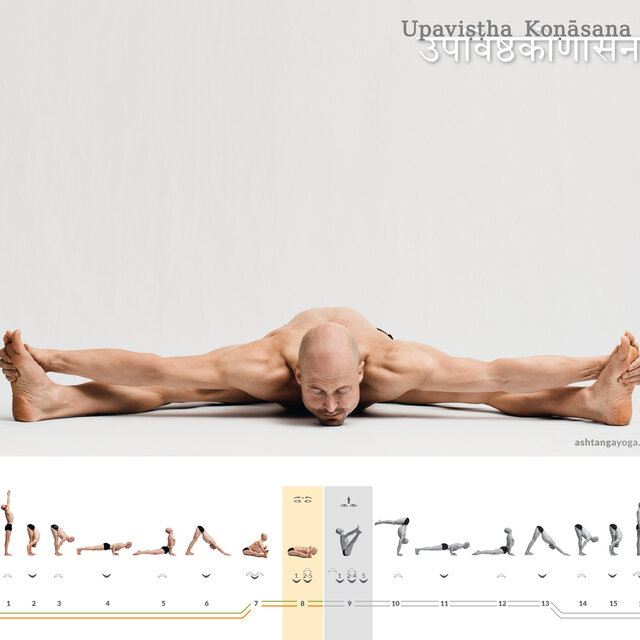
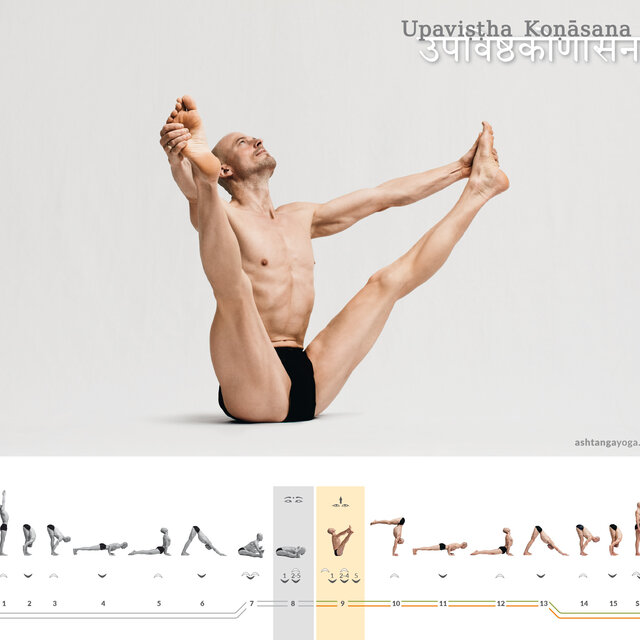
Upaviṣṭha Koṇāsana A: upward-facing angle pose

Upaviṣṭha Koṇāsana A: upward-facing angle pose

The posture of the “upward-facing angle” has two phases. In the first, the legs are spread wide to the sides while the torso rests as flat as possible on the...

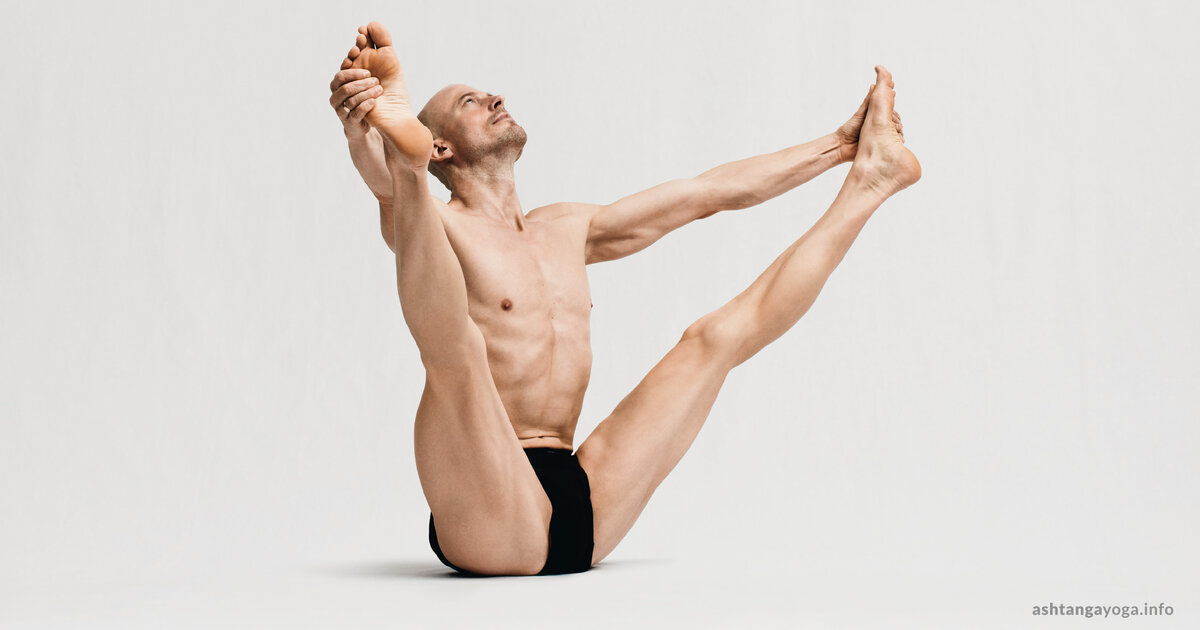
Upaviṣṭha Koṇāsana B: upward-facing angle pose

Upaviṣṭha Koṇāsana B: upward-facing angle pose

In the second phase of the “upward-facing angle” posture, Upaviṣṭha Koṇāsana, you balance on your pelvis while holding the outer edges of the feet. Arms and...

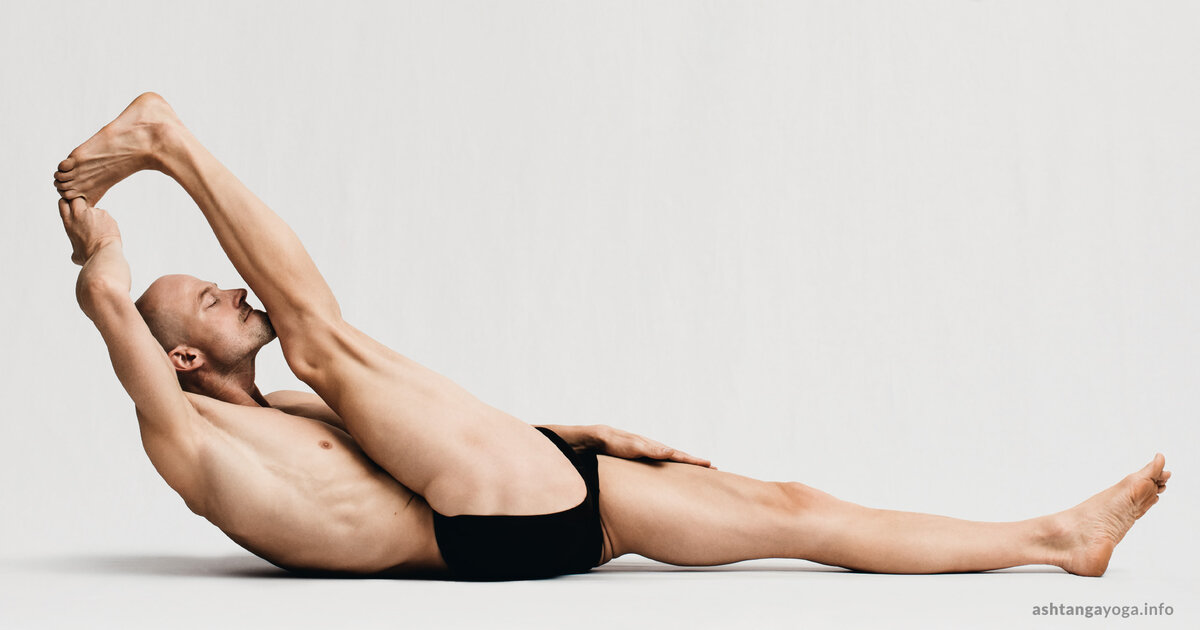
Supta Koṇāsana: reclining angle pose

Supta Koṇāsana: reclining angle pose

The “reclining angle,” Supta Koṇāsana, is a supine posture with the pelvis lifted. Both legs are spread wide and straight while you hold the big toes with two...

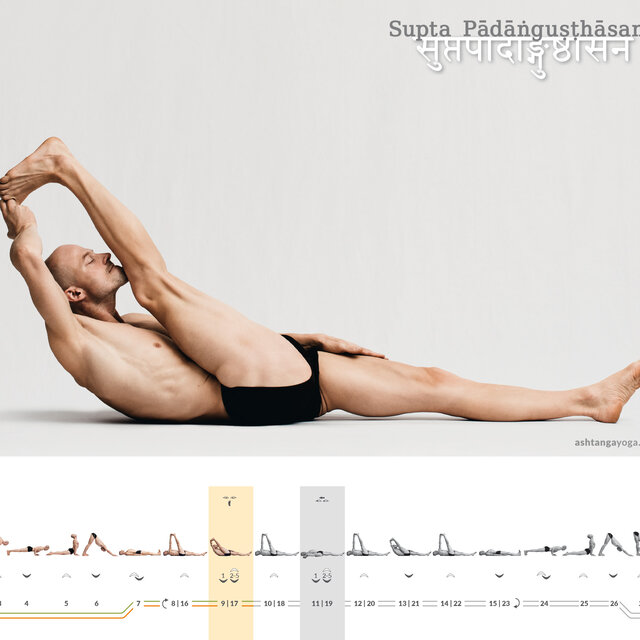
Supta Pādāṅguṣṭhāsana: reclining big-toe pose

Supta Pādāṅguṣṭhāsana: reclining big-toe pose

Supta Pādāṅguṣṭhāsana develops from lying on the back. One leg is lifted straight. Holding the big toe, you draw your chin toward the shin.

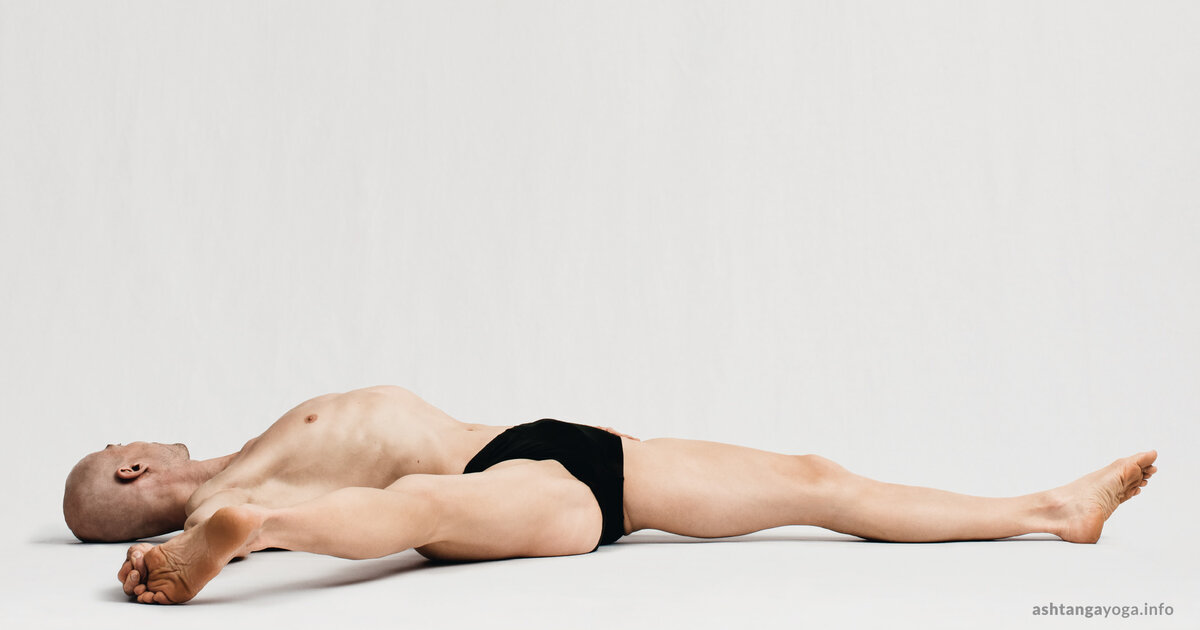
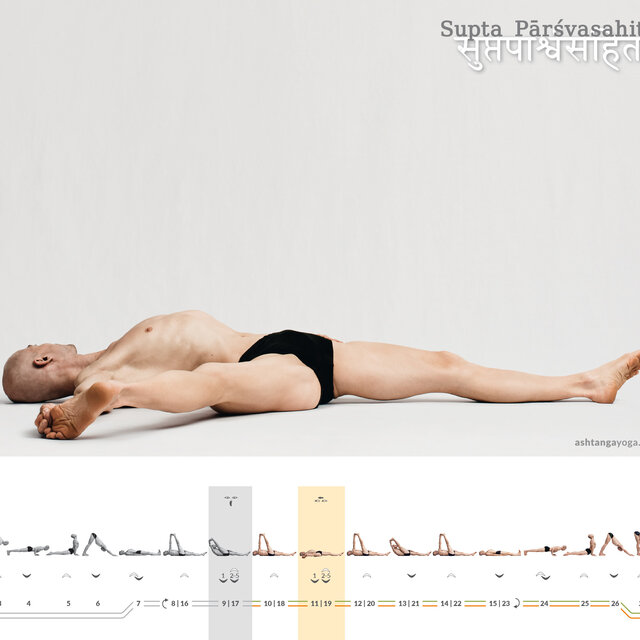
Supta Pārśvasahita: reclining side-extension pose

Supta Pārśvasahita: reclining side-extension pose

In Supta Pārśvasahita, the reclining side-extension pose that builds on the previous posture, you lower the straight leg out to the side onto the floor. You...

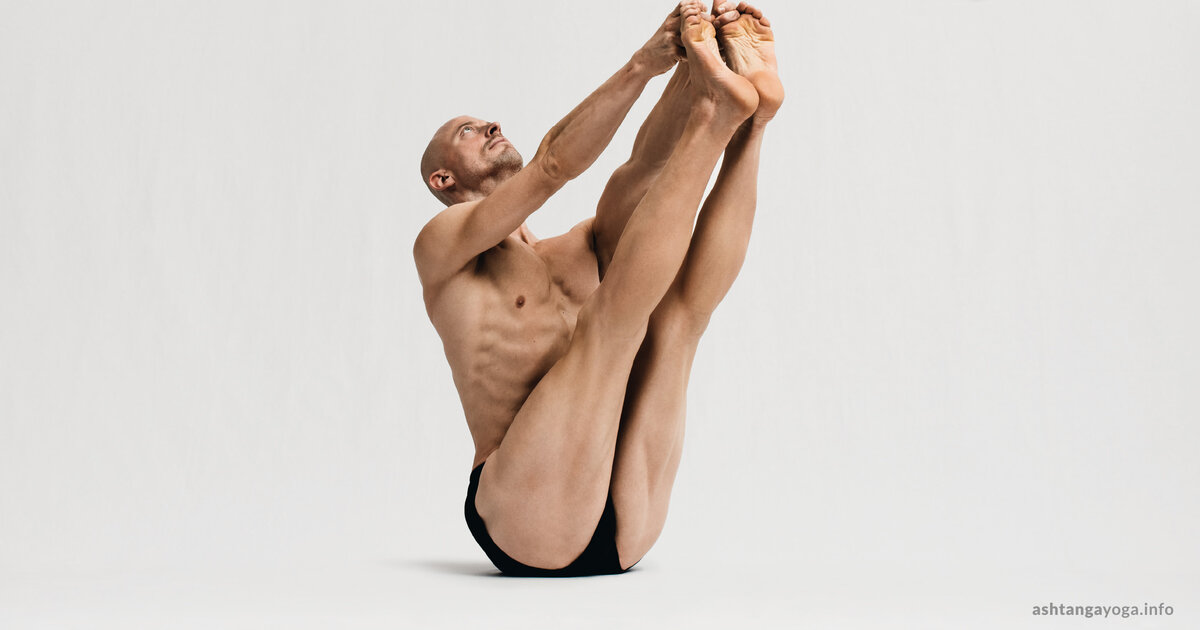
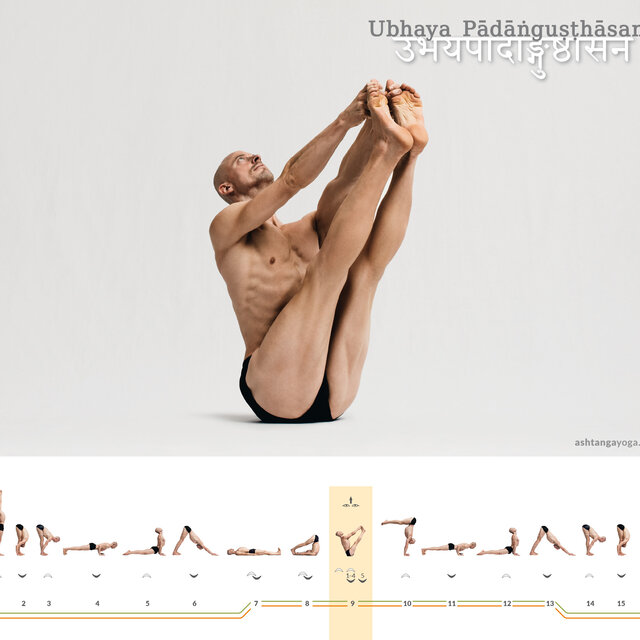
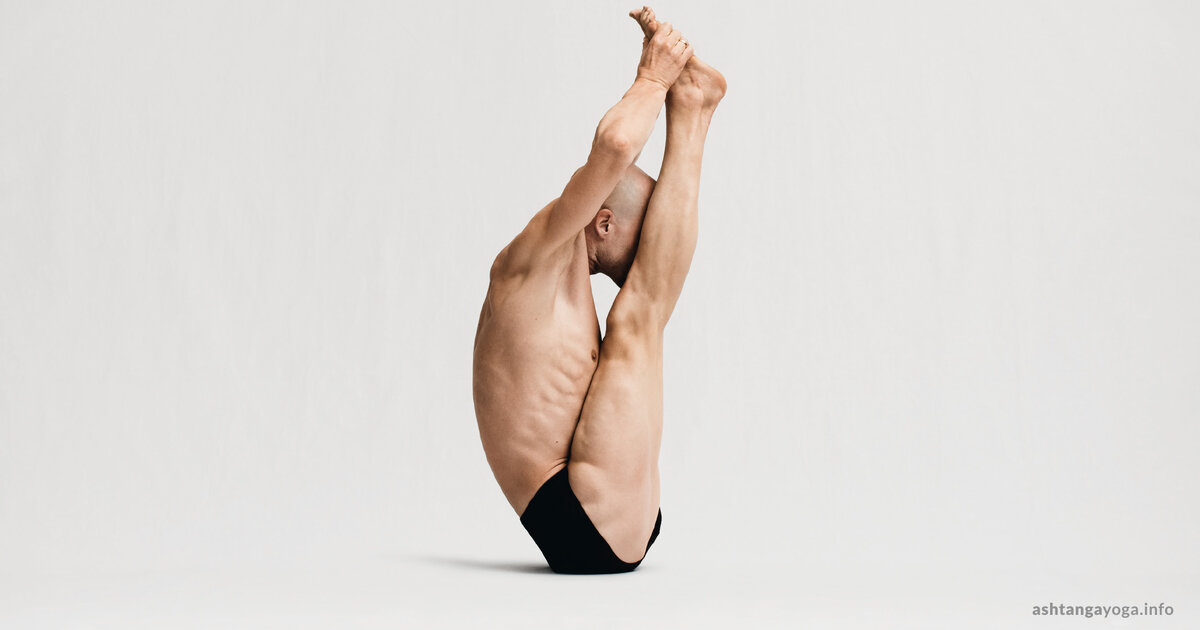
Ubhaya Pādāṅguṣṭhāsana: double big-toe pose

Ubhaya Pādāṅguṣṭhāsana: double big-toe pose

Ubhaya Pādāṅguṣṭhāsana is a posture in which you balance on the pelvis. Legs, arms, and back are straight. With both hands you hold the big toes. The legs...

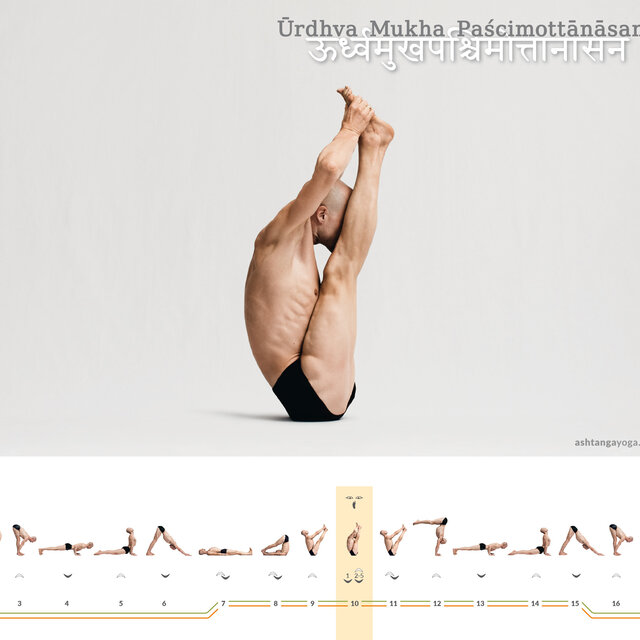
Ūrdhva Mukha Paścimottānāsana: upward-facing stretch of the back body

Ūrdhva Mukha Paścimottānāsana: upward-facing stretch of the back body

Ūrdhva Mukha Paścimottānāsana is a forward bend with the legs together in which the whole body points upward while you balance on the pelvis.

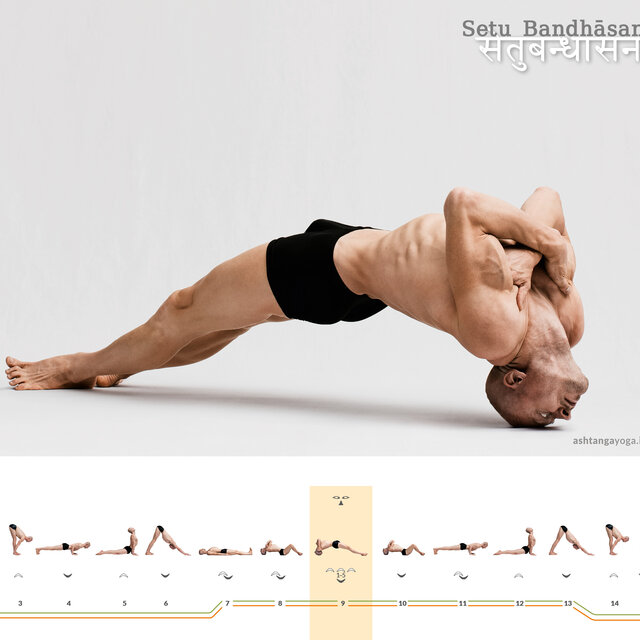
Setu Bandhāsana: tense bridge

Setu Bandhāsana: tense bridge

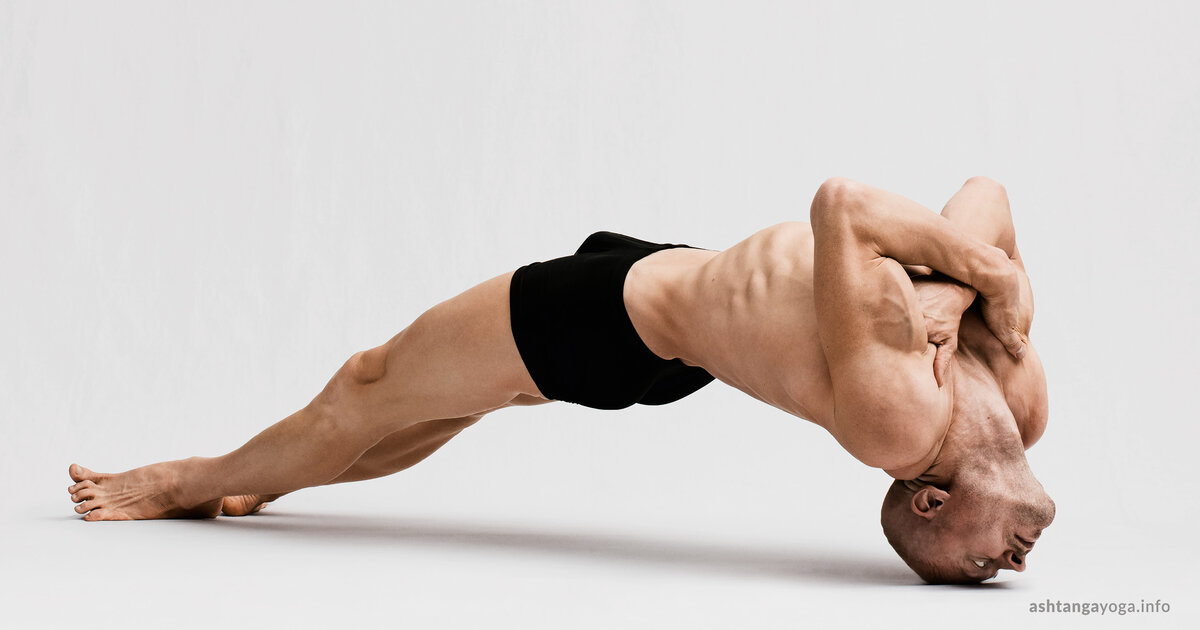
The “tense bridge,” Setu Bandhāsana, is a backbend with the front of the body facing upward. Only the feet and the crown of the head support the body.

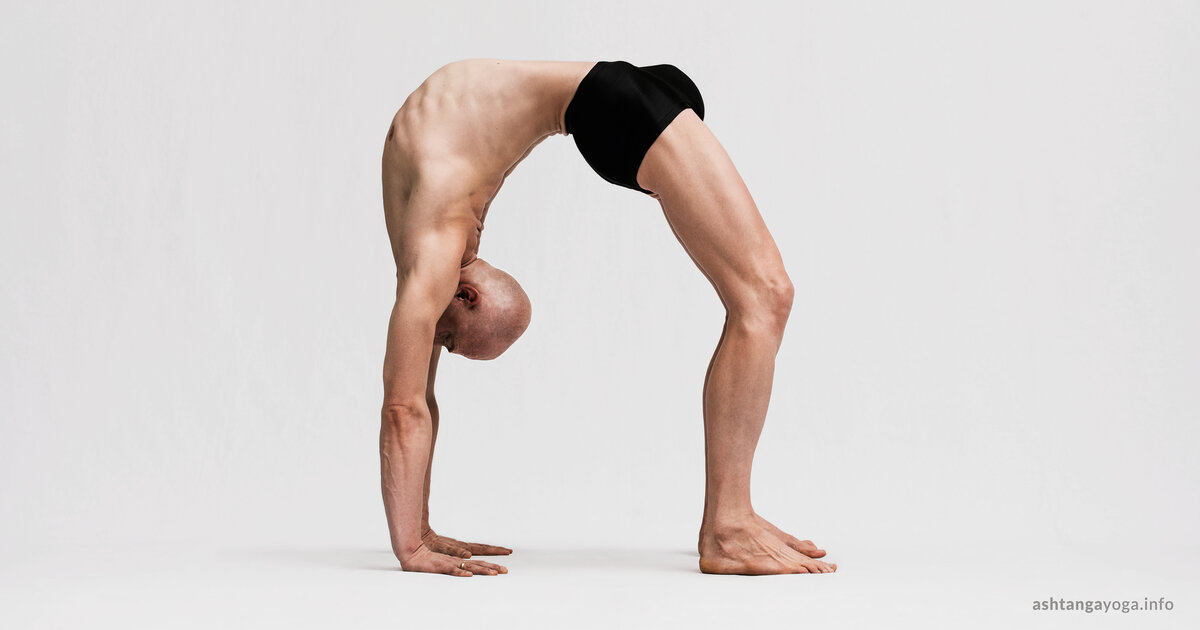
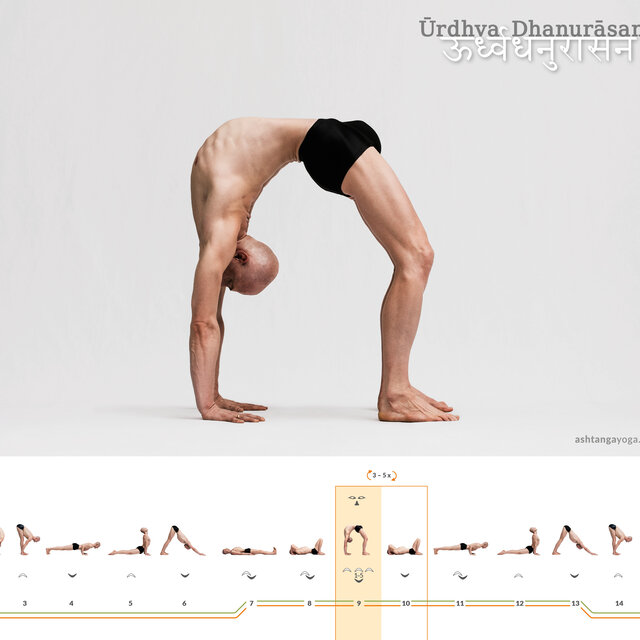
Ūrdhva Dhanurāsana: upward bow

Ūrdhva Dhanurāsana: upward bow

Ūrdhva Dhanurāsana is a backbend with the front of the body facing upward. Only the hands and feet touch the floor: the upward bow.

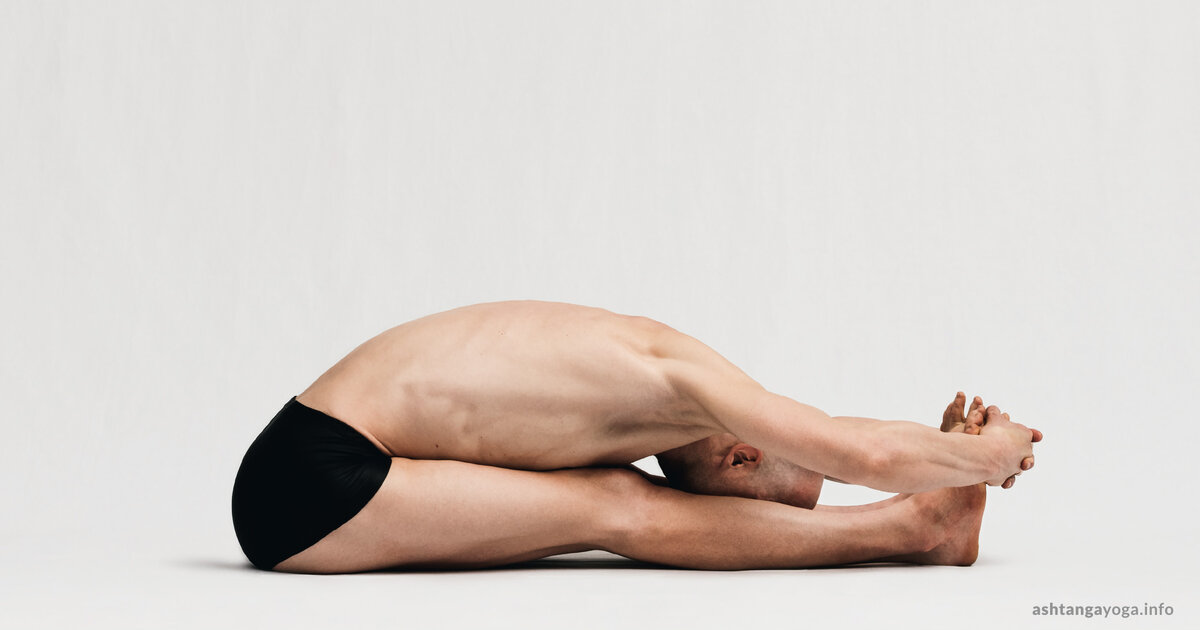
Paścimottānāsana: seated forward bend

Paścimottānāsana: seated forward bend

At this point in the Aṣṭāṅga Yoga series, the seated forward bend serves as the counterpose to the previous intense backbend, Paścimottānāsana.