

aṅka अङ्क – mark; sign
substantive masculine · Word type unspecified
Dictionary sources
AYI dictionary substantive masculine
mark; sign
Cappeller 1891 substantive masculine
Original text · English · substantive masculine
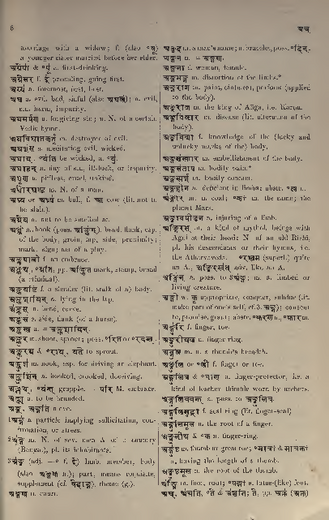
aṅká ·m. hook (poss. aṅkín), bend, flank, esp. of the body, groin, lap, side, proximity; mark, sign; act of a play.
Monier-Williams 1872 substantive masculine
Original text · English · substantive masculine
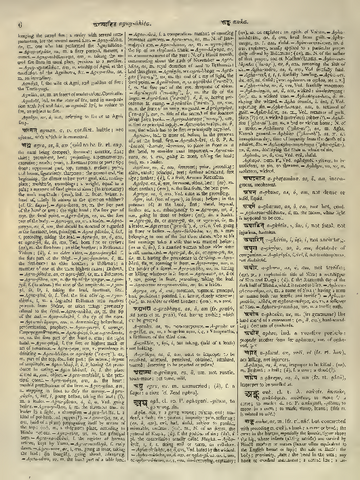
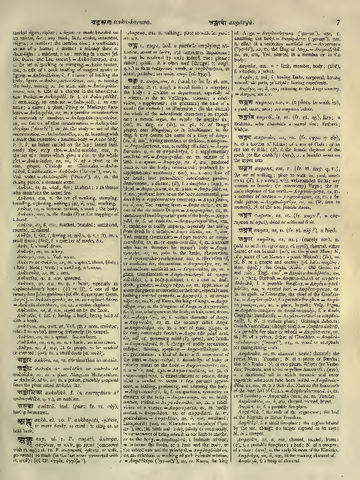
aṅka aṅka, as, m. (fr. rt. añc, but connected with preceding rt. aṅk), a hook; a curve or bend; the curve in the human, especially the female, figure above the hip, where infants (sitting astride) are carried by Hindū mothers or nurses (hence often equivalent to the English breast or lap); the side or flank; the body; proximity, place; the bend in the arm; any hook or crooked instrument; a curved line; a nu- merical figure, cipher; a figure or mark branded on an animal, &c.; any mark, line, stroke, ornament, stigma; a number; the number nine; a coefficient; an act of a drama; a drama; a military show or sham-fight; a misdeed, a sin; moving in a curve [cf. Gr. ὄγκος and Lat. uncus].
Petersburger 1855 substantive masculine · Word type unspecified
Original text · German · substantive masculine
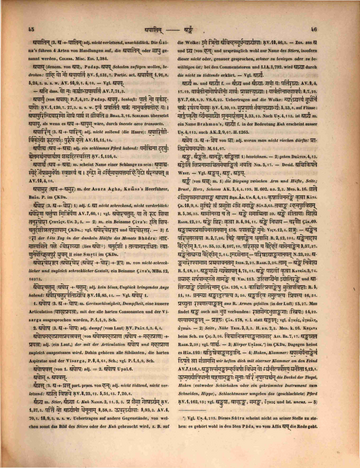
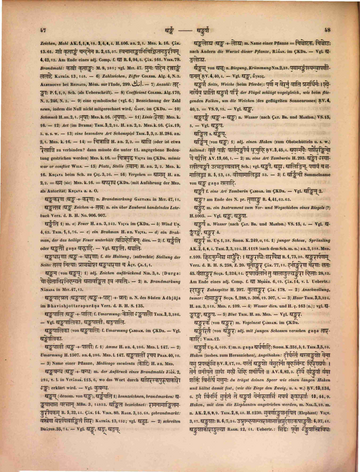
aṅká (von añc) m. 1〉 die Biegung zwischen Arm und Hüfte, Seite; Brust, Herz, Schooss AK. 3,4,4. AK. 3,4,199. H. 602. H. an. 2,2. MED. k. 16. jāte 'gnimupasamādhāyāṅka ādhāya BṚH. ĀR. UP. 6,4,24. kṛṣṇājinamaṅke kṛtvā KĀTY. ŚR. 10,9,8. suciraṃ tvaṃ prasupto 'si mamāṅke SĀV. 5,65. tavāṅka 'hamapuviśam R. 5,36,33. āsīnasya ca te — aṅke samāśritā R. 5,36,39. aṅke sītāyāḥ śiśye RAGH. 12,21. aṅke śiraḥ kṛtvā R. 6,94,11. aṅke nidhāya — caraṇau ŚĀK. 69. aṅkāśrayapraṇayinastanayān ŚĀK. 176. papātāṅke muneḥ VIŚV. 12,4. śatruḥ — aṅkena paridhṛtastvayā R. 2,7,26. ciraṃ vatāṅkena dhṛtāsi R. 2,12,101. aṅkenādāya vaidehīm R. 3,7,10. R. 3,55,33. R. 6,107,10. parigṛhya ca vaidehīṃ vāmenāṅkena R. 3,57,27. aṅkenodyamya vaidehīm R. 2,7,14. indrasenām — pariṣvajyāṅkamānayat N. 23,22. aṅkamāropayāmāsa praśrayāvanatam INDR. 2,21. RAGH. 3,26. tām — aṅke niveśya R. 1,18,21. aṅkamadhye nyaveśayat R. 6,71,11. aṅke pāṭalīṃ kṛtvā KATHĀS. 3,74. jagrāha sarṣapānhaste tāmaṅke ca VID. 113. utkṣipyaināṃ jyotiraṅke und ākṣipyāṅke jyotirenām ŚĀK. 126, v. l. kāścitpriyāṅkeṣu sukhopaviṣṭāḥ R. 5,11,18. jananyā aṅkādutpatya R. 5,3,50. aṅkādiva samutpatya priyasya R. 5,16,31. pracyutā rāvaṇasyāṅkāt aus R. Armen gefallen (in der Luft) R. 5,15,27. Man findet aṅka auch mit bhuja verbunden: rākṣasendrabhujāṅkagāḥ (striyaḥ) R. 5,14,22. yasyāyamaṅkāt — prarūḍhaḥ ŚĀK. 178, v. l. statt aṅgāt; vgl. ἀγϰάς, ἀγϰάλη, ἀγϰών. — 2〉 Seite, Nähe TRIK. 3,3,2. H. an. 2,2. MED. k. 16. KEŚAVA beim Sch. zu ŚIŚ. 3,36. viśvāmitrasyāṅkamāsasāda AIT. BR. 7,17. aṅkāgata RAGH. 2,38; vgl. pārśva. — 3〉 Körper UṆĀDIK.*⁾ im ŚKDR. Dagegen heisst es HĀR. 193: aṅgiṣvevāṅkamaṅgāni. *⁾ Vgl. UṆ. 4,215. Dieses Sūtra scheint nicht an seiner Stelle zu stehen: es gehört wohl in den 5ten Pāda, wo vom Affix ac die Rede geht. — 4〉 Haken, Klammer: a̱ya̱smayènā̱ṅkenà dviṣa̱te tvā sàjāmasi wir heften dich mit eiserner Klammer an den Feind AV. 7,116,1. a̱ṅkāntsàma̱ṅkānha̱viṣā̀ vidhema̱ yo 'gràbhī̱tparvā̀sya̱ grabhī̀tā AV. 1,12,1. ū̱ṣma̱ṇyā̀pi̱dhānā̀ carū̱ṇāma̱ṅkāḥ sū̱nāḥ parì bhū̱ṣa̱ntyaśvàm die Deckel der Tiegel, Haken (entweder Schürhaken oder ein gekrümmtes Instrument zum Schneiden, Hippe), Schlachtmesser umgeben das (geschlachtete) Pferd ṚV. 1,162,13; vgl. aṅkuśa, bāhvaṅka, samaṅka, ὄγϰος und lat. uncus. — 5〉 Zeichen, Mahl AK. 1,1,2,18. AK. 3,4,1,4. H. 106. H. an. 2,1. MED. k. 16. ŚĀK. 13. ŚĀK. 61. gajaṃ kṛtāṅkaṃ candanena R. 2,15,37. svanāmāṅkābhicihnitamaṅgurīyam R. 4,42,12. Am Ende eines adj. comp. f. ā R. 6,94,5. ŚĀK. 161. VIKR. 79. Brandmahl: kaṭyāṃ kṛtāṅkaḥ M. 8,281; vgl. MIT. 47. śunaḥ pādena dattvāṅkaṃ lalāṭe KATHĀS. 13,148. — 6〉 Zahlzeichen, Ziffer COLEBR. Alg. 4, N. 2. ALBYROUNY_bei_REINAUD, Mém. sur lʼInde, 299. انك — 7〉 Anzahl: tadaṅkāḥ P. 1,1,9, Sch. (als Ueberschrift). — 8〉 Coefficient COLEBR. Alg. 170, N. 3. COLEBR. Alg. 246, N. 2. — 9〉 eine symbolische (vgl. 6.) Bezeichnung der Zahl neun, indem die Null nicht mitgerechnet wird, JYOT._im_ŚKDR. — 10〉 Schmuck H. an. 2,1. (bhūṣā) MED. k. 16. (bhūṣaṇa). — 11〉 Linie (rekhā) MED. k. 16. — 12〉 Act (im Drama) TRIK. 3,2,24. H. an. 2,2. MED. k. 16. ŚĀK. 19,5. u. s. w. — 13〉 eine besondere Art Schauspiel TRIK. 3,3,2. H. 284. H. an. 2,1. MED. k. 16. — 14〉 = citrāji H. an. 2,2. = āji (oder ist etwa rekhāji zu verbinden? dann müsste die unter 11. angegebene Bedeutung gestrichen werden) MED. k. 16. = citrayuddha VIŚVA_im_ŚKDR. mimic war or conflict WILS. — 15〉 Platz, Stelle (sthāna) H. an. 2,2. MED. k. 16. KEŚAVA beim Sch. zu ŚIŚ. 3,36. — 16〉 Vergehen = āgas H. an. 2,2. = aga (sic) MED. k. 16. = aparādha ŚKDR. (mit Anführung der MED. als Autorität) KEŚAVA a. a. O.
Original text · German · Word type unspecified
aṅka [vgl. [1:46]] {7,116,1} = {7,115,1}. {1,12,1} = {1,12,2}. (revision)
Original text · German · Word type unspecified
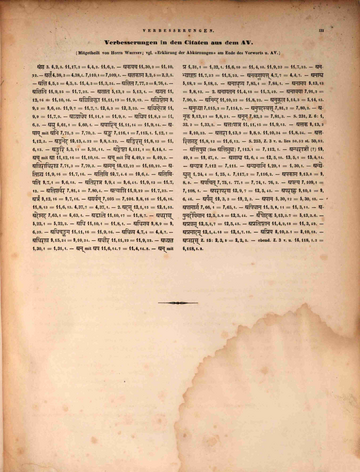
aṅka 1〉 vgl. bāhvaṅka. — 4〉 *Z. 3 lies 7,115,1 st. 7,116,1 und 1,12,2 st. 1,12,1. — 6〉 Ind. St. 8,443. — 9〉 auch Bez. der Zahl Eins Ind. St. 8,208, N. — 13〉 vgl. DAŚAR. 1,8. DAŚAR. 3,64. fg. SĀH. D. 519. PRATĀPAR. 24,b,9. — 17〉 ein best. Theil des Wagens, du. TS. 1,7,7,2. TBR. 2,7,8,1.
Original text · German · Word type unspecified
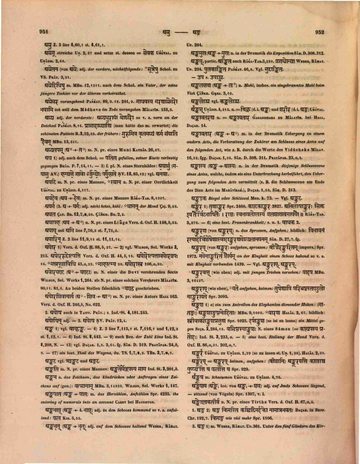
aṅka 9〉 Bez. der Zahl neun SŪRYAS. 1,30. fg.
Böhtlingk 1879 substantive masculine · Word type unspecified
Original text · German · substantive masculine
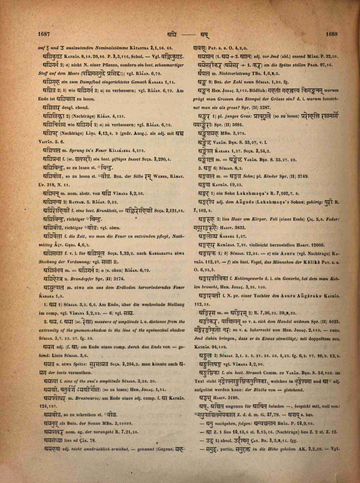
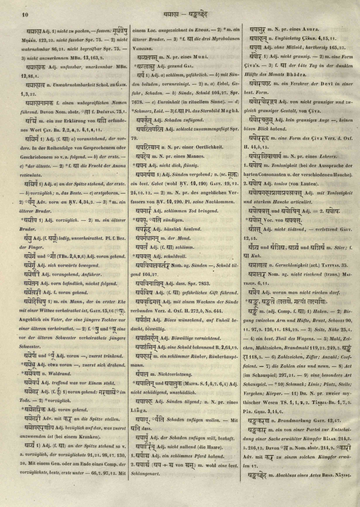
aṅká m. (adj. Comp. f. ā) — 1〉 Haken. — 2〉 Biegung zwischen Arm und Hüfte, Brust, Schooss Chr. 90,11. Chr. 97,9. Chr. 126,11. Chr. 184,29. — 3〉 Seite, Nähe Chr. 25,4. — 4〉 ein best. Theil des Wagens. — 5〉 Mahl, Zeichen, Mahlzeichen, Brandmahl Chr. 119,22. Chr. 249,3. aṅkaṃdā Chr. 118,5. — 6〉 Zahlzeichen, Ziffer; Anzahl; Coefficient. — 7〉 die Zahlen eins und neun. — 8〉 Act (im Schauspiel) Chr. 297,21. — 9〉 eine besondere Art Schauspiel. — 10〉 *Schmuck; Linie; Platz, Stelle; Vergehen; Körper. — 11〉 Du. N. pr. zweier mythischer Wesen TS. 1,1,7,2. TĀṆḌYA-BR. 1,7,5. PĀR. GṚHY. 3,14,6.
Original text · German · Word type unspecified
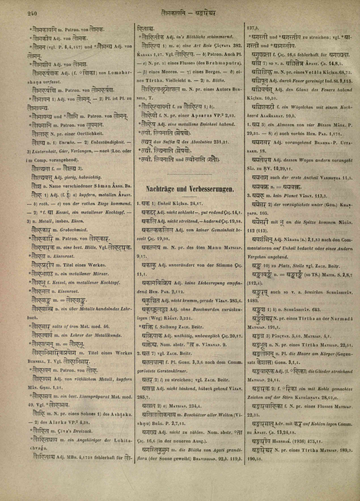
aṅka 10〉 zu Platz, Stelle vgl. ZACH. Beitr. [Nachtrag, Band 5]
Original text · German · Word type unspecified
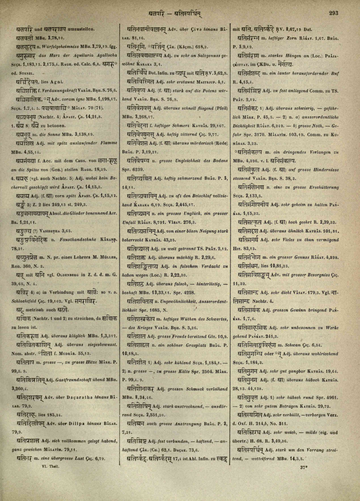
aṅká 5〉 Z. 2 lies 249,13 st. 249,3. [Nachtrag, Band 6]
Original text · German · Word type unspecified
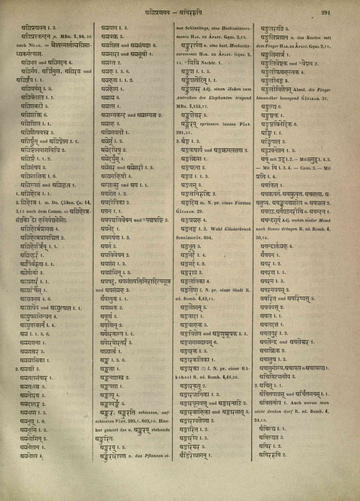
aṅka I. 5. 6. [Nachtrag, Band 7]
Cappeller 1887 Word type unspecified
Original text · German · Word type unspecified
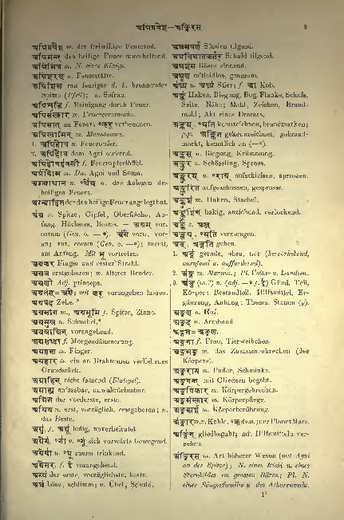
aṅká Haken, Biegung, Bug, Flanke, Schoß, Seite, Nähe; Mahl, Zeichen, Brandmahl; akt eines Dramas.
Burnouf 1866 substantive masculine
Original text · French · substantive masculine
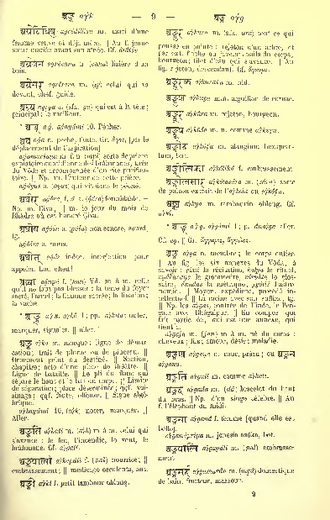
aṅka aṅka m. marque; ligne de démarcation; trait de plume ou de pinceau. Ornement peint ou dessiné. Section, chapitre; acte d'une pièce de théâtre. Ligne de bataille. Le pli du flanc qui sépare le haut et le bas du corps. Limite de séparation; place déterminée; qqf. voisinage; qqf. faute, offense. Signe algébrique. aṅkayāmi 10, (aṅk) noter, marquer. Aller.
Occurrences in source texts (1)
VBT 1 occurrence
Continue with AYI Free
Image source: AYI archive.