

aham अहम् – I
pronoun · pronoun pers 1p · Word type unspecified
Dictionary sources
AYI dictionary pronoun pers 1p
Cappeller 1891 pronoun
Original text · English · pronoun
ahám ·(pron.) I; so'ham I here.
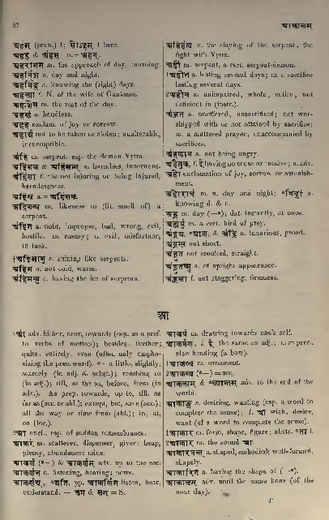
Monier-Williams 1872 Word type unspecified
Original text · English · Word type unspecified
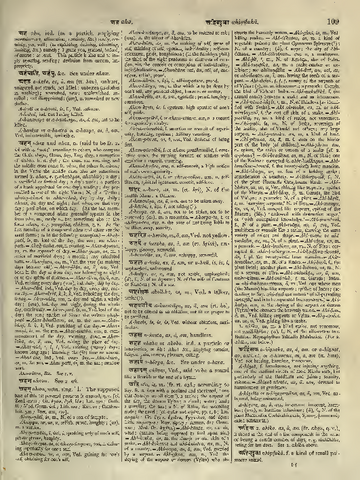
aham aham, nom. sing. ‘I.’ The supposed base of this 1st personal pronoun is asmad, q. v. [cf. Zend azem; Gr. ἐγών, ἐγώ, ἱών; Lat. ego; Goth. ik; Mod. Germ. ich; Lith. asz; Slav. az; Cambro- brit. ym; Bret. am, em].
Petersburger 1855 Word type unspecified
Original text · German · Word type unspecified
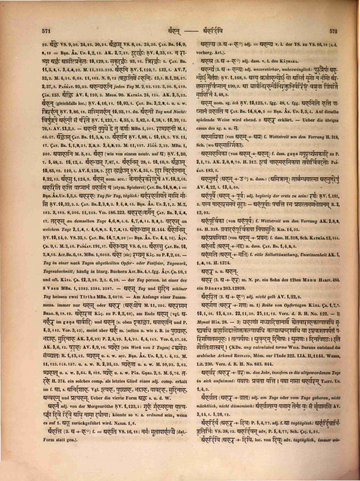
aham nom. sg. ich ṚV. 10,125,1. fgg. ṚV. 10,48,1. fgg. ahamiti hanti pāpmānaṃ jahāti ca ŚAT. BR. 14,8,6,5 = BṚH. ĀR. UP. 5,5,4. Auf dieselbe spielende Weise wird ebend. 3 ahar erklärt. — Ueber die übrigen casus des sg. s. u. ma.
Original text · German · Word type unspecified
aham scheinbar mit der 3ten Person construirt: tasmāttava vadhārthaṃ hi samutpatsyatyahaṃ (wohl samutpatsye hyahaṃ zu lesen) punaḥ R. 7,17,31. samutpasyati = samutpatsye Schol. aham = ahaṃkāra Selbstgefühl, die Meinung, dass man Ich d. i. Subject sei: ahami ca prasupte BHĀG. P. 11,3,39. ahamaḥ saṃsṛtirūpiṇaḥ BHĀG. P. 23,56. yannāgādahamo bhāvam BHĀG. P. 12,8,30. ahaṃrahita BHĀG. P. 10,38,11. indriyairindriyārtheṣu guṇairapi guṇeṣu ca . gṛhyamāṇeṣvahaṃkuryānna vidvānyastu BHĀG. P. 11,11,9. — Vgl. niraham.
Böhtlingk 1879 Word type unspecified
Original text · German · Word type unspecified
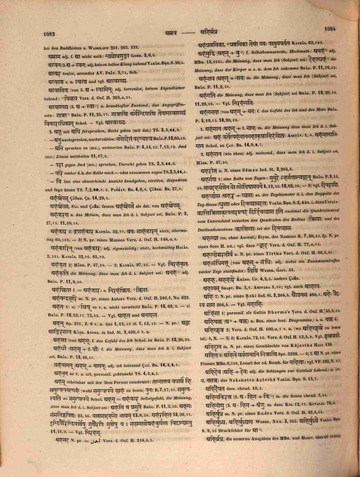
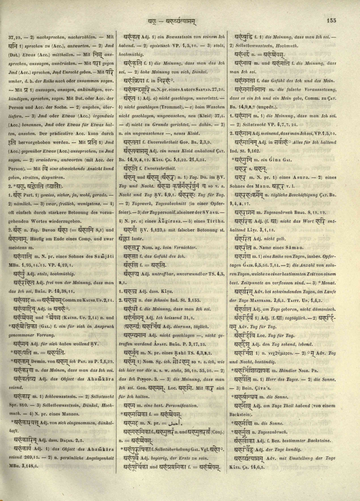
ahám — 1〉 Nom. Sg. ich. so'ham so v. a. ich, wie ich hier vor dir u. s. w. stehe, Chr. 50,10. Chr. 55,20. — 2〉 das Ich PIṆḌOP. 3. — 3〉 die Meinung, dass man Ich sei. Gen. ahamas Loc. ahami. — Mit kar sich für Ich halten.
Apte 1890 pronoun
Original text · English · pronoun
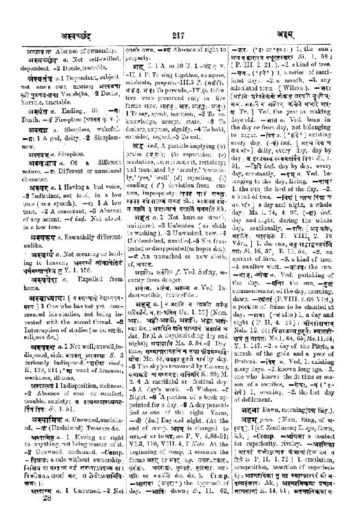
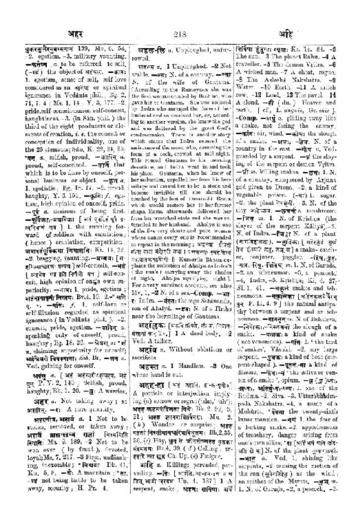
aham pron. (Nom. Sing. of asmad). I [cf. Zend azem; L. ego; Germ. ich.] Comp. — agrikā a contest for superiority, rivalry. — ahamikā [ahamahaṃ śabdo'styatra vīpsāyāṃ dvitvaṃ ṭhan na ṭilopaḥ P. II. 1. 72] 1 emulation, competition, assertion of superiority; ahamahamikā tu sā syātparasparaṃ yo bhavatyahaṃkāraḥ Ak.; ahamahamikayā praṇāmalālasānāṃ K. 14, K. 81; ahamahamikayā ([Page 0218-a]) madhukarakulairanubadhyamānaṃ K. 139, Mv. 6. 54. 2 egotism. 3 military vaunting. — kartavya a. to be referred to self. — (vyaṃ) the object of ahaṃkāra. — kāraḥ 1 egotism, sense of self, self-love considered as an avidyā or spiritual ignorance in Vedānta phil.; Bg. 2. 71, Bg. 7. 4; Ms. 1. 14; Y. 3. 177. 2 pride, self-consciousness, self-conceit, haughtiness. 3 (in Sān. phil.) the third of the eight producers or elements of creation, i. e. the conceit or conception of individuality, one of the 25 elements; Sāṅ. K. 22, Sāṅ. K. 24, Sāṅ. K. 25; ˚vat a. selfish, proud. — kārin a. proud, self-conceited. — kāryaṃ that which is to be done by oneself, personal business or object. — kṛta a. 1 egotistic; Bg. 18. 17. 2 proud, haughty, Y. 3. 151. — kṛtiḥ f. egotism, high opinion of oneself, pride. — pūrva a. desirous of being first. — pūrvikā, -prathamikā [ahaṃ pūrvo'haṃ pūrva ityabhidhānaṃ yatra] 1 the running forward of soldiers with emulation; (hence) emulation, competition; javādahaṃpūrvikayā yiyāsubhiḥ Ki. 14. 32. 2 bragging, vaunting. — pratyayaḥ [ ahamityākārakaḥ pratyayaḥ] self-conceit. — bhadraṃ [ahameva bhadra iti nirṇayo yatra] self-conceit, high opinion of one's own superiority. — bhāvaḥ 1 pride, egotism; ahaṃbhāvāvṛto nistrapaḥ Bv. 4. 10. 2 = ˚mati q. v. — matiḥ f. 1 self-love or self-illusion regarded as spiritual ignorance (in Vedānta phil.). 2 conceit, pride, egotism. — vādin a. speaking only of oneself, proud, haughty; Bg. 18. 26. — śreyas or ˚saṃ n. claiming superiority for oneself; ahaṃśreyase vivadamānāḥ Śat. Br. — sana a. Ved. gaining for oneself.
Cappeller 1887 Word type unspecified
Original text · German · Word type unspecified
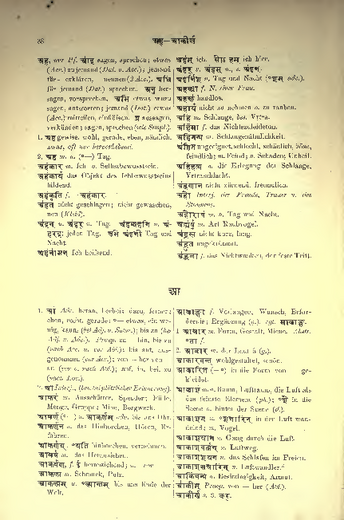
ahám ich. so' ham ich hier.
Burnouf 1866 Word type unspecified
Original text · French · Word type unspecified
aham aham je, moi. M§ 59. Lat. ego; gr. ἐγὼν, ἐγώ; germ. ich; breton, am. ahaṅkāra m. (kṛ) le moi. Egoïsme, amour-propre; orgueil. ahaṅkṛta a. (kṛ) égoïste; vaniteux, orgueilleux. ahaṅkṛti f. (kṛ) égoïsme, vanité, orgueil. ahamahamikā f. la vanité qui répète toujours moi. [Page065-2] ahampūrvikā f. le sentiment qui nous fait nous mettre en avant, émulation, orgueil. ahammati f. (man) la pensée de soi-même [opposée à la méditation divine et à l'extase]. ahamyu a. (sfx. yu) égoïste, vaniteux, orgueilleux.
Derived words
Occurrences in source texts (1)
PJH 1 occurrence
Continue with AYI Free
Image source: AYI archive.