

ahi अहि – serpent
adjective · substantive masculine · substantive neuter · Word type unspecified
Dictionary sources
AYI dictionary substantive neuter
serpent
Cappeller 1891 substantive masculine
Original text · English · substantive masculine
áhi ·m. serpent, esp. the demon Vṛtra.
Monier-Williams 1872 substantive masculine
Original text · English · substantive masculine
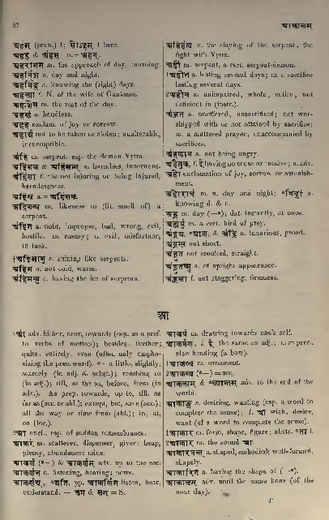
ahi ahi, is, m. (fr. rt. aṃh; according to Sāy. fr. rt. han with ā prefixed and shortened, ‘one that destroys on all sides’), a snake; the serpent of the sky, the demon Vṛtra; a cloud; water; lead; a traveller; the sun; a N. of Rāhu, the ascending node; the navel; [cf. agha and aṃhu, pp. 1, 6; Lat. anguis; Gr. ἔχι-ς, ἔχιδνα, ἔγχε-λυς and ὄφις Lith. ungury-s; Russ. ûgorj; Armen. ôz; Germ. unc; Mod. Gr. ἀχέλι]
Petersburger 1855 substantive masculine · Word type unspecified
Original text · German · substantive masculine
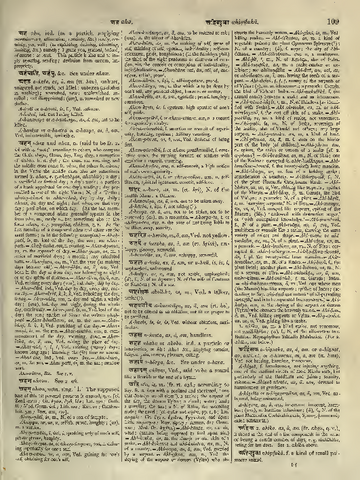
áhi m. Uṇ. 4,139 (ahí, vgl. P. 6,2,48, Sch.). 1〉 Schlange, Natter, ἔχις AK. 1,2,1,7. AK. 3,4,3,24. H. 1302. H. an. 2,596. MED. h. 2. HĀR. 15. f. ahi oder ahī́ (s. d.) gaṇa vahvādi zu P. 4,1,45. ahi̱rna jū̱rṇāmatì sarpati̱ tvacàm ṚV. 9,86,44. ṚV. 7,104,9. VS. 6,12. AV. 4,3,4. AV. 6,12,1. AV. 6,56,1. AV. 6,67,2. AV. 6,139,5. ŚAT. BR. 2,3,1,6. ŚAT. BR. 2,5,2,47. ŚAT. BR. 4,4,5,23. M. 2,79. M. 3,9. M. 11,68. M. 11,228. M. 11,240. M. 12,57. HIT. Pr. 27. HIT. Pr. I, 158. ŚĀK. 183. ahayaḥ saviṣāḥ sarve nirviṣā duṇḍubhāḥ KATHĀS. 14,84. ahijihmatā R. 2,43,2. ahinakulam die Schlange und das Ichneumon P. 2,4,9, Sch. — die Schlange am Himmel, der Dämon Vṛtra (deshalb NAIGH. 1,10 durch Wolke, NAIGH. 1,22 durch Wasser erklärt) AK. 3,4,240. TRIK. 2,8,22. H. an. MED. ahànnenaṃ prathama̱jāmahī̀nām ṚV. 1,32,3. ṚV. 1,32,5. vṛ̱traṃ yadìndra̱ śava̱sāvàdhī̱rahìm ṚV. 51,4. ṚV. 52,10. ṚV. 80,1. ṚV. 103,2. ṚV. 1,7. ṚV. 187,6. ahìma̱paḥ pàri̱ṣṭhāṃ ha̱tho vṛ̱tram ṚV. 6,72,3. Ueber ahirbudhnyaḥ s. u. budhnya. — 2〉 Nabel (udarāvarta) HĀR. 263. — 3〉 Reisender. — 4〉 Sonne. — 5〉 Rāhu ANEKĀRTHADHV._im_ŚKDR. — 6〉 vapra H. an. Blei WILS.
Original text · German · Word type unspecified
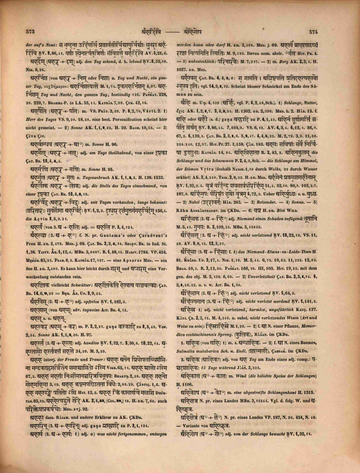
ahi 7〉 N. pr. eines Ṛṣi Ind. St. 3,204,b. auśanasa Ind. St. 460,1. aheḥ paidvasya sāma Ind. St. 204,b. — Vgl. mahāhi.
Böhtlingk 1879 substantive masculine
Original text · German · substantive masculine
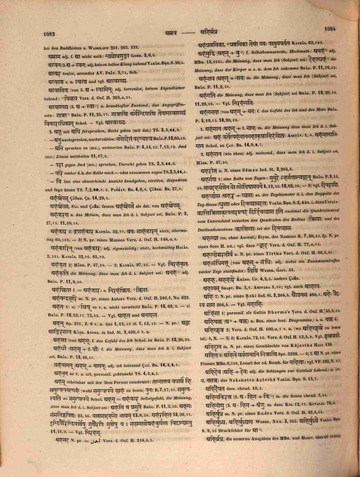
áhi m. — 1〉 Schlange, Natter. — 2〉 die Schlange am Himmel, der Dämon Vṛtra. — 3〉 *Wolke. — 4〉 *Wasser. — 5〉 *die Sonne. — 6〉 *Bein. Rāhuʼs. — 7〉 *Reisender. — 8〉 *Nabe. — 9〉 *Blei. — 10〉 Bez. der Zahl acht GAṆIT. 2,10. — 11〉 N. pr. verschiedener Ṛṣi.
Apte 1890 adjective · substantive masculine
Original text · English · adjective · substantive masculine
ahi a. Killing; pervaded, pervading. — hiḥ [āhaṃti, ā-hana-iṇa sa ca ḍit āṅo thasvaśca Uṇ. 4. 137] 1 A serpent, snake; ahayaḥ saviṣāḥ sarve ([Page 0218-c]) nirviṣā ḍuṃḍumāḥ smṛtāḥ Ks. 14. 84. 2 The sun. 3 The planet Rāhu. 4 A traveller. 5 The demon Vṛtra. 6 A wicked man. 7 A cheat, rogue. 8 The Aśleṣā Nakṣatra. 9 Water. 10 Earth. 11 A milch cow. 12 Lead. 13 The navel. 14 A cloud. — hī (du.) Heaven and earth. [cf., L. anguis, Gr. ehis]. Comp. — arṣu a. gliding away like a snake, not facing the enemy. — kāṃtaḥ air, wind. — koṣaḥ the slough of a snake. — kṣatraḥ, -kṣetraḥ N. of a country in the east. — gopa a. Ved. guarded by a serpent. — ghnaṃ the slaying of the serpent or demon Vṛtra. — ghnī m. killing snakes. — chatraḥ 1 N. of a country, conquered by Arjuna and given to Droṇa. 2 a kind of vegetable poison. — (trā) 1 sugar. 2 the plant meṣaśṛṃgī. 3 N. of the city ahicchatra. — chatrakaṃ a mushroom. — jit m. 1 N. of Kṛṣṇa (the slayer of the serpent Kāliya). 2 N. of Indra. — jihvā N. of a plant (nāgajihvālatā). — tuṃḍikaḥ [ahestuṃḍaṃ mukhaṃ tena dīvyati ṭhan, ṭhañ vā] a snake-catcher, conjurer, juggler. — dviṣ, -druh, — māra, -ripu, -vidviṣ m. 1 N. of Garuḍa. 2 an ichneumon. 3 a peacock. 4 Indra. 5 Kṛṣṇa; Ki. 4. 27; Śi. 1. 41. — nakulaṃ snakes and ichneumons. — nakulikā [ahinakulayorvairam vun P. II. 4. 9] the natural antipathy between a serpent and an ichneumon. — nāmabhṛt m. N. of Baladeva. — nirmokaḥ, -nivlayanī the slough of a snake. — patākaḥ a kind of snake (not venomous). — patiḥ 1 ‘the lord of snakes’, Vāsuki. 2 any large serpent. — putrakaḥ a kind of boat (serpent-shaped). — pūtanaṃ, -nā a kind of disease. — phenaḥ -naṃ ‘the saliva or venom of a snake’, opium. — bu (vu) dhnaḥ, — vradhnaḥ, ahirbudhnaḥ -dhnyaḥ 1 one of the Rudras. 2 Śiva. 3 Uttarābhādrapadā Nakṣatra. 4 a name of a Muhūrta. ˚devatā the twenty-sixth lunar mansion. — bhayaṃ 1 the fear of a lurking snake. 2 apprehension of treachery, danger arising from one's own allies; ˚dā [ahiṃ bhayaṃ dyati khaṃḍayati do ka] N. of the plant bhūmyāmalakī. — bhānu a. Ved. 1 shining like serpents. 2 causing the motion of the sun (sūryagatihetu) as the wind; an epithet of the Maruts. — bhuj m. 1 N. of Garuḍa. 2 a peacock. 3 ([Page 0219-a]) ichneumon. 4 N. of a plant. — bhṛt m. Śiva. — manyu a. 1 having destructive anger or with unimpaired knowledge. 2 enraged like serpents; epithet of the Maruts. — (nyuḥ) the anger of a serpent. — mardanī N. of a plant (gaṃdhanākulī). — māya a. having multiform or versatile forms like a snake, showing a variety of colour and shape, such as Vṛtra. — mārakaḥ, -medakaḥ 1 N. of a plant (arimeda). 2 = ˚dviṣ q. v. — latā 1 the betel-nut plant. 2 N. of a plant (gaṃdhanākulī.) — śuṣma a. having all-pervading strength; ˚satvan Ved. one whose men hiss like serpents. — saktha a. having a long thigh like a serpent. — (kthaḥ) N. of a country. — hatyaṃ Ved. the slaying of the serpent or demon Vṛtra. — han a. killing serpents or Vṛtra, Garuḍa, Indra.
Cappeller 1887 substantive masculine
Original text · German · substantive masculine
áhi m. Schlange, bes. Vṛtra.
Burnouf 1866 substantive masculine
Original text · French · substantive masculine
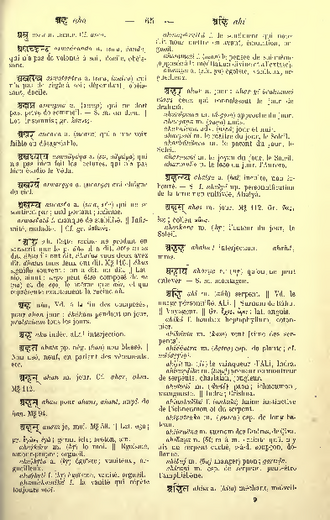
ahi ahi m. (aṃh) serpent. Vd. le nuage personnifié, Ahi. Surnom de Rāhu. Voyageur. Gr. ἔχις, ὄφις; lat. anguis. ahikā f. bombax heptaphyllum, cotonnier. ahikānta m. (kam) vent [aimé des serpents]. ahicchatra m. (chatra) esp. de plante; cf. meṣaśṛṅgī. ahijit m. (ji) le vainqueur d'Ahi, Indra. ahituṇḍika m. (tuṇḍ) preneur ou montreur de serpents, charlatan, jongleur. ahidviṣ m. (dviṣ) paon; ichneumon, mangouste. Indra; Kṛṣṇa. ahinakulikā f. (nakula) haine instinctive de l'ichneumon et du serpent. ahiputraka m. (putra) esp. de long bateau. ahibradhna m. surnom des Rudras, de Śiva. ahibhaya n. (bhī) m à m. crainte qu'il n'y ait un serpent caché, c-à-d. soupçon, défiance. ahibhuj m. (bhuj manger) paon; garuḍa. ahīraṇi m. esp. de serpent, peut-être l'amphisbène.
Occurrences in source texts (1)
HP 1 occurrence
Continue with AYI Free
Image source: AYI archive.