

asura असुर – Asura; demon
adjective · substantive masculine · Word type unspecified
Dictionary sources
AYI dictionary substantive masculine
Cappeller 1891 adjective
Original text · English · adjective
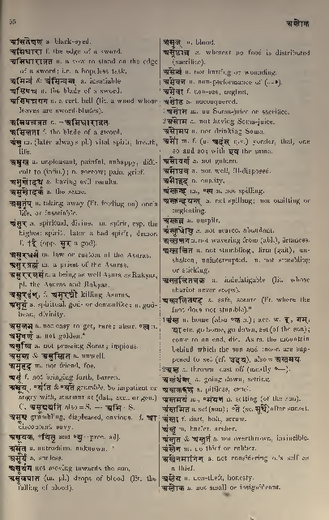
ásura ·a. spiritual, divine. m. spirit, esp. the highest spirit, later a bad spirit, demon f. ī† (opp. sura a god).
Monier-Williams 1872 adjective · Word type unspecified
Original text · English · adjective
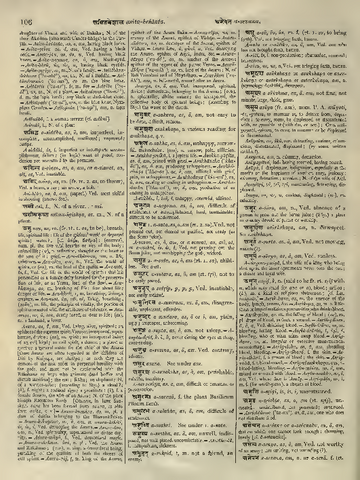
Asura, as, ā, am, Ved. living, alive, spiritual; an epithet of the supreme spirit; Varuṇa; incorporeal, super- human, divine; (as), m. spirit; an incorporeal being of an evil kind; an evil spirit, a demon; a ghost or spectre; a general name for the chief of the Asuras [these Asuras are often regarded as the children of Diti by Kaśyapa, see daitya; as such they are demons of the first order in perpetual hostility with the gods, and must not be confounded with the Rākṣasas or imps who animate dead bodies and disturb sacrifices]; the sun; Rāhu; an elephant; N. of a warrior-tribe; (according to Sāy.) a cloud ?; (ā), f. night; a zodiacal sign; a prostitute; (ī), f. a female demon, the wife of an Asura; N. of the plant Sinapis Racemosa Roxb. [Observe, in later San- skṛt, sura has been formed from asura, as sita from asita, q. v.]
Original text · English · Word type unspecified
asura asura. See under asu.
Petersburger 1855 adjective · substantive masculine · Word type unspecified
Original text · German · adjective · substantive masculine
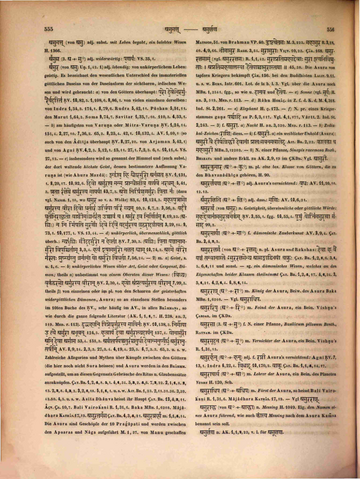
ásura (von asu) Uṇ. 1,42. 1〉 adj. lebendig; von unkörperlichem Leben: geistig. Es bezeichnet den wesentlichen Unterschied des immateriellen göttlichen Daseins von der Daseinsform der sichtbaren, irdischen Wesen und wird gebraucht: a〉 von den Göttern überhaupt: pa̱ro de̱vebhi̱rasùrai̱ryadastì ṚV. 10,82,5. ṚV. 1,108,6. ṚV. 8,86,1. von vielen einzelnen derselben: von Indra ṚV. 1,54,3. ṚV. 1,174,1. ṚV. 8,79,6. Rudra ṚV. 5,42,11. Pūṣan ṚV. 5,51,11. den Marut ṚV. 1,64,2. Soma ṚV. 9,74,7. Savitar ṚV. 1,35,7. ṚV. 1,35,10. ṚV. 1,110,3. ṚV. 4,53,1. — b〉 am häufigsten von Varuṇa oder Mitra — Varuṇa ṚV. 1,24,14. ṚV. 1,151,4. ṚV. 2,27,10. ṚV. 7,36,2. ṚV. 7,65,2. ṚV. 8,25,4. ṚV. 8,42,1. ṚV. 10,132,4. AV. 1,10,1 (so auch von den Āditya überhaupt ṚV. 8,27,20. von Aryaman ṚV. 5,42,1) und von Agni ṚV. 4,2,5. ṚV. 5,12,1. ṚV. 5,15,11. ṚV. 5,27,1. ṚV. 7,2,3. ṚV. 7,6,1. ṚV. 10,11,6. VS. 27,12. — c〉 insbesondere wird so genannt der Himmel und (auch subst.) der dort waltende höchste Geist, dessen bestimmtere Auffassung Varuṇa ist (wie Ahura Mazdā): indrā̀ya̱ hi dyaurasùro̱ anàmnata ṚV. 1,131,1. ṚV. 8,20,17. ṚV. 10,92,6. di̱vo asùrāya̱ manma̱ prāndhā̀ṃsīvi̱ yajyàve bharadhvam ṚV. 5,41,3. vra̱tā ràkṣethe̱ asùrasya mā̱yayā̀ ṚV. 5,63,7. a̱po niṣìñca̱nnasùraḥ pi̱tā nàḥ (dazu vgl. NAIGH. 1,10, wo asura so v. a. Wolke) ṚV. 83,6. ṚV. 10,124,3. ma̱haspu̱trāso̱ asùrasya vī̱rā di̱vo dha̱rtārà urvi̱yā parì khyan ṚV. 10,2. ṚV. 6,7,2. ṚV. 3,56,3. yadī̀ ghṛ̱tebhi̱rāhuto̱ vāśī̀ma̱gnirbharàta̱ uccāvà ca . asùra iva ni̱rṇijàm ṚV. 8,19,23. (agniḥ) na ni mìṣati su̱raṇò di̱ve yadasùrasya ja̱ṭharā̱dajā̀yata ṚV. 3,29,14. ṚV. 9,73,1. ṚV. 10,177,1. VS. 13,44. — d〉 unkörperlich, übermenschlich, göttlich überh.: nya1̱̀gniḥ sī̀da̱dasùro̱ na hotā̀ ṚV. 7,30,3. (agniḥ) pi̱tā ya̱jñānā̱masùro vipa̱ścitā̀m ṚV. 3,3,4. havà eṣā̱masùro nakṣata̱ dyām ṚV. 10,74,2. a̱sme vī̱ro màrutaḥ śu̱ṣmyàstu̱ janā̀nā̱ṃ yo asùro vidha̱rtā ṚV. 7,56,24. — 2〉 m. a〉 Geist, s. u. 1,c. — b〉 unkörperliches Wesen übler Art, Geist oder Gespenst, Dämon; theils α〉 unbestimmt von einem Obersten dieser Wesen: (vidhya) vṛkàdvaraso̱ asùrasya vī̱rān ṚV. 2,30,4. ha̱tho àpra̱tyasùrasya vī̱rān ṚV. 7,99,5. theils β〉 von einzelnen oder im pl. von den Schaaren der geisterhaften widergöttlichen Dämonen, Asura; so an einzelnen Stellen besonders im 10ten Buche des ṚV., sehr häufig im AV., in allen BRĀHMAṆA, so wie durch die ganze folgende Literatur (AK. 1,1,1,7. H. 238. H. an. 3,519. MED. r. 113). dṛ̱ḻhāni̱ pipro̱rasùrasya mā̱yinàḥ ṚV. 10,138,3. nirmā̀yā u̱ tye asùrā abhūvan ṚV. 10,124,5. ha̱tvāyà de̱vā asùrā̱nyadāyàn ṚV. 10,157,4. yonāsùrām̐ a̱bhi de̱vā asā̀ma ṚV. 53,4. ṚV. 151,3. athā̀tarpayacca̱turàścatu̱rdhā de̱vānmanu̱ṣyā̱m̐3̱̀ asùrānu̱tarṣīn AV. 8,9,24. AV. 2,3,3. AV. 2,27,3. AV. 2,3,4. AV. 4,19,4. AV. 4,23,5. AV. 6,7,2. AV. 6,7,3. AV. 6,65,3. u. s. w. Zahlreiche Allegorien und Mythen über Kämpfe zwischen den Göttern (die hier noch nicht Sura heissen) und Asura werden in den BRĀHMM. aufgestellt, um an diesen Gegensatz Gebräuche des Ritus u. Glaubenssätze anzuknüpfen. ŚAT. BR. 1,2,4,8. ŚAT. BR. 1,2,5,1. ŚAT. BR. 1,4,1,34. ŚAT. BR. 1,5,3,2. ŚAT. BR. 1,2,4,6. ŚAT. BR. 1,7,2,22. ŚAT. BR. 2,1,1,8. ŚAT. BR. 2,1,2,13. ŚAT. BR. 2,2,2,8. ŚAT. BR. 2,4,3,2. ŚAT. BR. 3,2,1,18. ŚAT. BR. 5,1,1,1. u. s. w. AIT. BR. 1,23. AIT. BR. 2,11. AIT. BR. 2,31. AIT. BR. 2,36. AIT. BR. 3,39. AIT. BR. 3,42. AIT. BR. 3,50. AIT. BR. 4,5. u. s. w. Asita Dhānva heisst ihr Haupt ŚAT. BR. 13,4,3,11. ĀŚV. ŚR. 10,7. Bali Vairocani R. 1,31,6. Baka MBH. 1,6208. Māyādhara KATHĀS. 17,19. asuratamása ŚAT. BR. 4,3,4,21. asurabrahmá m. ŚAT. BR. 1,1,4,14. Die Asura sind Geschöpfe der 10 Prajāpati und werden zwischen den Apsaras und Nāga aufgeführt M. 1,37. von Manu geschaffen MATSYOP. 51. von Brahman VP. 40. duṣṭacetasaḥ M. 3,225. mahāsura R. 3,18,40. R. 4,9,66. bhīmāsura RAGH. 3,54. surāsurāḥ VIŚV. 10,23. ŚĀK. 168. asurarakṣasām (vgl. asurarakṣasa) R. 1,1,42. surāpratigrahāddevāḥ surā ityabhiviśrutāḥ . apratigrahaṇāttasyā daiteyāścāsurāstathā .. R. 1,45,38. Die Asura von tapfern Kriegern bekämpft ŚĀK. 156. bei den Buddhisten LALIT. 9. LALIT. 11. u. s. w. BURN. Intr. 601. Lot. de la b. l. 3. Vgl. über die Asura noch MBH. 1,2541. fgg., so wie u. dānava und daiteya. — c〉 Sonne (vgl. sūrya) H. an. 3,519. MED. r. 113. — d〉 Rāhu HORĀŚ._in_Z. f. d. K. d. M. 4,318. Ind. St. 2,261. — e〉 Elephant H. ś. 175. — f〉 N. pr. eines Kriegerstammes gaṇa parśvādi zu P. 5,3,117. Vgl. P. 4,1,177, Vārtt. 2. Ind. St. 2,243. — 3〉 f. asurā. a〉 Nacht H. an. 3,520. MED. r. 113. — b〉 Zodiakal-Zeichen (rāśi) diess. — 4〉 f. asurī. a〉 ein weiblicher Unhold (Asura): asurī vai dīrghajihvī devānāṃ prātaḥsavanamavāleṭ AIT. BR. 2,22. kālakā ca mahāsurī MBH. 3,12203. — b〉 N. einer Pflanze, Sinapis racemosa Roxb., BHARATA und andere Erkll. zu AK. 2,9,19_im_ŚKDR. Vgl. āsurī.
Original text · German · Word type unspecified
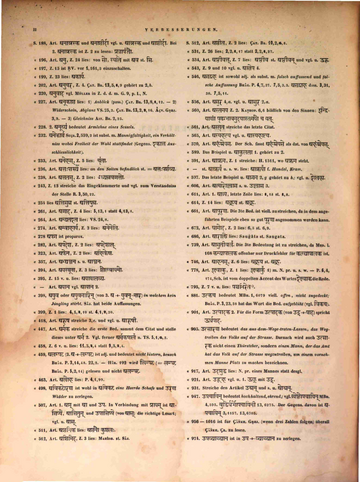
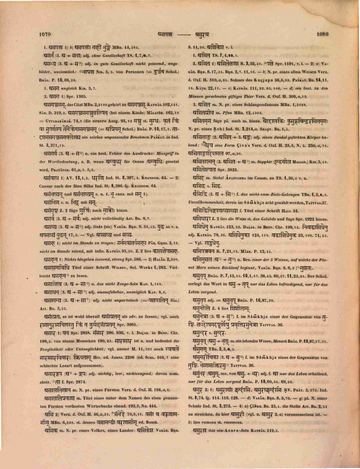
asura [vgl. [1:556]] 4,a. vgl. u. āsura 2,a. (revision)
Original text · German · Word type unspecified
asura 2〉b〉 asurāṇāṃ chandāṃsi, asuracchandāṃsi ṚV. PRĀT. 3,275. Ind. St. 8,74. fg. Ind. St. 8,114. Ind. St. 8,116. fg. Ind. St. 8,128. — d〉 VARĀH. BṚH. S. 5,79. — g〉 pl. N. einer Schule Ind. St. 3,275. — 4〉a〉 ŚĀṄKH. BR. 23,4. die Stelle AIT. BR. 2,22 zu streichen, da hier āsurī (vgl. u. āsura 2,a) vorauszusetzen ist. — b〉 lies ramosa st. racemosa.
Original text · German · Word type unspecified
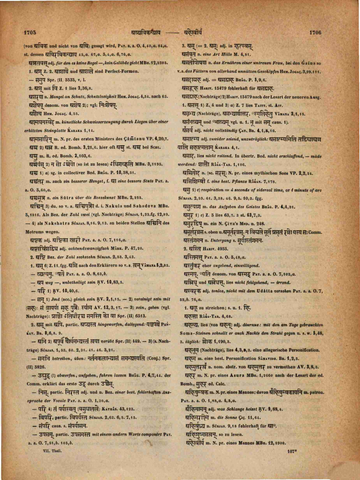
asura 1〉c〉 Z. 5 lies 63,7. 3 st. 63,7,3.
Böhtlingk 1879 adjective · substantive masculine
Original text · German · adjective · substantive masculine
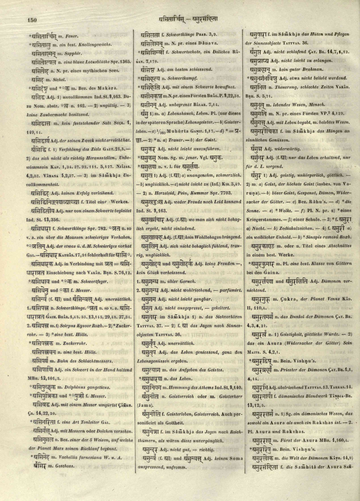
ásura — 1〉 Adj. geistig, unkörperlich, göttlich. — 2〉 m. — a〉 Geist, der höchste Geist (insbes. von Varuṇa). — b〉 böser Geist, Gespenst, Dämon, Widersacher der Götter. — c〉 Bez. Rāhuʼs. — d〉 *die Sonne. — e〉 *Wolke. — f〉 Pl. N. pr. — α〉 *eines Kriegerstammes. — β〉 einer Schule. — 3〉 *f. asurā — a〉 Nacht. — b〉 Zodiakalzeichen. — 4〉 f. asurī — a〉 ein weiblicher Unhold. — b〉 *Sinapis ramosa Roxb.
Apte 1890 adjective · substantive masculine
Original text · English · adjective · substantive masculine
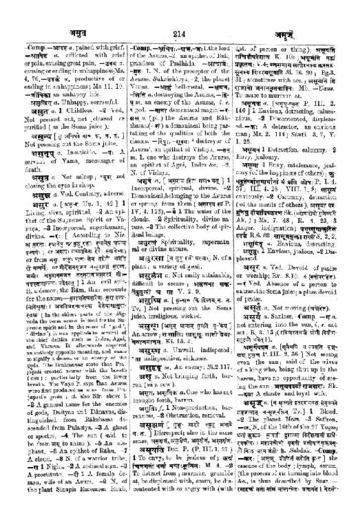
asura a. [asu-ra Uṇ. 1. 42] 1 Living, alive, spiritual. 2 An epithet of the Supreme Spirit or Varuṇa. 3 Incorporeal, superhuman, divine. — raḥ [According to Nir. a suratāḥ sthāneṣu na suṣṭhu ratāḥ sthāneṣu capalā ityarthaḥ; or astāḥ pracyāvitā devaiḥ sthānebhyaḥ; or from asu; asuḥ prāṇaḥ tena tadvaṃto bhavaṃti ro matvarthe; or sordevānasṛjata tatsurāṇāṃ suratvaṃ, asoḥ asurānasṛjata tadasurāṇāmasuratvaṃ; soḥ = praśastādātmanaḥ pradeśāt] 1 An evil spirit, a demon; the Rām. thus accounts for the name:-surāpratigrahāddevāḥ surā ityabhiviśrutāḥ . apratigrahaṇāttasyā daiteyāścāsurāstathā [In the oldest parts of the Ṛgveda the term asura is used for the Supreme spirit and in the sense of ‘god’, ‘divine’; it was applied to several of the chief deities such as Indra, Agni, and Varuṇa. It afterwards acquired an entirely opposite meaning, and came to signify a demon or an enemy of the gods. The Brāhmaṇas state that Prajāpati created asuras with the breath (asu); particularly from the lower breath. The Vāyu P. says that Asuras were first produced as sons from Prajāpati's groin; cf. also Nir. above]. 2 A general name for the enemies of gods, Daityas and Dānavas, distinguished from Rākṣasas descended from Pulastya. 3 A ghost or spectre. 4 The sun (said to be from as to shine). 5 An elephant. 6 An epithet of Rāhu. 7 A cloud. 8 N. of a warrior tribe. — rā 1 Night. 2 A zodiacal sign. 3 A prostitute. — rī 1 A female demon, wife of an Asura. 2 N. of the plant Sinapis Racemosa Roxb. ([Page 0214-b]) Comp. — adhipaḥ, -rāj, -jaḥ 1 the lord of the Asuras. 2 an epithet of Bali, grandson of Prahlāda. — ācāryaḥ, — guruḥ 1 N. of the preceptor of the Asuras, Śukrācārya. 2 the planet Venus. — āhvaṃ bell-metal. — kṣayaṇa, — kṣiti a. destroying the Asuras. — dviṣ m. an enemy of the Asuras, i. e. a god. — māyā demoniacal magic. — rakṣas n. (pl.) the Asuras and Rākṣasas. — (saṃ) a demoniacal being partaking of the qualities of both the classes. — ripuḥ, -sūdanaḥ ‘destroyer of Asuras’, an epithet of Viṣṇu. — han m. 1 one who destroys the Asuras, an epithet of Agni, Indra &c. 2 N. of Viṣṇu.
Cappeller 1887 Word type unspecified
Original text · German · Word type unspecified
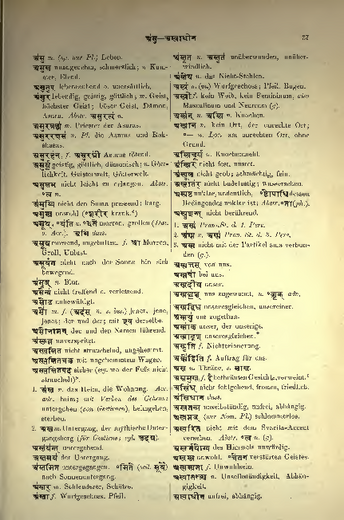
ásura lebendig, geistig, göttlich; m. Geist, höchster Geist; böser Geist, Dämon, Asura. Abstr. asuratvá n.
Burnouf 1866 adjective
Original text · French · adjective
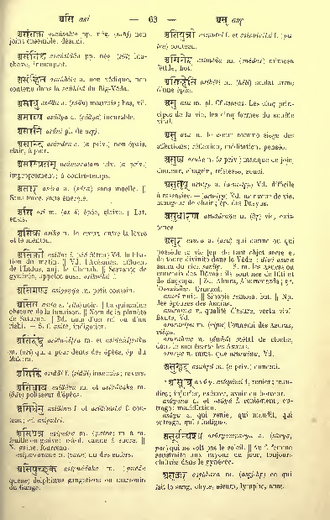
asura asura a. (asu) qui donne ou qui possède la vie [ép. de tout objet sacré et de toute divinité dans le Veda]: divo asura asura du ciel, savitṛ. — S. m. les Asuras ou ennemis des Devas: ils sont nés de Diti et de Kaśyapa. Zd. Ahura, Ahuramazda; gr. Ὀρομάσδης. Ormuzd. asurī nuit. Sinapis ramosa, bot. Np. des épouses des Asuras. asuratva n. qualité d'asura, vertu vivifiante, Vd. asuraripu m. (ripu) l'ennemi des Asuras, viṣṇu. asurāhva n. (āvhā) métal de cloche, dont le son écarte les Asuras. asurya n. mms. que asuratva, Vd.
Occurrences in source texts (1)
HTK 1 occurrence
HTK 10.34*2–38*1: Asvaṅgaśṛṅkhalā and Kumbhāntaraśṛṅkhalā 1 occurrence
Direct occurrences
-
HTK 10.37 Segment 30
Continue with AYI Free
Image source: AYI archive.