

dhara धर – as, ā or ī, am (fr. rt. dhṛ), holding, bearing, carrying
adjective · substantive masculine · substantive neuter · Word type unspecified
Dictionary sources
Cappeller 1891 adjective
Original text · English · adjective
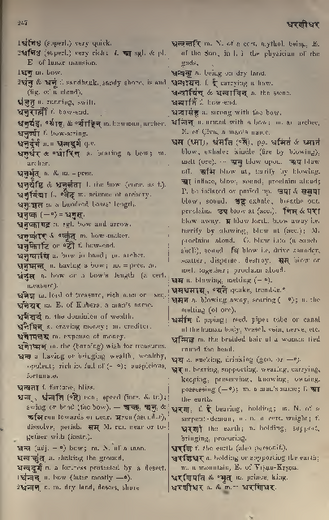
dhara ·a. bearing, supporting, wearing, carrying, keeping, preserving, knowing, owning, possessing (--°); m. a man's name; f. ā the earth.
Monier-Williams 1872 Word type unspecified
Original text · English · Word type unspecified
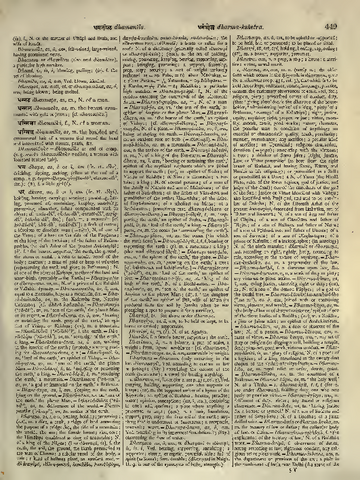
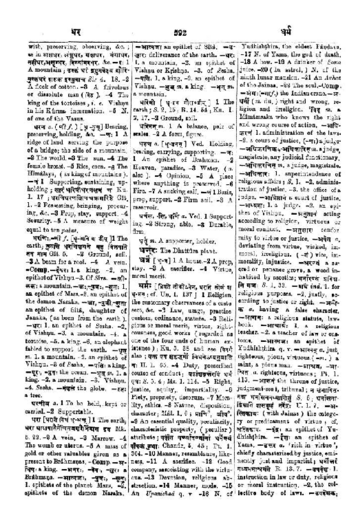
dhara dhara, as, ā or ī, am (fr. rt. dhṛ), holding, bearing, carrying; wearing; possessing, hav- ing, possessed of, containing, keeping, sustaining, preserving, observing, (often compounded with its object; cf. aṃśu-dh˚, akṣa-dh˚, aśruti-dh˚, asṛg- dh˚, kakṣa-dh˚, &c.); (as), m. a mountain [cf. kṣiti-dh˚, bhū-dh˚, mahī-dh˚]; a flock of cotton; a frivolous or dissolute man (= viṭa), N. of one of the Vasus; of a hero on the side of the Pāṇḍavas; of the king of the tortoises; of the father of Padma- prabha, the sixth Arhat of the present Ava-sarpiṇī; (ā), f. ‘the bearer, supporter,’ the earth, the ground; the uterus or womb; a vein or tubular vessel of the body; marrow; a mass of gold or heap of valuables (representing the earth and given to Brāhmans); N. of one of the wives of Kaśyapa, mother of the land and water-birds, (probably = the Earth.)
Petersburger 1855 adjective · substantive masculine · Word type unspecified
Original text · German · adjective · substantive masculine
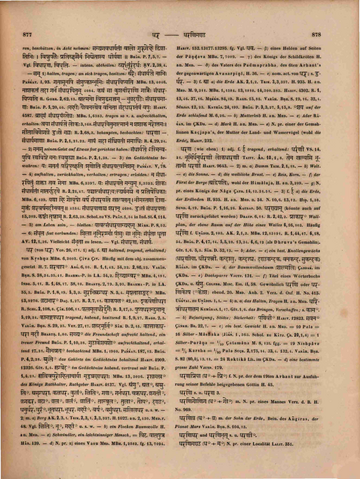
dhara (von dhar) VOP. 26,171. 1〉 adj. f. ā haltend, tragend, erhaltend; von Kṛṣṇa MBH. 6,3005. Śiva ŚIV. Häufig mit dem obj. zusammengesetzt H. 7. śaracāpa˚ ARJ. 6,10. R. 1,1,43. R. 1,54,22. R. 2,86,22. VARĀH. BṚH. S. 58,34. VARĀH. BṚH. S. 58,35. VARĀH. BṚH. S. 58,41. BRAHMA-P. in LA. 54,2. divyāmbara˚ MBH. 4,181. INDR. 5,11. R. 1,48,17. R. 1,58,10. BHARTṚ. 2,79. BHARTṚ. 3,95. BRAHMA-P. in LA. 55,5. BHĀG. P. 1. BHĀG. P. 8,19. BHĀG. P. 5,3,3. surabhisragdhara N. 5,4. mṛṣṭataptāṅgada˚ MBH. 13,5270. jaṭābhāra˚ DAŚ. 1,27. R. 3,7,11. kākapakṣa˚ R. 3,42,33. ekaveṇīdharā R. SCHL. 2,108,8. ŚĀK. 106,11. phalamūladharairdrumaiḥ R. 3,17,5. puṣpadharāndrumān R. 5,19,24. kāmarūpadharā tragend, habend, besitzend R. 1,9,27. RAGH. 2,3. VARĀH. BṚH. S. 29,25. VET. 27,17. śabdamūrti˚ SĀH. D. 2,15. kāntākāradharā nadī BHARTṚ. 1,80. sakhya˚ die Freundschaft aufrecht haltend, ein treuer Freund BHĀG. P. 1,10,28. guḍākeśayaśo˚ aufrechthaltend, erhaltend BHĀG. P. 17,31. maunavrata˚ beobachtend MBH. 1,1960. PAÑCAT. 187,12. BHĀG. P. 4,2,28. śruti˚ das Gehörte im Gedächtniss behaltend HARIV. 4909. HARIV. 12326. GĪT. 1,4. ṛgveda˚ im Gedächtniss habend, vertraut mit BHĀG. P. 1,4,21. ṛtvikpurohitācāryā mṛdubrahmadharāḥ MBH. 13,3026. rājamantra˚ des Königs Rathhalter, Rathgeber HARIV. 4137. Vgl. aṃśu˚, akṣa˚, aśruti˚, asṛgdharā, kakṣadhara, kulaṃ˚, kṣiti˚, gaṇa˚, garbhadharā, cakradhara, jagatī˚, jagaddhara, jaṭā˚, jala˚, jalaṃ˚, jātiṃ˚, tāmbūla˚, tulā˚, toya˚, daṇḍa˚, dhanurdhara, dhuraṃ˚, bhūtadharā, bhūdhara, mahī˚, varṣa˚, vasuṃdharā, saliladhara u. s. w. — 2〉 m. a〉 Berg AK. 2,3,1. TRIK. 2,3,1. TRIK. 3,3,357. H. 1027. H. an. 2,430. MED. r. 48. Vgl. kṣiti˚, bhū˚, mahī˚ u. s. w. — b〉 ein Flocken Baumwolle H. an. MED. — c〉 Schwindler, ein leichtsinniger Mensch, = viṭa, vātaputra HĀR. 139. — d〉 N. pr. α〉 eines Vasu MED. MBH. 1,2582. fg. MBH. 13,7094. HARIV. 152. HARIV. 13177. HARIV. 13295. fg. Vgl. dhava. — β〉 eines Helden auf Seiten der Pāṇḍava MBH. 7,7009. — γ〉 des Königs der Schildkröten H. an. MED. — δ〉 des Vaters des Padmaprabha. des 6ten Arhantʼs der gegenwärtigen Avasarpiṇī, H. 36. — e〉 nom. act. von dhar; s. durdhara. — 3〉 f. ā a〉 die Erde AK. 2,1,2. TRIK. 3,3,357. H. 935. H. an. MED. M. 9,311. MBH. 1,1584. MBH. 13,1810. MBH. 14,300. MBH. 14,383. HARIV. 4302. R. 1,13,46. R. 1,37,16. MṚCCH. 84,19. RAGH. 15,85. VARĀH. BṚH. S. 19,16. VARĀH. BṚH. S. 32,4. SŪRYAS. 12,23. KATHĀS. 24,199. BHĀG. P. 3,3,27. BHĀG. P. 5,15,8. ˚śaya auf der Erde schlafend M. 6,26. — b〉 Mutterleib H. an. MED. — c〉 Ader RĀJAN._im_ŚKDR. — d〉 Mark H. an. MED. — e〉 N. pr. einer der Gemahlinnen Kaśyapaʼs, der Mutter der Land- und Wasservögel (wohl die Erde), HARIV. 232.
Original text · German · Word type unspecified
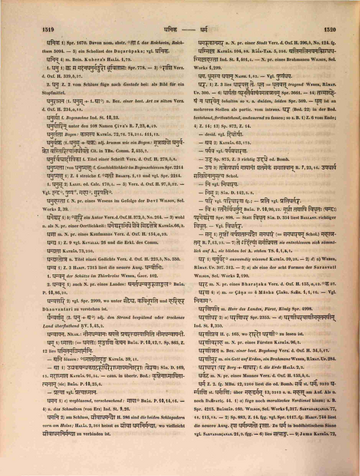
dhara 1〉 caturveda˚ auswendig wissend KATHĀS. 59,28. — 2〉d〉α〉 WEBER, RĀMAT. UP. 307. WEBER, RĀMAT. UP. 312. — 3〉a〉 als eine der acht Formen der Sarasvatī WILSON, Sel. Works 2,190.
Böhtlingk 1879 adjective · substantive masculine · substantive neuter · Word type unspecified
Original text · German · adjective · substantive masculine · substantive neuter
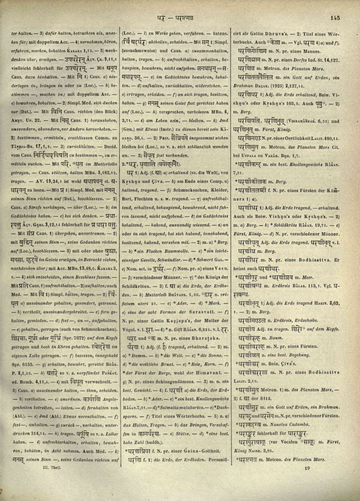
dhara — 1〉 Adj. (f. ā) — a〉 erhaltend (sc. die Welt), von Kṛṣṇa und Śiva. — b〉 am Ende eines Comp. — α〉 haltend, tragend. — β〉 Schmucksachen, Kleider, Bart, Flechten u. s. w. tragend. — γ〉 aufrechthaltend, erhaltend, behauptend, bewahrend, nicht fahren lassend, nicht aufgebend. — δ〉 im Gedächtniss behaltend, — habend, auswendig wissend. — ε〉 an oder in sich tragend, bei sich habend, innehabend, besitzend, habend, versehen mit. — 2〉 m. — a〉 *Berg. — b〉 *ein Flocken Baumwolle. — c〉 *ein leichtsinniger Geselle, Schwindler. — d〉 *Schwert GAL. — e〉 Nom. act. in durdhara. — f〉 Nom. pr. — α〉 eines Vasu. — β〉 verschiedener Männer. — γ〉 *des Königs der Schildkröten. — 3〉 f. ā — a〉 die Erde, der Erdboden. — b〉 Mutterleib BHĀVAPR. 1,56. ˚dvāra n. orificium uteri BHĀVAPR. 1,21. — c〉 *Ader. — d〉 *Mark. — e〉 eine der acht Formen der Sarasvatī. — f〉 N. pr. einer Gattin Kaśyapaʼs, der Mutter der Vögel. v. l. irā. — 4〉 *n. Gift RĀJAN. 6,224, v. l. dara.
Original text · German · Word type unspecified
dhara III. 2〉a〉 KIR. 15,12. DHARMAŚARM. 7,25. DHARMAŚARM. 10,15. [Nachtrag, Band 7]
Apte 1890 adjective · substantive masculine
Original text · English · adjective · substantive masculine
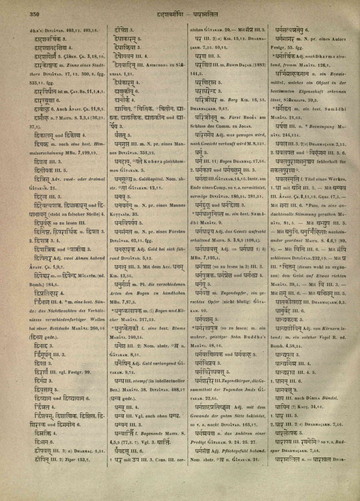
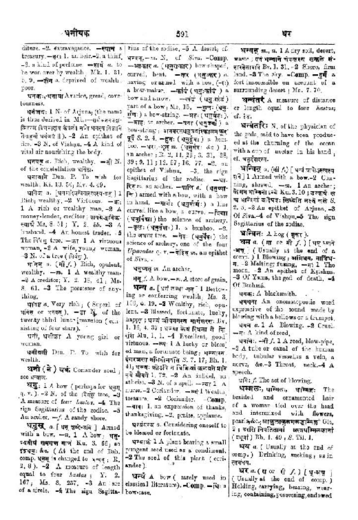
dhara a. (rā or rī f.) [dhṛ-ac] (Usually at the end of comp.) Holding, carrying, bearing, wearing, containing, possessing, endowed ([Page 0592-a]) with, preserving, observing, &c.; as in akṣadhara, aṃśudhara, gadādhara, gaṃgādhara, mahīdhara, asṛgdhara, divyāṃbaradhara, &c. — raḥ 1 A mountain; utkaṃ dharaṃ draṣṭumavekṣya śaurimutkaṃdharaṃ dāruka ityuvāca Śi. 4. 18. 2 A flock of cotton. 3 A frivolous or dissolute man (viṭa). 4 The king of the tortoises, i. e. Viṣṇu in his Kūrma incarnation. 5 N. of one of the Vasus.
Cappeller 1887 Word type unspecified
Original text · German · Word type unspecified
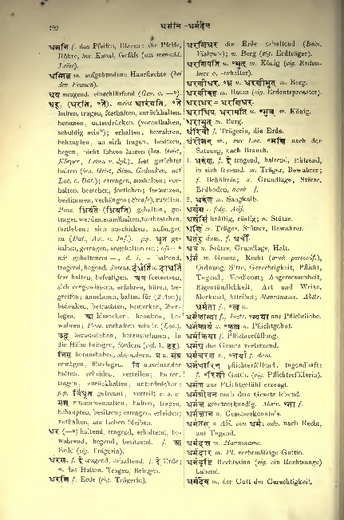
dhara (—˚) haltend, tragend, erhaltend, bewahrend, hegend, besitzend. f. ā Erde (eig. Trägerin.)
Burnouf 1866 adjective
Original text · French · adjective
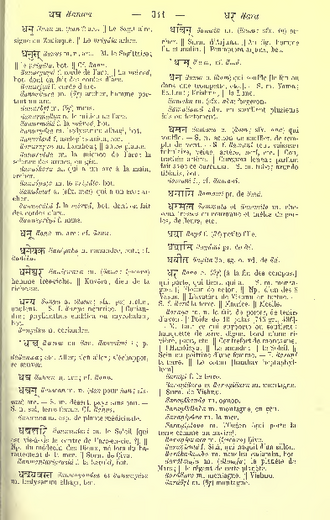
dhara dhara a. (dhṛ) [à la fin des compos.] qui porte, qui tient, qui a. — S. m. montagne. Flocon de coton. Np. d'un des 8 Vasus. L'avatāra de Viṣṇu en tortue. — S. f. dharā la terre. Matrice. Moelle. dharaṇa m. n. le fait de porter, de tenir, d'avoir. Poids de 10 palas [746 gr., 496]. — M. tout ce qui supporte ou soutient: banquette de terre, digue, bord d'une rivière, pont, etc. Contrefort de montagne. l'Himālaya. Le monde; le Soleil. Sein ou poitrine d'une femme. — F. dharaṇī la terre. Le coton [bombax heptaphyllum]. dharaṇi f. la terre. dharaṇidhara et dharaṇīdhara m. montagne. Surn. de Viṣṇu. dharaṇīkanda m. ognon. dharaṇīkīlaka m. montagne, en gén. dharaṇīpūra m. la mer. dharaṇīplava m. l'Océan [qui porte la terre comme un navire]. dharaṇīśvara m. (īśvara) Śiva. dharaṇīsutā f. Sītā, qui naquit d'un sillon. dharākadamba m. nauclea cadamba, bot. dharātmaja m. (ātmaja) la planète de Mars; le régent de cette planète. dharādhara m. montagne. Viṣṇu. dharābhṛt m. (bhṛ) montagne.
Occurrences in source texts (2)
SiSa 2 occurrences
SiSa 5.234-5.252: Tripurā-Mantra 2 occurrences
Direct occurrences
-
SiSa 5.246 Segment 12
-
SiSa 5.249 Segment 4
Continue with AYI Free
Image source: AYI archive.