

haṃsa हंस – individual soul; individual self; swan; haṃsa
substantive masculine · Word type unspecified
Dictionary sources
AYI dictionary substantive masculine
individual soul; individual self; swan; haṃsa
Cappeller 1891 Word type unspecified
Original text · English · Word type unspecified
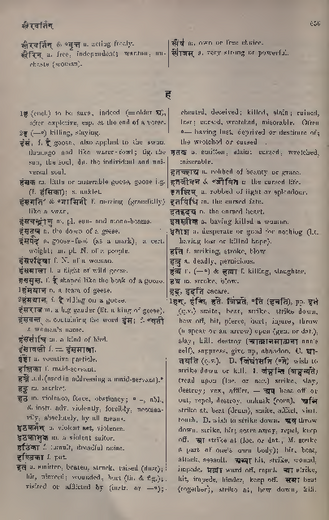
haṃsá ·f. ī goose, also applied to the swan, flamingo and like water-fowl; fig. the sun, the soul, du. the individual and universal soul.
Monier-Williams 1872 substantive masculine · Word type unspecified
Original text · English · substantive masculine
haṃsa 1 . haṃsa, as, m. (according to Uṇādi-s. III. 62. fr. rt. 1. han), a goose, gander, swan, duck, flamingo (or a kind of bird the description of which is rather poetical than real; perhaps a kind of mixture of any of these); the vehicle of Brahmā (represented as borne on a Haṃsa); the supreme Soul or universal Spirit (= brahman; according to Sāy. on Ṛg-veda IV. 40. 5. in this sense derived either fr. rt. 1. han in the sense ‘to go,’ i. e. ‘who goes eternally,’ or resolvable into ahaṃ sa, ‘I am that,’ i. e. the su- preme Being); the Jīvātman or living soul; one of the vital airs; Viṣṇu; Śiva; the Sun, (see haṃsa- vatī); a particular Mantra or mystical text [cf. haṃsa-vatī]; N. of Kāma-deva; an unambitious monarch; an ascetic or devotee of a particular order; a kind of horse, (in Naigh. I. 14. haṃsāsaḥ is enumerated among the aśva-nāmāni); envy, malice; a spiritual preceptor; a mountain; N. of a moun- tain; a buffalo; a species of the Ati-śakvarī metre; (in composition) best, excellent; pure (= viśud- dha); going before or in front; (ās), m. pl., N. of a caste supposed to live in Plaksha-dvīpa; (ī), f. a female goose; N. of a courtezan; a kind of metre (said to consist of twenty-two syllables); [cf. Gr. χήν; Lat. ans-er; Old Germ. gans; Angl. Sax. gos, gandra.]

Original text · English · Word type unspecified
2. haṃsa, Nom. P. haṃsati, &c., to act or behave like a swan.
Petersburger 1855 substantive masculine
Original text · German · substantive masculine
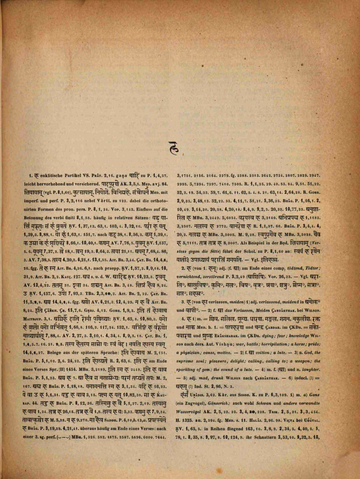
haṃsá UṆĀDIS. 3,62. Kār. aus SIDDH. K._zu_P. 6,3,109. 1〉 m. a〉 Gans (ein Zugvogel), Gänserich; auch wohl Schwan und andere verwandte Wasservögel AK. 2,5,23. AK. 2,5,25. AK. 3,4,30,228. TRIK. 2,5,31. TRIK. 3,3,454. H. 1325. H. an. 2,594. fg. MED. s. 11. HALĀY. 2,96. HALĀY. 2,98. VIŚVA_bei_UJJVAL. ṚV. 1,65,5. in Reihen fliegend ṚV. 163,10. ṚV. 3,8,9. ṚV. 2,34,5. ṚV. 4,40,5. ṚV. 5,78,1. ṚV. 8,35,8. ṚV. 9,97,8. ṚV. 10,124,9. ihr Schnattern ṚV. 3,53,10. ṚV. 9,32,3. ṚV. 10,67,3. AV. 8,7,24. AV. 11,2,24. AV. 12,1,51. TS. 5,5,21,1. als Gespann der Aśvin ṚV. 4,45,4. als ein in der Nacht waches Thier (vgl. den Kranich) AV. 6,12,1. von der Sonne (vgl. b) gesagt AV. 10,8,17. fg. (vgl. TAITT. ĀR. 2,15,8). AV. 11,4,21. AV. 13,3,14. hiraṇmaya TBR. 3,10,9,11. somàma̱dbhyo vyàpiba̱cchandàsā ha̱ṃsaḥ (wie später Milch und Wasser) śùci̱ṣat VS. 19,74. ˚mukha KĀTY. ŚR. 1,3,37. CHĀND. UP. 4,7,1. CHĀND. UP. 4,7,2 (= Sonne ŚAṂK.). ŚIKṢĀ_in_Ind. St. 4,108. ˚vāraṇagāminī M. 3,10. M. 5,12. M. 11,135. M. 12,62. MBH. 3,2090. fgg. MBH. 3,2416. matta˚ R. 2,112,15. R. 5,55,2. SUŚR. 1,205,12. SUŚR. 1,205,19. SUŚR. 1,334,4. MṚCCH. 120,17. MEGH. 24. MEGH. 58. MEGH. 74. ṚT. 1,5. RAGH. 17,25. VIKR. 95. dhṛtiṃ na labhate haṃso 'pi kūpodake Spr. (II) 1613. Spr. (II) 1787. haṃsā yathā mānasaṃ smaranti Spr. (II) 3716. na śobhate sabhāmadhye haṃsamadhye bako yathā Spr. (II) 4800. Spr. (II) 5078. yena śuklīkṛtā haṃsāḥ Spr. (II) 5537. Spr. (II) 7357. fgg. VARĀH. BṚH. S. 12,4. VARĀH. BṚH. S. 12,8. VARĀH. BṚH. S. 33,10. VARĀH. BṚH. S. 44,24. VARĀH. BṚH. S. 48,9. VARĀH. BṚH. S. 68,115. VARĀH. BṚH. S. 81,3. KATHĀS. 69,131. LA. (III) 5,3. LA. (III) 49,9. BHĀG. P. 1,5,10. BHĀG. P. 3,10,23. BHĀG. P. 3,15,38. BHĀG. P. 5,13,17. BHĀG. P. 11,4,17. ˚jātīya PAÑCAT. 76,7. PAÑCAT. 76,8. Verz. d. Oxf. H. 93,a,1. Verz. d. Oxf. H. 123,a,50. Verz. d. Oxf. H. 281,b,37. haṃso hi kṣīramādatte tanmiśrā varjayatyapaḥ ŚĀK. 155. KAP. 4,23. Spr. (II) 544. Brahmanʼs Gespann Spr. (II) 4771. BHĀG. P. 4,1,24. haṃso bhūtvātha sauvarṇastvajo nityaḥ prajāpatiḥ . sa vai paryeti lokāṃstrīn MBH. 12,10993. fgg. haṃsā dhārtarāṣṭrā devalokanivāsinaḥ HARIV. 8585. fgg. Śākyamuni als Gans VYĀḌI beim Schol. zu H. 233. am Ende eines adj. comp. f. ā MBH. 7,510. MBH. 7,4086. MBH. 9,442. RAGH. 16,56. — b〉 Bez. der Sonne (vgl. unter a) AK. 1,1,2,32. AK. 3,4,30,228. TRIK. 3,3,454. H. 96. H. an. MED. HALĀY. 1,37. VIŚVA a. a. O. MBH. 3,191. — c〉 (die wie die Gans reine und wandernde) Seele, auch die Weltseele (du. die individuelle und die Weltseele) ŚVETĀŚV. UP. 1,6. ŚVETĀŚV. UP. 3,18. ŚVETĀŚV. UP. 6,15. hiraṇyavarṇaḥ śakuno hṛdyāditye pratiṣṭhitaḥ . madgurhaṃsastejovṛṣaḥ MAITRYUP. 6,34. MAITRYUP. 6,35 (= CŪLIKOP._in_Ind. St. 9,10). Ind. St. 2,63. Ind. St. 9,14. BHĀG. P. 4,24,7. BHĀG. P. 4,28,61. BHĀG. P. 4,24,64. BHĀG. P. 4,29,80. BHĀG. P. 5,5,10. BHĀG. P. 5,7,13. BHĀG. P. 6,16,47 (parama˚). BHĀG. P. 11,17,10. Verz. d. Oxf. H. 149,b,22. Verz. d. Oxf. H. 150,a,5. mit Nārāyaṇa, Viṣṇu, Kṛṣṇa identificirt TRIK. H. an. MED. VIŚVA a. a. O. MBH. 1,2431. MBH. 12,12864. MBH. 13,6970. HARIV. 11389. HARIV. 14114. PAÑCAR. 4,3,26. PAÑCAR. 4,8,88. = virāj LIṄGA-P._bei_MUIR, ST. 4,326. = Śiva ANEKĀRTHAK._im_ŚKDR. = Kāma WILSON ohne Angabe einer Aut. — d〉 ein best. Wind im Körper H. an. MED. VIŚVA a. a. O. Ind. St. 1,385. — e〉 Bez. einer Art von Asketen H. an. MED. MBH. 13,6478. HARIV. 15469. HARIV. 15472. Verz. d. Oxf. H. 269,a,12. fgg. Verz. d. Oxf. H. 269,a,42. fgg. WEBER, RĀMAT. UP. 362. BHĀG. P. 3,12,43. BHĀG. P. 7,9,18. BHĀG. P. 11,17,9. BHĀG. P. 11,29,3. — f〉 Bez. eines unter bestimmten Constellationen geborenen Wundermenschen (mahāpuruṣa) VARĀH. BṚH. S. 69,2. VARĀH. BṚH. S. 69,7. VARĀH. BṚH. S. 69,24. VARĀH. BṚH. S. 69,26. VARĀH. BṚH. S. 69,35. — g〉 pl. Bez. der Brahmanen in Plakṣadvīpa BHĀG. P. 5,20,4. — h〉 ein genügsamer Fürst TRIK. H. an. MED. VIŚVA a. a. O. — i〉 Pferd NAIGH. 1,14 (wohl weil die Gans das Reitthier der Aśvin ist). H. ś. 177. ein best. Pferd H. an. MED. VIŚVA a. a. O. des Mondgottes VYĀḌI beim Schol. zu H. 104. — k〉 Bez. eines vorzüglichen Zugochsen VARĀH. BṚH. S. 61,17. Büffel schlechte v. l. H. 1283; vgl. haṃsakālītanaya. — l〉 Bez. einer best. Tempelform VARĀH. BṚH. S. 56,18. haṃso haṃsākāraḥ 26. — m〉 Neid, Missgunst H. an. MED. — n〉 ein best. Zauberspruch diess. Verz. d. Oxf. H. 236,b,16. — o〉 = śreṣṭha und agrataḥ sthitaḥ H. an. — p〉 Bez. zweier Metra: α〉 4 Mal – ⏑ ⏑ – – COLEBR. Misc. Ess. 2,158 (COLEBR. Misc. Ess. V, 1). — β〉 4 Mal ⏑ ⏑ ⏑ ⏑ – ⏑ ⏑ –, ⏑ – ⏑ – ⏑ – – ebend. 162 (X, 18). — — q〉 mystische Bez. des Buchstabens ha Verz. d. Oxf. H. 97,a, No. 151. — r〉 N. pr. α〉 eines Devagandharva HARIV. 14159. eines Dānava HARIV. 9141. eines Sohnes des Brahman BHĀG. P. 4,8,1. des Vasudeva BHĀG. P. 9,24,50. der Ariṣṭā MBH. 1,2718. KĀD._in_Z. d. d. m. G. 7,584. des Citragupta Verz. d. Oxf. H. 341,b, No. 799. des Brahmadatta und Heerführers des Jarāsaṃdha MBH. 2,576. MBH. 2,601. fgg. HARIV. 15404. des Arthapati HALL in der Einl. zu VĀSAVAD. 12. — PRAVARĀDHY._in_Verz. d. B. H. 59,20. Verz. d. Oxf. H. 259,a, No. 713. HALL 165. — β〉 eines Berges VP. 169. BHĀG. P. 5,16,27. Berg überh. ŚABDAR._im_ŚKDR. — 2〉 f. ī a〉 eine weibliche Gans VOP. 4,15. H. 1327. MṚCCH. 120,17. KATHĀS. 43,155. KATHĀS. 69,131. fg. CHANDOM. 114. — b〉 Bez. verschiedener Metra: α〉 4 Mal – – – –, ⏑ ⏑ ⏑ ⏑ ⏑ –, ŚRUT. 18. COLEBR. Misc. Ess. 2,159 (COLEBR. Misc. Ess. V, 12; hier fehlerhaft). — β〉 a. c: – – ⏑ – – ⏑ ⏑ – ⏑ – –; b. d: ⏑ – ⏑ – – ⏑ ⏑ – ⏑ – – Journ. of the Am. Or. S. 6,514. — γ〉 4 Mal – – – – – – – –, ⏑ ⏑ ⏑ ⏑ ⏑ ⏑ ⏑ ⏑ ⏑ ⏑ ⏑ ⏑ – COLEBR. Misc. Ess. 2,163 (COLEBR. Misc. Ess. XVII, 3). CHANDOM. 114. — c〉 N. pr. einer Tochter Bhagīrathaʼs und Gattin Kautsaʼs MBH. 13,6270. einer Sängerin RĀJA-TAR. 5,359. RĀJA-TAR. 5,386. — Vgl. eka˚, para˚, parama˚, bhakti˚, mahā˚, rakta˚, rāja˚.
Böhtlingk 1879 substantive masculine
Original text · German · substantive masculine
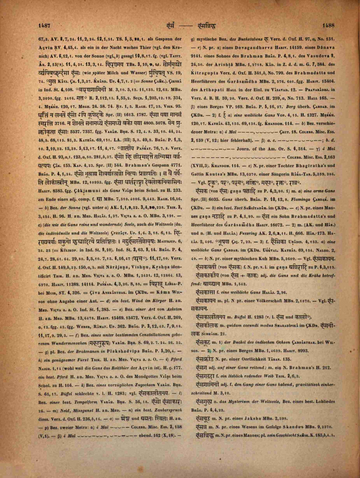
haṃsá — 1〉 m. — a〉 Gans (ein Zugvogel), Gänserich; auch wohl Schwan und andere verwandte Wasservögel. am Ende eines adj. Comp. f. ā. — b〉 *am Ende eines Comp. der Beste unter. — c〉 Bez. der Sonne. — d〉 die (wie die Gans weiss und wandernde) Seele, auch die Weltseele. Du. die individuelle und die Weltseele. Wird mit Nārāyaṇa, Viṣṇu, Kṛṣṇa, Virāj, *Śiva und *Kāma identificirt. — e〉 ein best. Wind im Körper. — f〉 Bez. einer Art von Asketen Spr. 7681. — g〉 Bez. eines unter bestimmten Constellationen geborenen Wundermenschen. — h〉 Pl. Bez. der Brahmanen in Plakṣadvīpa. — i〉 *ein genügsamer Fürst. — k〉 *Pferd. — l〉 Bez. eines vorzüglichen Zugochsen. Angeblich auch Büffel. — m〉 *Berg. — n〉 eine best. Tempelform. — o〉 ein best. Zauberspruch. — p〉 *Neid, Missgunst. — q〉 Bez. zweier Metra. — r〉 ein best. Tact S. S. S. 113. — s〉 mystische Bez. des Lautes ha. — t〉 N. pr. — α〉 eines Devagandharva. — β〉 eines Dānava. — γ〉 eines Sohnes des Brahman. — δ〉 eines Sohnes des Vasudeva. — ε〉 verschiedener anderer Person. — ζ〉 eines Rosses des Mondgottes VP.² 2,299. — η〉 eines Berges. — 2〉 f. haṃsī — a〉 eine weibliche Gans Chr. 250,21. ŚIŚ. 8,7. — b〉 Bez. verschiedener Metra. — c〉 N. pr. verschiedener Frauen.
Apte 1890 substantive masculine
Original text · English · substantive masculine
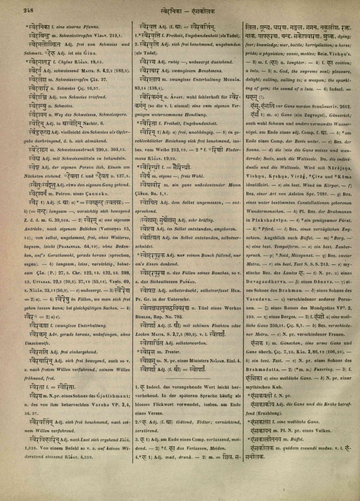
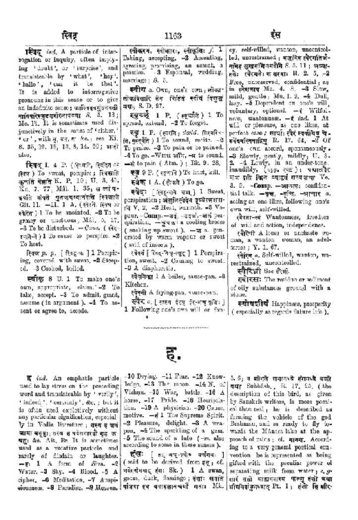
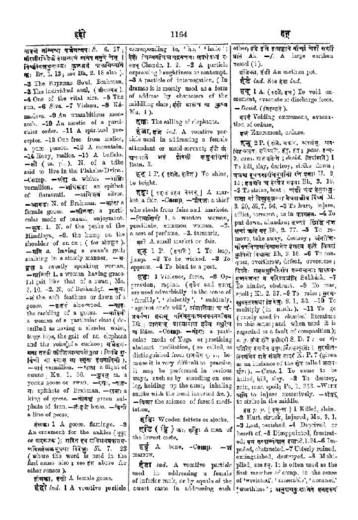
haṃsaḥ [has-ac-pṛṣo˚ varṇāgamaḥ] (said to be derived from has; cf. bhavedvarṇāgamād haṃsaḥ Sk.) 1 A swan, goose, duck, flamingo; haṃsāḥ saṃprati pāṃḍavā iva vanādajñātacaryāṃ gatāḥ ([Page 1163-1c]) Mk. 5. 6; na śobhate sabhāmadhye haṃsamadhye bako yathā Subhāṣ., R. 17. 25. (the description of this bird, as given by Sanskrit writers, is more poetical than real; he is described as forming the vehicle of the god Brahman, and as ready to fly towards the Mānasa lake at the approach of rains; cf. mānasa. According to a very general poetical convention he is represented as being gifted with the peculiar power of separating milk from water; e. g. sāraṃ tato grāhyamapāsya phalgu haṃso yathā kṣīramivāṃbumadhyāt Pt. 1; haṃso hi ([Page 1164-a]) kṣīramādatte tanmiśrā varjayatyapaḥ Ś. 6. 27; nīrakṣīraviveke haṃsālasyaṃ tvameva tanuṣe cet . viśvasminnadhunānyaḥ kulavrataṃ pālayiṣyati kaḥ Bv. 1. 13; see Bh. 2. 18 also). 2 The Supreme Soul, Brahman. 3 The individual soul, (jīvātman). 4 One of the vital airs. 5 The sun. 6 Śiva. 7 Viṣṇu. 8 Kāmadeva. 9 An unambitious monarch. 10 An ascetic of a particular order. 11 A spiritual preceptor. 12 One free from malice, a pure person. 13 A mountain. 14 Envy, malice. 15 A buffalo. — sau (m. pl.). N. of a tribe said to live in the Plakṣa-Dvīpa. Comp. — aṃśu a. white. — aṃghriḥ vermilion. — adhirūḍhā an epithet of Sarasvatī. — abhikhyaṃ silver. — ārūḍhaḥ N. of Brahman. — kāṃtā a female goose. — kīlakaḥ a particular mode of sexual enjoyment. — kūṭaḥ 1 N. of the peaks of the Himālaya. 2 the hump on the shoulder of an ox; (for aṃsakūṭa). — gati a. having a swan's gait, stalking in a stately manner. — gadgadā a sweetly speaking woman. — gāminī 1 a woman having graceful gait like that of a swan; Ms. 3. 10. 2 N. of Brahmāṇī. — tūlaḥ — laṃ the soft feathers or down of a goose. — dāhanaṃ aloe-wood. — nādaḥ the cackling of a goose. — nādinī a woman of a particular class (described as having a slender waist, large hips, the gait of an elephant and the voice of a cuckoo; gajeṃdragamanā tanvī kokilālāpasaṃyutā . nitaṃbe gurviṇī yā syāt sā smṛtā haṃsanādinī). — pādaṃ vermilion. — mālā a flight of swans; Ku. 1. 30. — yuvan m. a young goose or swan. — rathaḥ, — vāhanaḥ epithets of Brahman. — rājaḥ a king of geese. — lomaśaṃ green sulphate of iron. — lohakaṃ brass. — śreṇī a line of geese.
Cappeller 1887 Word type unspecified
Original text · German · Word type unspecified
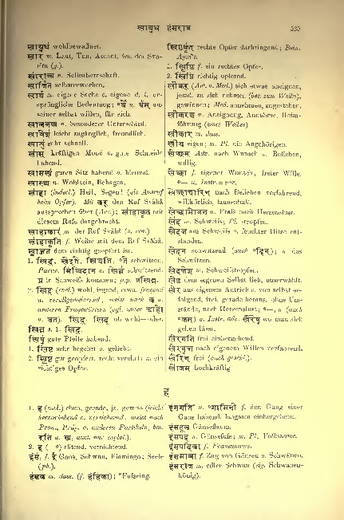
haṃsá, f. ī Gans, Schwan, Flamingo; Seele (ph.).
Burnouf 1866 substantive masculine
Original text · French · substantive masculine
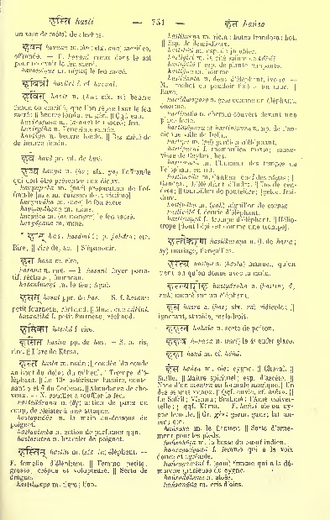
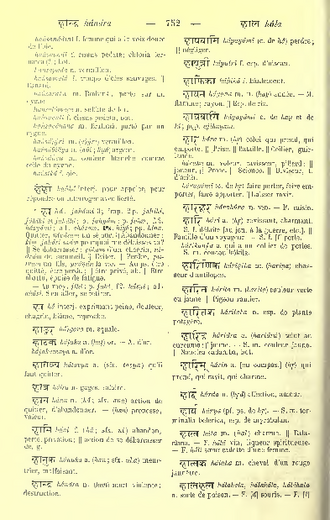
haṃsa haṃsa m. oie; cygne. Cheval. Buffle. Maître spirituel; esp. d'ascète. Nom d'un mantra ou formule magique. Un des esprits vitaux. Qqf. envie, cf. hiṃsā. Le Soleil: Viṣṇu; Brahmā; l'Ame universelle; qqf. Kāma. — F. haṃsī oie ou cygne femelle. Gr. χήν; germ. gans; lat. anser; etc. haṃsaka m. le flamant. Sorte d'ornement pour les pieds. haṃsakūṭa m. la bosse du bœuf indien. haṃsagadgadā f. femme qui a la voix douce et agréable. haṃsagāminī f. (gam) femme qui a la démarche gracieuse du cygne. haṃsadāhana n. aloës. haṃsanāda m. cris d'oies. [Page752-1] haṃsanādinī f. femme qui a la voix douce de l'oie. haṃsapadī f. cissus pedata; clitoria ternatea (?); bot. haṃsapāda n. vermillon. haṃsamālā f. troupe d'oies sauvages. Canard. haṃsaratha m. Brahmā, porté sur un cygne. hansalomaśa n. sulfate de fer. haṃsavatī f. cissus pedata, bot. haṃsavāhana m. Brahmā, porté par un cygne. haṃsāṅghri m. (aṅghri) vermillon. haṃsābhikhya n. (abhi; khyā) argent. haṃsāṃśu m. couleur blanche comme celle du cygne. haṃsikā f. oie.
Occurrences in source texts (8)
HTK 2 occurrences
SiSa 3 occurrences
Continue with AYI Free
Image source: AYI archive.