

hariṇa हरिण – deer; antelope
adjective · substantive masculine · Word type unspecified
Dictionary sources
AYI dictionary substantive masculine
deer; antelope
Cappeller 1891 adjective
Original text · English · adjective
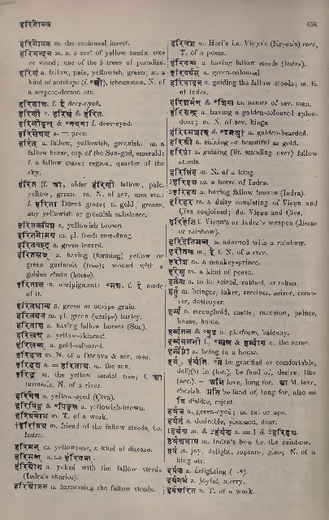
hariṇá ·a. fallow, pale, yellowish, green; m. a kind of antelope (f. °ṇī́), ichneumon, N. of a serpent-demon etc.
Monier-Williams 1872 adjective
Original text · English · adjective
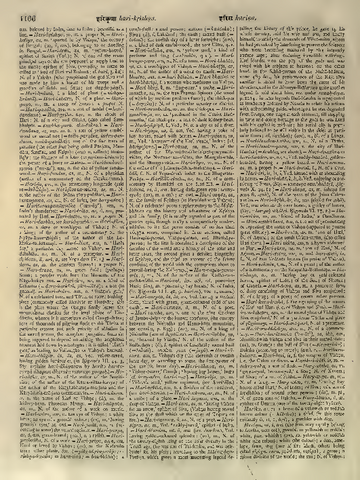
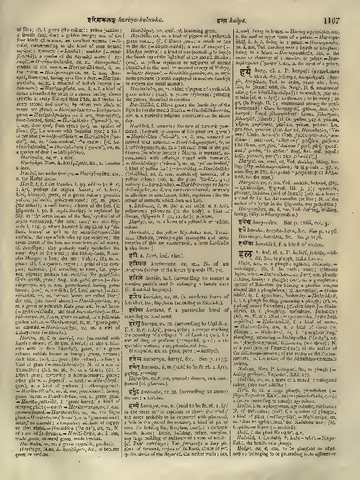
Hariṇa, as, ī, am (the fem. may equally belong to harita, next col.), greenish or yellowish or reddish white, pale, whitish; (as), m. yellowish or reddish white (the colour); white (the colour); a deer, ante- lope, fawn, stag (one of five kinds, others being called ṛṣya, ruru, pṛṣata, mṛga); a goose; a minor division of the world; the sun; N. of Viṣṇu; of Śiva; (ī), f. green (the colour); yellow jasmine; a female deer, doe; a golden image; one of the four kinds of women, an excellent woman (= ci- triṇī, corresponding to the kind of man termed mṛga); turmeric (= haritā); madder (= mañ- jiṣṭhā); a species of the Aty-aṣṭi metre (= ta- ruṇī).
Petersburger 1855 adjective · substantive masculine
Original text · German · adjective · substantive masculine
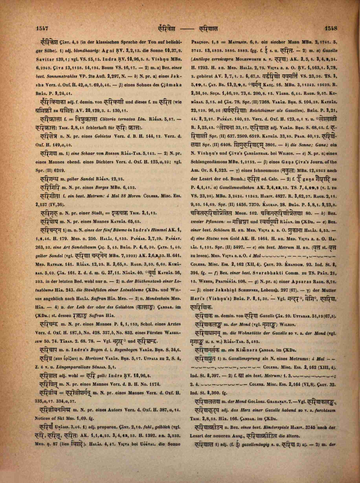
hariṇá UṆĀDIS. 3,46. 1〉 adj. proparox. ŚĀNT. 2,10. fahl, gelblich (vgl. hari, harit, harita) AK. 1,1,4,23. AK. 3,4,13,53. H. 1392. H. an. 3,233. MED. ṇ. 87 (lies viśade). HALĀY. 4,47. VIŚVA_bei_UJJVAL. die Sonne PRAŚNOP. 1,8 = MAITRYUP. 6,8. ein siecher Mann MBH. 2,1741. MBH. 5,3742. MBH. 13,4828. MBH. 13,5886. MBH. 13,5889. fgg. f. ī s. u. harita. — 2〉 m. a〉 Gazelle (Antilope cervicapra MOLESWORTH s. v. haraṇa) AK. 2,5,8. AK. 3,4,3,24. H. 1293. H. an. MED. HALĀY. 2,75. VIŚVA a. a. O. ṚV. 1,163,1. ṚV. 5,78,2. gehörnt AV. 3,7,1. AV. 3,7,2. AV. 6,67,3. yaddhàri̱ṇo yava̱mattì VS. 23,30. TS. 5,5,19,1. ŚAT. BR. 13,2,9,8. ˚carman KAUŚ. 16. MBH. 3,11342. MBH. 3,15629. R. 2,34,50. SUŚR. 1,46,20. SUŚR. 1,73,6. SUŚR. 1,200,8. SUŚR. 1,46,15. VĀGBH. 6,44. RAGH. 9,57. KUMĀRAS. 5,15. ad ŚĀK. 78. Spr. (II) 7368. VARĀH. BṚH. S. 104,28. KATHĀS. 22,128. KATHĀS. 96,26 (arthahariṇāḥ Reichthümer als Gazellen). BHĀG. P. 3,21,44. BHĀG. P. 8,2,21. PAÑCAT. 140,23. Verz. d. Oxf. H. 123,a,1. Verz. d. Oxf. H. 123,a,v. u. ˚lolākṣī R. 5,25,45. ˚locanā R. 5,33,17. hariṇākṣa adj. VARĀH. BṚH. S. 68,65. f. hariṇākṣī Spr. (II) 637. Spr. (II) 2509. Spr. (II) 6519. KATHĀS. 33,88. PRAB. 40,12. hariṇekṣaṇā Spr. (II) 6408. śiśuhariṇadṛś Spr. (II) 3801. — b〉 die Sonne; Gans; ein N. Viṣṇuʼs und Śivaʼs ŚABDĀRTHAK._bei_WILSON. — c〉 N. pr. α〉 eines Schlangendämons MBH. 1,2152. — β〉 eines Gaṇa Śivaʼs Journ. of the Am. Or. S. 6,523. — γ〉 eines Ichneumons (nakula) MBH. 12,4942 nach der Lesart der ed. Bomb.; harita ed. Calc. — 2〉 f. ī́ gaṇa gaurādi zu P. 4,1,41. a〉 Gazellenweibchen AK. 3,4,13,53. TS. 7,4,19,2 (v. l. zu VS. 23,20). MBH. 3,2424. MBH. 3,11342. HARIV. 4827. R. 3,62,37. RAGH. 2,11. RAGH. 9,55. RAGH. 14,69. Spr. (II) 1456. Spr. (II) 7370. CAURAP. 28. BHĀG. P. 5,8,1. BHĀG. P. 9,23,8. cakitahariṇīprekṣita MEGH. 102. cakitahariṇīprekṣaṇā MEGH. 80. — b〉 Bez. zweier Pflanzen: = mañjiṣṭhā und svarṇayūthī RĀJAN._im_ŚKDR. — c〉 Bez. einer best. Schönen H. an. MED. VIŚVA a. a. O. śukābhā HALĀY. 4,53. — d〉 eine Statue von Gold AK. H. 1464. H. an. MED. VIŚVA a. a. O. HALĀY. 1,131. Spr. (II) 5497. — e〉 ein best. Metrum H. an. (vṛtta st. vṛnta zu lesen). MED. VIŚVA. a. a. O. 4 Mal ⏑ ⏑ ⏑ ⏑ ⏑ –, – – – –, ⏑ – ⏑ ⏑ – ⏑ – COLEBR. Misc. Ess. 2,162 (COLEBR. Misc. Ess. XII, 4). ŚRUT. 39. CHANDOM. 93. Ind. St. 8,394. fg. — f〉 Bez. einer best. Svarabhakti Comm. zu TS. PRĀT. 21,15. WEBER, PRATIJÑĀS. 108. — g〉 N. pr. α〉 einer Apsaras RAGH. 8,78. — β〉 einer Yakṣiṇī SCHIEFNER, Lebensb. 297 (67). — γ〉 der Mutter Hariʼs (Viṣṇuʼs) BHĀG. P. 8,1,30. — Vgl. mandara˚, vegi˚, hāriṇa, hāriṇika.
Böhtlingk 1879 adjective · substantive masculine
Original text · German · adjective · substantive masculine
hariṇá — 1〉 Adj. (f. háriṇī) gehört zu hárita fahl, gelblich (auch von der Farbe siecher Männer); grünlich, grün. — 2〉 m. — a〉 Gazelle, wohl Antilope cervicapra ŚIŚ. 6,9. 13,56. — b〉 Ichneumon MAITR. S. 3,9,3 (116,17). Vgl. f〉γ〉. — c〉 die Sonne. — d〉 Gans. — e〉 Bein. Viṣṇuʼs und Śivaʼs. — f〉 N. pr. — α〉 eines Schlangendämons. — β〉 eines Gaṇa Śivaʼs. — γ〉 eines Ichneumons MBH. 12,138,31. vgl. 2〉b〉. — 3〉 f. ī — a〉 Gazellenweibchen ŚIŚ. 12,30. — b〉 Rubia munjista RĀJAN. 6,192. — c〉 gelber Jasmin RĀJAN. 10,99. — d〉 Bez. einer best. Schönen. — e〉 eines Statue von Gold. — f〉 Pl. Bez. der Verse AV. 18,2,11-18 KAUŚ. 80,3. 5. 82. 83. VAITĀN. 37,24. — g〉 ein best. Metrum. — h〉 eine best. Svarabhakti. — i〉 N. pr. — α〉 einer Apsaras. — β〉 einer Yakṣiṇī. — γ〉 der Mutter Hariʼs (Viṣṇuʼs).
Apte 1890 adjective · substantive masculine
Original text · English · adjective · substantive masculine
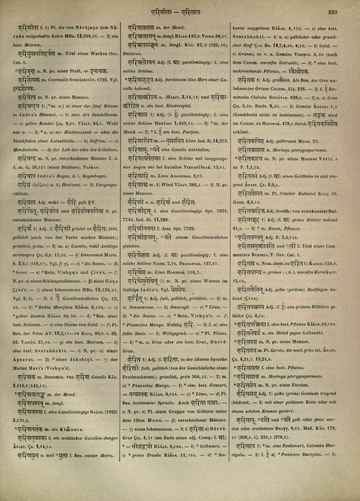
hariṇa a. (ṇī f.) [hṛ-inan] 1 Pale, whitish. 2 Reddish or yellowish white. — ṇaḥ 1 A deer, an antelope; (said to be of five kinds: -hariṇaścāpi vijñeyaḥ paṃcabhedo'tra bhairava . ṛṣyaḥ khaḍgo ruruścaiva pṛṣataśca mṛgastathā Kālikā P.); api prasannaṃ hariṇeṣu te manaḥ Ku. 5. 35. 2 The white colour. 3 A goose. 4 The sun. 5 Viṣṇu. 6 Śiva. Comp. — akṣa a. deer-eyed, fawn-eyed. — (kṣaḥ) N. of Śiva. — (kṣī) ‘deer-eyed’, a woman with beautiful eyes. — aṃkaḥ 1 the moon. 2 camphor. — kalaṃkaḥ, -dhāmanu m. the ([Page 1166-c]) moon. — nayana, -natre, -locana a. deereyed, fawn-eyed. — nartakaḥ a Kinnara. — hṛdaya a. deer-hearted, timid.
Cappeller 1887 Word type unspecified
Original text · German · Word type unspecified
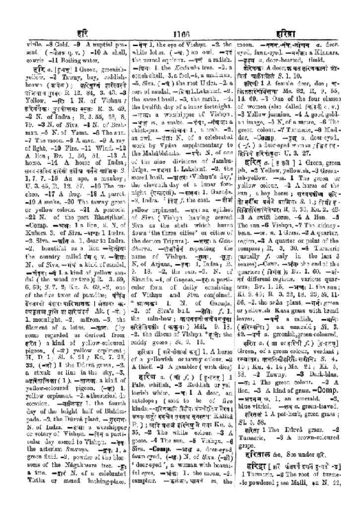
hariṇá fahl, gelblich; m. Gazelle. f. ī́ Gezallenweibechen.
Burnouf 1866 adjective
Original text · French · adjective
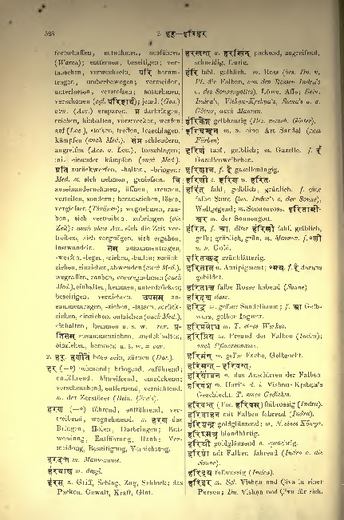
hariṇa a. blanc-jaunâtre. — S. m. couleur d'un blanc-jaune. Le soleil; Viṣṇu. Antilope; oie. Śiva xx. Un des petits dvīpas. — S. f. hariṇī couleur verte ou jaune. Statue d'or. Jasmin jaune. Femelle d'antilope. Sorte de metre poétique. Ang. green.
Occurrences in source texts (1)
HP 1 occurrence
Continue with AYI Free
Image source: AYI archive.