

baddhaḥ sunādagandhena sadyaḥsaṃtyaktacāpalaḥ MBHDL2026 ] baddhaṃ tu nādabandhena manaḥ santyaktacāpalam NS1882
nāda-śravaṇataś cittam; antaraṅga-bhujaṅgamaḥ | Analysis ▾ Analysis ▴
|
nāda
|
inner sound | |
|
śravaṇatas
|
hearing | |
|
cittam
|
mind | |
|
antaraṅga
|
inner | |
|
bhujaṅgamaḥ
|
serpent |
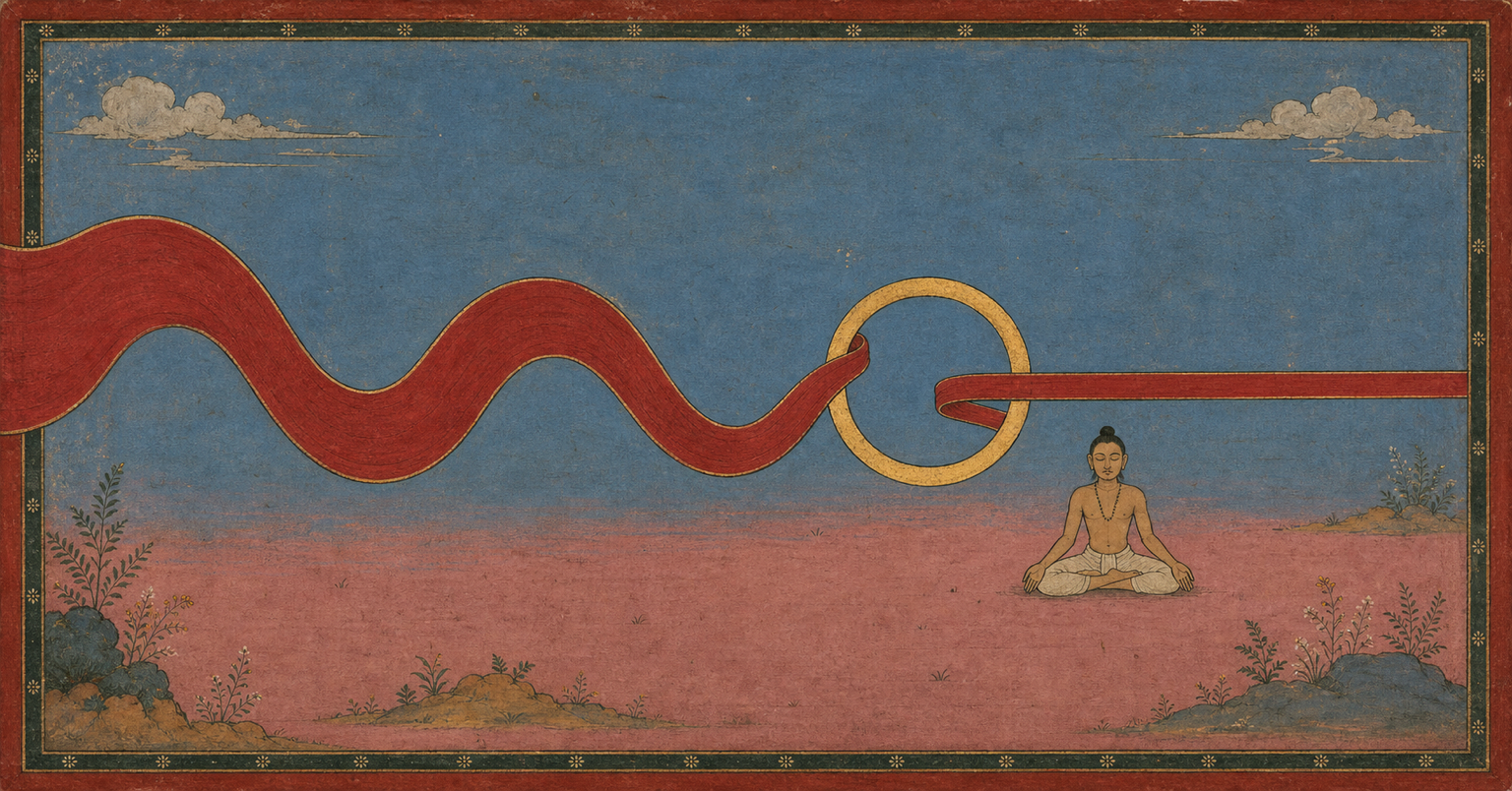
Just as a serpent is transfixed by sound, according to Brahmānanda the mind loses its mobility through Nāda. He identifies this state, which still relates to an object, with Saṃprajñāta Samādhi and explains it using definitions from the Yoga and Viṣṇupurāṇa traditions. Complete objectless absorption follows only later.
nādaśravaṇataś cittam MBHDL2026 ] nādaśravaṇataḥ kṣipram NS1882
javino MBHDL2026 ] yamino NS1882
I understand kuraṅga here with MBHDL2026 as a horse: the rein in the following pāda supports this image.
rodhe MBHDL2026 ] vadhe NS1882
The mind is the arrow and mastery of Prāṇa the archer. The archer's task is to direct the swift “arrow of breath” through Suṣumṇā to Brahmarandhra. Brahmānanda thereby explicitly connects the image with control of the breath; mental concentration alone would not yet be the archer's skill intended in the verse.
For Brahmānanda, Nāda contains the knowable: self-luminous consciousness. The mind first assumes its form; then even these movements of knowledge end, while only a subtle impression remains. “Viṣṇu” here denotes the all-pervading self free from limiting determinations.
jyotir jyotirantargataṃ MBHDL2026 ] jñeyaṃ jñeyasyāntargataṃ NS1882
As long as sound is perceived, the conception of Ākāśa, space as its support, also remains. According to Brahmānanda, the soundless lies beyond both and is called Brahman or the supreme self. Nāda is therefore an exceedingly subtle means, but not the final object of absorption.
For Brahmānanda, every audible Nāda is a manifestation of Śakti. Its formless ground, into which the elements and principles of knowledge dissolve, is Parameśvara. He assigns verses 4.50 to 4.54 to objectless Asaṃprajñāta Samādhi: sound leads to the boundary at which even its own difference from the hearer ends.
Here there is a decisive textual difference: in the reading commented upon by Brahmānanda, the ears, eyes, nose, and mouth are to be closed. He explains Parāṅmukhīmudrā with the thumbs at the ears, index fingers at the eyes, and the remaining fingers at the nose and mouth. MBHDL2026, by contrast, reads a prohibition of this closing; the commentary must therefore not be silently transferred to its opposite wording.
śravaṇamukhanayananāsānirodhanaṃ naiva kartavyam MBHDL2026 ] śravaṇapuṭanayanayugalaghrāṇamukhānāṃ nirodhanaṃ kāryam NS1882
saṃkṣīṇe vāsanācaye MBHDL2026 ] kṣīyante pāpasaṃcayāḥ NS1882
Continue with AYI Free
Illustrations: AI-generated.

Please log in to write a message. Go to login
No messages yet.