

jihva जिह्व – tongued; having a tongue
adjective · substantive masculine · Word type unspecified
Dictionary sources
AYI dictionary adjective
tongued; having a tongue
Cappeller 1891 substantive masculine
Original text · English · substantive masculine
jihvá ·m. E. of Agni; r. = f. jihvā tongue.

Monier-Williams 1872 substantive masculine
Original text · English · substantive masculine
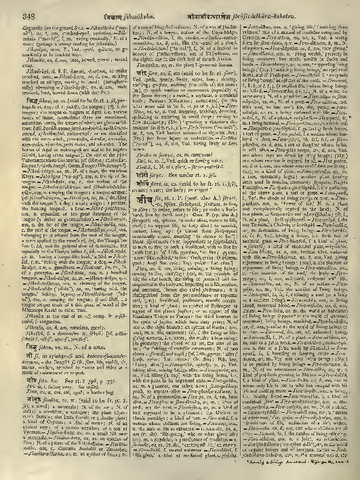
jihva jihva, as, m. (said to be fr. rt. 1. ji, per- haps fr. rt. hve; cf. 1. juhū), the tongue; (ā), f. the tongue; the tongue or tongues of Agni, i. e. various forms of flame, (sometimes three are mentioned, sometimes seven, the names of which are given as fol- lows: kālī, karālī, mano-javā, su-lohitā, sudhūmra- varṇā, sphuliṅginī, viśva-rūpī; or are identified with the seven winds, pra-vaha, ā-vaha, ud-vaha, saṃ-vaha, vi-vaha, pari-vaha, and ni-vaha. The horses of Agni or vahnayaḥ are said to be sapta- jihvāḥ, having seven tongues); the root of the plant Tabernæmontana Coronaria; [cf. jihma; cf. also Lat. lingua ?; Goth. tuggô; Germ. Zunge; Hib. teanga ?].
Petersburger 1855 substantive masculine
Original text · German · substantive masculine
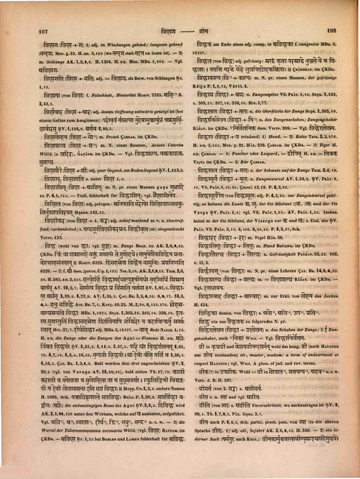
jihva (wohl von hvā; vgl. juhū) m. Zunge BHAR._zu_AK. 2,6,2,42. ŚKDR. kiṃ vā śakyāmahe vaktuṃ gaṇānāṃ te guṇodadhe . mānuṣeṇaikajihvena prabhāvotsāhasaṃbhavān .. HARIV. 6325. dvisahasreṇa jihvena vāsukiḥ prathayiṣyati HARIV. 6326. — 2〉 f. ā́ dass. (parox. Uṇ. 1,153) NIR. 5,26. AK. 2,6,2,42. TRIK. 2,6,30. H. 585. H. an. 2,521. hanvo̱rhi ji̱hvāmadàdhātpurū̱cīmadhā̀ ma̱ḥīmadhì śiśrāya̱ vācàm AV. 10,2,7. somàsya ji̱ḥvā pra jìgāti̱ cakṣàsā ṚV. 1,87,5. ji̱ḥvāyā̱ agràm ṚV. 3,39,3. ṚV. 9,73,9. AV. 1,34,2. ŚAT. BR. 3,5,4,23. ŚAT. BR. 3,8,3,17. ŚAT. BR. 10,3,4,5. hanū sajihve AIT. BR. 7,1. KAUŚ. 10. KAUŚ. 25. M. 2,90. M. 8,125. M. 8,270. snehasravānprasravati jihvā MBH. 1,5934. SUŚR. 1,305,16. SUŚR. 1,310,10. SUŚR. 1,328,19. etasya guṇastutiṃ jihvāsahasreṇa dvitīyenāpi sarpeśvaro na kadācitkartuṃ samarthaḥ syāt HIT. 27,7. dīrghajihvā adj. MBH. 3,16137. = vāc Rede NAIGH. 1,11. H. an. die Zunge oder die Zungen des Agni = Flamme H. an. a̱gneḥ pìbata ji̱hvayā̀ ṚV. 5,51,2. ṚV. 1,14,8. ṚV. 3,57,5. pari̱ dyāṃ ji̱ḥvayā̀tanat ṚV. 8,61,18. ṚV. 4,7,10. ṚV. 6,3,4. ṚV. 6,16,32. ma̱ndrayā̀ ji̱ḥvayā̀ . ā de̱vāṃ vàkṣi̱ yakṣì ca ṚV. 5,26,1. ṚV. 6,16,2. ŚAT. BR. 1,3,1,9. Bald werden ihm drei zugeschrieben ṚV. 3,20,2 (vgl. von Varuṇa AV. 10,10,28), bald sieben VS. 17,79. kālī karālī ca manojavā ca sulohitā yā ca sudhūmravarṇā . sphuliṅginī viśvarūpī ca devī lelāyamānā iti sapta jihvāḥ .. MUṆḌ. UP. 1,2,4. andere Namen H. 1099, Sch. yatrāgnirupāste saptajihvaḥ BHĀG. P. 5,20,2. sa̱ptajìhvā̱ vahnàyaḥ (agneḥ) die siebenzüngigen Rosse des Agni ṚV. 3,6,2. dvijihva wird AK. 3,4,21,136 unter den Wörtern, welche auf ba auslauten, aufgeführt. Vgl. agni˚, a˚, jvālā˚, dīrgha˚, dvi˚, madhu˚, mandra˚ u. s. w. — 3〉 die Wurzel der Tabernaemontana coronaria Willd. (vgl. jihma) RATNAM._im_ŚKDR. — ajihma ṚT. 1,23_bei_BOHLEN und LASSEN fehlerhaft für ajihva.
Original text · German · substantive masculine
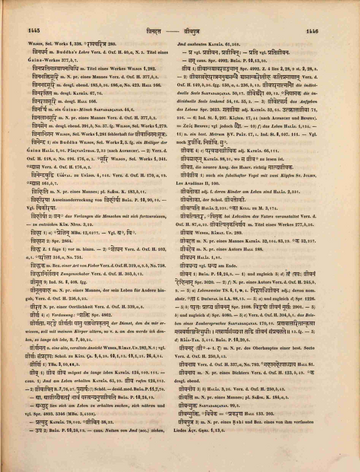
jihva Z. 1 füge 1〉 vor m. hinzu. — 2〉 ˚śodhana Verz. d. Oxf. H. 103,a,1. ˚parīkṣā Verz. d. Oxf. H. 316,a, No. 751.
Böhtlingk 1879 adjective · substantive masculine
Original text · German · adjective · substantive masculine
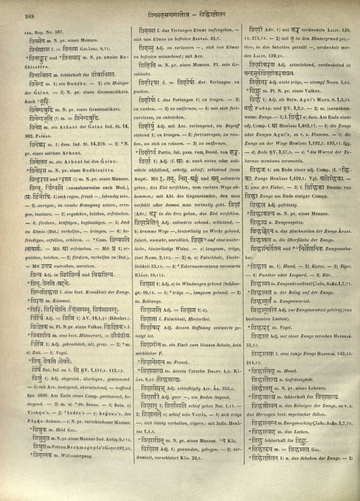
jihvá — 1〉 Adj. als Beiw. Agniʼs MAITR. S. 1,3,35. yahvá Padapāṭha Padap. und ṚV. 3,2,9. — 2〉 m. (ausnahmsweise) Zunge. — 3〉 f. jihvā́ — a〉 dass. Am Ende eines adj. Comp. f. ā HEMĀDRI 1,402,17. — b〉 die Zunge oder Zungen Agniʼs, so v. a. Flamme. — c〉 die Zunge an der Wage HEMĀDRI 1,192,3. 193,11. fgg. — d〉 Rede ṚV. 3,57,5. — e〉 *die Wurzel der Tabernaemontana coronaria.
Apte 1890 substantive masculine
Original text · English · substantive masculine
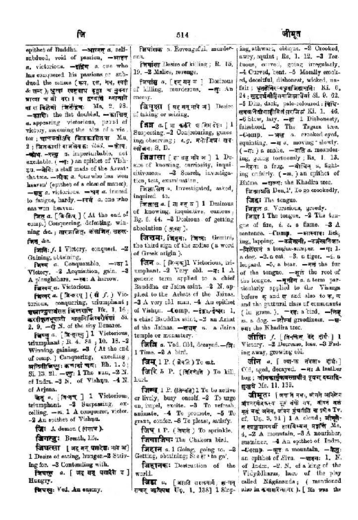
jihvaḥ The tongue.
Cappeller 1887 Word type unspecified
Original text · German · Word type unspecified
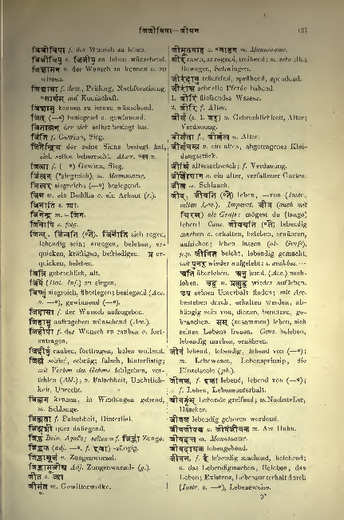
jihvá Bein. Agnis; selten= f. jihvā́ Zunge.
Occurrences in source texts (2)
HP 1 occurrence
SiSa 1 occurrence
Continue with AYI Free
Image source: AYI archive.