

kathā कथा – story; conversation; discourse
adverb · particle · substantive feminine · Word type unspecified
Dictionary sources
AYI dictionary substantive feminine
story; conversation; discourse
Cappeller 1891 adverb · substantive feminine
Original text · English · adverb
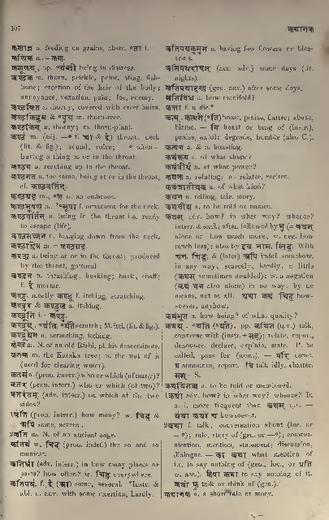
kathā́1 ·adv. how? in what way? whence? In a. l. more frequent than kathám q.v. -- yáthā kathā́ ca howsoever.
Original text · English · substantive feminine
kathā2 ·f. talk, conversation about (loc. or --°); tale, story of (gen. or --°); communication, mention, statement; discussion, dialogue. -- kā kathā what mention of i.e. to say nothing of (gen., loc., or prati w. acc.). kaiṣā kathā to say nothing of it. kathāṃ kṛ talk or think of (gen.).*
Monier-Williams 1872 particle · substantive feminine
Original text · English · particle
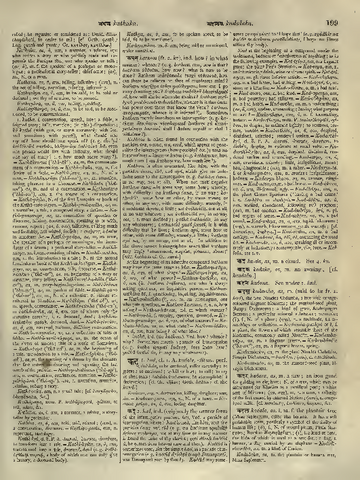
2. kathā, ind. (for katham), Ved. how? whence? why? Sometimes merely a particle of interrogation (e. g. kathā śṛṇoti Indraḥ, does Indra hear? yathā kathā ca, in any way whatsoever).
Original text · English · substantive feminine
1. kathā, f. conversation, speech, tale; a fable, a feigned story; talk, mention; (in phil.) disputation; kā kathā (with gen. or more commonly with loc. and sometimes with prati), what should one say of? how should one speak of? (e. g. eko 'pi kṛcchrād varteta, bhūyasāṃ kathaiva kā, even one person would live with difficulty, what should one say of many? i. e. how much more many?).
Petersburger 1855 substantive feminine · Word type unspecified
Original text · German · substantive feminine
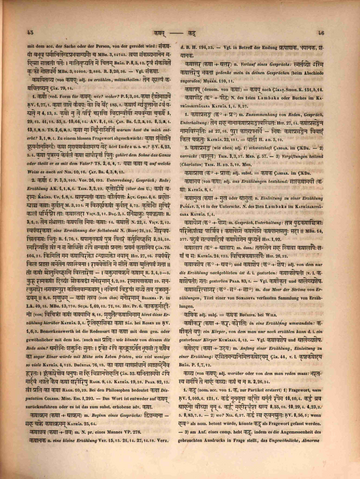
2. kathā́ f. P. 3,3,105. VOP. 26,192. Unterredung, Gespräch; Rede; Erzählung AK. 1,1,5,6. TRIK. 3,2,22. hantodgīthe (über den U.) kathāṃ vadāmaḥ CHĀND. UP. 1,8,1. āyuṣmatāṃ kathāḥ kīrtayantaḥ ĀŚV. GṚHY. 4,6. brahmodyāśca kathāḥ kuryāt M. 3,231. na vigarhyakathāṃ kuryāt M. 4,72. kṛtvobhau suciraṃ kālaṃ dharmiṣṭhau tāḥ kathāstadā VIŚV. 2,11. DAŚ. 2,5. śanaiścakruḥ pṛthakkathāḥ R. 3,1,3. tena saṃbhrāntāḥ kathayanti mithaḥ kathāḥ R. 3,1,14. kathānte N. 22,4. VIŚV. 2,12. svayaṃvarakathā eine Erwähnung der Selbstwahl N. (BOPP) 21,23. gauravayantritakathaḥ pituḥ R. 1,76,1. apānṛtakathaṃ putra pitaraṃ kartumicchasi R. 2,34,38. smariṣyati tvāṃ na sa bodhito 'pi sankathāṃ pramattaḥ prathamaṃ kṛtāmiva ŚĀK. 76. ŚĀK. 104,21. kimiti mama kathāvirakto 'nyāsakto bhavān HIT. 27,16. svayaṃvare kila prāptā tvametena yaśasvinā . rāghaveṇeti me sīte kathā śrutipathaṃ gatā .. tāṃ kathāṃ śrotumicchāmi vistāreṇa — . vaktumācakrame kathām R. 3,4,3 — R. 3,4,5. kuru rāmakathāṃ divyāṃ ślokabaddhāṃ manoramām R. 1,2,38. rāmāyaṇakathā R. 3,4,39. sanatkumāro bhagavānpurā kathitavānkathām . bhaviṣyaṃ viduṣāṃ mathye tava putrasamudbhavam .. R. 3,8,6. śṛṇudhvam — kathāṃ tasya (von ihm) manoramām BRAHMA-P. in LA. 49,15. MBH. 13,770. SUŚR. 1,69,12. SUŚR. 1,71,10. HIT. Pr. 6. kākakūrmādīnāṃ (von) vicitrāṃ kathāṃ kathayāmi HIT. 8,18. śṛṇutaitkathāmimām höret diese Erzählung hierüber KATHĀS. 3,4. aitihāsikā kathā SĀY._bei_ROSEN_zu_ṚV. 1,6,5. Bemerkenswerth ist die Redensart kā kathā mit dem gen. oder gewöhnlicher mit dem loc. (auch mit prati): wie könnte von diesem die Rede sein? amībhiḥ śaktubhiḥ sutāḥ . eko 'pi kṛcchrādvarteta bhūyasāṃ tu kathaiva kā sogar Einer würde mit Mühe sein Leben fristen, wie viel weniger so viele KATHĀS. 4,123. DHŪRTAS. 76,19. kā kathā vāṇasaṃdhāne jyāśabdenaiva dūrataḥ . hūṃkāreṇeva dhanuṣaḥ sa hi vighnānapohati ŚĀK. 52. abhitaptamayo 'pi mārdavaṃ bhajate kaiva kathā śarīriṣu RAGH. 8,43. KATHĀS. 19,28. PRAB. 82,15. tvāṃ prati kā kathā RAGH. 10,29. Bei den Philosophen bedeutet kathā Disputation COLEBR. Misc. Ess. I, 293. — Das Wort ist entweder auf kathay zurückzuführen oder es ist das zum subst. erhobene adv. kathā.
Original text · German · Word type unspecified
1. kathā́ (ved. Form für katham) wie? woher? P. 5,3,26. ka̱thā dā̀śemā̱gnaye̱ ṚV. 1,77,1. ka̱thā jā̱te kàvaya̱ḥ ko vi vèda ṚV. 1,185,1. ka̱thāyaṃ nyàṅṅuttā̱no 'và padyate̱ na ṚV. 4,13,5. ka̱tho nu te̱ parì carāṇi vi̱dvānvī̱ryā̀ maghava̱nyā ca̱karthà ṚV. 5,29,13. ṚV. 5,41,11. ṚV. 5,53,2. ṚV. 10,64,14. AV. 8,1,16. ŚAT. BR. 1,2,5,25. ŚAT. BR. 8,5,3,1. ŚAT. BR. 13,1,2,9. TS. 2,6,3,3. ka̱thā mā̱ niràbhā̱gitì warum hast du mich enterbt? TS. 3,1,9,4. Zu einem blossen Fragewort abgeschwächt: ka̱thā śṛ̀ṇoti hū̱yamā̀na̱mindràḥ ka̱thā śṛ̱ṇvannavàsāmasya veda hört Indra u. s. w. ? ṚV. 4,23,3. ṚV. 4,23,4. ka̱thā pu̱trasya̱ kevàlaṃ ka̱thā sādhā̀raṇaṃ pi̱tuḥ gehört dem Sohne das Ganze oder theilt er es mit dem Vater? TS. 2,6,1,7. yathā kathā ca auf welche Weise es auch sei NIR. 10,16. ŚAT. BR. 4,3,2,13.
Original text · German · Word type unspecified
2. kathā , dharmakathāṃ kartumārabdhau eine Unterredung über PAÑCAT. 117,13. aśakyametadasmākamiti tāścakrire kathāḥ so v. a. sie sagten MĀRK. P. 1,41. itihāsakathā KĀVYĀD. 1,15. śrutā prājñakathā deva tvayā mugdhakathāṃ śṛṇu die Geschichte vom Klagen, — Dummen KATHĀS. 61,2. eine kunstgerechte Erzählung definirt SĀH. D. 567. Im Nyāya Discussion, Dialog: kathā nāma vādiprativādinoḥ pakṣapratipakṣaparigrahaḥ SARVADARŚANAS. 114,5.
Böhtlingk 1879 adverb · substantive feminine · Word type unspecified
Original text · German · adverb
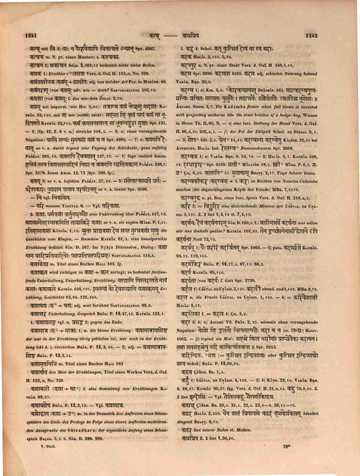
1. kathā́ Adv. — 1〉 wie? auf welche Weise? woher? warum? yathā́ kathā́ ca auf welche Weise es auch sei. — 2〉 abgeschwächt so v. a. num. kathā́ — kathā́ auch utrum — an.
Original text · German · substantive feminine
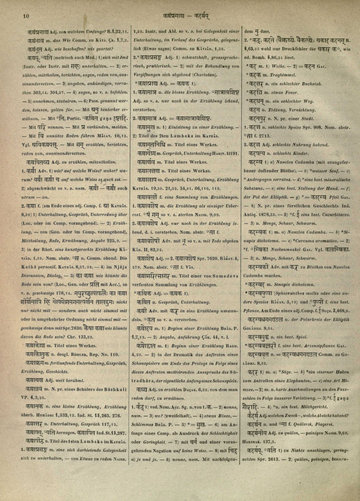
2. kathā f. (am Ende eines adj. Comp. f. ā KATHĀS. 8,38) — 1〉 Unterhaltung, Gespräch, Unterredung über (Loc. oder im Comp. vorangehend). — 2〉 Erzählung, — von (Gen. oder im Comp. vorangehend), Mittheilung, Rede, Erwähnung, Angabe Chr. 225,9. — 3〉 in der Rhet. eine kunstgerechte Erzählung KĀVYĀD. 1,38. Nom. abstr. ˚tva n. Comm. ebend. Die Kathā personif. KATHĀS. 8,37. KATHĀS. 8,38. — 4〉 im Nyāya Discussion, Dialog. — 5〉 kā kathā wie könnte die Rede sein von? (Loc., Gen. oder prati mit Acc.), so v. a. geschweige Chr. 176,14. madhuracchāyaphalaiḥ kā kathā śīrṇenāpi hi nopayogamagamatparṇena tāldrumaḥ nicht nur nicht mit — sondern auch nicht einmal mit oder in umgekehrter Ordnung nicht einmal mit — geschweige denn mit Spr. 7630. kaiṣā kathā wie könnte davon die Rede sein? Chr. 133,32.
Original text · German · Word type unspecified
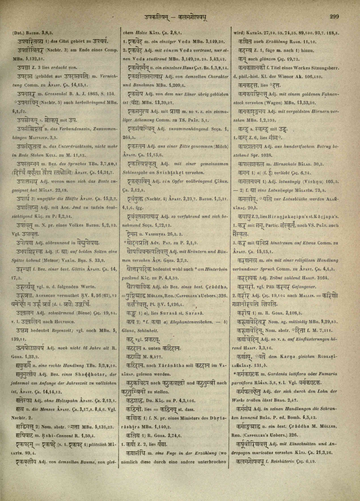
1. kathā́ Z. 2, lies yáthā. [Nachtrag, Band 6]
Original text · German · Word type unspecified
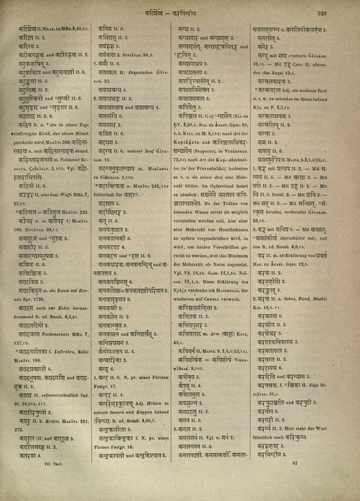
1. kathā́ II. 6. [Nachtrag, Band 7]
Apte 1890 substantive feminine
Original text · English · substantive feminine
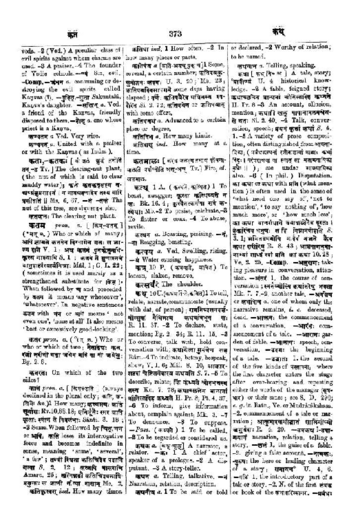
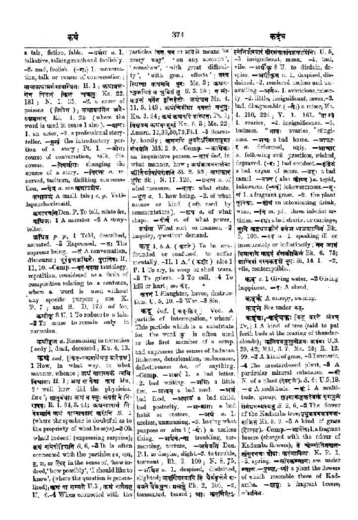
kathā [kath ni˚ a] 1 A tale, story; ˚prāvīṇyaṃ U. 4 historical knowledge. 2 A fable, feigned story; kathācchalena bālānāṃ nītistadiha kathyate H. Pr. 8 3 An account, allusion, mention; kathāpi khalu pāpānāmalamaśreyase yataḥ Śi. 2. 40. 4 Talk, conversation, speech; prathamaṃ kṛtāṃ kathāṃ Ś. 4. 1. 5 A variety of prose composition, often distinguished from ākhyāyikā; (prabaṃdhakalpanāṃ stokasatyāṃ prājñāḥ kathāṃ viduḥ . paraṃparāśrayā yā syāt sā matākhyāyikā budhaiḥ ..); see under ākhyāyikā also. 6 (In phil.) Disputation. kā kathā or kathā with prati (what mention) is often used in the sense of ‘what need one say of’, ‘not to mention’, ‘to say nothing of’, ‘how much more’, or ‘how much less’; kā kathā bāṇasaṃdhāne jyāśabdenaiva dūrataḥ . huṃkāreṇeva dhanuṣaḥ sa hi vighnānapohati Ś. 3. 1; abhitaptamayopi mārdavaṃ bhajate kaiva kathā śarīriṣu R. 8. 43; āptavāganumānābhyāṃ sādhyaṃ tvāṃ prati kā kathā R. 10. 28; Ve. 2. 25. Comp. — anurāgaḥ taking pleasure in conversation, attention. — aṃtaraṃ 1 the course of conversation; smartavyosmi kathāṃtareṣu bhavatā Mk. 7. 7. 2 another tale. — avaśeṣa or kathāśeṣa a. one of whom only the narrative remains, i. e. deceased, dead. — ākramaḥ the commencement of a conversation. — āraṃbhaḥ commencement of a tale. — ārāmaḥ garden of fable. — ālāpaḥ speech, conversation. — udayaḥ the beginning of a tale. — uddhātaḥ 1 the second of the five kinds of prastāvanā, where the first character enters the stage after over-hearing and repeating either the words of the manager ( sūtradhāra) or their sense; see S. D. 290; e. g. in Ratn., Ve. or Mudrārākṣasa. 2 commencement of a tale or narration; ākumārakathoddhātaṃ śāligopyo jaguryaśaḥ R. 4. 20. — upakatha — upākhyānaṃ narration, relation, telling a story. — chalaṃ 1 the guise of a fable. 2 giving a false account. — nāyakaḥ, puruṣaḥ the hero or leading character of a story; rāmāyaṇa˚ U. 4, U. 6. — paṭhiṃ 1 the introductory part of a tale or story. 2 N. of the first laṃbaka or book of the kathāsaritsāgara. — prabaṃdhaḥ ([Page 0374-a]) a tale, fiction, fable. — prasaṃga a. 1 talkative, talking much and foolishly. 2 mad, foolish. — (gaḥ) 1 conversation, talk or course of conversation; nānākathāprasaṃgāvasthitaḥ H. 1; kathāprasaṃgena vivādaṃ kila cakratuḥ Ks. 22. 181; N. 1. 35. 2 a curer of poisons (viṣavaidya); kathāprasaṃgena janairudāhṛtāt Ki. 1. 24 (where the word is used in sense 1 also). — prāṇaḥ 1 an actor. 2 a professional storyteller. — mukhaṃ the introductory portion of a story; Pt. 1. — yogaḥ course of conversation, talk, discourse. — viparyāsaḥ changing the course of a story. — virakta a. reserved, taciturn, disliking conversation. — śeṣa a. see kathāvaśeṣa.
Cappeller 1887 adverb · substantive feminine
Original text · German · adverb
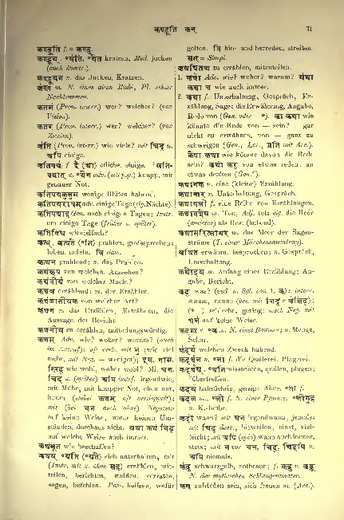
1. kathā́ Adv. wie? woher? warum? yáthā kathā́ ca wie auch immer.
Original text · German · substantive feminine
2. kathā f. Unterhaltung, Gespräch, Erzählung, Sage; die Erwähnung, Angabe, Rede von (Gen. oder —˚ kākathā wie könnte die Rede von — sein? — gar nicht zu erwähnen, von — ganz zu schweigen (Gen., Loc., prati mit Acc.). kaiṣā kathā wie könnte davon die Rede sein? kathāṃ kar von etwas reden, an etwas denken (Gen.*)
Burnouf 1866 substantive feminine
Original text · French · substantive feminine
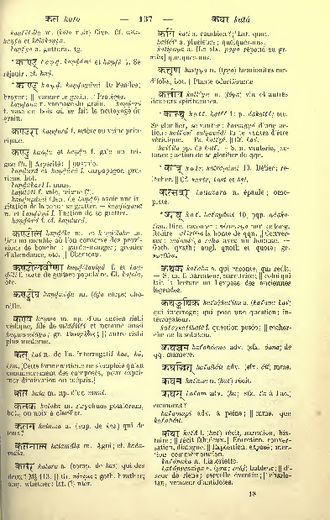
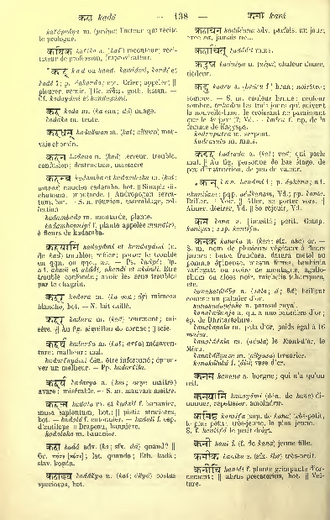
kathā kathā f. (kath) récit, narration, histoire; récit fabuleux. Entretien, conversation, dialogue. Exposition, exposé; mention. commémoration. kathānaka n. historiette. kathāprasaṅga a. (pra; sañj) hableur; diseur de riens; cervelle éventée; charlatan, vendeur d'antidotes. [Page138-1] kathāprāṇa m. (prāṇa) l'acteur qui récite le prologue.
Occurrences in source texts (3)
DYS 2 occurrences
SS 1 occurrence
Continue with AYI Free
Image source: AYI archive.