

kuśa कुश – grass, especially the sacred grass used at certain religious ceremonies (i. e. Poa Cynosuroides, a grass with long…
adjective · substantive masculine · substantive neuter · Word type unspecified
Dictionary sources
Cappeller 1891 substantive masculine
Original text · English · substantive masculine
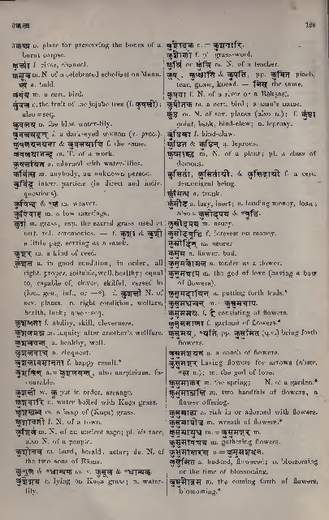
kuśá ·m. grass, esp. the sacred grass used at cert. rel. ceremonies. --f. kuśā & kuśī́ a little peg, serving as a mark.
Monier-Williams 1872 substantive masculine
Original text · English · substantive masculine
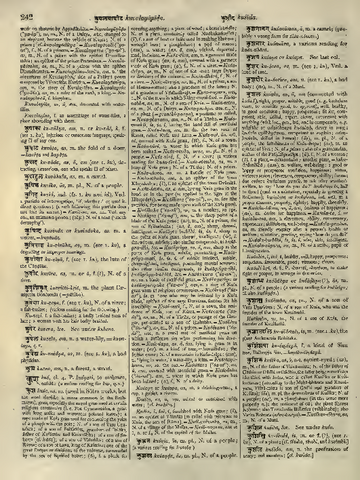
kuśa kuśa, as, m. (used in Sūtra works, but the word darbha is more common in the Brāh- maṇas), grass, especially the sacred grass used at certain religious ceremonies (i. e. Poa Cynosuroides, a grass with long stalks and numerous pointed leaves); a rope made of Kuśa grass used for connecting the yoke of a plough with the pole; N. of a son of Vasu Upa- ricara; of a soñ of Balākāśva, grandson of Balāka, father of Kuśāmba and Kuśanābha; of a son of Su- hotra [cf. kāśa]; of a son of Vidarbha; of a son of Rāma; of a son of Lava, king of Kaśmīra; one of the great Dvīpas or divisions of the universe, surrounded by the sea of liquified butter; (ā), f. a plank for covering anything; a piece of wood; a horse's bridle; N. of a plant, commonly called Madhukarkaṭikā; (ī), f. a sort of boat or ladle used in making libations; wrought iron; a ploughshare; a pod of cotton; (am), n. water; (as, ā, am), wicked, depraved; mad, inebriate.
Petersburger 1855 adjective · substantive masculine · substantive neuter · Word type unspecified
Original text · German · adjective · substantive masculine · substantive neuter
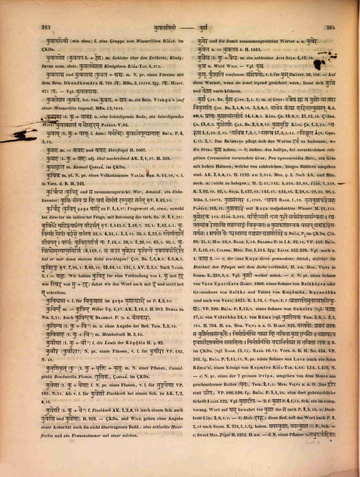
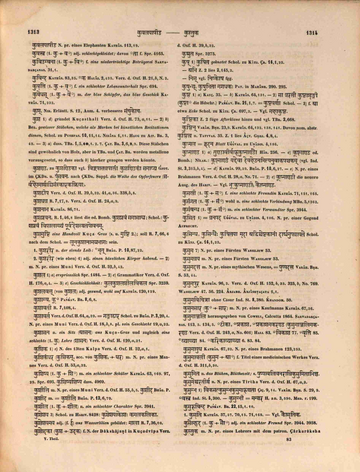
kuśá ŚAT. BR. kúśa ŚĀNT. 2,4. 1〉 m. a〉 Gras: yatraiva kva ca kuśo vā yadvā vikṛntati ŚAT. BR. 3,1,2,16. ŚAT. BR. 5,3,2,7. yāneva kāṃśca haritānkuśān ŚAT. BR. 4,5,10,6. prācaḥ kuśānsaṃstīrya ŚAT. BR. 14,1,3,1. KĀTY. ŚR. 10,8,7. KĀTY. ŚR. 25,12,19. ŚĀṄKH. ŚR. 13,6,3. kuśorṇāḥ ŚAT. BR. 2,5,2,15. kuśamuṣṭi KĀTY. ŚR. 1,3,23. ˚taruṇa KĀTY. ŚR. 5,1,29. KĀTY. ŚR. 5,2,15. ˚pavitra KĀTY. ŚR. 7,3,1. ˚stamba KĀTY. ŚR. 17,3,1. KĀTY. ŚR. 17,3,14. ˚piñjūla ĀŚV. GṚHY. 1,17. ĀŚV. GṚHY. 2,7. Das BRĀHMAṆA pflegt sich des Wortes darbha zu bedienen, wo die SŪTRA kuśa haben. — b〉 insbes. das heilige, bei verschiedenen religiösen Ceremonien verwendete Gras, Poa cynosuroides Retz., ein Gras mit hohen Halmen, welche von zahlreichen, langen Blättern umgeben sind. AK. 2,4,5,31. H. 1192. H. an. 2,545. MED. ś. 3. Nach AK. und MED. auch. n. (nicht zu belegen). M. 2,43. M. 2,182. M. 4,250. M. 10,88. YĀJÑ. 1,229. R. 5,92,19. R. 5,93,1. SUŚR. 1,137,19. SUŚR. 1,143,17. SUŚR. 1,144,16. SUŚR. 2,28,8. SUŚR. 2,29,20. SUŚR. 2,98,2. MBH. 3,16078. kuśasaṃstara MBH. 1,4708. ˚śayana RAGH. 1,95. kṛtakuśaparigraha PAÑCAT. 165,15. kuśavāri mit Kuśa aufgekochtes Wasser M. 11,148. kuśodaka M. 212. YĀJÑ. 3,315. varhiṣmatī nāma purī sarvasaṃpatsamanvitā . nyapatanyatra romāṇi yajñsyāṅgaṃ vidhunvataḥ .. kuśakāśāstatra vāsan śaśvaddharitavarcasaḥ . ṛṣayo yaiḥ parābhāvya yajñaghnānyajñamījire .. BHĀG. P._im_ŚKDR. ŚĀK. 89. ŚĀK. 31,1. HIT. 10,8. RAGH. 1,49. BRAHMA-P. in LA. 49,18. VP. 106. BHĀG. P. 1,19,17. COLEBR. Misc. Ess. I, 114. fgg. LALIT. 152. LALIT. 239. Vgl. noch u. 1. kāśa 2. — c〉 der (aus Kuśa — Gras gewundene) Strick, welcher die Deichsel des Pfluges mit dem Joche verbindet, H. an. MED. VIŚVA_in_SIDDH. K. 251,b,2. Vgl. kuśī weiter unten. — d〉 N. pr. eines Sohnes von Vasu Uparicara HARIV. 1806. eines Sohnes von Balākāśva oder Grossohnes von Balāka und Vaters von Kuśāmba, Kuśanābha (und auch von Vasu) HARIV. 1424. R. 1,34,1. VIŚV. 1,1 (prajāpatisutastvāsītkuśaḥ). VP. 399. BHĀG. P. 9,15,4. eines Sohnes von Suhotra (vgl. kāśa) BHĀG. P. 17,3. von Vidarbha BHĀG. P. 24,1. von Rāma (vgl. kuśīlava) TRIK. 2,8,4. TRIK. 2,3,3. TRIK. 2,8,194. H. 704. H. an. MED. VIŚVA a. a. O. HARIV. 822. yastayoḥ prathamaṃ jātaḥ sa kuśairmantrasaṃskṛtaiḥ . nirmārjanīyo nāmnā hi bhavitā kuśa ityasau .. yaścāvaraja evāsīllavaṇena samāhitaḥ . nirmārjanīyo vṛddhābhirnāmnā sa bhavitā lavaḥ .. R._im_ŚKDR. (vgl. RAGH. 15,32). RAGH. 16,72. Verz. d. B. H. No. 434. VP. 385. fg. BHĀG. P. 9,11,11. N. pr. eines Sohnes von Lava (auch ein Sohn Rāmaʼs), eines Königs von Kaśmīra RĀJA-TAR. 1,88. LIA. I, 476, N. — e〉 N. pr. eines der 7 grossen Dvīpa, umgeben von dem Meere aus geschmolzener Butter (ghṛta), TRIK. 2,1,4. MED. VIŚVA a. a. O. (lies dvīpa statt dhīpa). VP. 166. VP. 198. fg. BHĀG. P. 5,1,32. eine dort gebräuchliche Schrift LALIT. 122. Vgl. kuśadvīpa. — 2〉 f. kuśā P. 4,1,42, Sch. ein im comp. vorang. Wort auf as bewahrt vor kuśā das sa nach P. 8,3,46. a〉 Deckbrett LĀṬY. 2,6,1. LĀṬY. 2,6,4. — b〉 Holz (dāru); diese Bed. soll das Wort auch P. 8,3,46 nach SIDDH. K. 251,b,3. fg. haben. ayaskuśā, payaskuśā(!) P., Sch. — c〉 Strick MED. Zügel H. 1252. H. an. — d〉 N. einer Pflanze (s. madhukarkaṭikā) ŚABDAC._im_ŚKDR. — 3〉 f. kuśī́ VOP. 4,26. a〉 a sort of boat or spoon, used in making libations HAUGHT. Viell. hierher ŚAT. BR. 3,6,2,9. fgg. — b〉 verarbeitetes Eisen (ayovikāra) P. 4,1,42. AK. 2,9,99. H. 1039. H. an. — c〉 Pflugschar MED. Vgl. kuśika. — d〉 a pod of cotton HAUGHTON. — e〉 = śalākā SIDDH. K. 251,b,2. — 4〉 n. Wasser AK. 3,4,28,218. H. 1069. H. an. MED. Wohl aus kuśapa und kuśeśaya geschlossen; vgl. auch kuśita. — 5〉 adj. a〉 böse, schlecht (pāpiṣṭha). — b〉 trunken H. an. MED.
Original text · German · Word type unspecified
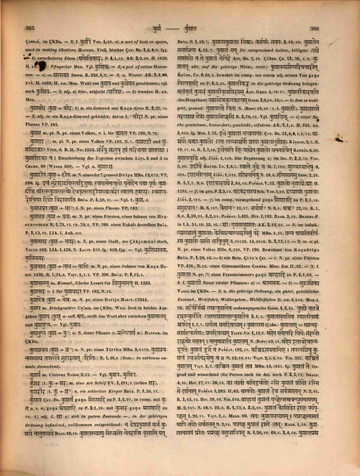
kuśa 1〉d〉 gründet Kuśasthalī Verz. d. Oxf. H. 73,a,11. — 2〉b〉 Bez. gewisser Stäbchen, welche als Marken bei künstlichen Recitationen dienen, Schol. zu PUṢPAS. 10,11,14. NIDĀNA 1,11. HAUG_zu_AIT. BR. 3,42. — 3〉a〉 dass. TBR. 1,5,10,1. TBR. 1,5,10,2. TBR. 1,5,10,7. ŚAT. BR. 3,6,2,9. Diese Stäbchen sind gewöhnlich von Holz, aber in TBR. und ŚAT. BR. werden metallene vorausgesetzt, so dass auch b〉 hierher gezogen werden könnte.
Böhtlingk 1879 adjective · substantive masculine · substantive neuter
Original text · German · adjective · substantive masculine · substantive neuter
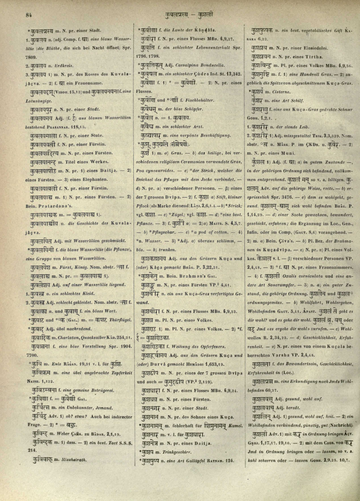
kuśá — 1〉 m. — a〉 Gras. — b〉 das heilige, bei verschiedenen religiösen Ceremonien verwendete Gras, Poa cynosuroides. — c〉 *der Strick, welcher die Deichsel des Pfluges mit dem Joche verbindet. — d〉 N. pr. — α〉 verschiedener Personen. — β〉 eines der 7 grossen Dvīpa. — 2〉 f. kuśā — a〉 Stift, kleiner Pflock (als Marke dienend) LĀṬY. 2,6,1. 4. — b〉 *Strick; vgl. kaśā. — c〉 *Zügel; vgl. kaśā. — d〉 *einen best. Pflanze. — 3〉 f. kuśī́ — a〉 = 2〉a〉 MAITR. S. 4,5,7. — b〉 *Pflugschar. — c〉 *a pod of cotton. — 4〉 *n. Wasser. — 5〉 *Adj. — a〉 überaus schlimm, — bös. — b〉 trunken.
Cappeller 1887 substantive masculine
Original text · German · substantive masculine
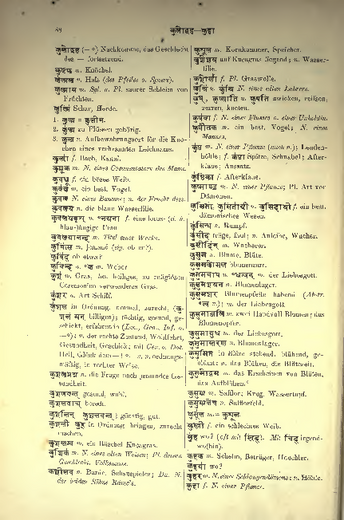
kuśá m. Gras, bes. heiliges, zu religiösen Ceremonien verwendetes Gras.
Burnouf 1866 adjective
Original text · French · adjective
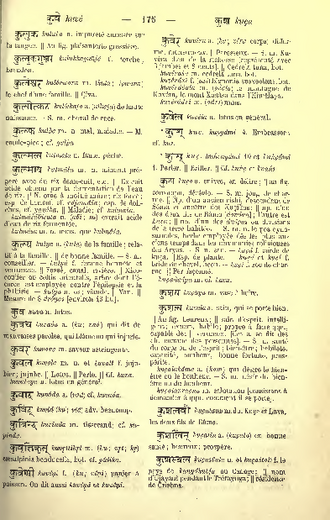
kuśa kuśa a. enivré, en délire; au fig. corrompu, déréglé. — S. m. joug de charrue. Np. d'un ancien Ṛṣi, descendant de Soma et ancêtre des Kuśikas; np. d'un des deux fils de Rāma [candra]; l'autre est Lava; np. d'un des dvīpas ou divisions de la terre habitée. — S. m. n. le poa cynosuroïdes, herbe employée dès les plus anciens temps dans les cérémonies religieuses des Aryas. — S. n. eau. — kuśā f. corde de kuśa. Esp. de plante. — kuśā et kuśī f. bride de cheval, licou. — kuśī f. soc de charrue. Fer façonné. kuśadvīpa m. cf. kuśa.
Occurrences in source texts (1)
GoS 1 occurrence
Continue with AYI Free
Image source: AYI archive.