

mahākāla महाकाल – —Mahā-kāla, as, m. a form of Śiva, an epithet of Śiva in his character of the destroying deity (being then represented…
substantive masculine · substantive neuter
Dictionary sources
Cappeller 1891 substantive masculine
Original text · English · substantive masculine
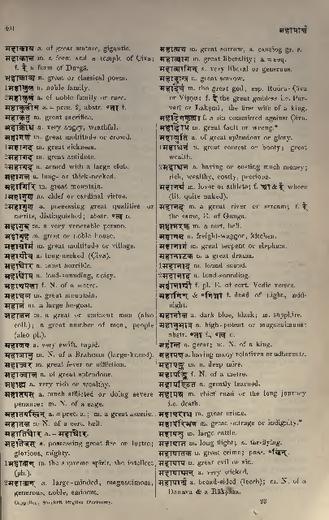
mahākāla ·m. a form and a temple of Śiva; f. ī a form of Durgā.
Monier-Williams 1872 substantive masculine
Original text · English · substantive masculine
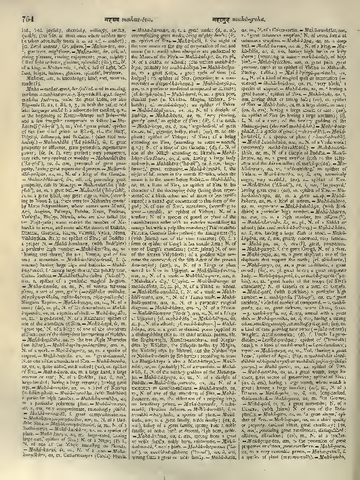
—Mahā-kāla, as, m. a form of Śiva, an epithet of Śiva in his character of the destroying deity (being then repre- sented of a black colour and of more or less terrific aspect); a sacred spot consecrated to this form of the god; N. of one of Śiva's attendants, (according to some = nandi); an epithet of Viṣṇu; N. of a teacher; N. of a species of gourd or plant of the cucurbitaceous order with an exterior resembling an orange but with a pulp like cow-dung (Trichosanthes Palmata, Cucumis Colocynthus); the mango tree (?); (with Jainas) one of the nine treasures; (ī), f. a form or epithet of Durgā in her terrific form; N. of one of Durgā's attendants; (with Jainas) N. of one of the sixteen Vidyādevīs; of a goddess who exe- cutes the commands of the fifth Arhat of the present Ava-sarpiṇī; (am), n., N. of a Liṅga or place sacred to Śiva in Ujjayinī.
Petersburger 1855 substantive masculine
Original text · German · substantive masculine
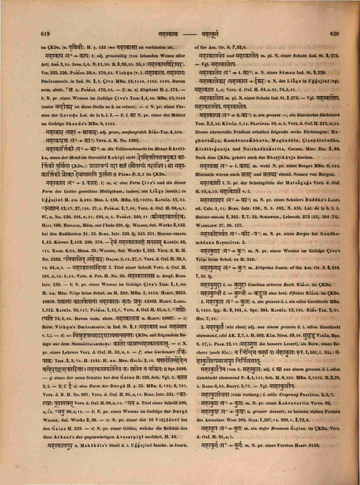
mahākāla (ma˚ + 2. kāla) 1〉 m. a〉 eine Form Śivaʼs und ein dieser Form des Gottes geweihtes Heiligthum, insbes. ein Liṅga (neutr.) in Ujjayinī H. an. 4,293. MED. l. 158. MBH. 12,10392. KATHĀS. 11,32. ˚śmaśāna KATHĀS. 12,47. KATHĀS. 27,136. KATHĀS. 37,4. PAÑCAR. 1,7,66. Verz. d. Oxf. H. 89,a,1. Verz. d. Oxf. H. 97,a, No. 150. Verz. d. Oxf. H. 101,a,31. Verz. d. Oxf. H. 184,a,2. PAÑCAT. 240,11 (śrīmahākāladeva). HALL 166. REINAUD, Mém. sur lʼInde 291. fg. WILSON, Sel. Works 2,142. bei den Buddhisten WILSON, Sel. Works 2,21. WILSON, Sel. Works 2,33. BURN. Intr. 538. fg. BURN. Intr. 543. fg. BURN. Intr. 551. HIOUEN-THSANG 1,43. KÖPPEN 2,118. KÖPPEN 2,298. KÖPPEN 2,370. — devaṃ mahākālamahaṃ gatāsam KATHĀS. 48,124. RAGH. 6,34. MEGH. 35. WILSON, Sel. Works 1,223. Verz. d. B. H. No. 1242. ˚nivāsin (maheśvara) DAŚAK. 5,13. DAŚAK. 27,7. Verz. d. Oxf. H. 39,b,18. Verz. d. Oxf. H. 64,a,6. — mahākālasaṃhitā f. Titel einer Schrift Verz. d. Oxf. H. 101,a,12. Verz. d. Oxf. H. 101,b,42. Verz. d. Pet. H. No. 50. mahākālatantra n. desgl. BURN. Intr. 539. — b〉 N. pr. eines Wesens im Gefolge Śivaʼs TRIK. 1,1,50. H. an. MED. VYĀḌI beim Schol. zu H. 210. MBH. 1,2529. HARIV. 9555. HARIV. 10859. gaṇānāṃ kālakeyānāṃ mahākālaḥ kṛtaḥ prabhuḥ HARIV. 12502. HARIV. LANGL. I, 512. KATHĀS. 50,147. PAÑCAR. 1,15,7. Verz. d. Oxf. H. 45,a,7. ˚gaṇotpatti Verz. d. Oxf. H. 75,b,26. Davon nom. abstr. mahākālatva n. HARIV. 10867. — c〉 Beiw. Viṣṇuʼs DHYĀNABINDŪP._in_Ind. St. 2,1 (mahākāya und mahāmāya v. l.). — d〉 = viṣṇurūpākhaṇḍadaṇḍāyamānasamayaḥ ŚKDR. mit folgendem Belege aus dem SIDDHĀNTALAKṢAṆA: kālo ghaṭavānmahākālatvāt. — e〉 N. pr. eines Lehrers Verz. d. Oxf. H. 53,a,8. — f〉 eine Gurkenart (kiṃpāka) TRIK. 3,3,70. H. 1141. H. an. MED. HALĀY. 2,48. antarmalinadehena bahirāhlādakāriṇā . mahākālaphaleneva kaḥ khalena na vañcitaḥ .. Spr. 3489. — g〉 eines der neun Schätze bei den Jaina H. 193, Sch. Vgl. 1. kāla 2,1. — 2〉 f. ī a〉 eine Form der Durgā H. ś. 51. MBH. 4,195. MBH. 6,797. Verz. d. B. H. No. 697. Verz. d. Oxf. H. 94,a,11. BURN. Intr. 551. ˚kālyāḥ pūjāyantram Verz. d. Oxf. H. 96,a,10. ˚mata n. Titel einer Schrift Verz. d. Oxf. H. 109,a,13. ˚manu Verz. d. Oxf. H. 98,a,15. — b〉 N. pr. eines Wesens im Gefolge der Durgā WILSON, Sel. Works 2,38. — c〉 N. pr. einer der 16 Vidyādevī bei den Jaina H. 239. — d〉 N. pr. einer Göttin, welche die Befehle des 5ten Arhantʼs der gegenwärtigen Avasarpiṇī ausführt, H. 44.
Böhtlingk 1879 substantive masculine · substantive neuter
Original text · German · substantive masculine · substantive neuter
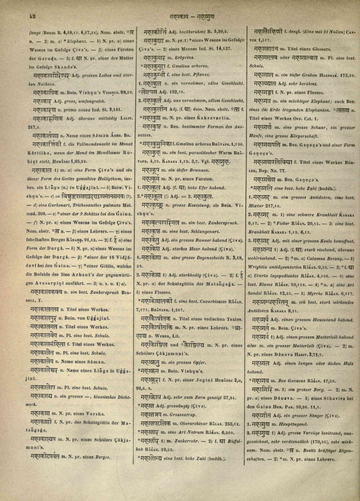
mahākāla — 1〉 m. — a〉 eine Form Śivaʼs und ein dieser Form des Gottes geweihtes Heiligthum, insbes. ein Liṅga (n.) in Ujjayinī. — b〉 Beiw. Viṣṇuʼs. — c〉 = viṣṇúpākhaṇḍadaṇḍāyamānasamayaḥ. (?). — d〉 eine Gurkenart, Trichosanthes palmata Mat. med. 308. — e〉 *einer der 9 Schätze bei den Jaina. — f〉 N. pr. — α〉 eines Wesens im Gefolge Śivaʼs. Nom. abstr. ˚tva n. — β〉 eines Lehrers. — γ〉 eines fabelhaften Berges KĀRAṆḌ. 91,13. — 2〉 f. ī — a〉 eine Form der Durgā. — b〉 N. pr. — α〉 eines Wesens im Gefolge der Durgā. — β〉 *einer der 16 Vidyādevī bei den Jaina. — γ〉 *einer Göttin, welche die Befehle des 5ten Arhantʼs der gegenwärtigen Avasarpiṇī ausführt. — 3〉 n. s. u. 1〉a〉.
Cappeller 1887 substantive masculine
Original text · German · substantive masculine
mahākāla m. eine Form Śiva's; f. ī eine Form der Durgā.
Burnouf 1866 substantive masculine
Original text · French · substantive masculine
mahākāla m. Śiva [comme symbole du temps destructeur]. Nandi. Manguier. — F. [i] Durgā. Np. d'une Vidyādevī.
Occurrences in source texts (1)
SiSa 1 occurrence
Continue with AYI Free
Image source: AYI archive.