

matsya मत्स्य – matsya; fish
substantive feminine · substantive masculine · Word type unspecified
Dictionary sources
AYI dictionary substantive masculine
matsya; fish
Cappeller 1891 substantive masculine
Original text · English · substantive masculine
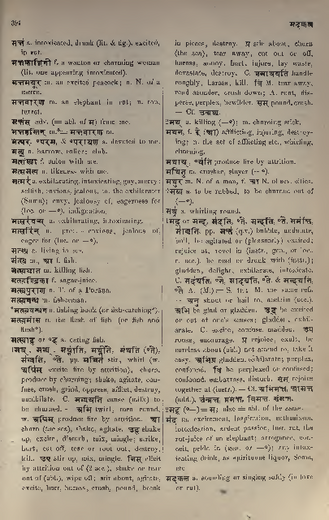
mátsya ·m. ā f. fish.
Monier-Williams 1872 substantive masculine · Word type unspecified
Original text · English · substantive masculine
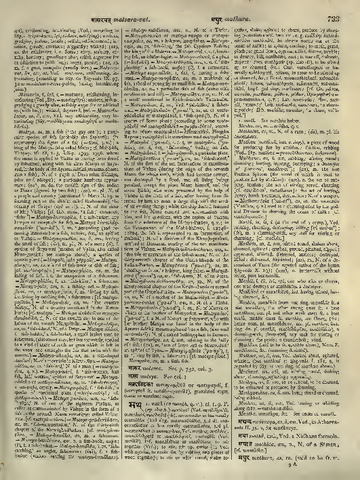
Matsya, as, m. a fish (‘the gay one’); a parti- cular species of fish (probably the Sapharī); (in astronomy) the figure of a fish (= timi, q. v.); a king of the Matsyas (also called Matsa; cf. Mahā-bh. Virāṭa-p. 16, 18, 145, Ādi-p. 2393, 2396, where the name is applied to Virāṭa as having been found by fishermen, along with his sister Matsyā or Satya- vatī, in the body of the Apsaras Adrikā, metamorphosed into a fish); N. of a pupil of Deva-mitra Śākalya, (also read vātsya); a particular luminous appear- ance; (au), m. du. the twelfth sign of the zodiac or Pisces (figured by two fish); (ās), m. pl., N. of a people and country (mentioned in Manu II. 19. as forming part of the district called Brahmarṣi), the country of Virāṭa; (syā or sī), f., N. of the sister of king Virāṭa; [cf. Hib. meas, ‘a fish;’ measach, ‘fishy.’]
Original text · English · Word type unspecified
matsya matsya. See col. 1.
Petersburger 1855 substantive masculine
Original text · German · substantive masculine
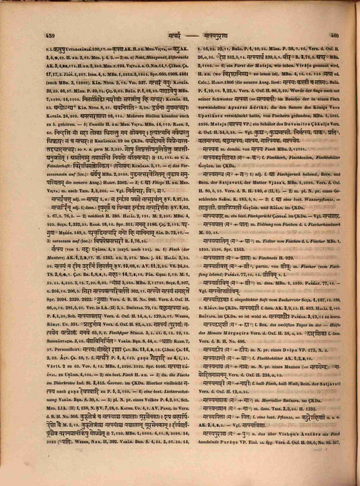
mátsya (von 1. mad) UṆĀDIS. 4,2 (oxyt. nach 104). m. 1〉 Fisch (der Muntere) AK. 1,2,3,17. H. 1343. H. an. 2,375. MED. y. 44. HALĀY. 3,35. HALĀY. 3,38. matsya̱ṃ na dī̱na u̱danì kṣi̱yantàm ṚV. 10,68,8. AV. 11,2,25. VS. 24,34. TS. 2,6,6,1. ŚAT. BR. 1,8,1,1. mahā˚ ŚAT. BR. 14,7,1,18. PĀR. GṚHY. 1,19. M. 1,39. M. 1,44. M. 4,250. M. 5,15. M. 7,20. M. 8,95. ˚māṃsa M. 3,268. MBH. 3,12751. SUŚR. 1,107,6. SUŚR. 1,204,10. SUŚR. 1,206,5. sirā matsyavatparivartante SUŚR. 362,11. matsyo matsyaṃ samādatte Spr. 2094. Spr. 2329. Spr. 2922. ˚guṇāḥ Verz. d. B. H. No. 986. Verz. d. Oxf. H. 86,a,18. Verz. d. Oxf. H. 281,b,21. VET. in LA. (II) 5,5. DHŪRTAS. 79,15. bahumatsyā adj. P. 4,1,28, Sch. matsyāvatāra Verz. d. Oxf. H. 14,a,4. Verz. d. Oxf. H. 129,a,17. WEBER, RĀMAT. UP. 351. ˚prādurbhāva Verz. d. Oxf. H. 83,a,23. mātsyaṃ (purāṇaṃ) matsyena yatproktaṃ manave Verz. d. Oxf. H. 65,b,2. Fischfigur SŪRYAS. 3,4. SŪRYAS. 3,41. SŪRYAS. 6,15. SŪRYAS. 10,12. SIDDHĀNTAŚIR. 3,45. vaṃśavinirmita˚ VARĀH. BṚH. S. 44,4. ˚dhvajāḥ RAGH. 7,37. Personificirt: matsyaḥ sāṃmado rājā ŚAT. BR. 13,4,3,12. ŚĀṄKH. ŚR. 16,2,23. ĀŚV. ŚR. 10,7. f. matsī́ P. 6,4,149. gaṇa gaurādi zu P. 4,1,41. Vārtt. 2 zu 63. VOP. 4,12. MBH. 1,2390. MBH. 1,2392. Spr. 4166. matsyā UJJVAL._zu_UṆĀDIS. 4,104. — 2〉 ein best. Fisch H. an. — 3〉 du. die Fische im Thierkreise Ind. St. 2,415. JYOTIST._im_ŚKDR. Hierher vielleicht matsya nach gaṇa devapathādi zu P. 5,3,100. — 4〉 eine best. Lichterscheinung VARĀH. BṚH. S. 30,8. — 5〉 pl. N. pr. eines Volkes P. 4,2,81, Sch. MED. LIA. (II) I, 158, N. ṚV. 7,18,6. KAUṢ. UP. 4,1. AV. PARIŚ._in_Verz. d. B. H. No. 366. kurukṣetraṃ ca matsyāśca pañcālāḥ śūrasenakāḥ . eṣa brahmarṣideśo vai M. 2,19. kurukṣetrāṃśca matsyāṃśca pañcālān śūrasenakān . dīrghāllam̐ghūṃścaiva narānagrānīkeṣu yodhayet .. M. 7,193. MBH. 1,6085. MBH. 4,11. MBH. 8,2098. MBH. 14,2023 (˚pati). WEBER, Nax. II, 3. WEBER, Nax. II,92. VARĀH. BṚH. S. 4,24. VARĀH. BṚH. S. 5,37. VARĀH. BṚH. S. 5,38. VARĀH. BṚH. S. 14,2. VARĀH. BṚH. S. 16,22. VARĀH. BṚH. S. 32,11. BHĀG. P. 1,10,34. MĀRK. P. 58,7. MĀRK. P. 58,16. Verz. d. Oxf. H. 26,a,36. ˚deśa Verz. d. Oxf. H. 352,b,14. matsyārdha Verz. d. Oxf. H. 339,b,1. vīra˚ R. 2,71,5. apara˚ MBH. 2,1108. — 6〉 ein Fürst der Matsya, wie insbes. Virāṭa genannt wird, H. an. (wo virāṭābhikhya˚ zu lesen ist). MBH. 4,16. MBH. 4,18. MBH. 4,145 (matsa ed. Calc.). HARIV. 1806 (die neuere Ausg. liest: matsyaḥ kālī ca saptamaḥ). BHĀG. P. 1,10,10. BHĀG. P. 9,22,6. Verz. d. Oxf. H. 80,b,39. Wurde der Sage nach mit seiner Schwester matsyā (= satyavatī) im Bauche der in einen Fisch verwandelten Apsaras Adrikā, die den Samen des Königs Vasu Uparicara verschluckt hatte, von Fischern gefunden, MBH. 1,2393. MBH. 1,2396. Matsya (vātsya VP.) ein Schüler des Devamitra Śākalya Verz. d. Oxf. H. 54,b,35. — Vgl. kuḍya˚, kuḍyamatsī, nirmatsya, pāka˚, prati˚, phalamatsyā, bahumatsya, mātsya, mātsyika, mātsyeya.
Böhtlingk 1879 substantive feminine · substantive masculine
Original text · German · substantive feminine · substantive masculine
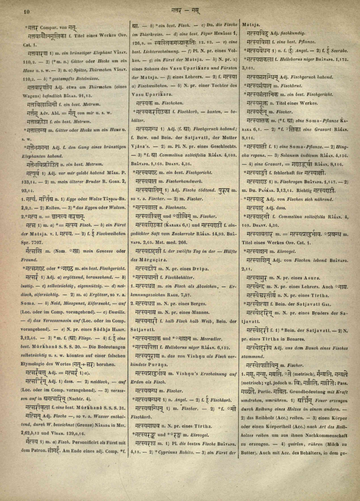
mátsya — 1〉 m. — a〉 Fisch. Personificirt als Fürst mit dem Patron. sāṃmadá. Am Ende eines adj. Comp. *f. [Page5-010-b] ā — b〉 *ein best. Fisch. — c〉 Du. die Fische im Thierkreise. — d〉 eine best. Figur HEMĀDRI 1,126,8 = svastikamadhyākṛtiḥ Chr. 12,13. — e〉 eine best. Lichterscheinung. — f〉 Pl. N. pr. eines Volkes. — g〉 ein Fürst der Matsya. — h〉 N. pr. — α〉 eines Sohnes des Vasu Uparicara und Fürsten der Matsya. — β〉 eines Lehrers. — 2〉 f. matsya — a〉 Fischweibchen. — b〉 N. pr. einer Tochter des Vasu Uparicara.
Apte 1890 substantive masculine · Word type unspecified
Original text · English · substantive masculine
matsyaḥ [mad-syanaḥ Uṇ. 4. 2.] 1 A fish; śūle matsyānivāpakṣyan dabalonva lavattarāḥ Ms. 7. 20. 2 A particular variety of fish. 3 A king of the Matsyas. — tmyau (dual) The sign Pisces of the zodiac. — tsyāḥ (pl.) N. of a country and its inhabitants. the country of Virāṭa q. v.; Ms. 2. 19. Comp. — akṣakā, -akṣī N. of a kind of Soma plant. — ad, -adana, — āda a. feeding on fish, a fish-eater. — avatāraḥ the first of the ten incarnations of Viṣṇu; (during the reign of the seventh Manu. the whole earth, which had become corrupt was swept away by a flood. and all living beings perished except the pious Manu and the seven sages who were saved by Viṣṇu in the form of a fish); cf. Jayadeva's description of this avatāra: pralayapayodhijale dhṛtavānasi vedaṃ vihitavahitracaritramakhedaṃ . kaśava dhṛtamīnaśarīra jaya jagadīśa hare Gīt. 1. — aśanaḥ 1 a king-fisher. 2 one who eats fish. — asuraḥ N of a demon. — ādhānī, — dhānī a fish-basket (used by fishermen). — udarin m. an epithet of Virāṭa. — udarī an epithet of Satyavatī. — udarīyaḥ an epithet of Vyāsa. — upajīvin m., ājīvaḥ a fisherman. — karaṃḍikā a fish-basket. — gaṃdha a. ([Page 0835-c]) having the smell of fish. — (dhā) N. of Satyavatī. — ghaṃṭaḥ a kind of fishsauce. — ghātaḥ 1 the occupation of a fisherman. 2 a fisherman. — ghātin, -jīvat, -jīvin m. a fisherman. — jālaṃ a fishing-net. — deśaḥ the country of the Matsyas. — dvādaśī N. of the twelfth day in the month of mārgaśīrṣa. — nārī ‘half-fish, half-woman’, an epithet of Satyavatī. — nāśakaḥ — nāśanaḥ an osprey. — purāṇaṃ N. of one of the eighteen Purāṇas. — baṃdhaḥ, -baṃdhin m. a fisherman. — baṃdhanaṃ a fish-hook, an angle. — baṃdha (dhi) nī a fish-basket. — raṃkaḥ, -raṃgaḥ, -raṃgakaḥ a halcyon, king-fisher. — rājaḥ 1 the Rohita fish. 2 N. of Virāṭa — vedhanaṃ, -vedhanī an angle. — vedhanī a cormorant. — saṃghātaḥ a shoal of fish.

Original text · English · Word type unspecified
matsya or virāṭa N. of a country lying to the west of Dholpur; the Pāṇḍavas are said to have entered it from the banks of the Yamunā through the land of the Rohitakas and Sūrasenas towards the north ([Page 1195-b]) of Daśārṇa. Vairāṭa, the capital of Virāṭa, is probably the same as Bairat 40 miles north of Jeypore.
Cappeller 1887 substantive masculine
Original text · German · substantive masculine
mátsya m. ā f. Fisch; m. pl. Volksname.
Burnouf 1866 substantive masculine
Original text · French · substantive masculine
matsya matsya m. [f. ī] poisson, en gén. — M. le poisson dans lequel Viṣṇu s'est incarné; Viṣṇu; le Matsya-purāṇa. Np d'un contrée dans l'Inde. matsyaka m. poisson. matsyakaraṇḍikā f. huche ou nasse. matsyagandhā f. nama zeylanica et commelyna salicifolia, bot. La mère de Vyāsa. matsyajāla n. filet de pêcheur. matsyadhānī f. (dhā) huche à poisson. matsyanāśaka m. (naś au c.) orfraie. matsyapittā f. la katukī, plante. matsyabandhin m. pêcheur. — F. (inī) huche ou nasse. matsyaraṅga m. martin-pêcheur. matsyarāja m. cyprinus denticulatus, esp. de carpe. matsyavedhana n. et f. [ī] (vyadh) hameçon. — F. esp. d'oiseau pêcheur. matsyasaṅghāta m. banc de poissons. matsyasantānika m. poisson cuit dans une enveloppe faite de paille et d'argile, et mangé avec des assaisonnements. matsyākṣī f. (akṣi) asclepias acida. matsyāśana m. (aś) martin-pêcheur. matsyodarī f. (udara) Satyavatī, mère de Vyāsa, qui fut trouvé dans le ventre d'un poisson. Np. d'un étang sacré à Bénarès.
Occurrences in source texts (2)
Continue with AYI Free
Image source: AYI archive.