

netra नेत्र – eye
adjective · substantive masculine · substantive neuter · Word type unspecified
Dictionary sources
AYI dictionary substantive neuter
Cappeller 1891 substantive masculine
Original text · English · substantive masculine
netra ·m. leader, guide (only adj. --°); a man's name, n. netrá guidance, conduct, the eye.
Monier-Williams 1872 adjective · Word type unspecified
Original text · English · adjective
Netra, as, ī, am, one who guides or leads, a leader, guide; a substitute for netṛ at the end of a comp. (e. g. bhavan-netra, having thee as com- mander); (as), m., N. of a son of Dharma and father of Kunti; also a son of Su-mati; (am), n. leading, conducting; the eye (as the instrument of leading or guiding); symbolic expression for the number two; the string with which a churning-stick is whirled round; an enema-pipe; the root of a tree; bleached or wove silk; a carriage.
Original text · English · Word type unspecified
netra netra, netrika, &c. See p. 511, col. 3.
Petersburger 1855 substantive masculine · substantive neuter · Word type unspecified
Original text · German · substantive masculine · substantive neuter
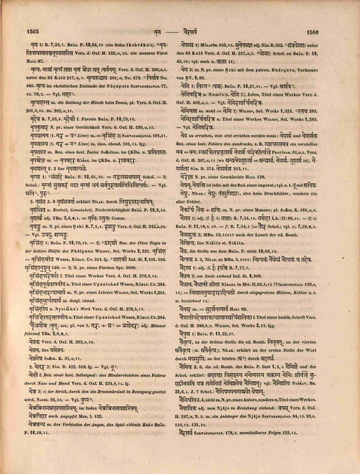
netra (von 1. nī) VOP. 26,68. oxyt. AV. parox. P. 3,2,182. n. SIDDH. K. 249,b. 3. m.n. SIDDH. K. 250,b,6. 1〉 nom. ag. Leiter, Führer, Lenker TRIK. 3,3,358. H. an. 2,435. MED. r. 55. Erscheint in dieser Bedeutung nur am Ende eines adj. comp. und ist hier gleichhedeutend mit netar, so dass die indischen Grammatiker es in diesem Falle als blossen Stellvertreter von netar betrachten. Nach P. 5,4,116, Vārtt. 2. 3 am Ende eines adj. comp. nur im Veda (bṛhaspatinetrāḥ, somanetrāḥ Sch.; vgl. agni˚, yama˚) und in Verbindung mit Sternbildnamen (puṣyanetrāḥ, mṛganetrāḥ Sch. mṛganetrā rātriḥ VOP. 6,30.) Für den Gebrauch von netra am Ende eines adj. comp. in der oben angegebenen Bed. können wir folgende Belege geben: sarvaṃ tatprajñānetram AIT. UP. 5,3. tvannetrāḥ santu te putrāḥ MBH. 2,2486. bhavannetrā raṇe śatrūnvijeṣyantīha pāṇḍavāḥ MBH. 7,3702. dhvajinyāṃ hatanetrāyām MBH. 9,222. nāvaṃ samudra iva bālanetrāmāruhya ghore vyasane nimajjet MBH. 2,2114. karmaṇā daivanetreṇa BHĀG. P. 3,31,1. — 2〉 m. N. pr. eines Sohnes des Dharma und Vaters des Kunti BHĀG. P. 9,23,21: vgl. dharmanetra. eines Sohnes des Sumati MATSYA-P._in_VP. 465, N. 17. LIA. I, Anh. XXXII. — 3〉 n. a〉 Leitung, Führung: tatàstvā bra̱hmodàhvaya̱tsa hi ne̱tramave̱ttavà AV. 10,10,22. — b〉 Auge (vgl. nayana) AK. 2,6,2,44. AK. 1,1,4,17. TRIK. H. 575. H. an. MED. HALĀY. 2,364. KAUŚ. 106. M. 4,44. M. 4,177. M. 8,26. HIḌ. 3,16. N. 4,13. N. 24,15. SUŚR. 1,120,4. SUŚR. 1,121,18. RAGH. 2,73. VARĀH. BṚH. S. 49,11. VARĀH. BṚH. S. 51,2. VARĀH. BṚH. S. 68,19. taṃ netragocaraṃ vīkṣya im Bereich des Auges seiend BHĀG. P. 8,17,5. netrotsava DHŪRTAS. 80,16. am Ende eines adj. comp. f. ā MBH. 15,436. HARIV. 3832. RAGH. 3,11. KUMĀRAS. 7,13. VIKR. 17. ŚRUT. (BR.) 11. CAURAP. 5. Symbolische Bezeichnung der Zahl zwei SŪRYAS. 2,19. SŪRYAS. 2,21. — c〉 der Strick, durch den der Butterstössel in Bewegung gesetzt wird, TRIK. H. an. MED. VIŚVA beim Schol. zu VĀSAV. S. 19 (wo netraṃ mathiguṇe zu lesen ist). manthānaṃ mandaraṃ kṛtvā tathā netraṃ ca vāsukim MBH. 1,1124. HARIV. 12184. R. GORR. 1,46,21. BHĀG. P. 8,7,1. Schol. zu KĀTY. ŚR. 356,10. KĀTY. ŚR. 363,3. fgg. — d〉 das Rohr an einer Klystirspritze SUŚR. 2,24,1. fgg. SUŚR. 2,197,1. SUŚR. 2,24,9. fgg. SUŚR. 2,200,19. SUŚR. 2,24,215. fgg. SUŚR. 2,24,2. — e〉 Wurzel AK. 3,4,25,182. TRIK. H. an. MED. HALĀY. 5,23. VIŚVA a. a. O. — f〉 eine Art Zeug oder Tuch, = aṃśuka AK. = vastra H. an. VIŚVA a. a. O. = vastrabheda MED. Seidenzeug VYUTP. 136. — g〉 Wagen MED. VIŚVA. a. a. O. — nekī s. u. netar.
Original text · German · Word type unspecified
netra 3〉c〉 der Strick, durch den ein Brummkreisel in Bewegung gesetzt wird, NAIṢ. 22,53. — Vgl. puṣpa˚.
Böhtlingk 1879 substantive masculine · substantive neuter · Word type unspecified
Original text · German · substantive masculine · substantive neuter
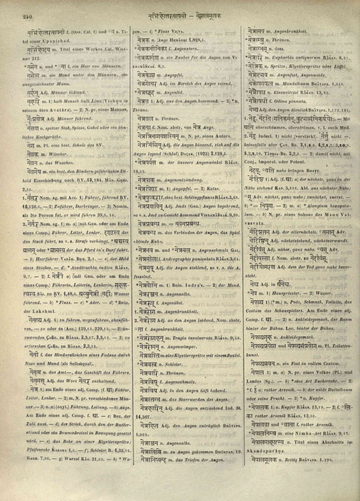
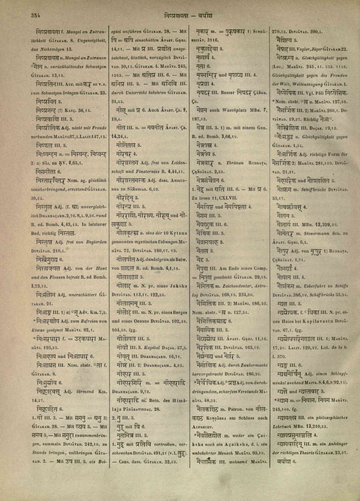
netra — 1〉 am Ende eines Adj. Comm. (f. ā) Führer, Leiter, Lenker. — 2〉 m. N. pr. verschiedener Männer. — 3〉 n. — a〉 (oxyt.) Führung, Leitung. — b〉 Auge. Am Ende eines adj. Comp. f. ā. — c〉 Bez. der Zahl zwei. — d〉 der Strick, durch den der Butterstössel oder ein Brummkreisel in Bewegung gesetzt wird. — e〉 das Rohr an einer Klystierspritze; Pfeifenrohr CARAKA. 1,5. — f〉 Schleier R. 1,35,16. RAGH. 7,36. — g〉 Wurzel KĀD. 21,23. — h〉 *Wagen. [Page3-240-b] — i〉 *Fluss VIŚVA.
Original text · German · substantive neuter
netra n. auch eine Art Zeug HARṢAC. (1936) 315,2. 438,7 (175,11). ˚vastra KĀŚĪKH. 30,44. [Nachtrag, Band 5]
Original text · German · Word type unspecified
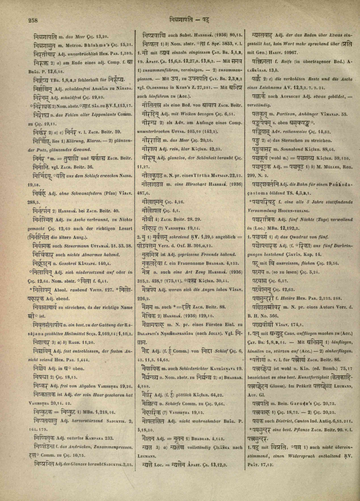
netra III. 5. 1〉 m. mit einem Gen. R. ed. Bomb. 3,66,10. [Nachtrag, Band 7]
Apte 1890 substantive neuter
Original text · English · substantive neuter
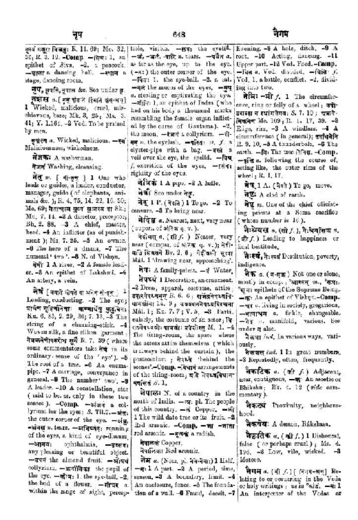
netraṃ [nayati nīyate vā anena nī-ṣṭran] 1 Leading, conducting. 2 The eye; prāyeṇa gṛhiṇīnetrāḥ kanyārtheṣu kuṭuṃbinaḥ Ku. 6. 85, Ku. 2. 29, Ku. 2. 30; Ku. 7. 13. 3 The string of a churning-stick. 4 Woven silk, a fine silken garment; netrakrameṇoparurodha sūryaṃ R. 7. 39 (where some commentators take netraṃ in its ordinary sense of the ‘eye’). 5 The root of a tree. 6 An enemapipe. 7 A carriage, conveyance in general. 8 The number ‘two’. 9 A leader. 10 A constellation, star (said to be. m. only in these two senses). Comp. — aṃjanaṃ a collyrium for the eyes; Ś. Til. 7. — aṃtaḥ the outer corner of the eye. — aṃbu, — aṃbhas n. tears. — abhiṣyaṃdaḥ running of the eyes, a kind of eye-disease. — āmayaḥ ophthalmia. — utsavaḥ any pleasing or beautiful object. — upamaṃ the almond fruit. — auṣadhaṃ collyrium. — kanīnikā the pupil of the eye. — koṣaḥ 1 the eye-ball. 2 the bud of a flower. — gocara a. within the range of sight, ([Page 0648-b]) perceptible, visible. — chadaḥ the eyelid. — jaṃ, -jalaṃ, -vāri n. tears. — paryaṃta a. as far as the eye, up to the eye. — (taḥ) the outer corner of the eye. — piṃḍaḥ 1 the eye-ball. 2 a cat. — malaṃ the mucus of the eyes. — muṣ a. stealing or captivating the eye. — yoniḥ 1 an epithet of Indra (who had on his body a thousand marks resembling the female organ inflicted by the curse of Gautama). 2 the moon. — raṃjanaṃ a collyrium. — roman n. the eyelash. — vastiḥ m. f. a clyster-pipe with a bag. — vastraṃ a veil over the eye, the eyelid. — viṣ f. excretion of the eyes. — staṃbhaḥ rigidity of the eyes.
Cappeller 1887 Word type unspecified
Original text · German · Word type unspecified
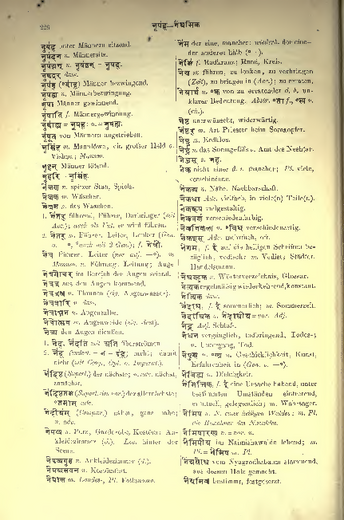
netra Führer, Leiter (nur adj. —˚). m. Mannsn. n. Führung, Leitung; Auge.
Burnouf 1866 adjective
Original text · French · adjective
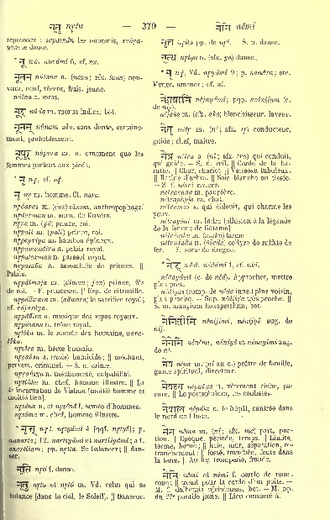
netra netra a. (nī; sfx. tra) qui conduit, qui guide. — S. n. œil. Corde de la baratte. Char, chariot. Vaisseau tubuleux. Racine d'arbre. Soie blanche ou tissée. — S. f. netri rivière. netrachada m. paupière. netrapiṇḍa m. chat. netramuṣ a. qui éblouit, qui charme les yeux. netrayoni m. Indra [allusion à la légende de la femme de Gotama]. netrāmbu m. (ambu) larme. netrauṣadha n. (oṣadha) collyre de sulfate de fer. — F. sorte de drogue.
Occurrences in source texts (3)
HP 1 occurrence
Continue with AYI Free
Image source: AYI archive.