

pāka पाक – as, ā, am (said to be fr. rt. 1. pā, to drink), Ved. very young
adjective · substantive masculine · substantive neuter · Word type unspecified
Dictionary sources
Cappeller 1891 adjective · substantive masculine
Original text · English · adjective
pā́ka1 ·a. very young, simple, ignorant, stupid, artless, honest. --m. the young of animals, N. of a Daitya.
Original text · English · substantive masculine
pāka2 ·m. (adj. --° f. ī) cooking, baking (tr. & intr.), burning (bricks), cooking in the stomach, i.e. digestion; ripening, maturity, development (esp. of consequences), perfection.
Monier-Williams 1872 adjective · substantive masculine
Original text · English · adjective
pāka 1 . pāka, as, ā, am (said to be fr. rt. 1. pā, to drink), Ved. very young; sincere, simple, genuine, inartificial, honest; ignorant; (as), m. the young of animals, a child, an infant; N. of a Daitya slain by Indra; an owl.
Original text · English · substantive masculine
pāka 2 . pāka, as, m. (fr. rt. 2. pac), cook- ing, baking, roasting, boiling, dressing food; burning (bricks or earthenware); digestion, assimilation of food; ripening, becoming ripe, ripeness; maturity, perfect development (e. g. dhiyas, of the intellect), development of consequences (as of an act done in a former life or of any act); completion, perfection, fulfilment, accomplishment [cf. phala-p˚]; greyness of the hair, old age; inflammation, suppuration, ripeness of a boil; an abscess, ulcer; a vessel in which anything is cooked or dressed, cooking utensil (a saucepan, boiler, &c.); the domestic fire; general fear and panic resulting in national disaster or revo- lution; the subversion of a country; [cf. a-p˚, ikṣu-p˚, kṛṣṇa-p˚.]
Petersburger 1855 adjective · substantive masculine · substantive neuter · Word type unspecified
Original text · German · adjective · substantive masculine
1. pā́ka (f. ā gaṇa ajādi zu P. 4,1,4) 1〉 adj. ganz jung: dhenuḥ pākavatsā ŚĀṄKH. GṚHY. 3,2. m. das Junge eines Thiers, Kind UṆĀDIS. 3,43. UṆĀDIS. 5,53. AK. 2,5,38. TRIK. 3,3,33. H. 338. H. an. 2,12. MED. k. 28. HALĀY. 2,347. Hierher gehört viell. ulūka˚ und kapota˚ im gaṇa nyaṅkvādi zu P. 7,3,53. pākā JAṬĀDH._im_ŚKDR. Wird in dieser Bedeutung von 1. pā trinken abgeleitet und also als Säugling aufgefasst. — 2〉 adj. einfältig, sowohl redlich, schlicht, als auch unkundig, unwissend NIR. 3,12. u̱ta trā̱tāsi̱ pāka̱syāthò ha̱ntāsì ra̱kṣasàḥ AV. 4,19,3. pākèna̱ manàsā̱ caràntam ṚV. 7,104,8. ṚV. 10,114,4. pra pāka̱ṃ śāssi̱ pra diśò vi̱duṣṭàraḥ ṚV. 1,31,14. ṚV. 3,9,7. ṚV. 4,5,2. ṚV. 10,28,5. pākàḥ pṛcchāmi̱ mana̱sāvìjānan ṚV. 1,164,5. ṚV. 1,164,21. kiṃ te̱ pākàḥ kṛṇava̱dapràcetāḥ ṚV. 10,7,6. a̱nyasya̱ sadàne sīda̱ yò 'smatpākàtaraḥ TS. 3,2,4,4. sinanti pākamati dhīra eti ĀŚV. ŚR. 1,3. — 3〉 m. N. pr. eines von Indra erschlagenen Daitya H. 174. H. an. MBH. 12,3660. BHĀG. P. 7,2,4. BHĀG. P. 8,11,19. BHĀG. P. 8,11,22; vgl. ˚śāsana, ˚śāsani. — 4〉 m. Eule ŚABDAR._im_ŚKDR.
Original text · German · substantive masculine
2. pāká (von 1. pac) m. P. 6,1,159, Sch. = pacā AK. 3,3,8. = pacana TRIK. 3,3,33. H. an. 2,12. MED. k. 28. UJJVAL._zu_UṆĀDIS. 3,43. 1〉 das Kochen, Backen; = kledana UJJVAL._zu_UṆĀDIS. 3,43. SĀH. D. 10,16. VOP. 7,90. KĀTY. ŚR. 8,8,39. vṛthā pākaḥ kṛto 'smābhiḥ MBH. 3,15551. fg. kṣāra˚ SUŚR. 1,31,9. ˚prāpte phāṇite SUŚR. 161,17. guḍe ca pākābhimukhe dem Sieden nahe 13. pāke kṣīrājyapayasāṃ śṛtam AK. 3,2,45. BHĀṢAP. 104. tadarthaṃ punaḥ- pākaṃ kṛtvā von Neuem kochen KULL._zu_M. 3,108. ṛjīṣaṃ piṣṭapākabhṛt H. 1020. ekapākena vasatām so v. a. gemeinschaftlich kochend, eine gemeinschaftliche Küche habend BṚHASPATI_bei_KULL._zu_M. 9,111. śatapākena tailena hundertmal gekocht MBH. 13,2763. — 2〉 das Backen, Brennen von Ziegeln und irdenen Geschirren KĀTY. ŚR. 16,4,26. MBH. 11,97. punaḥpākena bhāṇḍānāṃ pārthivānām MĀRK. P. 35,12. M. 5,122. M. 5,123. YĀJÑ. 1,187. — 3〉 das Kochen im Magen, Verdauung SUŚR. 1,61,15. fgg. SUŚR. 1,128,9. SUŚR. 1,143,8. fgg. SUŚR. 1,149,15. fgg. SUŚR. 1,244,21. — 4〉 das Reifen, Reifwerden: agrapākasya vrīhīṇāṃ yavānāṃ ca Erstlinge KĀTY. ŚR. 4,6,1. sasyāni pākamupayānti VARĀH. BṚH. S. 8,12. VARĀH. BṚH. S. 53,109. phala˚ P. 4,3,166, Vārtt. 1. M. 1,46. SUŚR. 1,4,18. AK. 2,4,1,6. H. 1117. HALĀY. 2,25. phalāni saṃjātapākāni Spr. 1589. nīvārapākādi (vanyam) so v. a. reifer Reis RAGH. 5,9. phalamabhinavapākaṃ rājajambūdrumasya VIKR. 90. phala˚ in übertr. Bed. das Reifwerden der Frucht so v. a. das Eintreten der Folgen VARĀH. BṚH. S. 11,7. VARĀH. BṚH. S. 11,36. svakarma˚ MĀRK. P. 70,34. yatkāryamasamīkṣitaṃ kriyate tasyedṛkphalapāko bhavati PAÑCAT. 129,13. pākābhimukhaiḥ — vijñāpanāphalaiḥ RAGH. 17,40. phalaṃ sadyaḥpākam die Folgen treten am selben Tage ein VARĀH. BṚH. S. 87,13. Auch ohne phala das Eintreten der Folgen, das in-Erfüllung-Gehen: dvābhyāṃ (māsābhyāṃ) pākaṃ ca yāti nirghātaḥ VARĀH. BṚH. S. 31,26. pākamupayāti daivam VARĀH. BṚH. S. 45,7. daśā˚ VARĀH. BṚH. S. 94,62. karmaṇaḥ VARĀH. BṚH. S. 85,5. HARIV. 14706. dharmasya saṃcitasya HARIV. 14758. ariṣṭa˚ SUŚR. 1,103,3. śubhasya Spr. 1751. tīvrāśubha˚ RĀJA-TAR. 6,149. kumantra˚ BHĀG. P. 3,3,13. yanmayā na kṛtaṃ vākyaṃ tava — tasyaiṣaḥ pākaḥ KATHĀS. 43,40. āśīrbhiḥ — puraḥpākābhiḥ KUMĀRAS. 6,90. saptāhapākā mṛgāḥ die Vorbedeutungen der Waldthiere gehen nach sieben Tagen in Erfüllung VARĀH. BṚH. S. 29,31. VARĀH. BṚH. S. 96,14. VARĀH. BṚH. S. 96,16. utpāta˚ DEV. 11,34. pāka = pariṇati MED. — 5〉 das Reifwerden der Haare so v. a. das Grauwerden derselben MED. hohes Alter UJJVAL._zu_UṆĀDIS. 3,43. — 6〉 Reife, vollkommene Entwickelung: dhiyaḥ der Einsicht, des Verstandes Spr. 1864. — 7〉 Entzündung, Eiterung, Geschwür SUŚR. 1,15,9. SUŚR. 1,34,16. SUŚR. 1,37,2. SUŚR. 1,67,13. gudamukhameḍhrapākāḥ SUŚR. 90,15. netra˚ Augenentzündung SUŚR. 2,314,11. SUŚR. 2,330,17. SUŚR. 2,332,15. akṣi˚ SUŚR. 1,361,7. SUŚR. 2,305,21. SUŚR. 2,312,7. SUŚR. 2,305,14. śuṣkākṣi˚ SUŚR. 314,18. — 8〉 Kochgeschirr MED. — 9〉 Hausfeuer Schol. zu KĀTY. ŚR. 6,10,29. — 10〉 general panick, or the subversion of a country WILS. nach ŚABDAR. = bhīti und rāṣṭrādibhaṅga (woraus im ŚKDR. zwei Bedeutungen gemacht werden: rāṣṭrādi und bhaṅga) ŚKDR. nach ders. Aut. — In compp. wie dūrepāka, phale˚, kṣaṇe˚ u. s. w. wird pāka von den Grammatikern adjectivisch aufgefasst und darum erscheinen diese Wörter im gaṇa nyaṅkvādi zu P. 7,3,53. Einige compp. auf pāka haben im fem. ī nach P. 4,1,64. — Vgl. a˚, arjunapākī, ikṣu˚, odanapākī, kaṭu˚, karṇa˚, karma˚, kiṃ˚, kumbhipākī, kumbhī˚, kṛṣṇa˚, kṛṣṇapākaphala, kṣaṇe˚ (wohl in einem Augenblicke gar werdend, reifend), kṣīra˚, guda˚, ghrāṇa˚, tālu˚, tvak˚, dūre˚ (wohl noch nicht so bald reif werdend), nāsā˚, nāsikā˚, para˚ (auch YĀJÑ. 1,112. MBH. 3,13353), māṃsa˚, śata˚, śṛta˚, sthālī˚, svādu˚.
Original text · German · substantive neuter
3. pāká n. nom. abstr. von 1. pāka gaṇa pṛthvādi zu P. 5,1,122.
Original text · German · Word type unspecified
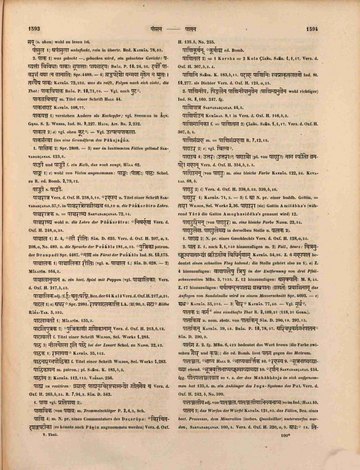
2. pāka 1〉 was gekocht —, gebacken wird, ein gekochtes Gericht: pacyantāṃ vividhāḥ pākāḥ sūpāntāḥ pāyasādayaḥ BHĀG. P. 10,24,26. darvī pākarasaṃ yathā (na jānāti) Spr. 4488. — 4〉 tvadupadeśo yanmayā mūḍhena na śrutaḥ . tasyaiṣa pākaḥ KATHĀS. 72,253. was da reift, Folgen nach sich zieht, die That: pākavipāka BHĀG. P. 10,71,10. — Vgl. noch puṭa˚.
Original text · German · Word type unspecified
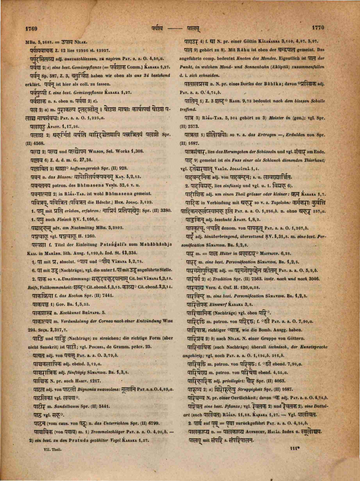
2. pāka so v. a. Umstimmung: sahṛdayahṛdayānām Cit. bei VĀMANA 1,2,18. Reife, Vollkommenheit: śabda˚ Cit. ebend. 1,3,15. kāvya˚ Cit. ebend. 3,2,14.
Böhtlingk 1879 adjective · substantive masculine · substantive neuter · Word type unspecified
Original text · German · adjective · substantive masculine
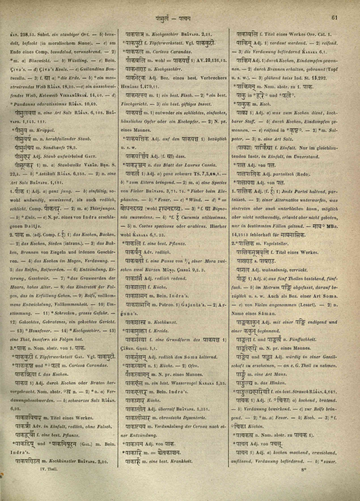
1. pā́ka — 1〉 Adj. — a〉 ganz jung. — b〉 einfältig sowohl unkundig, unwissend, als auch redlich, schlicht. Comp. pā́katara. — 2〉 m. — a〉 Thierjunges. — b〉 *Eule. — c〉 N. pr. eines von Indra erschlagenen Daitya.
Original text · German · substantive masculine
2. pāka m. (adj. Comp. f. ī) — 1〉 das Kochen, Backen. — 2〉 das Kochen, Sieden (intrans.). — 3〉 das Backen, Brennen von Ziegeln und irdenen Geschirren — 4〉 das Kochen im Magen, Verdauung. — 5〉 das Reifen, Reifwerden. — 6〉 Entzündung, Eiterung, Geschwür. — 7〉 *das Grauwerden der Haare, hohes Alter. — 8〉 das Grauwerden der Folgen, das in Erfüllung Gehen. — 9〉 Reife, vollkommene Entwickelung, Vollkommenheit. — 10〉 Umstimmung. — 11〉 *Schrecken, grosse Gefahr. — 12〉 Gekochtes, Gebratenes, ein gekochtes Gericht. — 13〉 *Hausfeuer. — 14〉 *Kochgeschirr. — 15〉 eine That, insofern sie Folgen hat.
Original text · German · substantive neuter
3. *pāka n. Nom. abstr. von 1. pāka.
Original text · German · Word type unspecified
1. pāka IV. 1〉a〉 ĀPAST. GṚHY. 20,15. [Nachtrag, Band 7]
Apte 1890 adjective · substantive masculine
Original text · English · adjective · substantive masculine
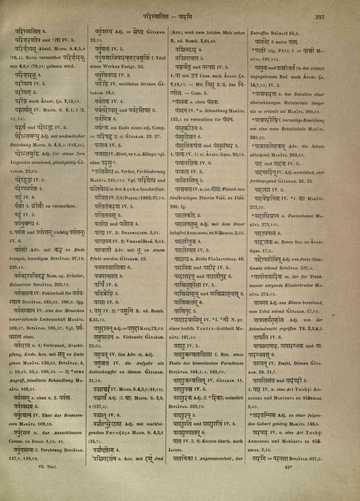
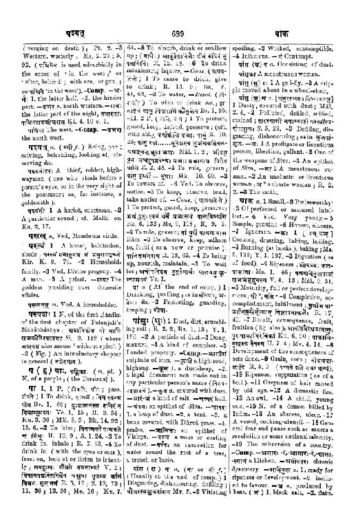
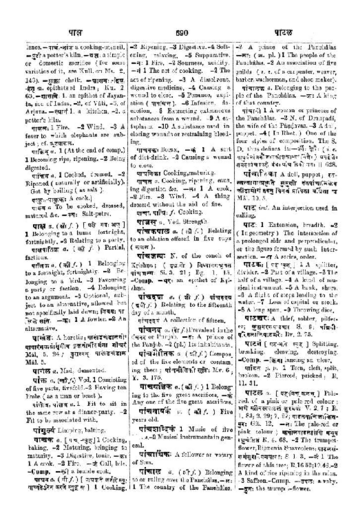
pāka a. 1 Small. 2 Praiseworthy. 3 Of perfected or matured intellect. 4 Ved. Very young. 5 Simple, genuine 6 Honest, sincere. 7 Ignorant. — kaḥ 1 [pac-ghañ] Cooking, dressing, baking, boiling. 2 Burning (as bricks), baking; Ms. 5. 122; Y. 1. 187. 3 Digestion (as of food). 4 Ripeness; oṣadhyaḥ phalapākāṃtāḥ Ms. 1. 46; palamabhimukhapākaṃ rājajaṃbūdrumasya V. 4. 13; Māl. 9. 31. 5 Maturity, full or perfect development; dhī˚, mati˚ 6 Completion, accomplishment, fulfilment; yuyoja pākābhimukhairbhṛtyān vijñāpanāphalaiḥ R. 17. 40. 7 Result, consequence, fruit, fruition (fig also); āśīrbhiredhayāmāsuḥ puraḥpākābhiraṃbikāṃ Ku. 6. 90; pākābhimukhasya daivasya U. 7. 4; Mv. 4. 14. 8 Development of the consequences of acts done. 9 Grain, corn; nīvārapākādi R. 5. 9 (pacyate iti pākaḥ dhānyaṃ). 10 Ripeness, suppuration (as of a boil). 11 Greyness of hair caused by old age. 12 A domestic fire. 13 An owl. 14 A child, young one. 15 N. of a demon killed by Indra. 16 An abscess, ulcer. 17 A vessel, cooking-utensil. 18 General fear and panic such as causes a revolution or some national calamity. 19 The subversion of a country. Comp. — agāraḥ -raṃ, -āgāraḥ -raṃ, -śālā, — sthānaṃ a kitchen. — atīsāraḥ chronic dysentery. — abhimukha a. 1 ready for ripeness or development. 2 inclined to favour. — ja a. produced by heat. (jaṃ) 1 black salt. 2 ([Page 0690-a]) flatulence. — pātraṃ, -bhāṃḍaṃ a cooking-utensil. — puṭī a potter's kiln. — yajñaḥ a simple or domestic sacrifice (for some varieties of it, see Kull. on Ms. 2. 143). — śuklā chalk. — śāsanaḥ, -dviṣ, — haṃtṛ m. epithets of Indra; Ku. 2. 63. — śāsaniḥ 1 an epithet of Jayanta, son of Indra. 2 of Vāli. 3 of Arjuna. — sthānaṃ 1 a kitchen. 2 a potter's kiln.
Cappeller 1887 substantive masculine · Word type unspecified
Original text · German · substantive masculine
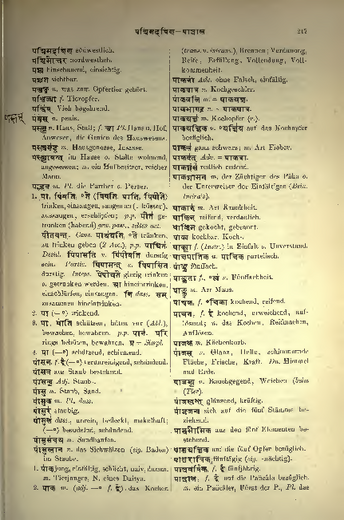
2. pāka m. (adj. —˚ f. ī) das Kochen [Page247-2] (trans. u. intrans.), Brennen; Verdauung, Reife, Erfüllung, Vollendung, Vollkommenheit.
Original text · German · Word type unspecified
1. pā́ka jung, einfältig, schlicht, naiv, dumm. m. Tierjunges, N. eines Daitya.
Burnouf 1866 substantive masculine
Original text · French · substantive masculine
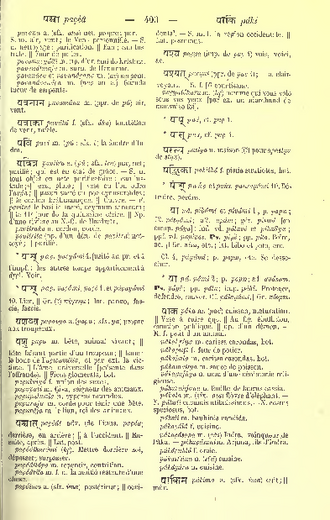
pāka pāka m. (pac) cuisson, maturation. Vase à cuire qqc. Au fig. ébullition, émotion publique. np. d'un démon. — M. f. petit d'un animal. pākakṛṣṇa m. carissa carondas, bot. pākapuṭī f. four de potier. pākaphala m. carissa carondas, bot. pākamatsya m. sauce de poisson. pākayajñya n. nom d'une cérémonie religieuse. pākarañjana n. feuille de laurus cassia. pākala m. (sfx. ala) fièvre d'élephant. — F. pākalī cucumis utilatissimus. — N. costus speciosus, bot. pākali m. bauhinia candida. pākaśālā f. cuisine. pākaśāsana m. (śās) Indra, vainqueur de Pāka. — pākaśāsani m. Arjuna, fils d'Indra. pākaśuklā f. craie. pākasthāna n. (sthā) cuisine. pākāgāra n. cuisine.
Occurrences in source texts (2)
GoS 1 occurrence
SiSa 1 occurrence
Continue with AYI Free
Image source: AYI archive.