

parvan पर्वन् – stage; section; division; joint
substantive neuter · Word type unspecified
Dictionary sources
AYI dictionary substantive neuter
stage; section; division; joint
Cappeller 1891 substantive neuter
Original text · English · substantive neuter
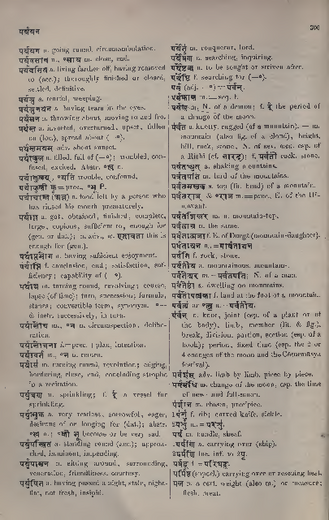
párvan ·n. knot, joint (esp. of a plant or of the body), limb, member (lit. & fig.), break, division, portion, section (esp. of a book); period, fixed time (esp. the 2 or 4 changes of the moon and the Caturmasya festival).
Monier-Williams 1872 substantive neuter
Original text · English · substantive neuter
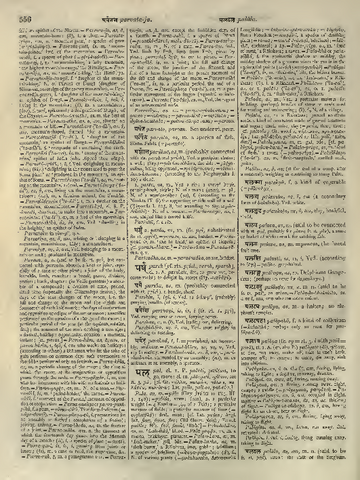
Parvan, a, n. (said to be fr. rt. pṝ, but con- nected with parvata above), a knot or joint, espe- cially of a cane or other plant; a joint of the body, knuckle, limb, member; a break, pause, division, section; book, chapter; (in Vedic grammar) a mem- ber of a compound; a division of time, period, fixed time (especially the Cāturmāsya festival), the days of the four changes of the moon, i. e. the full and change of the moon and the eighth and fourteenth of each half month; the days of conjunction and opposition or eclipse of the sun or moon; a sacrifice performed on the occasion of a change of the moon; a particular period of the year (as the equinox, solstice, &c.); the moment of the sun's entering a new sign; a festival, holiday; opportunity, occasion; a moment, instant; [cf. parus.]
Petersburger 1855 substantive neuter · Word type unspecified
Original text · German · substantive neuter
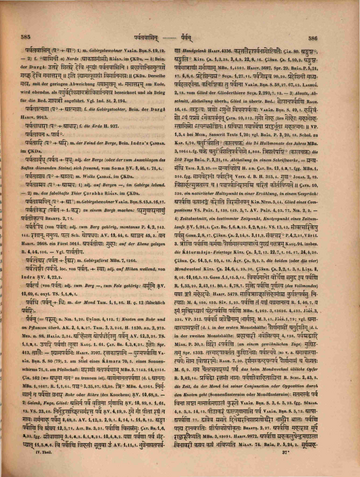
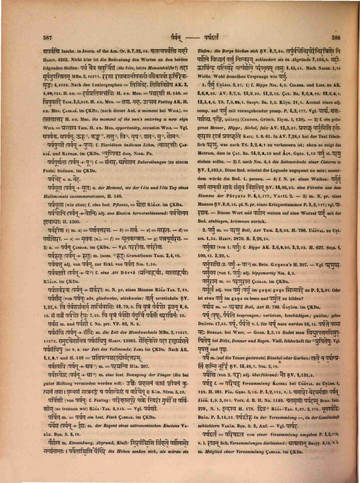
párvan (= parus) n. NIR. 1,20. UṆĀDIS. 4,112. 1〉 Knoten am Rohr und an Pflanzen überh. AK. 2,4,5,27. TRIK. 3,3,246. H. 1130. H. an. 2,273. MED. n. 88. HALĀY. 2,34. ahìṃsanta̱ oṣàdhīrdāntu̱ parvàn AV. 12,3,31. TS. 1,1,2,1. upari parvaṇāṃ lūtvā KAUŚ. 1,61. ŚAT. BR. 6,3,1,31. ikṣoḥ Spr. 413. tālaiḥ — śyāmaparvabhiḥ HARIV. 3707. dantakāṣṭhāni — yugmaparvāṇi VARĀH. BṚH. S. 80 (79), 2. am Stiel eines Cāmara VARĀH. BṚH. S. 70,5. eines Sonnenschirms VARĀH. BṚH. S. 71,2. am Pfeilschaft: śarāṇāṃ nataparvaṇām MBH. 5,7143. MBH. 14,2151. ŚĀK. 162 (wo adhunā nata˚ zu trennen ist). bāṇenānataparvaṇā (d. i. ānata) MBH. 1,1667. R. 1,1,64. pañca˚ R. 3,35,87. R. 3,43,20. tri˚ MBH. 4,1361. nirma̱jjāna̱ṃ na parvàṇo jabhāra Rohr oder Röhre (des Knochens) ṚV. 10,68,9. — 2〉 Gelenk, Fuge, Glied: a̱sirna parvà vṛji̱nā śṛ̀ṇāsi ṚV. 10,89,8. ṚV. 1,61,12. VS. 23,40. nirbhū̀dukha̱cchitsamàranta̱ parvà ṚV. 4,19,9. i̱me mā̀ pī̱tā ratha̱ṃ na gāva̱ḥ samànāha̱ parvàsu ṚV. 8,48,5. AV. 1,12,2. AV. 2,9,1. AV. 6,14,1. AV. 11,8,12. aṅgā̱ parvā̀ṇi̱ vi śràthaya AV. 12,5,71. AIT. BR. 3,31. parvāṇi visasraṃsuḥ ŚAT. BR. 1,6,3,35. fgg. grīvāṇām ŚAT. BR. 3,4,4,2. ŚAT. BR. 6,1,2,31. ŚAT. BR. 10,4,5,2. yathā parvaṇā parva saṃdadhyāt ŚAT. BR. 11,5,8,6. vi parvā̀ṇi jihatāṃ sūta̱vā ù AV. 1,11,1. bhujenāyataparvaṇā Handgelenk HARIV. 4336. karatalairāparvabhāgotthitaiḥ ŚĀK. 80. aṅguṣṭha˚, aṅguli˚ KĀTY. ŚR. 1,3,38. KĀTY. ŚR. 3,4,9. KĀTY. ŚR. 22,8,16. ŚĀṄKH. ŚR. 1,10,2. aṅguṣṭhaparvamātrāṇāṃ garbhāṇām MBH. 1,4501. HARIV. 5687. Spr. 29. BHĀG. P. 5,21,17. BHĀG. P. 6,8,6. pradeśinyagra˚ SUŚR. 1,27,11. parvagaurava SUŚR. 90,20. pradeśinī madhyaparvadalahīnā, kaniṣṭhikā tu parvonā VARĀH. BṚH. S. 58,27. VARĀH. BṚH. S. 67,42. LAGHUJ. 2,18. vom Glied der Gliederthiere SUŚR. 2,293,7. SUŚR. 2,293,13. — 3〉 Absatz, Abschnitt, Abtheilung überh., Glied in übertr. Bed.: sopānaparvāṇi RAGH. 16,46. (khaḍgasya) vraṇo 'śubho vipamaparvasthaḥ VARĀH. BṚH. S. 49,1. harivaṃśo 'yaṃ paprathe 'nekaparvabhṛt ŚATR. 10,312. tamo moha (lies moho) mahāmohastāmisro 'tyandhasaṃjñitaḥ . avidyā pañcaparvaiṣā prādurbhūtā mahātmanaḥ .. VP. 1,5,4_bei_MUIR, Sanskrit Texts 1,20; vgl. BHĀG. P. 3,20,18. Schol. zu KAP. 1,70. caturviṃśati˚ (kālacakra) die 24 Halbmonate des Jahres MBH. 3,10644. fg. cakre caturviṃśatiparvayoge MBH. 1,808. triśataṃṣaṣṭi˚ (kālacakra) die 360 Tage BHĀG. P. 3,21,18. Abtheilung in einem Schriftwerke, = granthasaṃdhi TRIK. 3,2,25. = granthaviśeṣa H. an. ŚAT. BR. 13,4,3,7. fgg. MBH. 1,310. fgg. sāmavedānāṃ parvādīn Verz. d. B. H. 315,4. guṇa˚ YOGAS. 2,19. viṃśārhatsuvratasya ca . pañcaparvābhirāmaśri caritaṃ kīrtayiṣyate .. ŚATR. 10,320. ein natürlicher Haltepunkt in einer Erzählung, in einem Gespräch: aparvaṇi kathābhaṅgaṃ karoti virasībhavan KĀM. NĪTIS. 5,44. Glied eines Compositums VS. PRĀT. 1,138. VS. PRĀT. 1,149. VS. PRĀT. 5,7. AV. PRĀT. 4,53. AV. PRĀT. 4,77. NIR. 2,2. — 4〉 Zeitabschnitt, ein bestimmter Zeitpunkt, Knotenpunkt eines Zeitumlaufs ṚV. 1,94,4. ŚAT. BR. 1,6,3,35. ŚAT. BR. 6,2,2,24. VS. 13,43. sāṃvatsarikeṣu parvasu GOBH. 2,8,17. ŚĀṄKH. ŚR. 2,14,8. ŚĀṄKH. ŚR. 3,11,9. saṃvatsara˚ P. 4,2,21, Vārtt. 3. trīṇi parvāṇi karmaṇaḥ paurṇamāsyamāvāsye puṇyaṃ nakṣatram KAUŚ. 94. insbes. die Cāturmāsya-Feiertage KĀTY. ŚR. 5,2,13. KĀTY. ŚR. 22,7,1. KĀTY. ŚR. 22,7,16. KĀTY. ŚR. 22,7,17. KĀTY. ŚR. 24,4,30. ŚĀṄKH. ŚR. 14,5,6. ŚĀṄKH. ŚR. 14,10,4. ŚĀṄKH. ŚR. 14,5,18. ĀŚV. ŚR. 9,2. ĀŚV. ŚR. 9,3. die beiden (oder die vier) Mondwechsel KĀTY. ŚR. 24,6,4. KĀTY. ŚR. 24,6,25. KĀTY. ŚR. 24,6,30. ŚĀṄKH. ŚR. 3,2,1. ŚĀṄKH. ŚR. 3,3,1. LĀṬY. 8,8,46. LĀṬY. 10,16,3. LĀṬY. 10,16,13. GOBH. 1,1,13. GOBH. 1,5,14. vivardhamāno vīryeṇa samudra iva parvaṇi R. 1,55,20. R. 2,43,11. R. 2,80,4. R. 6,78,7. śukle parvaṇi pūrṇasya (des Vollmondes) yathā rūpaṃ mahodadheḥ HARIV. 5479. sāvitrāñchāntihomāṃśca kuryātparvasu nityaśaḥ M. 4,150. M. 4,153. SĀV. 1,25. parvaṇi taṃ yajñaṃ yajamānasya R. 1,40,7. ya imaṃ śuciradhyāyaṃ paṭhetparvaṇi parvaṇi MBH. 1,262. MBH. 3,13626. MBH. 4,435. YĀJÑ. 3,334. VP. 312. parvavarjaṃ vrajeccainām (bhāryām) M. 3,45. YĀJÑ. 1,79; vgl. amāvāsyāmaṣṭamīṃ (d. i. in der ersten Monatshälfte) paurṇamāsīṃ caturdaśīm (d. i. in der zweiten Monatshälfte) brahmacārī bhavennityam YĀJÑ. 4,128. parvaśraddhādi MĀRK. P. 30,3. śiro 'parvaṇi (an einem gewöhnlichen Tage) muṇḍitam Spr. 1352. tasmādapāvartata kuṇḍineśaḥ parvātyaye (so v. a. amāvāsyātyaye) soma ivoṣṇaraśmeḥ RAGH. 7,30. darśamaskandayanparva paurṇamāsaṃ ca yogataḥ M. 6,9. mama caitatsamārabdhaṃ parva das beim Mondwechsel übliche Opfer R. 3,42,14. praviddho rakṣasāṃ bhāgaḥ parvaṇīvāhitāgninā R. SCHL. 2,43,5. die Zeit, da der Mond bei seiner Conjunction oder Opposition durch den Knoten geht (Sonnenfinsterniss oder Mondfinsterniss): satamaskaṃ parva vinā tvaṣṭā nāmārkamaṇḍalaṃ kurute VARĀH. BṚH. S. 3,6. VARĀH. BṚH. S. 5,23. fgg. SŪRYAS. 4,8. SŪRYAS. 5,3. SŪRYAS. 14,15. pīḍākaraṃ phālguṇamāsi parva VARĀH. BṚH. S. 5,73. āṣāḍhaparvaṇi 77. dvāveva grasate dineśvaraniśāprāṇeśvarau bhāsurau bhrāntaḥ parvaṇi paśya dānavapatiḥ śīrṣāvaśeṣīkṛtaḥ BHARTṚ. 2,27. aparvaṇi mahārāja sūryaṃ rāhurupaiṣyati MBH. 3,13091. HARIV. 9872. aparvaṇi grahakaluṣendumaṇḍalā vibhāvarī kathaya kathaṃ bhaviṣyati MĀLAV. 74. BHĀG. P. 5,24,2. sūryagrahaṇaparvaṇi Inschr. in Journ. of the Am. Or. S. 7,32,10. calatyaparvaṇi mahī HARIV. 4262. Nicht klar ist die Bedeutung des Wortes an den beiden folgenden Stellen: parva caiva caturviṃśaṃ (die 24te, letzte Monatshälfte?) tadā sūryamupasthitam MBH. 3,14271. rarāja rājanrajanīyakarmā yathaikaparvā ruciraikaśṛṅgaḥ MBH. 4,2088. Nach den Lexicographen = tithibheda, tithiviśeṣa AK. 3,4,18,124. H. an. = darśapratipatsaṃdhiḥ H. an. MED. = pañcadaśī H. 148. = viṣuvādi TRIK. 3,3,246. H. an. MED. = kṣaṇa, maha, utsava Festtag AK. H. an. MED. ŚABDAC._im_ŚKDR. (nach dieser Aut. a moment bei WILS.). = lakṣaṇāntara H. an. MED. the moment of the sunʼs entering a new sign WILS. = prastāva TRIK. H. an. MED. opportunity, occasion WILS. — Vgl. aparvaka, aparvan, ūru˚, kaṅka˚, tantu˚, vi˚, vṛṣa˚, śata˚, su˚, soma˚.
Original text · German · Word type unspecified
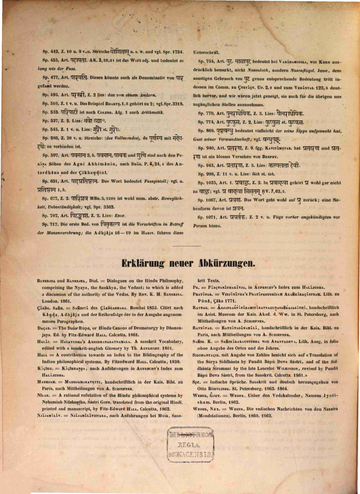
párvan [vgl. [4:586]] Z. 20 v. u. Streiche: (des Vollmondes), da pūrṇasya mit mahodadheḥ zu verbinden ist. (revision)
Original text · German · Word type unspecified
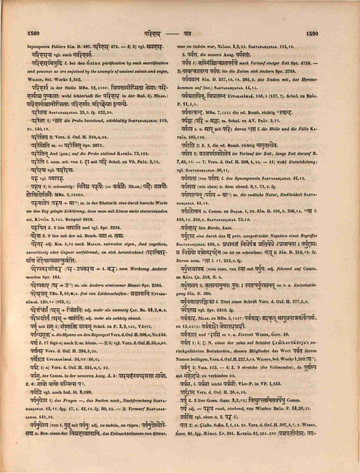
parvan 2〉 VIKR. 112. — 4〉 Z. 9 streiche (des Vollmondes), da pūrṇasya mit mahodadheḥ zu verbinden ist.
Original text · German · Word type unspecified
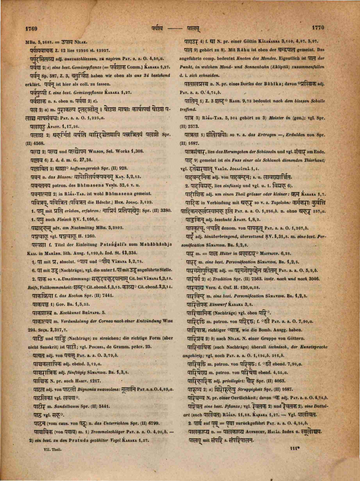
parvan Sp. 587, Z. 3, caturviṃśa haben wir oben als aus 24 bestehend erklärt. parvan ist hier als coll. zu fassen.
Böhtlingk 1879 substantive neuter
Original text · German · substantive neuter
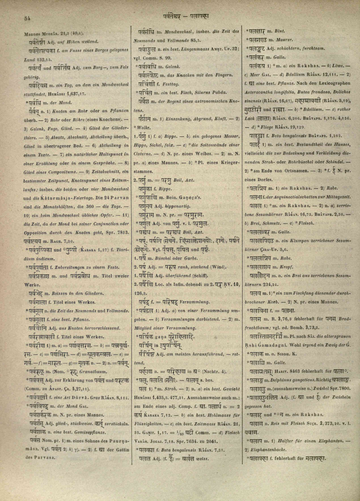
párvan n. — 1〉 Knoten am Rohr oder an Pflanzen überh. — 2〉 Rohr oder Röhre (eines Knochens). — 3〉 Gelenk, Fuge, Glied. — 4〉 Glied der Gliederthiere. — 5〉 Absatz, Abschnitt, Abtheilung überh. Glied in übertragener Bed. — 6〉 Abtheilung in einem Texte. — 7〉 ein natürlicher Haltepunct in einer Erzählung oder in einem Gespräche. — 8〉 Glied eines Compositums. — 9〉 Zeitabschnitt, ein bestimmter Zeitpunct, Knotenpunct eines Zeitumlaufes; insbes. die beiden oder vier Mondwechsel und die Cāturmāsya-Feiertage. Die 24 Parvan sind die Monatshälften, die 360 Parvan die Tage. — 10〉 ein beim Mondwechsel übliches Opfer. — 11〉 die Zeit, da der Mond bei seiner Conjunction oder Opposition durch den Knoten geht, Spr. 7813. parvātyaya m. RAGH. 7,30.
Apte 1890 substantive neuter
Original text · English · substantive neuter
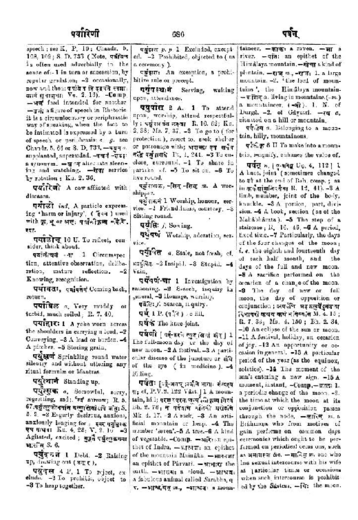
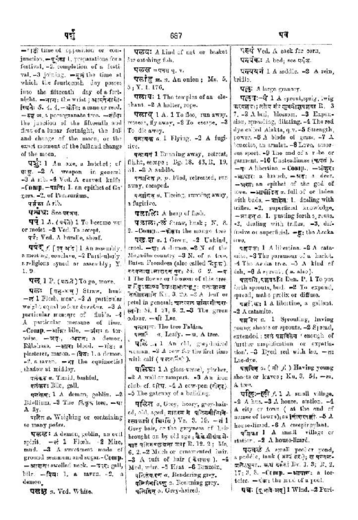
parvan n. [pṛ-vanip Uṇ. 4. 112] 1 A knot, joint (sometimes changed to parva at the end of Bah. comp.; as in karkaśāṃguliparvayā R. 12. 41). 2 A limb, member, joint of the body, knuckle. 3 A portion, part, division. 4 A book, section (as of the Mahābhārata). 5 The step of a staircase; R. 16. 46. 6 A period, fixed time. 7 Particularly, the days of the four changes of the moon; i. e. the eighth and fourteenth day of each half month, and the days of the full and new moon. 8 A sacrifice performed on the occasion of a change of the moon. 9 The day of new or full moon, the day of opposition or conjunction; aparvaṇi grahakaluṣeṃdumaṃḍalā vibhāvarī kathaya kathaṃ bhaviṣyati M. 4. 15; R. 7. 33; Ms. 4. 150; Bh. 2. 34. 10 An eclipse of the sun or moon. 11 A festival, holiday, an occasion of joy. 12 An opportunity or occasion in general. 13 A particular period of the year (as the equinox, solstice). 14 The moment of the sun's entering a new sign. 15 A moment, instant. Comp. — kālaḥ 1 a periodic change of the moon. 2 the time at which the moon at its conjunction or opposition passes through the node. — kārin m. a Brāhmaṇa who from motives of gain performs on common days ceremonies which ought to be performed on periodical occasions, such as amāvāsyā &c. — gāmin m. one who has sexual intercourse with his wife at particular times or occasions when such intercourse is prohibited by the Śāstras. — dhiḥ the moon. ([Page 0687-a]) — nāḍī time of opposition or conjunction. — pūrṇatā 1 preparations for a festival. 2 completion of a festival. 3 joining. — mūlaṃ the time at which the fourteenth day passes into the fifteenth day of a fortnight. — bhāgaḥ the wrist; āparvabhāgotthitaiḥ Ś. 4. 4. — yoniḥ a cane or reed. — ruh m. a pomegranate tree. — saṃdhiḥ the junction of the fifteenth and first of a lunar fortnight, the full and change of the moon, or the exact moment of the full and change of the moon.
Cappeller 1887 substantive neuter
Original text · German · substantive neuter
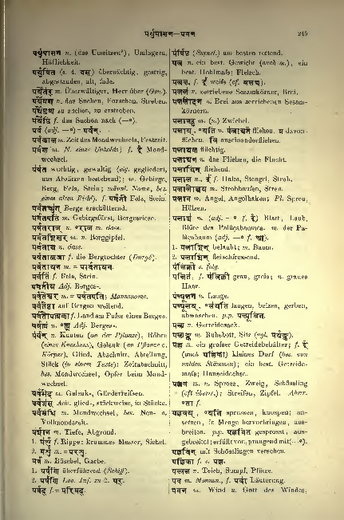
párvan n. Knoten (an der Pflanze), Röhre (eines Knochens), Gelenk (an Pflanze o. Körper), Glied, Abschnitt, Abteilung, Stück (in einem Texte); Zeitabschnitt, bes. Mondwechsel, Opfer beim Mondwechsel.
Burnouf 1866 substantive neuter
Original text · French · substantive neuter
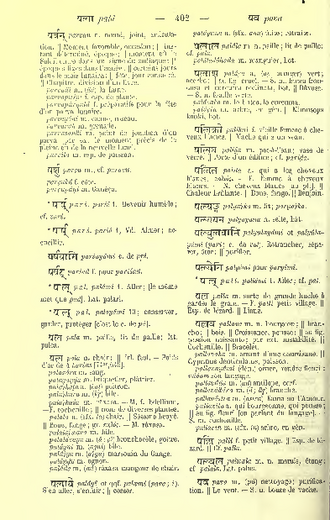
parvan parvan n. nœud, joint, articulation. Moment favorable, occasion; instant déterminé, époque; moment où le Soleil entre dans un signe du zodiaque; époques fixes dans l'année; certains jours dans le mois lunaire; fête, jour consacré. Chapitre, division d'un livre. parvadhi m. (dhā) la Lune. parvapuṣpī f. esp. de plante. parvapūrṇatā f. préparatifs pour la fête d'un parva lunaire. parvayoni m. canne, roseau. parvaruh m. grenade. parvasandhi m. point de jonction d'un parva [par ex. le moment précis de la pleine ou de la nouvelle lune]. parvita m. esp. de poisson.
Occurrences in source texts (2)
PYS 1 occurrence
SVU 1 occurrence
Continue with AYI Free
Image source: AYI archive.