

ruci रुचि – liking
adjective · substantive feminine · substantive masculine · Word type unspecified
Dictionary sources
AYI dictionary substantive feminine
liking
Cappeller 1891 substantive feminine
Original text · English · substantive feminine
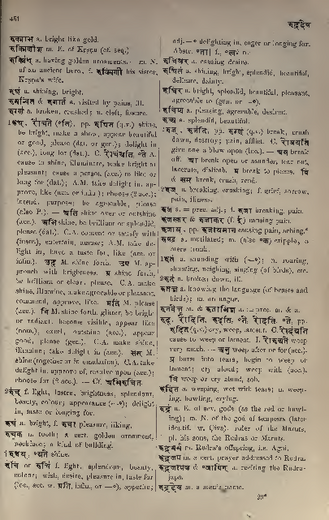
rúci ·f. light, splendour, beauty, colour; wish, desire, pleasure in, taste for (loc., acc. w. prati, infin., or --°), appetite; adj. --° delighting in, eager or longing for. Abstr. °tāÅ f., °tvaÅ n.
Original text · English · substantive feminine
rucí ·f. light, splendour, beauty, colour; wish, desire, pleasure in, taste for (loc., acc. w. prati, infin., or --°), appetite; adj. --° delighting in, eager or longing for. Abstr. °tāÅ f., °tvaÅ n.
Monier-Williams 1872 substantive feminine
Original text · English · substantive feminine
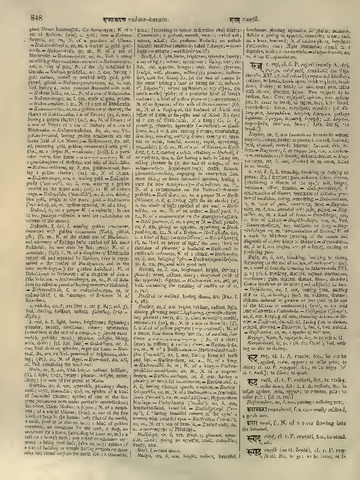
Ruci, is, f. light, lustre, brightness, splendor, beauty; a ray of light; colour; appearance; liking, taste, re- lish, zest, appetite, hunger; wish, desire, pleasure, (rucyā, with pleasure, willingly); passion; inclina- tion, taste for, liking for, (at the end of comps. in the sense ‘having a taste or liking for,’ cf. māṃsa- r˚, hiṃsā-r˚); intent application to any object; (in erotic works) epithet of a particular kind of lover's embrace; a kind of yellow pigment (= go-rocanā); N. of an Apsaras; of the wife of Deva-śarman; (is), m., N. of a Prajā-pati, the husband of Ākūti and father of Yajña or Su-yajña and of Manu Raucya; of a son of Viśvā-mitra; of a king; (is, is, i), pleasing, pleasant, agreeable (= rucira).
Petersburger 1855 adjective · substantive feminine · substantive masculine
Original text · German · adjective · substantive feminine · substantive masculine
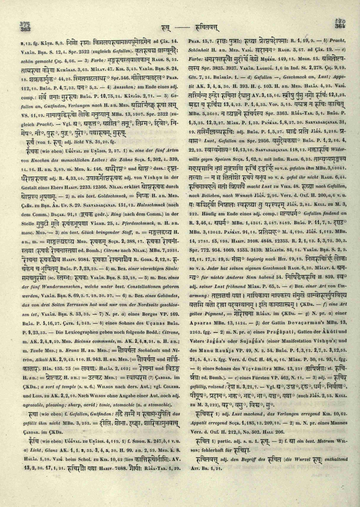
rúci (wie eben) UJJVAL._zu_UṆĀDIS. 4,119. 1〉 f. SIDDH. K. 247,b,1 v. u. a〉 Licht, Glanz AK. 1,1,2,35. AK. 3,4,5,30. H. 99. H. an. 2,59. MED. c. 8. HALĀY. 1,38. VAIJ. beim Schol. zu KIR. 10,62 (lies kāntirucorbhāsi). AV. 13,2,30. AV. 17,1,21. ruciragnau yathā HARIV. 7088. gauryāḥ RĀJA-TAR. 1,29. PRAB. 15,7. (rājñaḥ putrāḥ) rucyā proṣṭhapadopamāḥ R. 1,19,9. — b〉 Pracht, Schönheit H. an. MED. VAIJ. tvadānana˚ RAGH. 5,67. ad ŚĀK. 19. — c〉 Farbe: bhramarapakṣarucau sudīrghe keśe MṚCCH. 149,15. MEGH. 15. asitotpalasya Spr. 3825. Spr. 3937. VARĀH. LAGHUJ. 1,6_in_Ind. St. 2,278. ŚIŚ. 9,19. GĪT. 7,24. BHĀṢĀP. 1. — d〉 Gefallen —, Geschmack an, Lust; Appetit AK. 3,4,5,30. H. 393. H. ś. 103. H. an. MED. HALĀY. 4,25. VAIJ. tasmìnma̱ indro̱ ruci̱mā dàdhātu AV. 3,15,16. strī̱ṣu pu̱ṃsu bhago̱ rucìḥ AV. 12,1,25. śra̱ddhā ca̱ rucìśca AV. 13,4,23. P. 1,4,33. VOP. 5,15. yadyatra na ruciḥ kācit MBH. 5,3601. na vyañjane ruciryasya Spr. 3363. RĀJA-TAR. 5,1. BHĀG. P. 1,5,25. BHĀG. P. 12,3,27. MĀRK. P. 1,33. PAÑCAR. 1,8,27. PAÑCAR. 1,8,30. SARVADARŚANAS. 31,19. tasmim̐llabdharuciḥ adj. BHĀG. P. 1,5,27. śrāddhaṃ prati YĀJÑ. 1,218. pravāsa˚ Lust, Gefallen an Spr. 2956. vasudevakathā˚ BHĀG. P. 1,2,16. BHĀG. P. 4,22,23. svasvabhojya˚ BHĀG. P. 10,13,10. SARVADARŚANAS. 118,12. bhaktāruci Widerwille gegen Speisen SUŚR. 1,62,3. mit infin. RAGH. 6,35. tānyṛṣyaśṛṅgasya mahārasāni bhṛśaṃ surūpāṇi ruciṃ dadurhi so v. a. gefielen ihm MBH. 3,10041. tasyāḥ — na sa kṣitīśo rucaye babhūva so v. a. gefiel ihr nicht RAGH. 6,44. rucimāvahate satāṃ kriyāyai macht Lust zu VIKR. 48. rucyā nach Gefallen, nach Belieben, nach Wunsch YĀJÑ. 2,96. Verz. d. Oxf. H. 200,a,6 v. u. yaḥ kaścidartho niṣṇātaḥ svarucyā tu parasparam YĀJÑ. 2,84. KULL._zu_M. 3,222. Häufig am Ende eines adj. comp.: satyadharma˚ Gefallen findend an R. 3,46,4. adharma˚ MBH. 1,4341. MBH. 3,487. MBH. 3,8489. BHĀG. P. 11,7,5. daṇḍa˚ MBH. 3,13043. PAÑCAT. 91,18. pratigraha˚ M. 4,190. YĀJÑ. 1,112. MBH. 14,2781. MBH. 15,198. HARIV. 3108. HARIV. 4848. HARIV. 12355. R. 2,1,13. R. 5,3,72. R. 5,30,3. Spr. 772. Spr. 954. Spr. 1069. Spr. 1555. Spr. 3159. MĀLATĪM. 84,14. VARĀH. BṚH. S. 2,9. VARĀH. BṚH. S. 12,11. VARĀH. BṚH. S. 17,3. VARĀH. BṚH. S. 19,5. māṃsa˚ begierig nach HIT. 19,19. bhinnarucirhi lokaḥ so v. a. Jeder hat seinen eigenen Geschmack RAGH. 6,30. MĀLAV. 4. ananya˚ für nichts Anderes Sinn habend MĀLAV. 54. niṣiddhaikaruci H. 859. sva˚ adj. seiner Lust fröhnend MĀRK. P. 65,5. — e〉 Bez. einer Art von Umarmung: tallakṣaṇaṃ yathā . nāyikāyā nāyakasya saṃmukhe jānvoruparyupaviśya vakṣasi vakṣo dattvā yadavasthānam . iti kāmaśāstram . ŚKDR. — f〉 eine Art gelbes Pigment, = gorocanā RĀJAN._im_ŚKDR. — g〉 N. pr. α〉 einer Apsaras MBH. 13,1424. — β〉 der Gattin Devaśarmanʼs MBH. 13,2263. fgg. — 2〉 m. N. pr. a〉 eines Prajāpati, Gatten der Ākūti und Vaters Yajñaʼs oder Suyajñaʼs (einer Manifestation Viṣṇuʼs) und des Manu Raucya VP. 49, N. 2. VP. 49,54. BHĀG. P. 1,3,12. BHĀG. P. 2,7,2. BHĀG. P. 3,12,55. BHĀG. P. 3,21,5. BHĀG. P. 3,4,1. BHĀG. P. 3,12,2. fgg. Verz. d. Oxf. H. 48,a,16. MĀRK. P. 50,16. MĀRK. P. 95,1. fgg. — b〉 eines Sohnes des Viśvāmitra MBH. 13,251 (ṛṣirvrajaḥ st. rucirvrajaḥ ed. Bomb.). — c〉 eines Fürsten VP. 462, N. 11. — 3〉 adj. = rucira gefällig, reizend: deśa R. 3,21,7. — Vgl. a˚, uṣṇa˚, dṛḍha˚, dharma˚, nirvāṇa˚, pīyūṣa˚, pradāna˚, bhakta˚, bhadra˚, bhā˚, yajña˚, yathā˚ (auch YĀJÑ. 2,55. KULL._zu_M. 3,222), vara˚, vasu˚, viśva˚, su˚.
Böhtlingk 1879 substantive feminine · substantive masculine
Original text · German · substantive feminine · substantive masculine
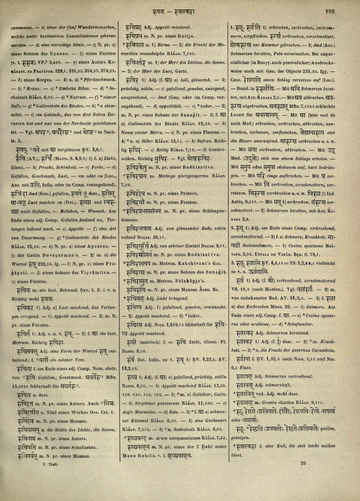
rúci (AV.), rucí (MAITR. S. 4,9,5) — 1〉 f. — a〉 Licht, Glanz. — b〉 Pracht, Schönheit. — c〉 Farbe. — d〉 Gefallen, Geschmack, Lust, — an oder zu (Loc., Acc. mit prati, Infin. oder im Comp. vorangehend). ruciṃ dā Jmd (Gen.) gefallen, rucaye bhū dass., rucim ā-vah Lust machen zu (Dat.). rucyā und svarucyā nach Gefallen, — Belieben, — Wunsch. Am Ende eines adj. Comp. Gefallen findend an, Verlangen habend nach. — e〉 Appetit. — f〉 eine Art von Umarmung. — g〉 *Gallenstein des Rindes RĀJAN. 12,58. — h〉 N. pr. — α〉 einer Apsaras. — β〉 der Gattin Devaśarmanʼs. — 2〉 m. — a〉 die Wurzel ruc Chr. 222,26. fg. — b〉 N. pr. — α〉 eines Prajāpati. — β〉 eines Sohnes des Viśvāmitra. — γ〉 eines Fürsten.
Original text · German · substantive feminine · substantive masculine
rúci (AV.), rucí (MAITR. S. 4,9,5) — 1〉 f. — a〉 Licht, Glanz. — b〉 Pracht, Schönheit. — c〉 Farbe. — d〉 Gefallen, Geschmack, Lust, — an oder zu (Loc., Acc. mit prati, Infin. oder im Comp. vorangehend). ruciṃ dā Jmd (Gen.) gefallen, rucaye bhū dass., rucim ā-vah Lust machen zu (Dat.). rucyā und svarucyā nach Gefallen, — Belieben, — Wunsch. Am Ende eines adj. Comp. Gefallen findend an, Verlangen habend nach. — e〉 Appetit. — f〉 eine Art von Umarmung. — g〉 *Gallenstein des Rindes RĀJAN. 12,58. — h〉 N. pr. — α〉 einer Apsaras. — β〉 der Gattin Devaśarmanʼs. — 2〉 m. — a〉 die Wurzel ruc Chr. 222,26. fg. — b〉 N. pr. — α〉 eines Prajāpati. — β〉 eines Sohnes des Viśvāmitra. — γ〉 eines Fürsten.
Apte 1890 substantive feminine
Original text · English · substantive feminine
ruciḥ(cī) f. [ruc-ki vā ṅīp] 1 Light, lustre, splendour, brightness; ([Page 0914-b]) rucimiṃdudale karotyajaḥ paripūrṇaṃdurucirmahīpatiḥ Śi. 16. 71; R. 5. 67; Me. 15. 2 A ray of light; as in rucibhartṛ q. v. 3 Appearance, colour, beauty (usually at the end of comp.); paṭalaṃ bahirbahalapaṃkaruci Śi. 9. 19. 4 Taste, relish; as in rucikara. 5 Zest, hunger, appetite. 6 Wish, desire, pleasure; svarucyā ‘at will or pleasure. 7 Liking, taste; vimārgagāyāśca ruciḥ svakāṃte Bv. 1. 125 ‘liking or love’; na sa kṣitīśo rucaye babhūva; bhinnarucirhi lokaḥ R. 6. 30; nāṭyaṃ bhinnarucerjanasya bahudhāpyekaṃ samārādhanaṃ M. 1. 4; oft. in comp. in the sense of ‘indulging in’, ‘devoted or addicted to’; hiṃsāruceḥ Māl. 5. 29. 8 Passion, close application to any object 9 A kind of yellow pigment ( gorocanā). Comp. — kara a. 1 tasteful, savoury, palatable. 2 exciting desire. 3 stomachic, tonic. — dhāman m. the sun. — bhartṛ m. 1 the sun; Śi. 9. 17. 2 a husband.
Cappeller 1887 substantive feminine · Word type unspecified
Original text · German · substantive feminine
1. rúci u. rucí f. Licht, Glanz, Pracht, Farbe; Geschmack, Gefallen, Lust an (Loc. Acc. mit) prati, Inf. o. —˚), Appetit.
Original text · German · Word type unspecified
2. ruci die Wurzel ruc (g.).
Burnouf 1866 substantive feminine
Original text · French · substantive feminine
ruci f. lueur, lumière, rayon; éclat; lustre, beauté. Appétit, faim. Désir, passion; attention portée sur un objet.
Occurrences in source texts (1)
DYS 1 occurrence
Continue with AYI Free
Image source: AYI archive.