

sthāṇu स्थाणु – motionless
adjective · substantive masculine · substantive neuter · Word type unspecified
Dictionary sources
AYI dictionary adjective
motionless
Cappeller 1891 adjective
Original text · English · adjective
sthāṇú ·a. standing, firm, immovable; m. trunk or stem of a tree, post, pillar, E. of Śiva.
Monier-Williams 1872 Word type unspecified
Original text · English · Word type unspecified
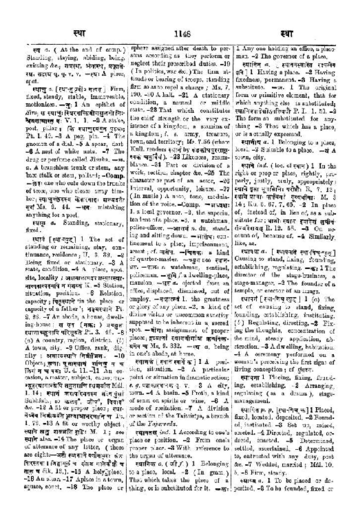
Sthāṇu, us, us, u, firm, fixed, steady, stable, im- movable, motionless; (us), m., N. of Śiva; a stake, post, pile; a peg, pin, pillar; the gnomon of a dial; a spear, dart; a nest of white ants; the drug or per- fume called Jīvaka, q. v.; (us, u), m. n. a branchless trunk or stem, the trunk of a lopped tree or of any tree, any bare stock or stem.
Original text · English · Word type unspecified
sthāṇu sthāṇu. See p. 1146, col. 1.
Petersburger 1855 adjective · substantive masculine · substantive neuter
Original text · German · adjective · substantive masculine · substantive neuter
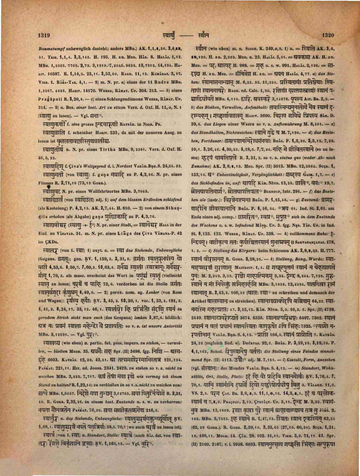
sthāṇú (von 1. sthā) UṆĀDIS. 3,37. 1〉 adj. stehend d. i. unbeweglich; n. das Unbewegliche DHARAṆĪ_im_ŚKDR. ŚABDĀRTHAK._bei_WILSON. jagatsarvaṃ caraṃ sthāṇu M. 3,201. yadidaṃ sthāṇu jaṅgamam MBH. 14,1487. MĀRK. P. 48,38. lokānsthāṇujaṅgamān HARIV. 944. neben sarīsṛpa BHĀG. P. 5,18. BHĀG. P. 5,27. sthāṇubhyo himavāñchreṣṭhaḥ HARIV. 3984. die Seele BHAG. 2,24. lokānsasthāṇujaṅgamān MBH. 1,1524. MBH. 1,6622. — 2〉 m.n. gaṇa ardharcādi zu P. 2,4,31. TRIK. 3,5,9. Stumpf, Stock eines Baumes, Pflock; m.n. AK. 2,4,1,8. m. (nur dieses zu belegen) TRIK. 3,3,142. H. 1122. H. an. 2,156. MED. ṇ. 132 (m. in der Bed. kīla, m.n. in der Bed. dhruva). HALĀY. 5,11. sthā̱ṇuṃ pàthe̱ṣṭhāmapà durma̱tiṃ hàtam ṚV. 10,40,13. AV. 10,4,1. AV. 14,2,48. fg. śuṣka AV. 19,49,10. CHĀND. UP. 5,2,3. a̱gni̱ho̱trasya̱ vai sthā̱ṇuràsti̱ taṃ ya ṛ̱cchedyàjñasthā̱ṇumṛ̀cchet das A. hat einen Stumpf (d. h. Stein des Anstosses), wer sich daran stösst u. s. w. TBR. 2,1,4,3. TS. 6,1,2,4. yaḥ sthā̱ṇuṃ hantì TS. 7,3,1,1. AIT. BR. 3,14. ŚĀṄKH. BR. 26,4. naiṣa sthāṇoraparādho yadenamandho na paśyati NIR. 1,16. bhārahāra NIR. 18. ŚAT. BR. 2,6,2,17. ŚAT. BR. 3,6,2,4. ŚAT. BR. 3,6,2,9. ŚAT. BR. 3,5,2,13. ŚAT. BR. 14,9,3,15. KĀTY. ŚR. 5,10,21. KĀTY. ŚR. 14,3,12. KAUŚ. 49. sthāṇumanye 'nusaṃyanti CAṬHOP. 5,7. Ind. St. 4,330. ˚ccheda M. 9,44. R. 2,80,6 (sthāṇūn zu lesen). sthāṇvādibhyo yathā vinā chāyā SĀṂKHYAK. 41. KĀM. NĪTIS. 14,21. KĀM. NĪTIS. 14,32. KĀM. NĪTIS. 16,18. KĀM. NĪTIS. 19,11. ālānika RAGH. 14,38. Spr. (II) 7356. VARĀH. BṚH. S. 94,13. kiṃ svinnaro vā sthāṇurvā BHĀṢĀP. 128. ŚAṂK._zu_BṚH. ĀR. UP. S. 69. als Bild des Unbeweglichen: sthāṇuriva tiṣṭhamānāḥ MAITRYUP. 2,6. MBH. 1,7291. R. 1,63,24 (R. 1,65,29 GORR.). ŚĀK. 170. Spr. (II) 437. BHĀG. P. 1,13,53. ˚bhūta MBH. 5,7347. — 3〉 m. ein best. Theil des Pfluges (fünf Vitasta lang) KṚṢIS. 9,6. KṚṢIS. 9,7. — 4〉 m.n. ein best. Geschoss NĪLAK._zu_AK. nach ŚKDR. — 5〉 m. ein best. Parfum, = jīvaka ŚABDAC._im_ŚKDR. — 6〉 m. a nest of white ants WILSON nach einem Comm. zu AK. — 7〉 m. ein N. Śivaʼs (der bei seinen Bussübungen wie ein Baumstumpf unbeweglich dasteht; anders MBH.) AK. 1,1,1,30. AK. 3,4,13,51. TRIK. 1,1,4. TRIK. 3,3,142. H. 195. H. an. MED. HĀR. 8. HALĀY. 1,12. MBH. 1,2565. MBH. 1,7702. MBH. 2,72. MBH. 3,1518. MBH. 7,2046. MBH. 7,9625. MBH. 13,7512. MBH. 14,194. HARIV. 10587. R. 1,14,5. R. 1,25,11. R. 3,53,60. RAGH. 11,13. KUMĀRAS. 3,17. VIKR. 1. RĀJA-TAR. 4,1. — 8〉 m. N. pr. a〉 eines der 11 Rudra MBH. 1,2567. MBH. 1,4826. HARIV. 14170. WEBER, RĀMAT. UP. 304. WEBER, RĀMAT. UP. 313. — b〉 eines Prajāpati R. 3,20,8. — c〉 eines Schlangendämons WEBER, RĀMAT. UP. 314. — 9〉 n. Bez. einer best. Art zu sitzen Verz. d. Oxf. H. 11,a, N. 1 (sthāṇu zu lesen). — Vgl. sabhā˚.
Böhtlingk 1879 adjective · substantive masculine · substantive neuter · Word type unspecified
Original text · German · adjective · substantive masculine · substantive neuter
sthāṇú — 1〉 Adj. stehend, d. i. unbeweglich; n. das Unbewegliche. — 2〉 m. (*n.) — a〉 Stumpf, Stock eines Baumes, Pflock; Pfosten ĀPAST. GṚHY. 5,25. Auch als Bild des Unbeweglichen. — b〉 ein best. Geschoss. — 3〉 m. — a〉 ein best. Theil des Pfluges. — b〉 ein best. wohlriechender Stoff. — c〉 a nest of white ants. — d〉 Bein. Śivaʼs, der bei seinen Bussübungen wie ein Baumstumpf unbeweglich dasteht; anders im MBH. erklärt. — e〉 N. pr. — α〉 einer der 11 Rudra. — β〉 eines Prajāpati. — γ〉 eines Rākṣasa TĀṆḌYA-BR. 15,5,20. — δ〉 eines Schlangendämons. — 4〉 n. eine best. Art zu sitzen.
Original text · German · Word type unspecified
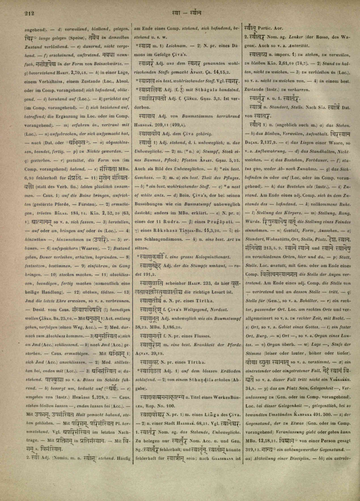
sthāṇu VII. Adj. fest CAṆḌĪŚ. 101. [Nachtrag, Band 7]
Apte 1890 adjective · substantive masculine
Original text · English · adjective · substantive masculine
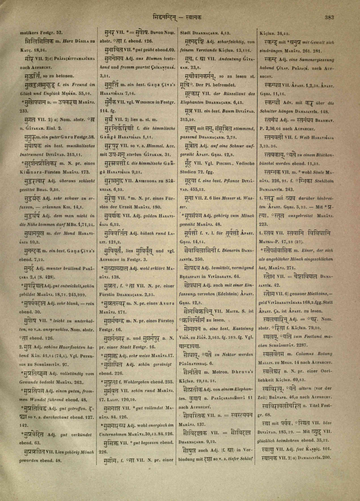
sthāṇu a. [sthā-nu pṛṣo˚ ṇatvam] Firm, fixed, steady, stable, immovable, motionless. — ṇuḥ 1 An epithet of Śiva; sa sthāṇuḥ sthirabhaktiyogasulabho niḥśreyasāyāstu vaḥ V. 1. 1. 2 A stake, post, pillar; kiṃ sthāṇurayamuta puruṣaḥ; Pt. 1. 49. 3 A peg, pin. 4 The gnomon of a dial. 5 A spear, dart. 6 A nest of white ants. 7 The drug or perfume called Jīvaka. — m. n. A branchless trunk or stem, any bare stalk or stem, pollard; Comp. — chedaḥ one who cuts down the trunks of trees, one who clears away timber; sthāṇucchedasya kedāramāhuḥ śalyavato mṛgaṃ Ms. 9. 44. — bhramaḥ mistaking anything for a post.
Cappeller 1887 Word type unspecified
Original text · German · Word type unspecified
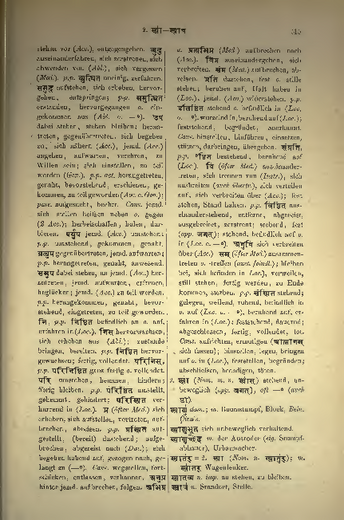
sthāṇú dass.; m. Baumstumpf, Block, Bein. Śiva's.
Burnouf 1866 adjective
Original text · French · adjective
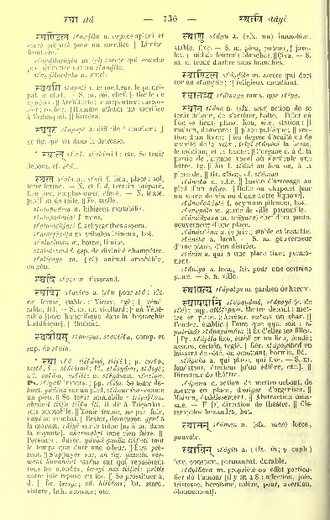
sthāṇu sthāṇu a. (sfx. nu) immobile, stable, fixe. — S. m. pieu, poteau, javelot. nid de fourmis blanches. Śiva. — S. m. n. tronc d'arbre sans branches.
Occurrences in source texts (1)
HP 1 occurrence
Continue with AYI Free
Image source: AYI archive.