

sūtra सूत्र – cord; thread
substantive masculine · substantive neuter · Word type unspecified
Dictionary sources
AYI dictionary substantive neuter
cord; thread
Cappeller 1891 substantive neuter
Original text · English · substantive neuter
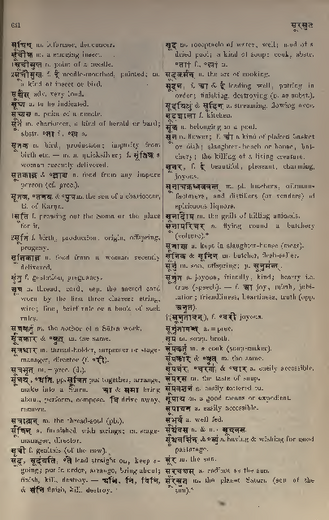
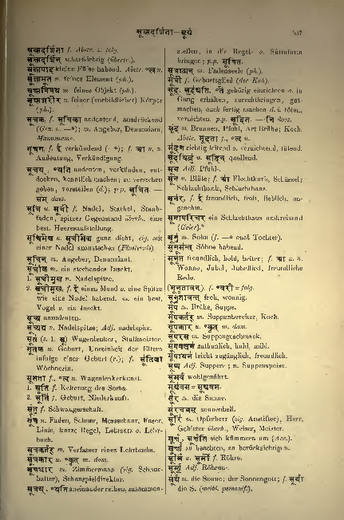
sū́tra ·n. thread, cord, esp. the sacred cord worn by the first three classes; string, wire; line, brief rule or a book of such rules.
Monier-Williams 1872 substantive neuter
Original text · English · substantive neuter
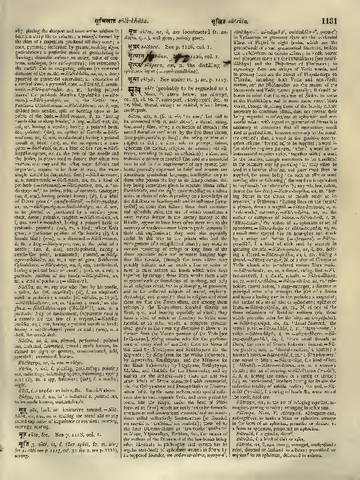
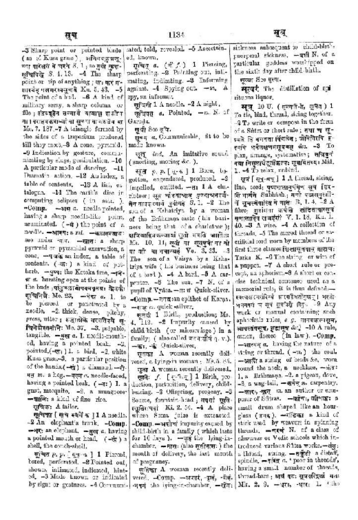
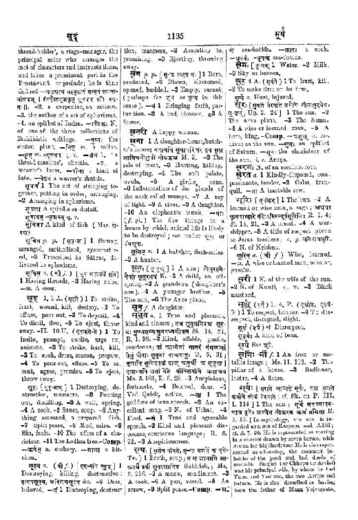
Sūtra, am, n. (fr. rt. siv, ‘to sew;’ but said to be connected with rt. sūtr above), a thread, string, line, cord; fibre, wire; a collection of threads; the sacred thread or cord worn by the first three classes, (see yajñopavīta, p. 804); the string or wire of a puppet or doll; a short rule or precept, axiom, aphorism (in morals, religion, or science; iti sū- treṇa, according to such an aphorism); a short and technical sentence or metrical line used as a memorial rule to aid in the acquirement of any system (and hence generally expressed in brief and obscure and sometimes symbolical language, intelligible only to those who possess the key to its interpretation, this key being sometimes given in separate Sūtras called Paribhāṣās, and the right understanding of a whole series or chain of rules depending on a knowledge of the Adhikāra or heading-rule and its influence [anu- vṛtti] on those that follow; these short sentences and aphoristic rules, the use of which constitutes a most curious feature in the literary history of the Hindūs, appear to have been often mere aids to the memory of teachers — mere hints to guide lecturers in their oral explications; they were also especially useful in this way to the priests who had the management of a complicated ritual); any work or manual consisting of strings or long lines of the above aphoristic rules and sentences hanging toge- ther like threads, (though the term sūtra may possibly indicate not so much a line or series of rules as rules written on leaves which were kept together by strings; these Sūtra works form a sort of groundwork or foundation of teaching, not only in all religious ritual, but in philosophy, in grammar, and in the collateral subjects of accent, euphony, etymology, and prosody: thus in religion and ritual there are first the Śrauta-sūtras, and among them principally the Kalpa-sūtras, founded directly on Śruti, q. v., and treating especially of ritual; they form a kind of rubric or directory to Vedic cere- monial, or in other words, a complete systema- tized guide to the rambling discursive Brāhmaṇa as distinct from the Mantra portion of the Veda [see brāhmaṇa], giving concise rules for the perform- ance of every kind of sacrifice; there are Sūtras of this kind by Āśvalāyana and Śāṅkhāyana for the Ṛg-veda; by Kātyāyana for the White Yajur-veda; by Āpastamba, Baudhāyana, and the Mānavas for the Black Yajur-veda; by Lāṭyāyana, Drāhyāyaṇa, Maśaka, and Gobhila for the Sāma-veda; and by Kuśika for the Atharva-veda; there are also two other kinds of Sūtras connected with ceremonial, viz. the Grihya-sūtras and Sāmayācārika or Dharma- sūtras [often by the same authors, with special refer- ence also to each separate Veda, and even placed by some, like the Kalpa, under the head of Sūtras founded on Śruti], which are really ‘rules for domestic ceremonies and conventional customs,’ and are some- times called collectively Smārta-sūtras [as founded on smṛti or ‘tradition,’ see smārta]; these led to the later Dharma-śāstras or ‘law-books’ attributed to Manu, Yājñavalkya, Parāśara, &c., the names of the authors of the Sūtras and of the law-books being often identical; in philosophy each system has its regular text-book of aphorisms written in Sūtras by its supposed founder, see vedānta-sūtra, nyāya-s˚, sāṅkhya-s˚, mīmāṃsā-s˚, vaiśeṣika-s˚, yoga-s˚; in Vyākaraṇa or grammar there are the celebrated Sūtras of Pāṇini in eight books, which are the groundwork of a vast grammatical literature, besides the Uṇādi-sūtras on certain affixes; in Vedic accent and phonetics there are the Prātiśākhyas [see prāti- śākhya] and the Phiṭ-sūtras of Śāntanava; in etymology there are strings of Vedic words, and in prosody there are the Sūtras of Piṅgala-nāga on Chandas, including both Vedic and non-Vedic metres, and the Nidāna-sūtra on the metres of the Sāma-veda and Vedic metres generally: it should be borne in mind that the mixture of Ślokas in some of the Prātiśākhyas and in some more recent Sūtra works, though depriving them of the brevity strictly necessary to constitute Sūtras, does not prevent their being regarded as collections of aphoristic and me- morial rules: with regard to grammatical Sūtras it is necessary to remember that all connecting words used as prepositions, however necessary to the sense, are omitted; thus, a word in the genitive case re- quires sthāne, ‘instead of,’ to be supplied; a word in the ablative requires param, ‘after;’ a word in the instrumental requires saha, ‘together with;’ a word in the locative, though sometimes to be translated in the ordinary way by prefixing ‘in,’ may often be used as a locative absolute, and pare must then be supplied, the sense being ‘on such an affix or word coming after or following;’ the word vā is equivalent to ‘optionally’ or ‘alternative’); any rule, law, canon, decree (in law &c.).
Petersburger 1855 substantive neuter
Original text · German · substantive neuter
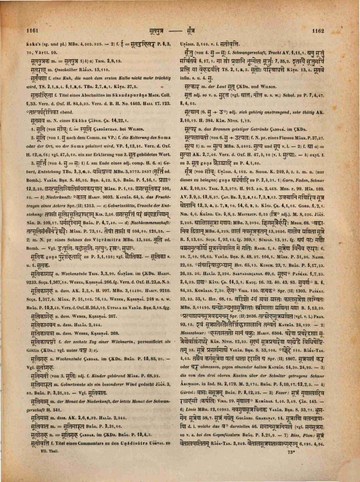
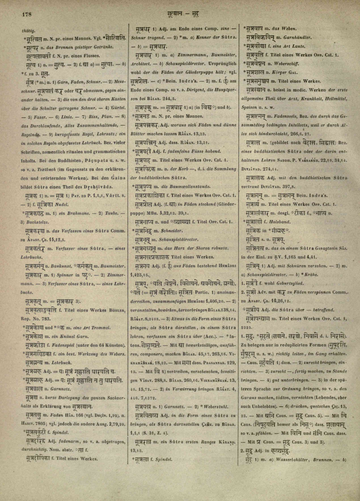
sū́tra (von sīv) UṆĀDIS. 4,162. n. SIDDH. K. 249,b,2. SIDDH. K. 249,b,3. m.n. (nur dieses zu belegen) gaṇa ardharcādi zu P. 2,4,31. 1〉 Garn, Faden, Schnur AK. 2,10,28. TRIK. 3,3,379. H. 913. H. an. 2,469. MED. r. 99. HĀR. 169. AV. 3,9,3. AV. 18,8,37. ŚAT. BR. 3,2,4,14. ŚAT. BR. 7,3,2,13. ukthāni maṇiriva sūtra otāni ŚAT. BR. 12,3,4,2. ŚAT. BR. 12,7,2,10. ŚAT. BR. 14,6,7,2. KĀTY. ŚR. 4,1,16. GOBH. 1,2,1. NIR. 4,6. CHĀND. UP. 6,8,2. MAITRYUP. 6,35 (tri˚ adj.). M. 8,326. YĀJÑ. 2,246. ākṣiptasūtrā maṇayaḥ MBH. 3,3094. chinnasūtrairhāraiḥ MEGH. 68. ˚baddhāniva dvijān MBH. 4,329. jālaṃ navasūtrakṛtam MBH. 13,2656. māleva grathitā sūtre R. 5,13,60. SUŚR. 1,93,15. fg. SUŚR. 1,369,1. SŪRYAS. 13,21. fg. ayaṃ paṭaḥ maṇau vajrasamutkīrṇe sūtrasyevāsti me gatiḥ RAGH. 1,4. sūtreṇa vinaiva hārāḥ RAGH. 6,28. RAGH. 7,10. RAGH. 16,65. VARĀH. BṚH. S. 48,37. VARĀH. BṚH. S. 104,1. MĀRK. P. 51,36. NAIṢ. 22,53. ˚saṃcāribāhubhyām HIT. 65,13. KUSUM. 23,7. BHĀG. P. 5,17,23. BHĀG. P. 5,26,32. BHĀG. P. 5,17,36. HALĀY. 2,394. SARVADARŚANAS. 69,6. sūkṣma˚ PAÑCAR. 1,7,35. PAÑCAR. 2,4,25. śaṇa˚ KĀTY. ŚR. 16,5,1. KAUŚ. 16. KAUŚ. 32. KAUŚ. 40. KAUŚ. 43. KAUŚ. 85. suvarṇa˚ R. 6,84,25. KUMĀRAS. 7,50. hema˚ VIKR. 140. kanaka˚ Spr. (II) 1305. PAÑCAT. 52,22. PAÑCAT. 53,1. HIT. 68,12. vaḍiśo 'yaṃ tvayā grastaḥ kālasūtreṇa lambitaḥ MBH. 3,11495. anyo 'nyabhujasūtraistāḥ strīmālā grathitā yathā R. 5,13,59. ˚pratyāśaghanasūtrabaddhamanas Spr. (II) 2036. tatsnehasūtragrathita (vgl. v. l.) PRAB. 93,15. evaṃ sūtraśataistaistairjihvājālāni tanvate KATHĀS. 24,199. — 2〉 Messschnur: ˚hastāstato mānaṃ cakruḥ HARIV. 6504. careṇa pracaredrājā sūtreṇevartvigadhvare KĀM. NĪTIS. 12,33. sūkṣmaṃ sūtrapracāreṇa paśyedvai vidhiceṣṭitam 28. sūtre prasāryamāṇe VARĀH. BṚH. S. 53,108. ˚cchede VARĀH. BṚH. S. 110. RĀJA-TAR. 4,65. tathaiva karmasūtreṇa phalaṃ dhātā dadāti ca Spr. (II) 1807. sūtrapātaṃ kar oder car abmessen, gegen einander halten KATHĀS. 14,30. KATHĀS. 24,93. — 3〉 die von den drei oberen Kasten über der Schulter getragene Schnur ĀRUṆIKOP._in_Ind. St. 2,179. M. 2,174. BHĀG. P. 5,10,17. BHĀG. P. 12,2,3. — 4〉 Gürtel: vāsaḥ sasūtram BHĀG. P. 8,12,23. — 5〉 Faser: sūtraṃ mṛṇālādiva rājahaṃsī (karṣati) VIKR. 19. mṛṇāla˚ KUMĀRAS. 1,40. KUMĀRAS. 3,49. ŚĀK. 145. — 6〉 Linie MBH. 12,10983. navaguṇasūtravibhakta VARĀH. BṚH. S. 53,71. bhrūsamena sūtreṇa VARĀH. BṚH. S. 58,7. sūtraṃ nayet GOLĀDHY. GRAHAṆAV. 14. sūtrāṇi valanarūpāṇi d. i. welche das va˚ darstellen 46. samānasūtranipāte (vgl. samasūtraga) so v. a. bei den Gegenfüsslern BHĀG. P. 5,21,9. — 7〉 Riss, Plan: sūtraṃ vetālapātitam RĀJA-TAR. 3,349. vetālasūtrapātasthāngṛhān RĀJA-TAR. 6,191. RĀJA-TAR. 4,56. matsūtrapātanaṃ dṛṣṭvā RĀJA-TAR. 3,348. — 8〉 das Durchlaufende, Alles Zusammenhaltende, — Regelnde: tvameva dakṣeṇa sūtreṇa sasarjithādhvaram BHĀG. P. 4,6,44. BHĀG. P. 11,24,6. BHĀG. P. 11,28,16. Hierher vielleicht die Bed. vyavasthā H. an. MED. und kāraṇa TRIK. — 9〉 kurzgefasste Regel, Lehrsatz; ein in solchen Regeln abgefasstes Lehrbuch, Bez. vieler Schriften, namentlich ritualen und grammatischen Inhalts TRIK. H. 254. H. an. MED. svalpākṣaramasaṃdigdhaṃ sāravadviśvatomukham . astobhamanavadyaṃ ca sūtraṃ sūtravido viduḥ .. DURGĀD._im_ŚKDR. ŚAT. BR. 14,5,4,10. ŚAT. BR. 14,7,3,11. ĀŚV. GṚHY. 3,4,3. MAITRYUP. 6,32. P. 4,2,60. P. 4,2,65. P. 5,1,58. kaccitsūtrāṇi sarvāṇi gṛhṇāsi — hastisūtrāśvasūtrāṇi rathasūtrāṇi ca pūjayan MBH. 2,255. dhanurvedasya sūtraṃ vai yantrasūtraṃ ca nāgaram MBH. 2,256. R. GORR. 1,13,21. R. GORR. 7,36,45. VARĀH. BṚH. S. 15,1. KĀŚ._zu_P. 1,2,25. Schol. zu P. 1,1,62. zu KĀTY. ŚR. 16,9. zu AV. PRĀT. 3,96. AV. PRĀT. 4,101. zu TS. PRĀT. 1,1 u. s. w. SARVADARŚANAS. 21,1. fgg. SARVADARŚANAS. 22,5. fgg. SARVADARŚANAS. 34,17. mūla˚ CĀṆ. 3_bei_WEBER. bhārata˚ so v. a. kurze Darstellung des Mahābhārata MBH. 1, Adhy. 61 in der Unterschrift. Bei den Buddhisten, Pāśupata u. s. w. so v. a. Textbuch (im Gegens. zu den erklärenden und erörternden Werken) BURNOUF, Intr. 35. fgg. BURNOUF, Intr. 51. fgg. BURNOUF, Intr. 70. fgg. WASSILJEW 5 u. s. w. Bei den Jaina bildet sūtra einen Theil des Dṛṣṭivāda H. 246. WILSON, Sel. Works 1,285. ˚saṃdarbha SARVADARŚANAS. 37,6. — Vgl. akṣa˚ (auch KUMĀRAS. 3,46), ūrṇā˚, kaṭi˚ (auch BHĀG. P. 5,16,22), kaṇṭha˚, kalpa˚, kāla˚, dīrgha˚, dharma˚, naṭa˚, naṣṭāpti˚, nirvāṇa˚, paśu˚, puṣpa˚, pramāṇa˚, prāṇa˚, brahma˚, bhakti˚, bhikṣu˚, maṇi˚, madhya˚, mantra˚, māna˚, maitra˚, yajña˚, ratha˚, vi˚, viṣṇu˚, vīta˚, veda˚, vyāsa˚, śaṇa˚, śārīraka˚, śiva˚, śrauta˚, saṃhitā˚, samasūtraga, sāvitrī˚, suvarṇa˚, sūci˚, sūcī˚, hasta˚, sautra.
Böhtlingk 1879 substantive masculine · substantive neuter · Word type unspecified
Original text · German · substantive masculine · substantive neuter
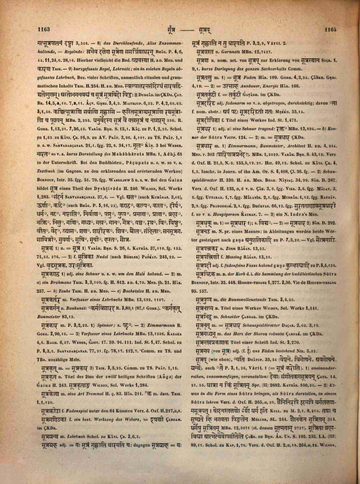
sū́tra (*m.) n. — 1〉 Garn, Faden, Schnur. — 2〉 Messschnur. sūtrapātaṃ n. kar oder car abmessen, gegen einander halten. — 3〉 die von den drei oberen Kasten über die Schulter getragene Schnur. — 4〉 Gürtel. — 5〉 Faser. — 6〉 Linie. — 7〉 Riss, Plan. — 8〉 das Durchlaufende, Alles Zusammenhaltende, — Regelnde. — 9〉 kurzgefasste Regel, Lehrsatz; ein in solchen Regeln abgefasstes Lehrbuch. Bez. vieler Schriften, namentlich Ritualen und grammatischen Inhalts. Bei den Buddhisten Pāśupata u. s. w. so v. a. Textbuch (im Gegensatz zu den erklärenden und erörternden Werken). Bei den Jaina bildet Sūtra einen Theil des Dṛṣṭivāda.
Original text · German · Word type unspecified
sūtra VII. ein best. Baum DIVYĀVAD. 315,20. [Nachtrag, Band 7]
Apte 1890 substantive neuter
Original text · English · substantive neuter
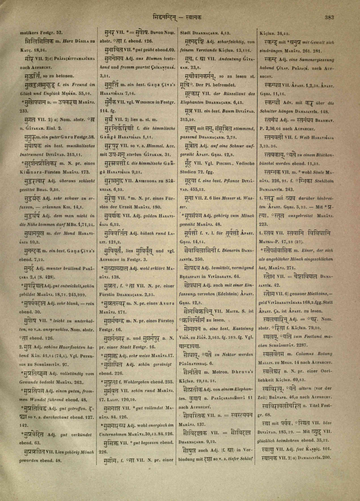
sūtraṃ [sūtr-ac] 1 A thread, string, line, cord; puṣpamālānuṣaṃgeṇa sūtraṃ śirasi dhāryate Subhāṣ.; maṇau vajrasamutkīrṇe sūtrasyevāsti me gātiḥ R. 1. 4. 2 A fibre; surāṃganā karṣati khaṃḍitāgrātsūtraṃ mṛṇālādiva rājahaṃsī V. 1. 18, Ku. 1. 40. 3 A wire. 4 A collection of threads. 5 The sacred thread or sacrificial cord worn by members of the first three classes; śikhāsūtravān brāhmaṇaḥ Tarka K. 6 The string or wire of a puppet. 7 A short rule or precept, an aphorism. 8 A short or concise technical sentence used as a memorial rule; it is thus defined: -svalpākṣaramasaṃdigdhaṃ sāravadviśvatomukham . astobhamanavadyaṃ ca sūtraṃ sūtravido viduḥ. 9 Any work or manual containing such aphoristic rules; e. g. mānavakalpasūtra, āpastaṃbasūtra, gṛhyasūtra &c. 10 A rule, canon, decree (in law). Comp. — ātman a. having the nature of a string or thread. ( — m.) the soul. — ālī a string of beads &c. worn round the neck, a necklace. — kaṃṭhaḥ 1 a Brāhmaṇa. 2 a pigeon, dove. 3 a wag-tail. — karman n. carpentry. — kāraḥ, -kṛt m. an author or composer of Sūtras. — koṇaḥ, koṇakaḥ a small drum shaped like an hourglass (ḍamaru). — gaṃḍikā a kind of stick used by weavers in spinning threads. — caraṇaṃ N. of a class of charanas or Vedic schools which introduced various Sūtra works. — taṃtuḥ a thread, string. — tarkuṭī a distaff, spindle. — daridra a. ‘poor in threads’, having a small number of threads, thread-bare; ayaṃ paṭaḥ sūtradaridratāṃ gataḥ Mk. 2. 9. — dharaḥ, -dhāraḥ 1 ‘the ([Page 1135-a]) thread-holder’, a stage-manager, the principal actor who arranges the cast of characters and instructs them, and takes a prominent part in the Prastāvanā or prelude; he is thus defined. -nāṭyasya yadanuṣṭhānaṃ tatsūtraṃ syātsabījakam . raṃgadaivatapūjākṛt sūtradhāra iti smṛtaḥ ... 2 a carpenter, an artisan. 3 the author of a set of aphorisms. 4 an epithet of Indra. — piṭakaḥ N. of one of the three collections of Buddhistic writings. — puṣpaḥ the cotton plant. — bhid m. a tailor. — bhṛt m. = sūtradhāra q. v. — yaṃtraṃ 1 ‘a thread machine’, shuttle. 2 a weaver's loom. — vīṇā a kind of lute. — veṣṭanaṃ a weaver's shuttle.
Cappeller 1887 substantive neuter
Original text · German · substantive neuter
sū́tra n. Faden, Schnur, Messchnur, Faser, Linie, kurze Regel, Lehrsatz o. Lehrbuch.
Burnouf 1866 substantive neuter
Original text · French · substantive neuter
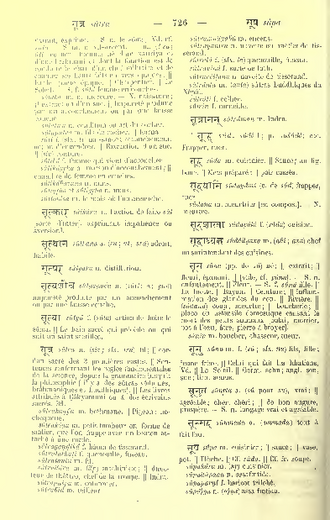
sūtra sūtra n. (siv; sfx. tra) fil; cordon sacré des 3 premières castes. Sentences renfermant les règles fondamentales de la science, depuis la grammaire jusqu'à la philosophie [il y a des sūtras védiques, brâhmaniques et buddhiques]. Les livres attribués à Śākyamuni ou à des écrivains sacrés, Bd. sūtrakaṇṭha m. brâhmane. Pigeon; hochequeue. sūtrakoṇa m. petit tambour en forme de sablier, que l'on frappe avec un bouton attaché à une corde. sūtragaṇḍikā f. bâton de tisserand. sūtratarkuṭī f. quenouille, fuseau. sūtratantu m. fil. sūtradhāra m. (dhṛ) machiniste; directeur de théâtre, chef de la troupe. Indra. sūtrapuṣpa m. cotonnier. sūtrabhid m. tailleur. [Page726-2] sūtramadhyabhū m. encens. sūtrayantra n. navette ou métier de tisserand. sūtralā f. (sfx. la) quenouille, fuseau. sūtravīṇā f. sorte de luth. sūtraveṣṭana n. navette de tisserand. sūtrānta m. (anta) sūtras buddhiques du Népâl. sūtrālī f. collier. sūtrin f. corneille.
Occurrences in source texts (2)
HP 1 occurrence
VBT 1 occurrence
Continue with AYI Free
Image source: AYI archive.