

svāmin स्वामिन् – owner; master
adjective · substantive masculine · Word type unspecified
Dictionary sources
AYI dictionary substantive masculine
owner; master
Cappeller 1891 substantive masculine
Original text · English · substantive masculine
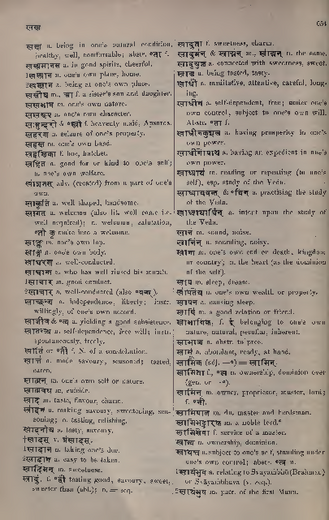
svāmin ·m. owner, proprietor, master, lord; f. °nī.
Monier-Williams 1872 adjective · Word type unspecified
Original text · English · adjective
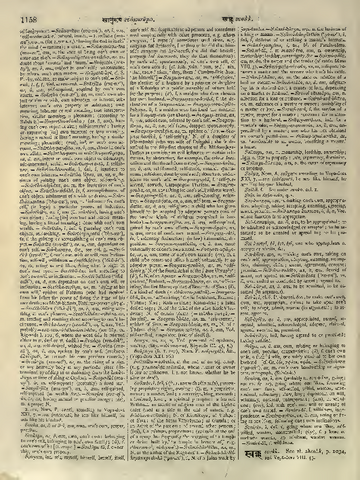
Svāmin, ī, inī, i (fr. 1. sva with affix min), possess- ing proprietary rights, owning; (ī), m. a proprietor, owner; a master, lord; a sovereign, king, monarch; a husband, lover; a spiritual preceptor; a learned Brāhman, an ascetic or religious man of the highest order (used as a title at the end of names, e. g. śrīdhara-svāmin); N. of Kārttikeya; of Viṣṇu; of Śiva; of the Muni Vātsyāyana; of Garuḍa; of an Arhat of the past era; of several other persons; (inī), f. a mistress, proprietress; (svāmin at the end of a comp. has frequently the meaning of ‘a temple or shrine built by,’ ‘a temple in honour of,’ e. g. dharma-s˚, viṣṇu-s˚.)
Original text · English · Word type unspecified
svāmin svāmin, &c. See p. 1158, col. 2.
Petersburger 1855 substantive masculine
Original text · German · substantive masculine
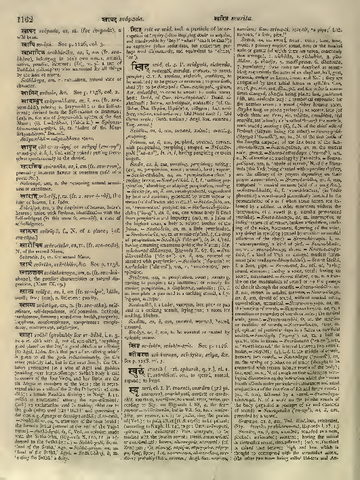
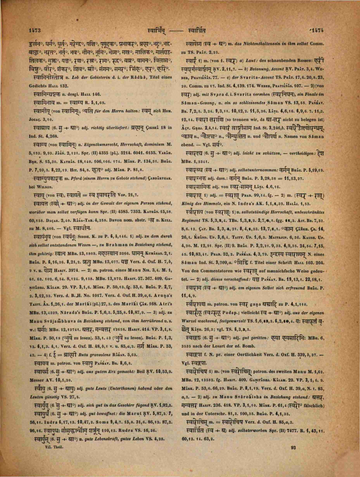
svāmín (von sva) P. 5,2,126. VOP. 7,32. fg. 1〉 m. a〉 Eigenthümer, Herr, Gebieter (Gegens. Untergebener, Unterthan, Diener, Knecht, Gattin) AK. 2,6,1,32. AK. 2,8,1,17. AK. 2,3,1,10. TRIR. 3,3,272. H. 359. H. 714. H. an. 2,291. MED. n. 151. HALĀY. 2,188. HALĀY. 5,39. LĀṬY. 10,17,17. KĀTY. ŚR. 1,6,9. KĀTY. ŚR. 1,7,20. KĀTY. ŚR. 1,8,31. KĀTY. ŚR. 12,1,8. M. 7,167. fg. M. 8,4. M. 8,5. fg. M. 8,30. M. 8,150. fg. M. 8,173. M. 8,197. fg. M. 8,199. M. 8,230. fg. M. 8,233. M. 8,244. fg. M. 8,293. M. 8,414. fg. M. 9,294. MBH. 3,2364. R. 1,8,3. R. 4,25,7. R. 5,38,39. Spr. (II) 344. Spr. (II) 1710. Spr. (II) 2013. Spr. (II) 2839. Spr. (II) 5775. Spr. (II) 7150. Spr. (II) 7160. Spr. (II) 7341. fgg. ŚĀK. 23,5. ŚĀK. 23,11. VARĀH. BṚH. S. 46,55. VARĀH. BṚH. S. 50,8. VARĀH. BṚH. S. 61,18. RĀJA-TAR. 4,333. BHĀG. P. 5,14,22. BHĀG. P. 7,10,4. BHĀG. P. 7,10,5. DAŚAK. 61,13. SĀH. D. 431. HIT. 4,5. HIT. 40,11. HIT. 41,1. HIT. 41,ed. JOHNS. 1412. JOHNS. 1531. VET. in LA. (III) 18,7. VET. in LA. (III) 27,3. SARVADARŚANAS. 179,12. mit gen. oder loc. P. 2,3,39. VOP. 5,29. gavām oder goṣu P., Schol. sainyasya R. 5,1,69. lokasya R. 6,102,9. asmākam KATHĀS. 18,144. VARĀH. BṚH. S. 16,5. paśuṣu M. 8,229. M. 8,234. bhuvi Spr. (II) 5005. svāmī kṛtaśca (so trennen wir) viṣaye bakakacchanāmni KATHĀS. 6,166. in comp. mit der Ergänzung, die ihren Accent behält, P. 6,2,17. gó˚, áśva˚ Schol. M. 8,231. yāna˚ 290. dik˚ VARĀH. BṚH. S. 35,4. caura˚ VARĀH. BṚH. S. 69,27. horā˚ BṚH. 1,19. KATHĀS. 25,46. KATHĀS. 36,44. sattvadhana˚ PAÑCAT. 24,17. tannagara˚ Z. d. d. m. G. 14,571,21. seneva susvāminā ein guter Anführer Spr. (II) 2617. — b〉 ein N. Kārttikeyaʼs TRIK. 1,1,56. TRIK. 3,3,272. H. 208. H. an. MED. HALĀY. 1,19. JAṬĀDH._in_Verz. d. Oxf. H. 191,a,27. YĀJÑ. 1,293. Viṣṇuʼs und Śivaʼs ŚABDAR._im_ŚKDR. Garuḍaʼs ŚABDĀRTHAK._bei_WILSON. — c〉 Standbild eines Gottes, insbes. Śivaʼs RĀJA-TAR. 5,23. häufig in dieser Bed. am Ende eines comp. — d〉 N. pr. verschiedener Männer: der 11te Arhant der vergangenen Utsarpiṇī H. 51. = vātsyāyana TRIK. 2,7,23. ein Lexicograph COLEBR. Misc. Ess. 2,20. COLEBR. Misc. Ess. 2,49. = kṣīrasvāmin Verz. d. Oxf. H. 113,a,38. Verz. d. Oxf. H. 183,a,3. — 2〉 f. ˚nī Herrin, Gebieterin MBH. 4,423. KATHĀS. 12,85. gṛhe KATHĀS. 29,72. prāṇeṣu, dhaneṣu KATHĀS. 52,315. yuṣmat˚ KATHĀS. 26,42. KATHĀS. 81,56. — Vgl. abhimanyu˚, avanti˚, ku˚, kṣīra˚, go˚, govinda˚, jagat˚, jaya˚, durlabha˚, dharma˚, dhūrta˚, narendra˚, pakṣi˚, pṛthūdaka˚, prabhākara˚, brahma˚, bhaṭṭa˚, bhadrabāhu˚, bharata˚, bhartṛ˚, bhava˚, bhīma˚, bhūmi˚, bhoga˚, makha˚, mākṣika˚, mārtaṇḍatilaka˚, mukta˚, yajña˚, raṇa˚, ratna˚, rāma˚, rudra˚, vajra˚, vāmana˚, vilāsa˚, viṣṇu˚, vīra˚, śaṃkara˚, śiva˚, śrī˚, saṃgama˚, samara˚, siṃha˚, hara˚, hari˚.
Böhtlingk 1879 substantive masculine
Original text · German · substantive masculine
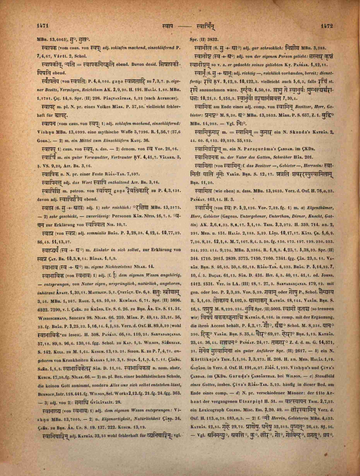
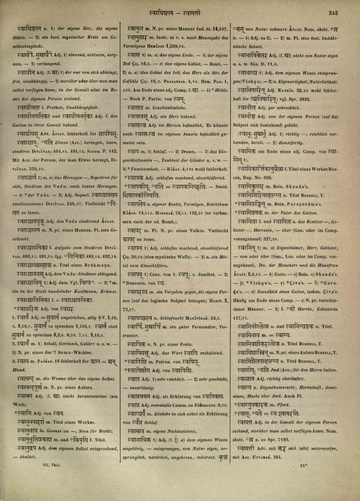
svāmin — 1〉 m. — a〉 Eigenthümer, Herr, Gebieter, — von oder über (Gen., Loc. oder im Comp. vorangehend). Du. der Hausherr und die Hausfrau ĀPAST. 2,4,13. — b〉 Gatte. — c〉 Bein. — α〉 Skandaʼs. — β〉 *Viṣṇuʼs. — γ〉 *Śivaʼs. — δ〉 *Garuḍaʼs. — d〉 Standbild eines Gottes, insbes. Śivaʼs Häufig am Ende eines Comp. — e〉 N. pr. verschiedener Männer. — 2〉 f. ˚nī Herrin, Gebieterin Chr. 117,15.
Apte 1890 adjective · substantive masculine
Original text · English · adjective · substantive masculine
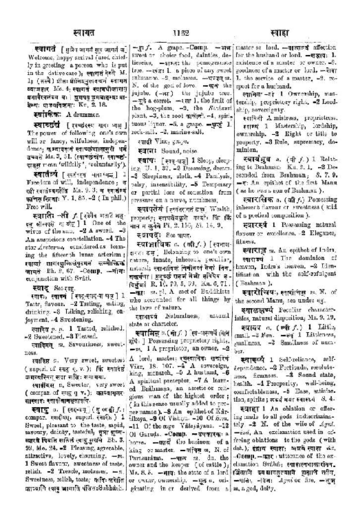
svāmin a. (nī f.) [sva-astyarthe mini dīrghaḥ] Possessing proprietory rights. — m. 1 A proprietor, an owner. 2 A lord, master; raghusvāminaḥ saccaritraṃ Vikr. 18. 107. 3 A sovereign, king, monarch. 4 A husband. 5 A spiritual preceptor. 6 A learned Brāhmaṇa, an ascetic or religious man of the highest order; (in this sense usually added to proper names). 7 An epithet of Kārtikeya. 8 Of Viṣṇu. 9 Of Śiva. 10 Of the sage Vātsyāyana. 11 Of Garuḍa. Comp. — upakārakaḥ a horse. — kāryaṃ the business of a king or master. — jaṃghin m. N. of Paraśurāma. — pāla m. du. the owner and the keeper (of cattle); Ms. 8. 5. — bhāvaḥ the state of a lord or owner, ownership. — mūla a. originating in or derived from a ([Page 1162-c]) master or lord. — vātsalyaṃ affection for the husband or lord. — sadbhāvaḥ 1 existence of a master or owner. 2 goodness of a master or lord. — sevā 1 the service of a master. 2 respect for a husband.
Cappeller 1887 substantive masculine
Original text · German · substantive masculine
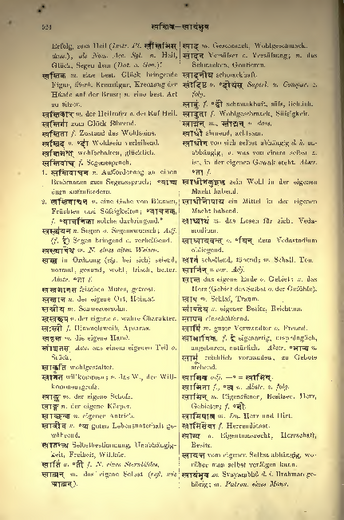
svāmin m. Eigentümer, Besitzer, Herr, Gebieter; f. ˚nī.
Burnouf 1866 adjective
Original text · French · adjective
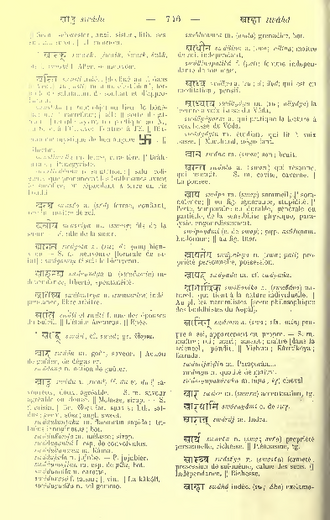
svāmin svāmin a. (sva; sfx. min) propre à soi, appartenant en propre. — S. m. maître; roi; mari; amant; maître [dans la science], paṇḍita. Viṣṇu; Kārttikeya; Garuḍa. svāmijaṅghin m. Paraśurāma. svāmya n. qualité de maître. svāmyupakāraka m. (upa; kṛ) cheval.
Occurrences in source texts (2)
HP 1 occurrence
HP 3.103-3.107*2: Conclusion of the Mudrā Teaching 1 occurrence
Direct occurrences
-
HP 3.107*1 Segment 12
PYS 1 occurrence
Continue with AYI Free
Image source: AYI archive.