

taṭa तट – a slope, an acclivity, declivity, precipice
substantive feminine · substantive masculine · substantive neuter · Word type unspecified
Dictionary sources
Cappeller 1891 substantive masculine
Original text · English · substantive masculine
taṭa ·m. ī f. slope, declivity (lit. & fig.); shore, bank.
Monier-Williams 1872 substantive feminine · substantive masculine
Original text · English · substantive feminine · substantive masculine
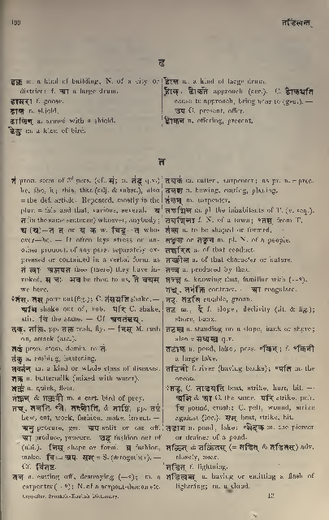
Taṭa, as, ā, m. f. a slope, an acclivity, declivity, precipice; the sky or horizon (as appearing to slope); (as, ā or ī, am), m. f. n. a shore or bank; a term applied to certain parts of the human body which have, as it were, sloping sides (e. g. śroṇi-taṭa, stana-taṭa, q. v.); (am), n. a field; [cf. a-taṭa, ut-taṭa, pura-taṭī.]
Petersburger 1855 substantive feminine · substantive masculine · Word type unspecified
Original text · German · substantive feminine · substantive masculine
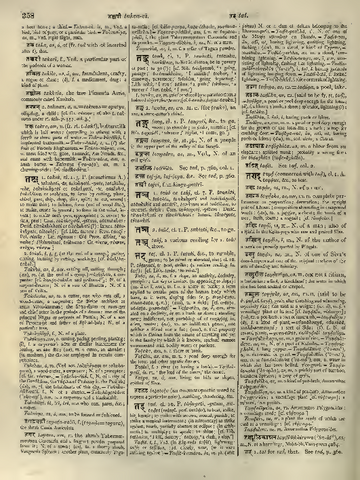
taṭa m. f. TRIK. 3,5,23. Abhang: himavatastaṭe MBH. 1,1567. MBH. 3,1663. R. 4,5,9. R. 4,12,26. R. 6,83,28. BHARTṚ. 2,32. VIKR. 57,19. MEGH. 60. KATHĀS. 1,66. KATHĀS. 9,56. KATHĀS. 22,255. vindhyāṭavī˚ KATHĀS. 10,142. vṛndāvana˚ HARIV. 5909. vom abfallenden Horizont: śabdapūritadiktaṭa KATHĀS. 26,26. das abhängige Ufer, Gestade, m. f. (taṭī) und n. AK. 1,2,3,7. m.f. MED. ṭ. 15. n. H. 1078. sarasvatyāstaṭe MBH. 13,1334. hradasyāsya taṭāvubhau HARIV. 3646. KUMĀRAS. 3,6. nadītīrataṭocchrāyān R. GORR. 2,87,13. BHARTṚ. 3,15. ŚĀK. 117. PAÑCAT. 9,5. velātaṭe PAÑCAT. II, 34. VARĀH. BṚH. S. 4,26. VARĀH. BṚH. S. 5,37. VARĀH. BṚH. S. 5,64. KATHĀS. 3,9. KATHĀS. 10,22. KATHĀS. 22,248. BHĀG. P. 1,4,27. VET. 6,8. nadyādīnāṃ taṭī SĀH. D. 47,16. RĀJA-TAR. 2,139. vāpīṣu vidrumataṭāsu BHĀG. P. 3,15,22. MBH. 7,507. HIT. IV, 86. āśā nāma nadī — prottuṅgacintātaṭī (adj.) BHARTṚ. 3,11. gartātaṭa die abhängige Wand einer Grube PAÑCAT. 81,22. — Sehr häufig von den abhängigen Theilen des menschlichen Körpers: kaṭitaṭa, kaṭītaṭa MBH. 3,11146. MBH. 13,834. INDR. 2,32. MṚCCH. 11,15. BHĀG. P. 3,15,20. jaghana˚ BHARTṚ. 1,49. śroṇi˚ ṚT. 2,18. ṚT. 3,20. stana˚ ŚṚṄGĀRAT. 7. AMAR. 21. kuca˚ AMAR. 55. ŚIŚ. 9,49. urojataṭau ŚIŚ. 44. payodharataṭī GĪT. 1,25. vakṣastaṭa PRAB. 2,4. vakṣastaṭī PRAB. 81,10. kaṇṭhataṭa RĀJA-TAR. 5,1. lalāṭa˚ RĀJA-TAR. 6,109. KATHĀS. 13,155. ŚIŚ. 9,28. śravaṇa˚ ṚT. 5,13. adharataṭī GĪT. 4,23. Dieses ist wohl das taṭaḥ praṃśasāvacanaḥ im gaṇa matallikādi in GAṆARATN._zu_P. 2,1,66. Nirgends n., dem MED. die Bed. Feld (kṣetra) giebt; taṭi, welches SIDDH. K. 248,a,9 als f. aufgeführt wird, können wir auch nicht belegen. MBH. 12,10381 wird Śiva als Abhang, als der an Abhängen Lebende und als Herr der Abhänge angerufen: namastaṭāya taṭyāya taṭānāṃ pataye namaḥ. — Vgl. ataṭa, uttaṭa, purataṭī.
Original text · German · Word type unspecified
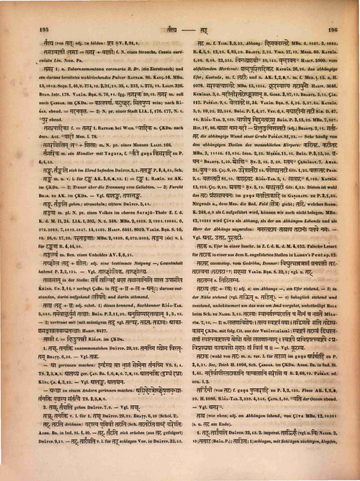
taṭa in nijapāṇipallavataṭa ŚIŚ. 9,52 wohl nur Druckfehler für tala, wie die Scholien haben.
Böhtlingk 1879 substantive feminine · substantive masculine · substantive neuter · Word type unspecified
Original text · German · substantive feminine · substantive masculine · substantive neuter
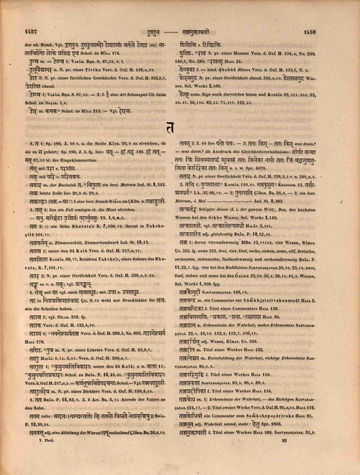
taṭa m. f. (ī) und (*n.) Abhang, ein abhängiges Ufer, Gestade. Ueberaus häufig von den abhängigen Theilen des menschlichen Körpers. — Auch fehlerhaft für tala.
Original text · German · substantive neuter
taṭa n. Spr. 7183. [Nachtrag, Band 6]
Original text · German · Word type unspecified
taṭa III. 6. [Nachtrag, Band 7]
Apte 1890 substantive masculine · substantive neuter
Original text · English · substantive masculine · substantive neuter
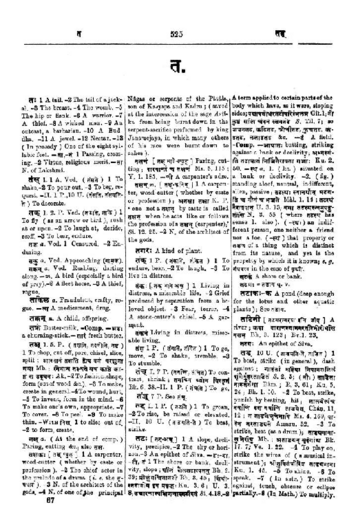
taṭaḥ [taṭ-ac] 1 A slope, declivity, precipice. 2 The sky or horizon. 3 An epithet of Śiva. — ṭaḥ -ṭā, — ṭī, -ṭaṃ 1 The shore or bank, declivity, slope; śīlaṃ śailataṭātpatatu Bh. 2. 39; prottuṃgaciṃtātaṭī Bh. 3. 45; siṃdhostaṭāvogha iva pravṛddhaḥ Ku. 3. 6; U. 3. 8; uccāraṇātpakṣigaṇāstaṭīstaṃ Śi. 4. 18. 2 ([Page 0525-c]) A term applied to certain parts of the body which have, as it were, sloping sides; padmāpayodharataṭīpariraṃbhalagna Gīt. 1; no luptaṃ sakhi caṃdanaṃ stanataṭe Ś. Til. 7; so jaghanataṭa, kaṭitaṭa, śroṇītaṭa, kucataṭa, kaṃṭhataṭa, lalāṭataṭa &c. — ṭaṃ A field. Comp. — āghātaḥ butting, striking against a bank or declivity; abhyasyaṃti taṭāghātaṃ nirjitairāvatā gajāḥ Ku. 2. 50. — stha a. 1 (lit.) situated on a bank or declivity. 2 (fig.) standing aloof, neutral, indifferent, alien, passive; taṭasthaḥ svānarthān ghaṭayati ca maunaṃ ca bhajate Māl. 1. 14; taṭasthaṃ nairāśyāt U. 3. 13; mayā taṣṭasthastvamupadrutosi N. 3. 55 (where taṭastha has sense 1. also). — (sthaḥ) an indifferent person, one neither a friend nor a foe. — (sthaṃ) that property or lakṣaṇa of a thing which is distinct from its nature, and yet is the property by which it is known; e. g. gaṃdhavattva in the case of pṛthvī.
Cappeller 1887 substantive masculine
Original text · German · substantive masculine
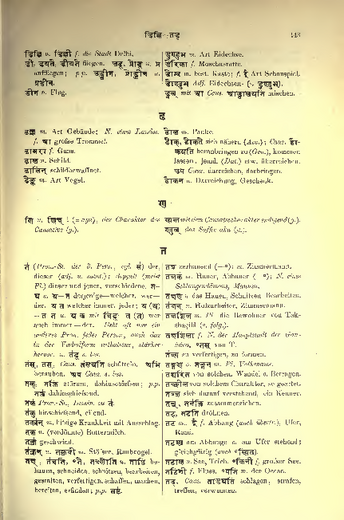
taṭa m., ī f. Abhang (auch übertr.), Ufer, Rand.
Burnouf 1866 substantive masculine · substantive neuter
Original text · French · substantive masculine · substantive neuter
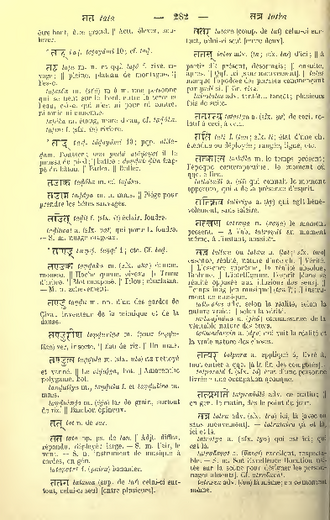
taṭa taṭa m. n. et qqf. taṭā f. rive, rivage; plaine, plateau de montagne. Fesse. taṭastha m. (sthā) m à m. une personne qui se tient sur le bord, entre la terre et l'eau, c-à-d. qui n'est ni pour ni contre, ni amie ni ennemie. taṭāka m. étang, mare d'eau, cf. taḍāka. taṭinī f. (sfx. in) rivière.
Occurrences in source texts (1)
HTK 1 occurrence
HTK 10.6*2–9*1: Ujjāyī / Ujjāyikā and Sūryabheda 1 occurrence
Direct occurrences
-
HTK 10.7 Segment 15
Continue with AYI Free
Image source: AYI archive.