
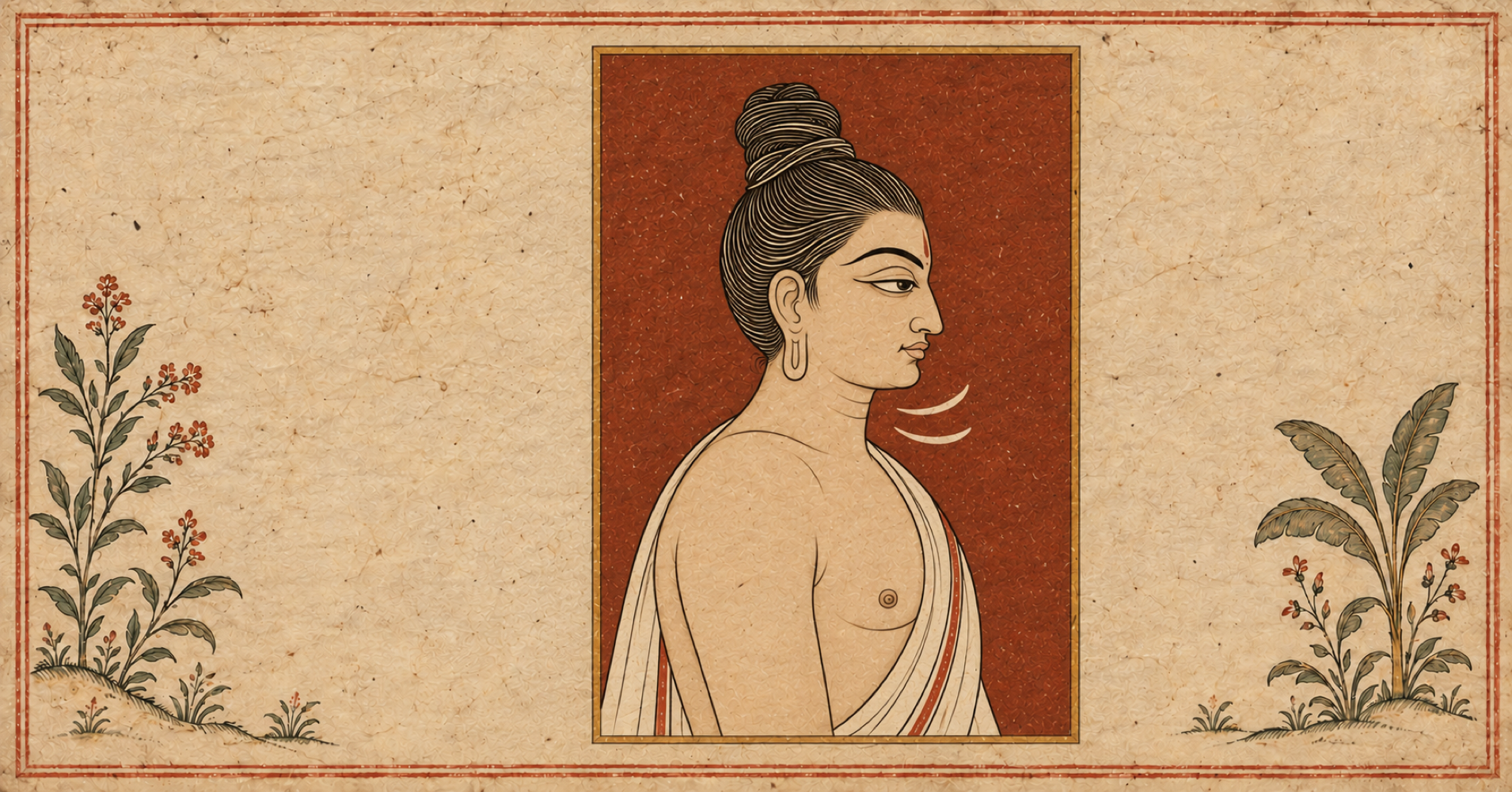

Haṭhatattvakaumudī 10.7
आस्यं संयम्य नासापुटयुगसुषिराभ्यां समाकृष्य वायुं मन्दं मन्दं यथासौ लगति गलतटादाहृदन्तः सशब्दः |
āsyaṃ saṃyamya nāsā,-puṭa-yuga-suṣirā,bhyāṃ samākṛṣya vāyuṃ; mandaṃ mandaṃ yathāsau, lagati gala-taṭād, ā-hṛd-antaḥ sa-śabdaḥ | Analysis ▾ Analysis ▴
|
āsyam
|
the mouth | |
|
saṃyamya
|
having closed | |
|
nāsā
|
of the nose | |
|
puṭa
|
of the opening | |
|
yuga
|
of the pair | |
|
suṣirābhyām
|
through the two cavities | |
|
samākṛṣya
|
having drawn in | |
|
vāyum
|
the breath | |
|
mandam
|
mandam
|
slowly |
|
mandam
|
mandam
|
slowly |
|
yathā
|
so that | |
|
asau
|
that | |
|
lagati
|
it adheres, it touches | |
|
gala
|
of the throat | |
|
taṭāt
|
from the edge | |
|
ā
|
up to | |
|
hṛd
|
heart | |
|
antaḥ
|
within | |
|
sa
|
with | |
|
śabdaḥ
|
having sound |
रुद्ध्वा केशान् नखाग्रावधि पवनम् अमुं रेचयेद्वामनाड्या प्रोक्तोज्जायीति कुम्भः कफगददलनो दीप्तिकृज्जाठराग्नेः ||7||
ruddhvā keśān nakhāgrā,vadhi pavanam amuṃ, recayed vāma-nāḍyā; proktojjāyīti kumbhaḥ, kapha-gada-dalano, dīpti-kṛj jāṭharāgneḥ ||7|| Analysis ▾ Analysis ▴
|
ruddhvā
|
having restrained | |
|
keśāt
|
from the hair | |
|
nakha
|
of the nail | |
|
agra
|
tip | |
|
avadhi
|
avadhi
|
up to |
|
pavanam
|
the breath | |
|
amum
|
that | |
|
recayet
|
one should release | |
|
vāma
|
left | |
|
nāḍyā
|
through the channel | |
|
proktaḥ
|
called | |
|
ujjāyī
|
Ujjāyī | |
|
iti
|
thus | |
|
kumbhaḥ
|
breath retention | |
|
kapha
|
of phlegm | |
|
gada
|
disease | |
|
dalanaḥ
|
destroying | |
|
dīpti
|
kindling | |
|
kṛt
|
causing | |
|
jāṭhara
|
belonging to the belly | |
|
agneḥ
|
of digestive fire (according to Meulenbeld 1974, p. 437) |
Metre: Sragdharā
Having closed (saṃyamya | abs) the mouth (āsyam | acc sg), [one should] draw in (samākṛṣya | abs) the breath (vāyum | acc sg) through the two cavities of the nostrils (nāsā-puṭa-yuga-suṣirābhyām | ins du), slowly (mandam), slowly (mandam), so that (yathā) it (asau | nom sg m) makes contact (lagati | 3p sg act pres), audibly (sa-śabdaḥ | nom sg m), from the edge of the throat (gala-taṭāt | abl sg) into the heart (ā-hṛd-antaḥ). Having retained (ruddhvā | abs) that (amum | acc sg m) breath (pavanam | acc sg) from the hair [of the head] (keśāt | abl sg) to the nail tips (nakhāgrāvadhi), [one] should release [it] (recayet | 3p sg act opt caus) through the left channel (vāma-nāḍyā | ins sg). The breath retention (kumbhaḥ | nom sg) [is] thus (iti) called (proktaḥ | nom sg m ppp) Ujjāyī (ujjāyī | nom sg). [It] destroys diseases of phlegm (kapha-gada-dalanaḥ | nom sg m) [and] kindles (dīpti-kṛt | nom sg m) the digestive fire (jāṭharāgneḥ | gen sg).
I read ā-hṛd-antaḥ and nakhāgrāvadhi as spatial limits. In the context of audible breathing, I understand lagati as “makes perceptible contact”.
Listen to the sound of your breath and notice where you feel it in your throat and chest. Give yourself time to hear its subtle changes.
saśabdaḥ GDJ2007 ] saśāṣṭavaḥ GDJ2007-b
proktojjāyīti GDJ2007 ] proktonāyīti GDJ2007-b
dīpti GDJ2007 ] dīti GDJ2007-b
proktojjāyīti GDJ2007 ] proktonāyīti GDJ2007-b
dīpti GDJ2007 ] dīti GDJ2007-b
Haṭhatattvakaumudī 10.8
एष उज्जायिकाख्यस्तु कुम्भो भृशं धातुलीनामयध्वंसदावानलः |
eṣa ujjāyikākhyas tu kumbho bhṛśaṃ; dhātu-līnāmaya-dhvaṃsa-dāvānalaḥ | Analysis ▾ Analysis ▴
|
eṣaḥ
|
this | |
|
ujjāyikā
|
ujjāyikā
|
Ujjāyikā |
|
ākhyaḥ
|
called | |
|
tu
|
but | |
|
kumbhaḥ
|
breath retention | |
|
bhṛśam
|
greatly | |
|
dhātu
|
in the bodily constituent (according to Meulenbeld 1974, pp. 470–471) | |
|
līna
|
hidden | |
|
āmaya
|
of disease (according to Meulenbeld 1974, p. 505, s.v. vyādhi) | |
|
dhvaṃsa
|
destruction | |
|
dāva
|
of the forest | |
|
analaḥ
|
fire |
गच्छता तिष्ठता योगिना सेवितो वृद्धनाडीनताम्बूदरध्वंसनः ||8||
gacchatā tiṣṭhatā yoginā sevito; vṛddha-nāḍī-natāmbūdara-dhvaṃsanaḥ ||8|| Analysis ▾ Analysis ▴
|
gacchatā
|
by one walking | |
|
tiṣṭhatā
|
by one standing | |
|
yoginā
|
by the yogin | |
|
sevitaḥ
|
practised | |
|
vṛddha
|
enlarged | |
|
nāḍī
|
channel, vessel (according to Meulenbeld 1974, p. 471) | |
|
natāmbūdara
|
|
unclear: fluid accumulation and abdominal disorders according to GDJ2007 |
|
dhvaṃsanaḥ
|
destroying |
Metre: Sragviṇī
This (eṣaḥ | nom sg m) breath retention (kumbhaḥ | nom sg), named Ujjāyikā (ujjāyikākhyaḥ | nom sg m), however (tu), [is] in great measure (bhṛśam) a forest fire destroying diseases hidden in the bodily constituents (dhātu-līnāmayadhvaṃsa-dāvānalaḥ | nom sg). Practised (sevitaḥ | nom sg m ppp) by the yogin (yoginā | ins sg) while walking (gacchatā | ins sg m pca) [or] standing (tiṣṭhatā | ins sg m pca), [it is] a remover of enlarged channels and fluid accumulation and abdominal disorders (vṛddha-nāḍī-natāmbūdara-dhvaṃsanaḥ | nom sg m).
You can notice your breath while walking or standing, too. Explore how breathing changes with your movement.
eṣa ujjāyikā GDJ2007 ] eṣa unnāyikā GDJ2007-b
līnāmayadhvaṃsa GDJ2007 ] līnamapadhvaṃ(?) GDJ2007-a
natāmbūdara GDJ2007 ] tatāmbūdara GDJ2007-a
līnāmayadhvaṃsa GDJ2007 ] līnamapadhvaṃ(?) GDJ2007-a
natāmbūdara GDJ2007 ] tatāmbūdara GDJ2007-a
Haṭhatattvakaumudī 10.9
उज्जायीसूर्यभेदौ द्वौ कुम्भाव् उष्णौ स्मृतौ मुनेः |
चिद्रूपोष्मांशुधमनीविषवाहतया तनौ ||9||
Metre: Anuṣṭubh
Ujjāyī and Sūryabheda (ujjāyī-sūrya-bhedau | nom du), the two (dvau | nom du m) breath retentions (kumbhau | nom du), are considered (smṛtau | nom du m ppp) heating (uṣṇau | nom du m) because of the removal of poison from the vessels by heat rays whose form is consciousness (cid-rūpoṣmāṃśu-dhamanī-viṣa-vāhatayā | ins sg) in the body (tanau | loc sg) of the sage (muneḥ | gen sg).
I take the instrumental cid-rūpoṣmāṃśu-dhamanī-viṣa-vāhatayā as giving the reason for uṣṇau smṛtau, “are regarded as heating”.
The image of warmth invites closer attention: where do you notice warmth, and does it feel pleasant or excessive just now?
vuṣṇau GDJ2007 ] vuṣmau GDJ2007-b
vāhatayā GDJ2007 ] vāhanayā GDJ2007-b
vāhatayā GDJ2007 ] vāhanayā GDJ2007-b
Haṭhatattvakaumudī 10.9*1
इत्य् उज्जायीकुम्भकः |
Metre: none
Thus (iti) [ends] the Ujjāyī breath retention (ujjāyī-kumbhakaḥ | nom sg).
Let the audible breath fade and notice how breathing then moves of its own accord.
Continue with AYI Free
Illustrations: AI-generated.

Please log in to write a message. Go to login
No messages yet.